
Odisha, a state on the eastern coast of India, is a treasure trove of history, culture, and spirituality. Known for its impressive temples, ancient forts, and rich archaeological heritage, Odisha offers travelers a profound cultural journey through time. Whether you are a history enthusiast or simply a curious traveler, exploring the historical places in Odisha can provide fascinating insights into the state’s glorious past and its enduring traditions.
Are you wondering about the best place in Odisha to visit in summer for a blend of scenic beauty and historical importance? Or perhaps you want to explore the top places to visit in Odisha that include ancient temples and iconic forts? This article highlights ten prominent historical sites that also rank among the best scenic places in Odisha and include some of the holy places in Odisha cherished by pilgrims. Many of these destinations are also considered some of the important tourist places in Odisha and the most visited place in Odisha, offering cultural depth alongside visual splendor. Let’s embark on a journey through Odisha’s most captivating historical landmarks.
Confused where to go for quick escape? Let us plan it for you.
Grab the Best DealTable of Contents
Historical Places in Odisha : Quick Overview
This article highlights ten prominent historical sites that also rank among the best scenic places in Odisha and include some of the holy places in Odisha cherished by pilgrims.
| Place | Location | Highlights | Category |
| Konark Sun Temple | Konark | UNESCO site, chariot architecture | Most Visited Place |
| Jagannath Temple | Puri | Famous pilgrimage, Rath Yatra | Holy Place |
| Barabati Fort | Cuttack | Medieval fort ruins, moat | Important Tourist Place |
| Raibania Fort | Balasore | Largest historical fort ruins | Underrated Place |
| Lingaraj Temple | Bhubaneswar | Kalinga architecture, Shiva temple | Famous Religious Place |
| Udayagiri & Khandagiri Caves | Near Bhubaneswar | Jain caves, ancient inscriptions | Historical & Cultural |
| Chilika Lake & Ratnagiri | Puri | Natural lake, Buddhist ruins | Scenic & Historical |
| Dhauli Hill | Near Bhubaneswar | Ashoka’s peace edicts, Buddhist monuments | Holy & Historical |
| Mukteshwar Temple | Bhubaneswar | Architectural gems, early Kalinga style | Lesser Known Tourist Place |
| Pushpagiri Archaeological Site | Kandhamal | Buddhist monastery ruins | Unknown Historical Site |
You can also explore our affordable Jagannath Puri Tour Package designed for Budget Travellers.
1. Konark Sun Temple
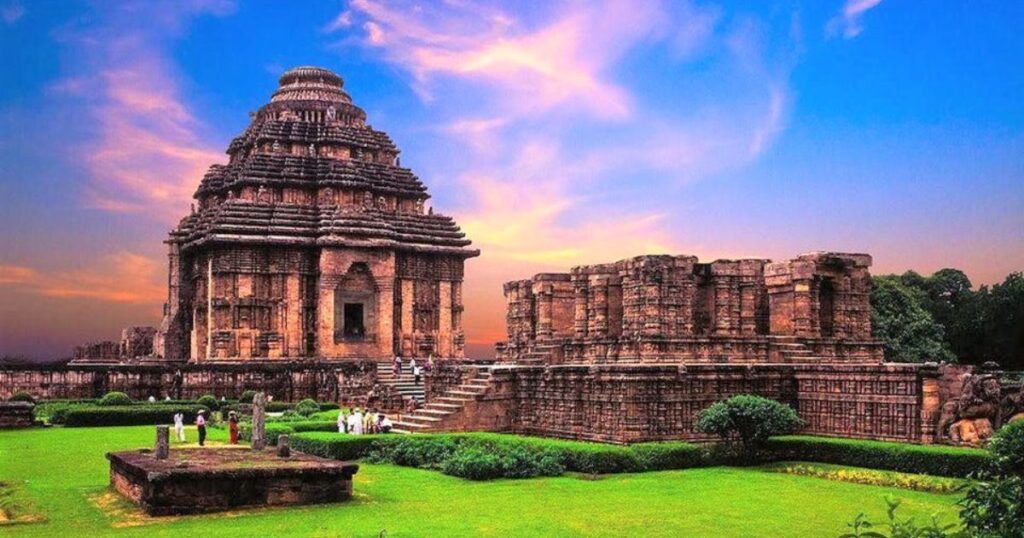
Built in the 13th century by King Narasimhadeva I, the entire structure was conceived as a colossal chariot for the Sun God – twelve pairs of intricately carved wheels, seven horses, and a scale that makes the ambition behind it feel almost unreasonable for its era. The detail on those wheels alone – each one functioning as a sundial accurate enough to tell time – rewards the kind of slow, close attention that most visitors don’t give it.
The erotic sculptures, the celestial musicians, the battle scenes, the animals – thousands of carvings covering every surface, each one different, each one telling something about 13th century Odisha that text records don’t quite capture. It’s simultaneously a religious monument, an astronomical instrument, and an artistic achievement that archaeologists and historians are still fully unpacking.
UNESCO World Heritage status is deserved and then some – but the designation also undersells it slightly. Konark isn’t just historically significant. It’s genuinely, repeatedly astonishing in a way that photographs don’t prepare you for. Among the historical places in Odisha, Konark Sun Temple sits at the top – not just as the most visited, but as the one that earns that position completely and without argument.
Why Visit Konark Sun Temple?
- Admire the detailed stone carvings depicting mythological stories and daily life.
- Experience the grandeur of Odisha’s temple architecture.
- Attend the annual Konark Dance Festival held on the temple grounds.
2. Jagannath Temple, Puri
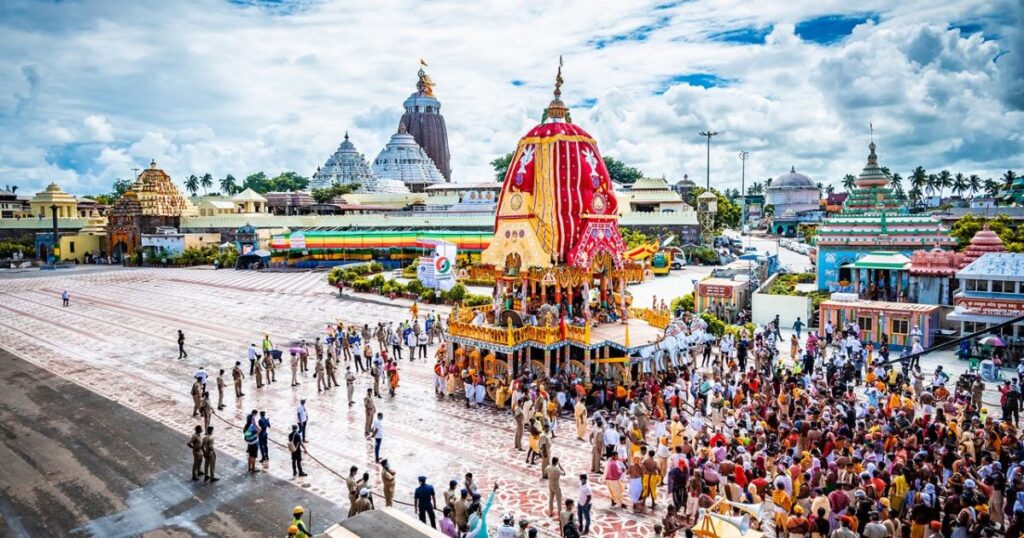
One of Hinduism’s four sacred dhams, it has been drawing pilgrims continuously for centuries – not tourists, pilgrims – and that distinction shapes everything about the atmosphere inside. The devotional energy here is constant and completely genuine. You feel it the moment you enter and it doesn’t leave until you do.
The temple rises 65 metres above Puri, visible from the sea and from every road approaching the town. Rath Yatra once a year transforms the entire context – three massive chariots pulled by hundreds of thousands of devotees through Puri’s Grand Road, one of the largest religious gatherings on the planet, originating from and returning to this temple. The temple kitchen feeds thousands daily with mahaprasad cooked in clay pots – same recipe, same method, unchanged for generations.
Among the historical places in Odisha, Jagannath Temple is the one that transcends historical significance entirely – a living spiritual centre that happens to be ancient, rather than an ancient monument that happens to still function.
Why Visit Jagannath Temple?
- Witness the majestic Rath Yatra festival with vibrant processions.
- Explore the temple’s unique architecture and religious traditions.
- Immerse yourself in the lively atmosphere of Puri.
3. Barabati Fort, Cuttack
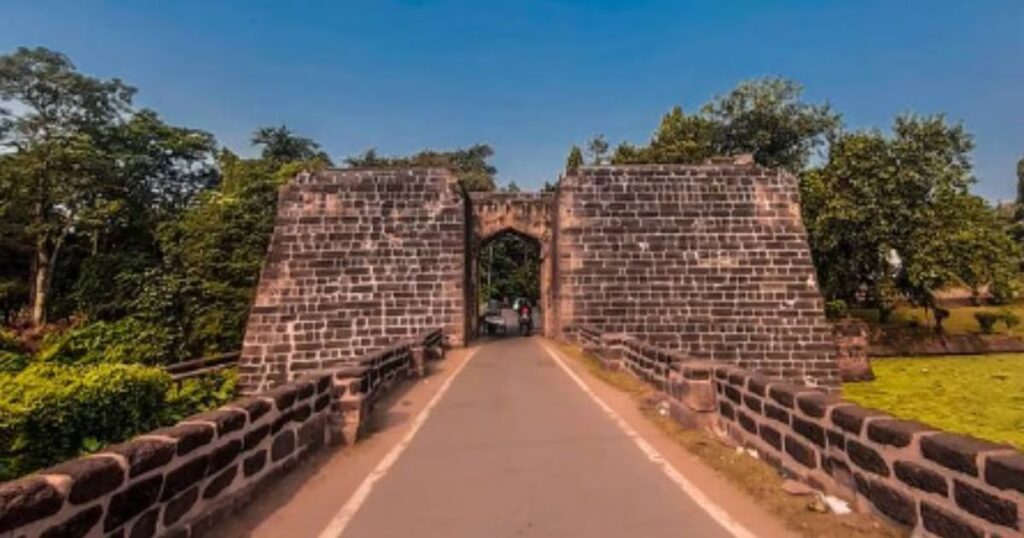
Built during the Ganga dynasty in the 14th century, it once housed a nine-storey palace that time and successive invasions have reduced to foundations and imagination. The massive moat survives largely intact, the gateway still stands with enough presence to suggest what the full complex once communicated, and the earthworks give a sense of scale that the missing structures don’t entirely erase.
Cuttack grew around this fort – the city’s identity is inseparable from it – and standing inside the ruins makes that relationship between fortress and settlement legible in a way that reading about it doesn’t. The adjacent Barabati Stadium sharing the grounds creates an unusual juxtaposition that only adds to the visit’s character rather than undermining it.
Among the historical places in Odisha, Barabati Fort is the one that rewards imagination alongside observation – what’s missing is as interesting as what remains.
Why Visit Barabati Fort?
- Walk through remnants of ancient defensive architecture.
- Learn about Odisha’s medieval military history.
- Enjoy panoramic views of Cuttack city.
4. Raibania Fort, Balasore
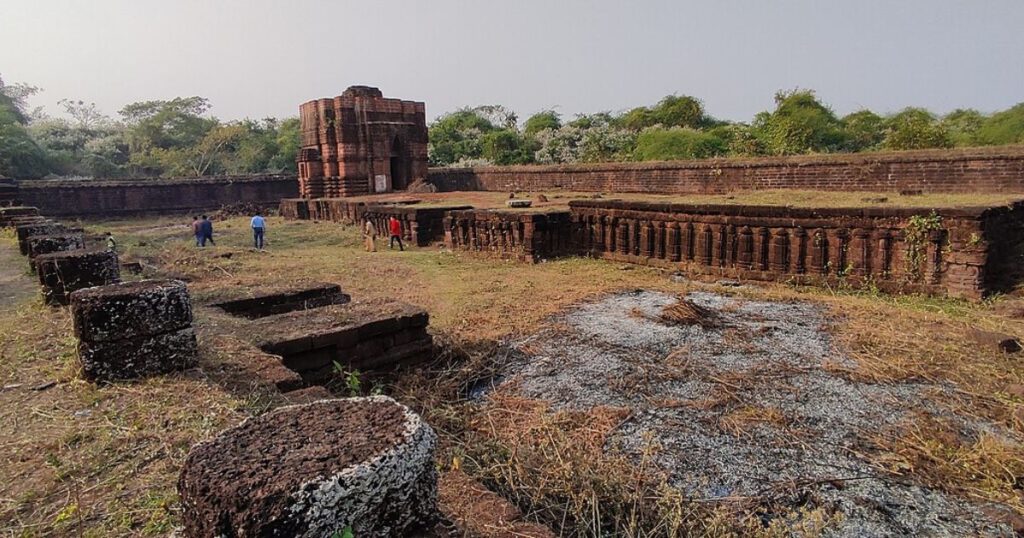
Once among the largest forts in India – that’s not a modest claim, and the scale of what remains supports it. Massive earthen ramparts stretching further than expected, moats that still hold water, structures that have survived centuries of neglect with enough integrity to convey the original ambition clearly. Walking the perimeter alone takes considerable time.
The Baitarani River running alongside adds a geographical logic to the fort’s position that becomes immediately obvious on arrival – this location was chosen by someone who understood both defence and access, and the landscape still reads that way. Almost no tourist infrastructure, very few visitors, and a historical significance that genuinely rivals more famous Odisha sites that receive considerably more attention. The neglect is frustrating from a preservation standpoint and quietly perfect from a visitor experience standpoint – for now.
Among the historical places in Odisha, Raibania Fort is the most underrated option on any list – substantial, atmospheric, and waiting for the wider recognition it should already have.
Why Visit Raibania Fort?
- Discover the vast expanse of historical fortifications.
- Experience rural Odisha’s historical depth away from crowds.
- Explore ancient stone walls and bastions amid greenery.
5. Lingaraj Temple, Bhubaneswar
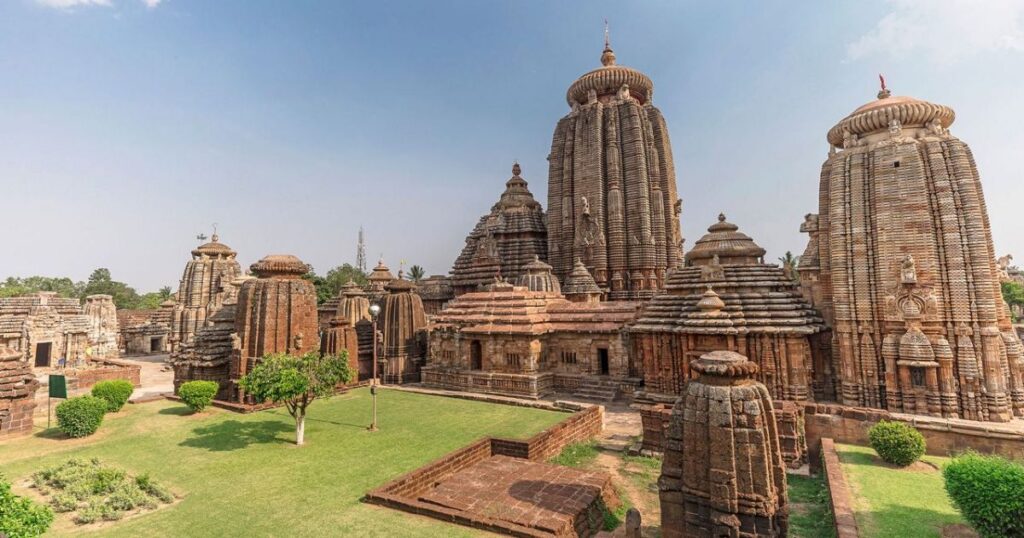
Built in the 11th century during the Somavamshi dynasty, it represents Kalinga architecture at its most refined and most confident. The proportions are exactly right – the tower climbing with a controlled urgency, the intricately carved surfaces covering every square inch without ever feeling cluttered, the whole composition achieving something that later temples in the tradition reference but rarely match.
The stonework rewards serious attention. Figures, foliage, celestial beings, geometric patterns – layers of carving that took generations of craftspeople and reflect a level of institutional commitment to beauty that’s difficult to fully comprehend from a contemporary standpoint. The temple remains an active place of worship – non-Hindus cannot enter the main sanctum, but the viewing platform outside the complex provides a perspective that serious visitors find entirely worthwhile.
Among the historical places in Odisha, Lingaraj Temple sits alongside Konark as the state’s finest architectural achievement – different in scale and purpose, equal in ambition and execution.
Why Visit Lingaraj Temple?
- Explore the largest temple in Bhubaneswar dedicated to Lord Shiva.
- Witness detailed sculptures depicting gods, goddesses, and mythological scenes.
- Partake in temple rituals and festivals.
6. Udayagiri and Khandagiri Caves
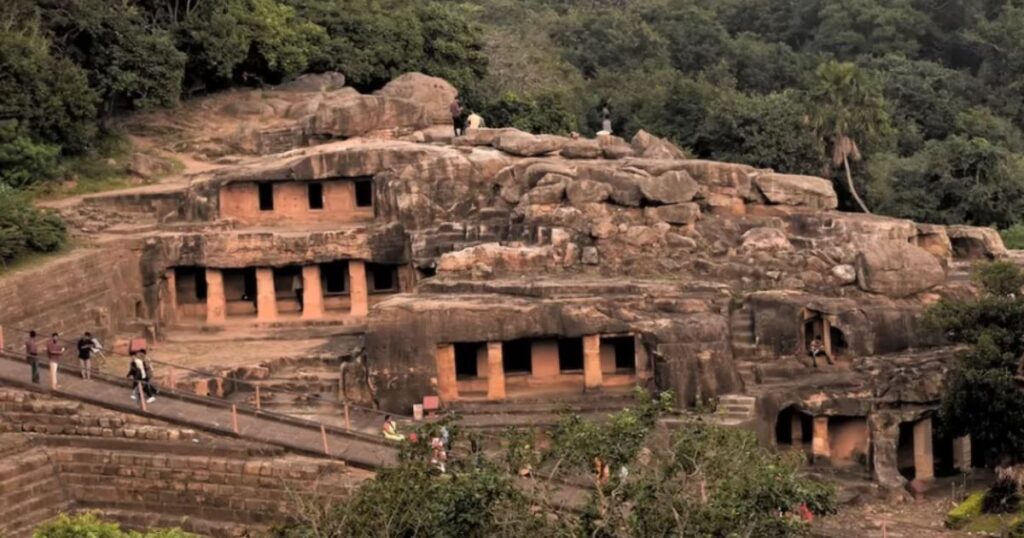
Carved during the reign of King Kharavela of the Mahameghavahana dynasty, these weren’t decorative projects. They were functional monastic residences for Jain monks – cells, halls, and sanctuaries cut directly into laterite rock with a precision that the centuries haven’t diminished. The Rani Gumpha on Udayagiri is the standout – a two-storied cave with sculptural friezes running along the facade depicting royal processions, women, animals, and scenes from court life that function as a visual record of 2nd century BCE Odisha more reliable than most written accounts.
The inscriptions here, including the famous Hathigumpha inscription of King Kharavela, are among the most significant epigraphic records in Indian history – detailing military campaigns, administrative achievements, and religious patronage in a first-person voice that feels remarkably direct across two millennia. Climbing between caves on both hills, the city of Bhubaneswar visible below, the age of what surrounds you registering slowly rather than all at once – it’s the kind of historical experience that stays considerably longer than the visit itself.
Among the historical places in Odisha, Udayagiri and Khandagiri Caves are the most archaeologically significant option on the list – and the one that rewards prior reading more than any other.
Why Visit Udayagiri and Khandagiri Caves?
- Admire the intricate inscriptions and carvings on the caves.
- Understand Jain heritage in Odisha’s historical context.
- Enjoy hilltop views and tranquil spots perfect for reflection.
7. Chilika Lake and Ratnagiri
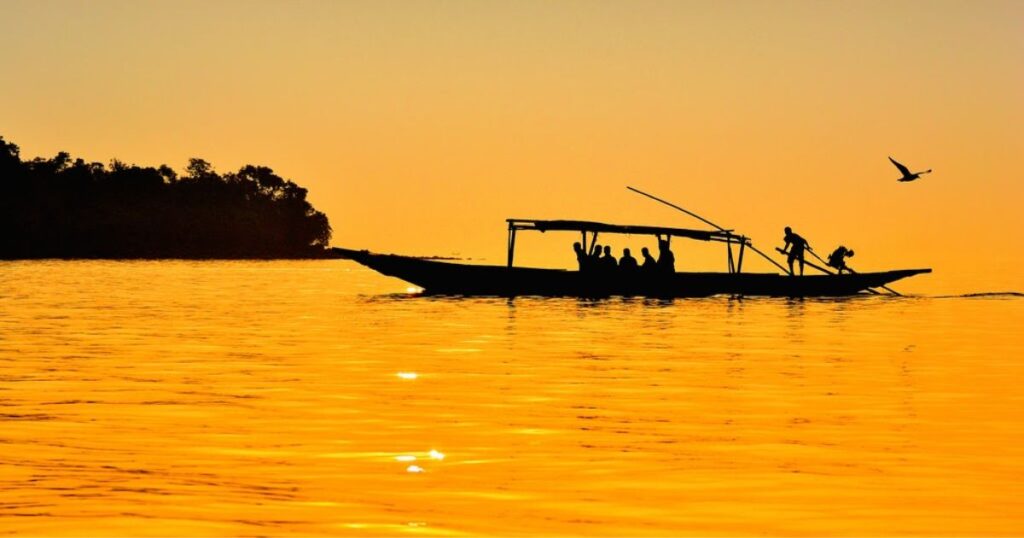
The lake itself is extraordinary for wildlife alone – the largest wintering ground for migratory birds in the Indian subcontinent, with flamingos, herons, and over 160 species arriving between November and February in numbers that make the boat rides during that window genuinely remarkable. The Irrawaddy dolphins in Chilika’s Satapada region are the specific encounter most visitors remember longest – freshwater dolphins in a brackish lagoon, surfacing alongside boats with a casualness that suggests they’ve been doing this considerably longer than tourism has existed here.
Ratnagiri nearby adds the historical dimension that purely natural sites don’t carry. Buddhist monastery ruins from the 5th to 12th century CE, considered one of the most significant tantric Buddhist sites in India, with sculptures and architectural fragments that reveal a sophisticated monastic complex that once attracted scholars from across Asia. The museum on site contextualises the ruins in a way that makes wandering the archaeological remains considerably more meaningful.
The combination of Asia’s largest brackish lagoon and significant Buddhist archaeological heritage within the same visit is unusual enough to make Chilika a destination that genuinely defies single categorisation. Among the historical places in Odisha, Chilika represents the state’s capacity to layer natural wonder and historical significance in the same geography — and do both exceptionally well.
Why Visit Chilika Lake and Ratnagiri?
- Enjoy bird watching and boat rides on Chilika Lake.
- Visit ancient Buddhist archaeological sites.
- Experience a peaceful ambiance at the confluence of history and nature.
8. Dhauli Hill
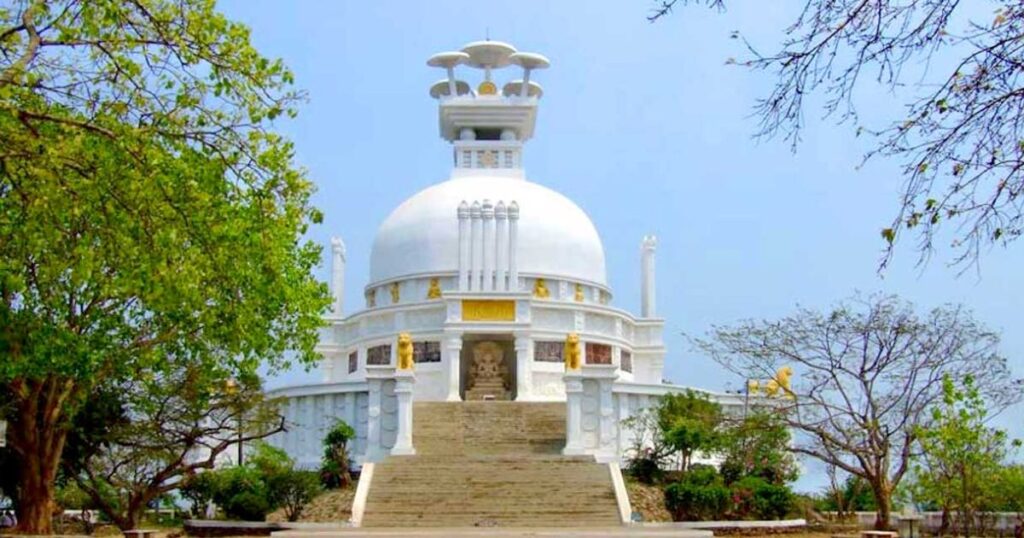
This is where the Kalinga War was fought in 261 BCE – a battle so catastrophic in its human cost that it changed Ashoka from one of ancient India’s most aggressive conquerors into Buddhism’s most influential royal patron. The Rock Edicts carved into the hillside here are among the oldest surviving written records in India, Ashoka’s own words instructing his officials toward compassion, religious tolerance, and ethical governance. Reading them – even in translation – produces a specific feeling that historical monuments rarely manage.
The Shanti Stupa built by Japanese Buddhist organisations at the summit is modern but positioned with genuine sensitivity – white, peaceful, overlooking the Daya River plains below where the battle occurred. The contrast between the violence the landscape witnessed and the stillness it now carries is the whole point of the site, and it lands.
The views from the hill across the Bhubaneswar plains make it genuinely pleasant in summer mornings – cool breeze, open sky, and enough quiet to sit with the historical significance rather than just photograph it and move on. Among the historical places in Odisha, Dhauli Hill is the one that connects most directly to the larger arc of Indian history – a single location where an emperor changed his mind and the subcontinent felt it for centuries afterwards.
Why Visit Dhauli Hill?
- See ancient rock edicts that mark Ashoka’s embrace of Buddhism.
- Explore serene Buddhist stupas and peaceful river views.
- A place of reflection on peace and spirituality.
9. Mukteshwar Temple, Bhubaneswar
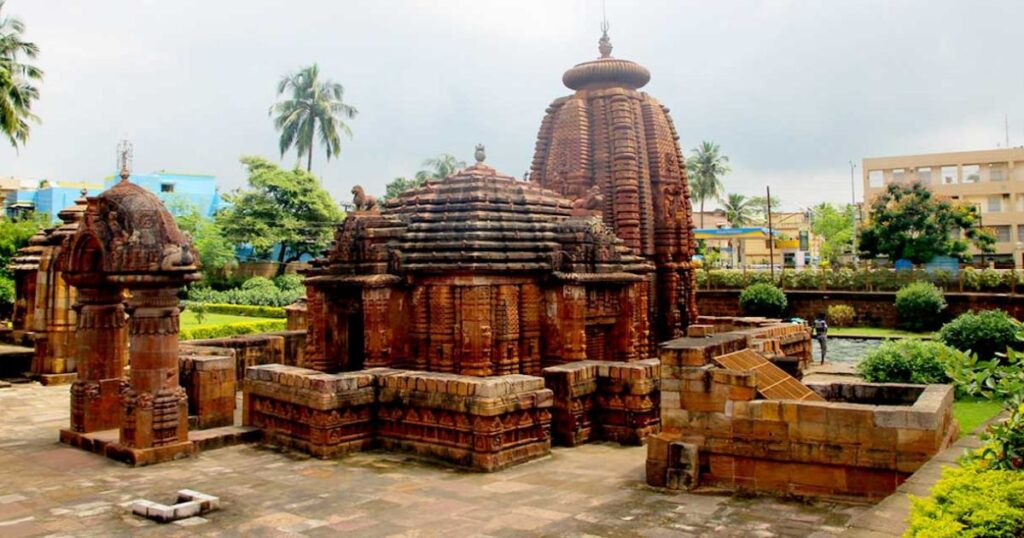
Built in the 10th century, it’s smaller than Odisha’s more famous temples and that scale works entirely in its favour. Nothing is competing for attention – the torana gateway, the carved figures, the geometric patterns, the proportions of the shikhara – all of it visible and legible in a way that larger, more overwhelming complexes don’t always allow.
The torana archway at the entrance is specifically what draws serious architectural attention – an ornamental gateway with carvings of such quality and inventiveness that it’s considered a landmark moment in the development of Kalinga temple architecture. The diamond-shaped lattice windows, the figures of women in various poses, the narrative friezes — each element rewards the kind of slow, close looking that rushed temple visits never allow.
The sacred tank alongside the temple, the intimate scale of the compound, and the relative quiet compared to neighbouring sites give Mukteshwar a contemplative quality that larger temples sacrifice to significance and footfall. Among the historical places in Odisha, Mukteshwar Temple is the connoisseur’s choice – smaller, quieter, and architecturally more precise than almost anything else in Bhubaneswar’s temple corridor.
Why Visit Mukteshwar Temple?
- Admire the detailed sculptures and motifs on temple walls.
- Experience a quieter temple visit away from crowds.
- Learn about architectural evolution in Odisha.
10. Pushpagiri Archaeological Site, Kandhamal
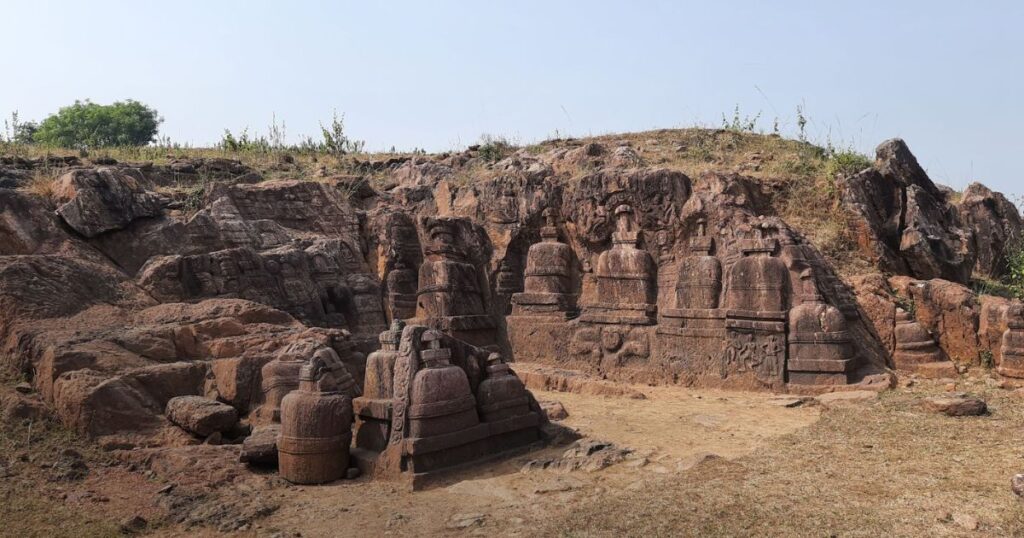
Spread across three hills – Ratnagiri, Udayagiri, and Lalitgiri – this was once one of the most significant Buddhist learning centres in ancient India, drawing scholars and pilgrims from across Asia between the 5th and 12th centuries CE. The scale of what existed here only becomes clear as excavations continue revealing more – monasteries, stupas, sculpture workshops, and residential complexes that suggest a thriving intellectual and spiritual community rather than just a religious outpost.
The sculptures recovered from Pushpagiri are among the finest examples of Buddhist art in eastern India – serene Buddha figures, intricate decorative panels, and architectural fragments carrying a refinement that reflects centuries of accumulated craft tradition. The site museum at Ratnagiri contextualises the ruins effectively for visitors who arrive without prior knowledge.
The landscape surrounding all three hills is quietly beautiful – green, unhurried, and carrying the specific atmosphere of places where serious human endeavour happened and then gradually returned to earth. Among the historical places in Odisha, Pushpagiri represents the state’s Buddhist heritage at its most substantial — significant enough to belong in the same conversation as Nalanda and Vikramashila, and nowhere near receiving the attention that comparison deserves.
Why Visit Pushpagiri?
- Explore ruins of ancient Buddhist monastic establishments.
- Immerse in a tranquil forest setting rich with history.
- Discover Odisha’s lesser-known Buddhist heritage.
Travel Tips for Visiting Historical Places in Odisha
- Plan Your Visit Seasonally: Since Odisha experiences a hot and humid climate, the best time to explore historical places is between October and March when the weather is cooler and more comfortable.
- Local Transportation: Rs convenient and frequent state-run buses connect major towns; however, renting a vehicle or hiring a taxi is recommended for flexibility, especially when visiting remote places like Pushpagiri or Raibania Fort.
- Cultural Sensitivity: Respect temple customs such as removing shoes before entering, dressing modestly, and following photography guidelines. Participating with humility enhances the cultural experience.
- Guided Tours: Hiring knowledgeable local guides at big sites such as Konark or Lingaraj Temple enriches the visit with historical context, legends, and architectural insights.
Exploring Nearby Attractions to Complement Your Historical Tour
After visiting prominent historical sites, travelers can explore nearby natural and cultural landmarks. For example:
- Chilika Lake nearby Puri is a perfect stop for bird watching and boat tours, complementing the spiritual experience with ecological wonders.
- Udayagiri and Khandagiri Caves, close to Bhubaneswar, offer exciting archaeological exploration amid serene hill stations.
- Local Markets and Handicrafts: Visiting local markets around Bhubaneswar and Puri unveils traditional crafts like silver filigree, applique work, and stone carving, rooted in Odisha’s artistic legacy.
Also you can check out our blog about the best places to visit in october outside india so that it can help you find the best time on your next trip.
Conclusion
Odisha presents a mesmerizing array of historical places in Odisha that combine spiritual grandeur, architectural brilliance, and natural beauty. Whether visiting the most visited place in Odisha like Konark Sun Temple or seeking out lesser known tourist places in Odisha such as Pushpagiri, travelers encounter both well-celebrated and hidden gems. The state’s best scenic places in Odisha and holy places in Odisha provide more than sightseeing—they bring a cultural journey filled with stories, devotion, and timeless artistry. Planning your trip with these top places to visit in Odisha ensures a fulfilling and richly immersive experience into this incredible Himalayan gateway.

Frenzy Holidays ensures a smooth and enriching travel experience from start to finish. You can visit us at Haware Centurion, S07/34, Nerul East, Sector 19A, Nerul, Navi Mumbai, Maharashtra 400706. For bookings or more information, call +91 7400453140, email [email protected], or visit www.frenzyholidays.com. So pack up and explore INDIA with frenzy holidays to have an unforgettable journey.
Historical Places in Odisha : FAQs
What are the most famous historical places in Odisha?
Konark Sun Temple, Jagannath Temple, Lingaraj Temple, and Udayagiri-Caves are some of the most famous historical places in Odisha.
What is the best place in Odisha to visit in summer?
Dhauli Hill and Chilika Lake are excellent summer destinations for their cool climate and serene beauty.
Which are the best scenic places in Odisha with historical importance?
Puri, Chilika Lake, Dhauli Hill, and Konark provide beautiful landscapes with rich history.
What are important tourist places in Odisha?
Konark, Puri, Bhubaneswar, and Cuttack, along with surrounding historical sites like Barabati Fort and Jagannath Temple.
Are there lesser known tourist places in Odisha worth visiting?
Yes, places like Mukteshwar Temple and Pushpagiri archaeological site offer deep cultural and historical experiences
What are some holy places in Odisha?
Puri’s Jagannath Temple, Dhauli Hill, and various ancient temples in Bhubaneswar are major holy places.
Is Konark Sun Temple the most visited place in Odisha?
Yes, it is a UNESCO World Heritage site and draws tourists globally for its stunning architecture.
How can I reach Edakkal Caves?
Edakkal Caves are in Kalpetta, Kerala, so not applicable for Odisha. For Odisha temple visits, Bhubaneswar is the nearest airport hub.
What makes Puri significant religiously?
The Jagannath Temple in Puri is part of Char Dham pilgrimages, attracting millions annually.
When is the best time to visit historical places in Odisha?
October to February offers pleasant weather suitable for cultural tours and outdoor activities.
