
Planning a pilgrimage to Kamakhya Temple requires understanding seasonal variations, festival calendars, and visitor protocols that transform your spiritual experience at this ancient Shakti Peetha. Located atop Nilachal Hill in Guwahati, Assam, Kamakhya Temple attracts millions of devotees annually, creating vastly different atmospheres throughout the year, with weather ranging from pleasant winter mornings to heavy monsoon rains and scorching summer afternoons that dramatically affect temple darshan comfort and overall pilgrimage experiences.
Understanding the best time to visit kamakhya temple ensures optimal spiritual journeys balancing comfortable weather conditions, manageable crowd levels, sacred kamakhya puja festival timing, complete knowledge of kamakhya temple dress code requirements, proper kamakhya temple tour planning including kamakhya temple prasad collection, and practical information on how to go kamakhya temple using various transportation options. This comprehensive resource provides month-by-month analysis, festival significance, visitor protocols, and complete travel planning for experiencing one of Hinduism’s most revered Shakti Peethas.
Table of Contents
Quick Reference: Kamakhya Temple Visit Planning
| Season | Best Months | Temperature | Rainfall | Crowd Level | Key Features |
|---|---|---|---|---|---|
| Winter | Nov-Feb | 10-25°C | Very Low | Moderate | Pleasant weather, comfortable climb |
| Spring | Mar-Apr | 18-32°C | Low | Moderate-High | Pre-monsoon comfort, festivals |
| Monsoon | May-Aug | 25-35°C | Very High | Very High | Ambubachi Mela (June), temple closure |
| Autumn | Sep-Oct | 20-30°C | Moderate | Moderate | Post-monsoon clarity, Durga Puja |
Best Time to Visit Kamakhya Temple: Festival & Weather Analysis
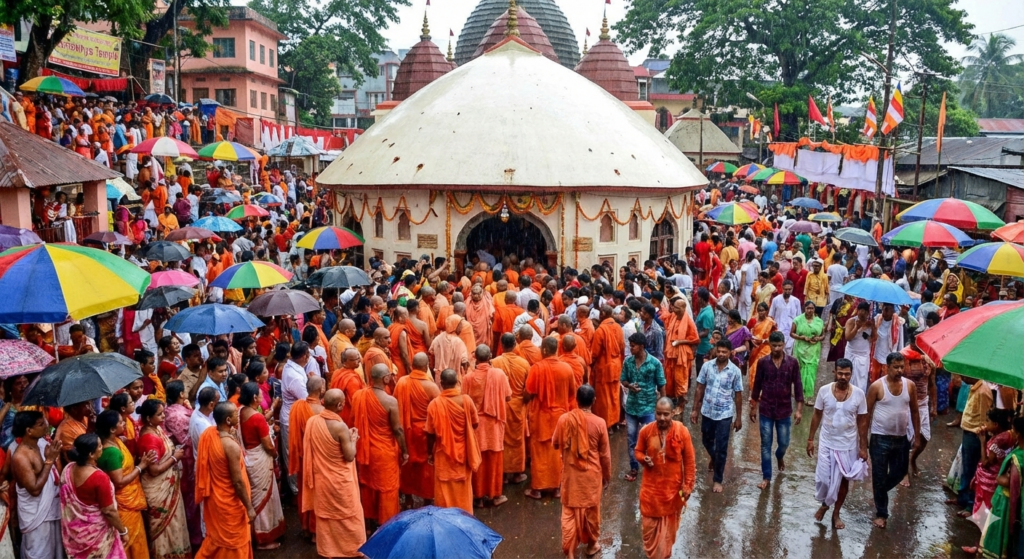
Determining the best time to visit kamakhya temple requires balancing sacred festival timing with weather comfort, as certain periods offer extraordinary spiritual experiences despite crowd and weather challenges.
June: Ambubachi Mela Peak Spiritual Energy
June represents the most spiritually significant yet most challenging period as the best time to visit kamakhya temple, featuring the famous Ambubachi Mela when the Goddess menstruates and the temple closes for three days.
Ambubachi Mela (Mid-June, 3-4 Days):
- Annual menstruation period of Goddess Kamakhya
- Temple closes for 3 days (no darshan)
- Reopens on 4th day with special ceremonies
- Lakhs of devotees and tantric practitioners gather
- Prasad distribution post-reopening considered highly auspicious
- Unique spiritual energy and tantric rituals
Weather Conditions:
- Temperature: 25-32°C
- Pre-monsoon humidity (75-85%)
- Occasional heavy rain showers
- Hot and humid conditions
Advantages: Most powerful spiritual energy of entire year, authentic tantric tradition witnessing, sacred prasad (red cloth piece) extremely auspicious, unique festival found nowhere else, profound religious significance for Shakti worship devotees, lifetime spiritual experience opportunity.
Considerations: Temple closed during main festival days (no darshan possible), extreme crowd density (5-10 lakh visitors), accommodation booking essential 3-4 months advance, hotel prices increase 3-4 times, challenging weather with heat and humidity, difficult hill climb in crowds, requires immense patience and physical stamina.
Ambubachi Strategy:
- Book accommodation by February-March
- Arrive 1-2 days before festival
- Prepare for temple closure (3 days no darshan)
- Queue for reopening day darshan (very long waits)
- Collect sacred prasad
- Budget ₹8,000-15,000 per person (3-4 days)
November to February: Winter Comfort Excellence
Winter represents the best time to visit kamakhya temple for comfortable weather-focused pilgrims, offering pleasant temperatures ideal for the steep hill climb and extended temple complex exploration.
Weather Conditions:
- Temperature: 10-25°C day, 8-18°C night
- Cool comfortable mornings
- Pleasant daytime exploration
- Minimal rainfall
- Clear skies with excellent visibility
Advantages: Perfect weather for 200-step hill climb to temple, comfortable for elderly and children visitors, pleasant temperature for waiting in darshan queues, excellent conditions for exploring Guwahati city, ideal for nearby Assam destination visits, moderate crowds allowing manageable darshan waits, affordable accommodation availability.
Considerations: Morning and evening cold requiring light woolens, December-January sees increased tourism, popular pilgrimage season with moderate queues, advance booking recommended for weekends.
Winter Visit Strategy:
- Weekday visits recommended (fewer crowds)
- Morning darshan (6-9 AM) most pleasant
- Combine with Guwahati sightseeing
- Budget ₹3,000-6,000 per person (2-3 days)
March to May: Summer Pre-Monsoon Season
Summer presents warm conditions making it moderately comfortable as the best time to visit kamakhya temple, offering manageable weather before monsoon arrival though temperatures increase progressively.
Weather Conditions:
- Temperature: 18-35°C day, 15-28°C night
- Warm afternoons by April-May
- Pre-monsoon humidity increasing
- Occasional thunderstorms by late May
Advantages: Moderate tourist density, comfortable morning temple visits, approaching Ambubachi if visiting May, spring weather pleasant in March-April, good availability of accommodations, reasonable hotel rates.
Considerations: Afternoon heat challenging (32-35°C by May), humidity levels increasing, pre-monsoon showers possible, hill climb uncomfortable during hot afternoons.
September to October: Post-Monsoon Festival Season
Autumn offers excellent conditions as the best time to visit kamakhya temple with post-monsoon freshness, Durga Puja celebrations, and comfortable weather before winter arrival.
Weather Conditions:
- Temperature: 20-30°C
- Post-monsoon clear atmosphere
- Moderate humidity
- Occasional rain showers
- Pleasant overall conditions
Festival Highlights:
- Durga Puja (September-October): Major celebration across Assam
- Manasa Puja and other regional festivals
- Cultural festivities throughout Guwahati
- Vibrant atmosphere citywide
Advantages: Post-monsoon lush greenery, Durga Puja cultural experience, comfortable weather conditions, festival celebrations adding vibrancy, excellent for photography with clear skies.
Considerations: Durga Puja brings increased crowds, accommodation booking needed for festival period, moderate rainfall still possible in September.
Kamakhya Puja: Sacred Rituals & Festival Significance
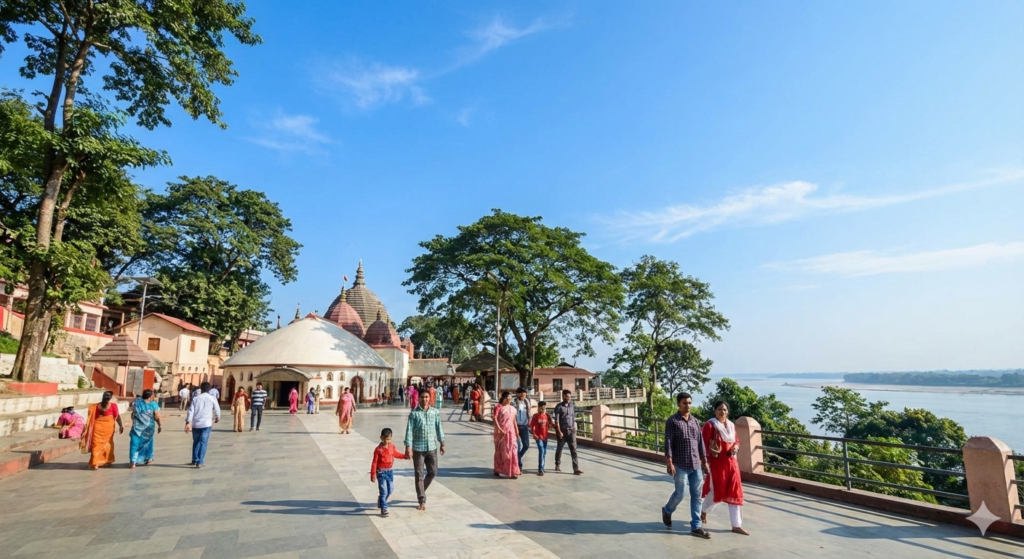
Understanding kamakhya puja rituals and festival importance enhances spiritual experiences and helps plan visits around significant worship periods.
Daily Puja Schedule
Morning Rituals:
- 5:30 AM: Temple opens (winter), 5:00 AM (summer)
- Morning aarti and abhishek
- Regular darshan begins
Afternoon Break:
- 1:00-2:00 PM: Temple closes for afternoon rest
- No darshan during this period
Evening Rituals:
- 2:00 PM: Reopening for afternoon darshan
- Evening aarti (6:00-7:00 PM depending on season)
- 9:30-10:00 PM: Temple closes
Major Kamakhya Puja Festivals
Ambubachi Mela (June):
- Most significant annual festival
- 3-day temple closure during Goddess menstruation
- Tantric practitioners gathering
- Sacred prasad distribution
Durga Puja (September-October):
- Major Shakti worship celebration
- Special decorations and ceremonies
- Cultural programs and festivities
Manasa Puja (July-August):
- Serpent Goddess worship
- Regional Assamese festival
- Special rituals conducted
Pohan Biya (March-April):
- Symbolic marriage ceremony of Lord Kamakhya
- Traditional Assamese celebration
- Cultural significance
Kamakhya Temple Dress Code: Essential Guidelines
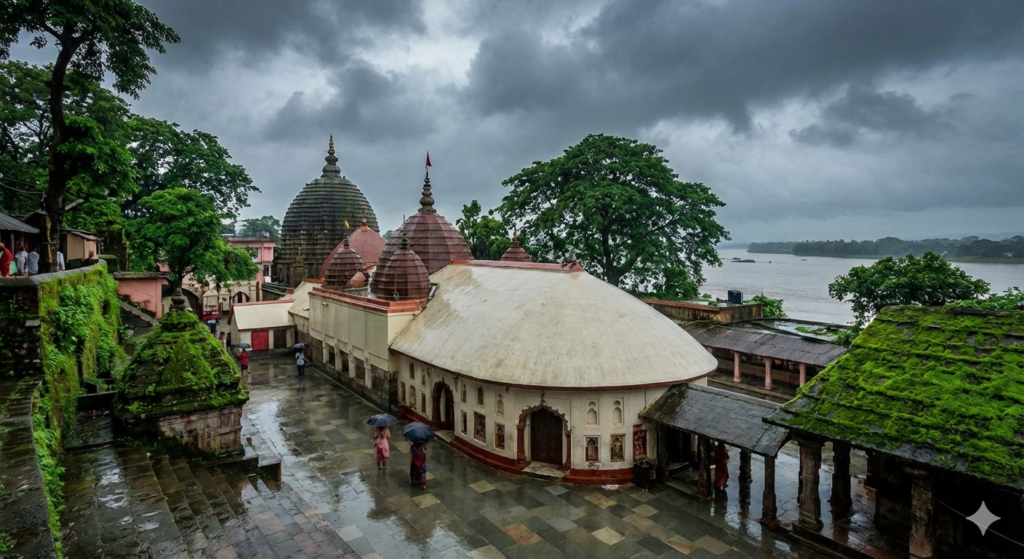
Understanding kamakhya temple dress code ensures respectful entry and smooth darshan experiences without complications or entry denial.
Mandatory Dress Requirements
For Men:
- Full pants or dhoti (no shorts)
- Shirt covering shoulders (no sleeveless)
- Traditional attire preferred but not mandatory
- Remove footwear outside temple (mandatory)
For Women:
- Salwar kameez, saree, or long dress acceptable
- Full-length clothing covering legs and shoulders
- Dupatta/scarf recommended
- Traditional attire appreciated
- Remove footwear outside
General Guidelines:
- Modest, conservative clothing mandatory
- Avoid revealing or tight-fitting clothes
- No leather items inside sanctum
- Socks permitted (helpful for hot surfaces)
Important: While dress code not extremely strict, modest traditional attire shows respect at this sacred Shakti Peetha and ensures comfortable acceptance by temple authorities and devotees.
How to Go Kamakhya Temple: Transportation Options
Understanding how to go kamakhya temple from various locations helps plan efficient travel using Guwahati’s connectivity options.
Reaching Guwahati
By Air:
- Lokpriya Gopinath Bordoloi International Airport
- Direct flights from Delhi, Mumbai, Kolkata, Bangalore
- 22 km from Kamakhya Temple
- Taxi: ₹400-600, 30-40 minutes
By Train:
- Guwahati Railway Station (main)
- Kamakhya Railway Station (2 km from temple)
- Well-connected to major Indian cities
- Overnight trains from Kolkata, Delhi
By Road:
- NH-27, NH-37 excellent connectivity
- State buses from neighboring states
- Private buses available
Local Transportation to Temple
From Guwahati City:
- Distance: 7-8 km from Paltan Bazaar
- Auto-rickshaw: ₹100-150, 20 minutes
- Taxi: ₹200-300
- Local bus: ₹20-30, available from Adabari
From Kamakhya Railway Station:
- Distance: 2 km uphill
- Auto-rickshaw: ₹50-80
- Walk possible (30-40 minutes uphill)
- Share auto: ₹20-30 per person
Parking:
- Available at hill base
- Charges: ₹20-50 for vehicles
- 200-step climb to temple from parking
Kamakhya Temple Tour: Complete Visitor Experience
Planning comprehensive kamakhya temple tour requires understanding temple layout, darshan process, nearby attractions, and practical visitor information.
Temple Complex Layout
Main Temple:
- Garbhagriha (sanctum) with sacred yoni (vulva-shaped stone)
- No idol, natural rock formation worshipped
- Dimly lit sanctum
- Narrow entrance (queues form)
Adjacent Temples:
- Ten Mahavidya temples on Nilachal Hill
- Each dedicated to different Shakti forms
- Can be visited after main darshan
- Panoramic views of Guwahati and Brahmaputra
Darshan Process
Entry Queue:
- General queue: 1-3 hours wait (normal days)
- VIP darshan: ₹500-1,000 (shorter queue)
- Festival times: 4-8 hours wait
- Early morning shortest queues
Inside Sanctum:
- Brief darshan (30 seconds-1 minute)
- Sacred yoni darshan
- Priest performs ritual
- Flowers offered
- Quick exit to accommodate crowds
Kamakhya Temple Prasad
Understanding kamakhya temple prasad helps devotees collect sacred offerings properly.
Regular Prasad:
- Sindoor (vermillion) from Goddess
- Flowers and bel leaves
- Sweet prasad (varies)
- Available at temple counter: ₹20-100
Ambubachi Special Prasad:
- Red cloth piece (most sacred)
- Considered extremely auspicious
- Given on temple reopening day
- Free distribution (massive crowds)
Where to Collect:
- Main prasad counter near exit
- Multiple counters during festivals
- Donation-based (suggested amounts displayed)
Practical Visitor Information
Temple Timings:
- Summer: 5:00 AM – 10:00 PM
- Winter: 5:30 AM – 9:30 PM
- Afternoon closure: 1:00-2:00 PM daily
- Ambubachi: Closed 3 days (June)
Entry Fee:
- Free entry for general darshan
- VIP darshan: ₹500-1,000
- No photography inside main temple
Facilities:
- Cloak rooms for belongings
- Drinking water available
- Clean washrooms (limited)
- Prasad and puja material shops
- Wheelchair accessibility limited (steep climb)
Accommodation:
- Guwahati city: Wide range (₹800-5,000/night)
- Near temple: Limited options (₹1,000-3,000)
- Festival periods: Book 2-3 months advance
Food:
- Vegetarian food recommended
- Restaurants at hill base
- Guwahati city has diverse options
- Local Assamese cuisine worth trying
Nearby Attractions:
- Umananda Temple (river island)
- Assam State Museum
- Brahmaputra River cruise
- Guwahati Planetarium
- Local markets (Fancy Bazaar, Paltan Bazaar)
For comprehensive Northeast experiences, explore hidden places in Guwahati for offbeat city attractions, discover places to visit in Tezpur for nearby Assam destinations, find places to visit in Lakhimpur Assam for extended Assam tours, explore places to visit in Kokrajhar for tribal heritage, or plan Meghalaya tour package from Kolkata for combined Northeast journeys.
Conclusion
Determining the best time to visit kamakhya temple depends on balancing spiritual priorities with weather comfort and crowd tolerance. Ambubachi Mela (June) offers unparalleled spiritual significance despite extreme crowds and temple closure, while winter months (November-February) provide comfortable conditions for standard kamakhya puja darshan. Understanding kamakhya temple dress code requirements, planning comprehensive kamakhya temple tour covering all ten Mahavidyas, collecting sacred kamakhya temple prasad, and knowing how to go kamakhya temple using convenient transportation ensures transformative pilgrimage experiences at this ancient Shakti Peetha.
Strategic planning considering festival calendars, weather patterns, and visitor protocols creates memorable spiritual journeys to one of Hinduism’s most powerful Shakti worship centers. Frenzy Holidays ensures a smooth and enriching travel experience from start to finish. You can visit us at Haware Centurion, S07/34, Nerul East, Sector 19A, Nerul, Navi Mumbai, Maharashtra 400706. For bookings or more information, call +91 7400453140, email [email protected], or visit www.frenzyholidays.com. So pack up and explore INDIA with Frenzy Holidays to have an unforgettable journey.
Best Time to Visit Kamakhya Temple – FAQs
What is the best time to visit Kamakhya Temple for comfortable weather?
November to February is the best time to visit kamakhya temple for comfortable weather with pleasant temperatures (10-25°C) ideal for the steep hill climb and temple exploration.
When is Ambubachi Mela at Kamakhya Temple?
Ambubachi Mela occurs mid-June annually for 3-4 days during Goddess menstruation when temple closes. Most spiritually significant kamakhya puja festival but requires advance planning for extreme crowds.
What is the kamakhya temple dress code?
Kamakhya temple dress code requires modest clothing: full-length pants/sarees, covered shoulders for both men and women. Traditional attire preferred, footwear removed outside temple mandatory.
How to go Kamakhya Temple from Guwahati Railway Station?
How to go kamakhya temple: Kamakhya Railway Station is 2 km away (₹50-80 auto, 10 minutes). From Guwahati main station, 8 km distance (₹100-150 auto, 20 minutes).
What is the significance of kamakhya temple prasad?
Kamakhya temple prasad includes sindoor, flowers, and sweets available regularly. During Ambubachi, sacred red cloth piece considered most auspicious is distributed on temple reopening day.
What kind of kamakhya puja is performed at the temple?
Kamakhya puja includes daily morning and evening aartis, abhishek rituals, and special ceremonies during Ambubachi Mela, Durga Puja, and Manasa Puja throughout the year.
How long does kamakhya temple tour take?
Kamakhya temple tour requires 2-4 hours including hill climb, darshan queue (1-3 hours normal days), brief sanctum darshan, and visiting adjacent ten Mahavidya temples on Nilachal Hill.
Is there VIP darshan available at Kamakhya Temple?
Yes, VIP darshan available at ₹500-1,000 with shorter queues. Regular darshan free but requires 1-3 hour wait, extending to 4-8 hours during festivals and Ambubachi.
What should I avoid during Kamakhya Temple visit?
Avoid: revealing clothing, leather items inside sanctum, photography in main temple, visiting during afternoon closure (1-2 PM), Ambubachi period without advance planning, and disrespecting tantric traditions.
Can I visit Kamakhya Temple during monsoon?
Yes, but monsoon (June-August) brings heavy rainfall making hill climb slippery. Ambubachi Mela occurs during this period. Post-monsoon (September-October) offers better conditions with festival celebrations
