
Planning a trip to Vrindavan — the sacred land of Lord Krishna’s childhood leelas on the banks of the Yamuna in Uttar Pradesh — requires far more than booking a train ticket and packing a bag. This holy town of 5,000-plus temples, eternal bhajans, and devotion-soaked ghats experiences dramatic seasonal shifts that profoundly affect your vrindavan darshan experience, from the unbearable summer heat of May to the bone-chilling fog of January mornings to the legendary but rain-drenched festival of Janmashtami. Getting your timing right means the difference between a deeply moving spiritual journey and an uncomfortable, overcrowded visit where you struggle to fully absorb the divine atmosphere.
Understanding the best time to visit Vrindavan ensures you experience the town’s true essence — peaceful temple darshans in pleasant weather, meaningful participation in major festivals like Holi and Janmashtami, comfortable vrindavan visiting time at key shrines, and the right balance between crowd levels and spiritual energy. This complete guide covers season-wise weather analysis, vrindavan temperature in march and other key months, how to plan your vrindavan trip cost, rain in vrindavan patterns, and everything else needed for a deeply fulfilling pilgrimage or cultural visit to Krishna’s beloved Braj Bhoomi.
Table of Contents
Quick Reference: Vrindavan Visit Planning
| Season | Best Months | Temperature | Conditions | Ideal For |
|---|---|---|---|---|
| Winter | Oct–Feb | 8–25°C | Cool, pleasant | Comfortable darshan, Kartik month |
| Festival Peak | Feb–Mar | 15–30°C | Warm, festive | Holi celebrations, spring colours |
| Summer | Apr–Jun | 30–45°C | Hot, dry | Avoid if heat-sensitive |
| Monsoon | Jul–Sep | 25–35°C | Humid, rain in vrindavan | Janmashtami, greenery, moderate crowds |
Best Time to Visit Vrindavan: Seasonal Analysis
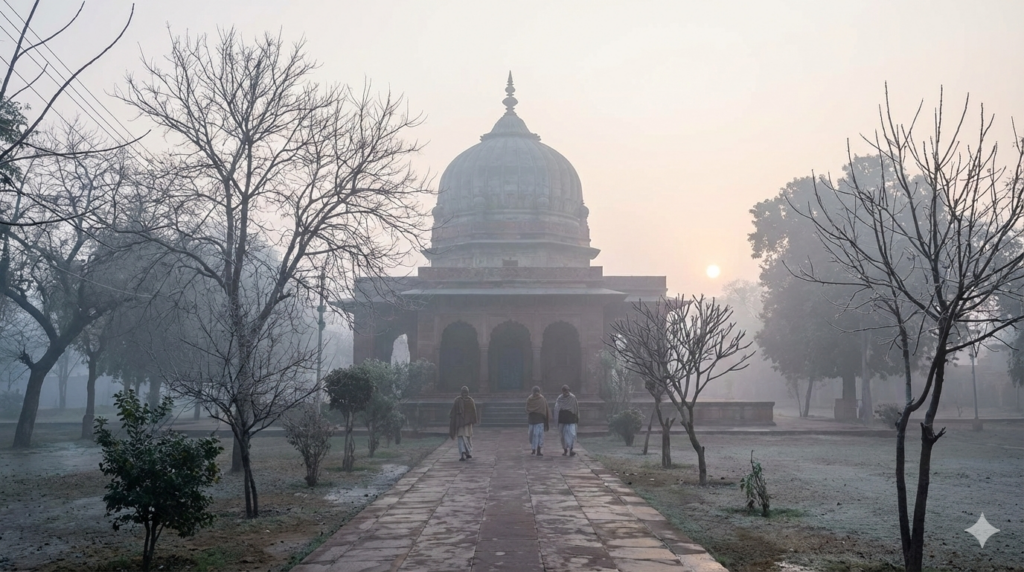
Vrindavan’s calendar is inseparable from the Hindu religious calendar. Festivals, fasting days, and auspicious tithi dates shape visitor patterns more than weather alone. The best time to visit Vrindavan must therefore account for both climate comfort and spiritual timing.
October to February: The Best Time to Visit Vrindavan Overall
The post-monsoon and winter months are unanimously considered the best time to visit Vrindavan for most pilgrims and travelers. The rains have cleared, greenery is lush, and the Yamuna flows with renewed calm. Vrindavan temperature drops to comfortable levels, making long temple-hopping sessions and ghat walks genuinely enjoyable rather than exhausting.
Vrindavan Temperature (October–February):
- October: 20–32°C, post-monsoon freshness
- November: 14–27°C, pleasant and clear
- December: 8–22°C, cool days, cold nights
- January: 6–20°C, fog possible in early mornings
- February: 10–24°C, warming beautifully
Why This Season Excels:
October and November sit in a sweet spot — the festivals of Navratri and Diwali have energized the town, crowds from monsoon Janmashtami have thinned, and the weather is at its most welcoming. Walking the Parikrama Marg (the 14 km circumambulation route around Vrindavan) is genuinely pleasant in these months, and early morning darshan at Banke Bihari Temple or ISKCON Temple feels meditative rather than rushed.
The sacred month of Kartik (October–November) holds special significance in Vrindavan — this is when devotees believe the town is at its most spiritually potent, and special evening aarti programmes, Govardhan Puja, and Tulsi Vivah ceremonies add layers of meaning to every visit. Many serious pilgrims specifically plan going to vrindavan during Kartik for this reason.
December and January bring a different beauty — cool, misty mornings over the Yamuna and shorter queues at major temples. However, dense fog in January can delay train arrivals and disrupt early morning vrindavan visiting time schedules. Carry a warm shawl or jacket for morning and evening darshans.
February warms up gently and sets the stage for the most spectacular event in Vrindavan’s calendar — Holi.
Ideal For: All pilgrims and first-time visitors, family groups, elderly travelers, those doing Vrindavan Parikrama, Kartik month devotees.
Vrindavan Trip Cost (Peak Winter): ₹6,000–12,000 per person for a 2N/3D trip from nearby cities; ₹10,000–18,000 from Mumbai or other distant cities including travel.
February to March: Holi Season — Vrindavan’s Most Famous Period
If October–February is the best time to visit Vrindavan for comfort, then February–March is the best time to visit Vrindavan for experience. The Braj Holi festival, spread across nearly a month of events, transforms this town into the most colourful, joyous, and spiritually electrifying version of itself.
Vrindavan Temperature in March:
- Early March: 16–28°C, warm and comfortable
- Mid-March: 20–32°C, rising heat
- Late March: 24–36°C, noticeably warmer
The Holi Festival Calendar in Vrindavan:
Vrindavan’s Holi is not a single day but a series of events beginning nearly 40 days before the main Holi date. Key celebrations include Lathmar Holi in Barsana and Nandgaon (where women beat men with sticks in playful tradition), Phoolon Wali Holi (flower Holi) at Banke Bihari Temple, Widow’s Holi at the Gopinath Temple (a deeply moving and increasingly celebrated event), and the main colour Holi at various temples and ghats.
The vrindavan temperature in march remains manageable, especially in the first two weeks, making outdoor festival participation comfortable. Expect very large crowds — accommodation books out 2–3 months in advance for the Holi period. If going to vrindavan for Holi is on your bucket list, plan and book early, carry old clothes you don’t mind staining, and protect your camera and phone with waterproof covers.
Practical Highlights:
- Book accommodation 8–10 weeks in advance for Holi week
- Carry waterproof pouches for electronics
- Temple darshan may have restricted hours during festival days — verify vrindavan visiting time in advance
- Phoolon Wali Holi at Banke Bihari Temple (ticketed) — book via official channels
Vrindavan Trip Cost (Holi Season): ₹12,000–20,000 per person for 2N/3D due to surge pricing on accommodation and transport.
April to June: Summer — Best Avoided
Summer in Vrindavan is harsh by any standard. Vrindavan temperature climbs steadily from a warm 35°C in April to a punishing 44–46°C by late May and June. The Yamuna recedes significantly, and hot, dry loo winds sweep across the Braj region in the afternoons. Temple floors that are normally cool become uncomfortably warm, and long queues under direct sun make darshan physically draining.
Vrindavan Temperature (April–June):
- April: 28–40°C, manageable in mornings only
- May: 32–44°C, extreme heat
- June: 34–46°C, pre-monsoon peak heat
Who Might Still Visit:
Devout pilgrims who are experienced with North India summers and plan their vrindavan visiting time exclusively in early morning (6–9 AM) and evening (6–8 PM) windows can manage April visits reasonably well. The town is noticeably less crowded, meaning temple darshan queues are shorter and the atmosphere more contemplative. However, for families with children, elderly travelers, or first-time visitors, this period is best avoided.
If April–May travel is unavoidable, stay at an air-conditioned property, carry a water bottle and ORS sachets, wear light cotton clothes and a hat, and plan all outdoor activity strictly before 10 AM and after 5 PM.
Vrindavan Trip Cost (Summer): ₹5,000–9,000 per person for 2N/3D — lowest rates of the year due to reduced demand.
July to September: Monsoon — Rain in Vrindavan & Janmashtami
The monsoon season brings rain in vrindavan from late June through September, with July and August being the wettest months. The Braj region receives moderate rainfall (600–800 mm annually), and while it’s nowhere near as heavy as coastal monsoons, it significantly changes the town’s character. The Yamuna rises dramatically, ghats are partially submerged, and the surrounding countryside turns lush and deeply green — an unexpectedly beautiful sight.
Vrindavan Temperature (July–September):
- July: 27–35°C, humid with regular rainfall
- August: 26–33°C, peak rain in vrindavan
- September: 25–32°C, rains easing
Janmashtami — The Defining Reason to Visit in Monsoon:
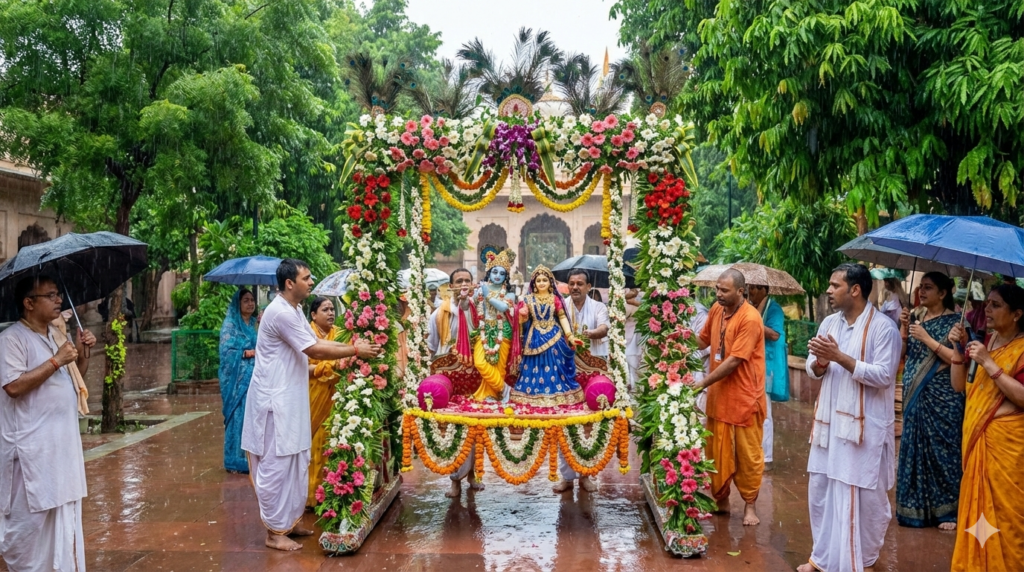
Despite the rain in vrindavan, August draws enormous crowds for Janmashtami — the midnight celebration of Lord Krishna’s birth. Vrindavan’s Janmashtami is one of India’s most spiritually charged events, with elaborate midnight abhishek and aarti ceremonies at ISKCON Vrindavan, Banke Bihari Temple, and Rangji Temple drawing lakhs of devotees. The atmosphere — midnight chanting, conch shells, flowers, and the breaking of the Dahi Handi — is unlike anything else in India.
If going to vrindavan specifically for Janmashtami, be prepared for extreme crowds (some temples restrict entry), limited accommodation availability (book 3–4 months in advance), and wet weather requiring waterproof footwear and rain gear. The spiritual energy, however, more than compensates for the physical challenges.
Practical Highlights:
- Janmashtami dates shift annually — check the exact tithi each year
- ISKCON Vrindavan Janmashtami celebrations are world-famous
- Carry waterproof footwear and a compact umbrella
- Ghat visits during monsoon require caution — slippery steps, high water levels
Vrindavan Trip Cost (Monsoon/Janmashtami): ₹8,000–15,000 per person for 2N/3D during Janmashtami week; ₹5,000–8,000 in non-festival monsoon weeks.
Vrindavan Temperature: Month-by-Month Breakdown
| Month | Min Temp | Max Temp | Rainfall | Recommendation |
|---|---|---|---|---|
| January | 6°C | 20°C | Nil | ✅ Very Good |
| February | 9°C | 24°C | Nil | ✅ Excellent |
| March | 15°C | 32°C | Minimal | ✅ Very Good |
| April | 22°C | 40°C | Nil | ⚠️ Average |
| May | 27°C | 44°C | Nil | ❌ Avoid |
| June | 29°C | 46°C | Starts | ❌ Avoid |
| July | 27°C | 35°C | Heavy | ⚠️ Janmashtami only |
| August | 26°C | 33°C | Heavy | ⚠️ Janmashtami only |
| September | 24°C | 32°C | Moderate | ✔️ Acceptable |
| October | 18°C | 32°C | Nil | ✅ Excellent |
| November | 12°C | 27°C | Nil | ✅ Excellent |
| December | 7°C | 22°C | Nil | ✅ Very Good |
Vrindavan Darshan Guide: Key Temples & Visiting Time
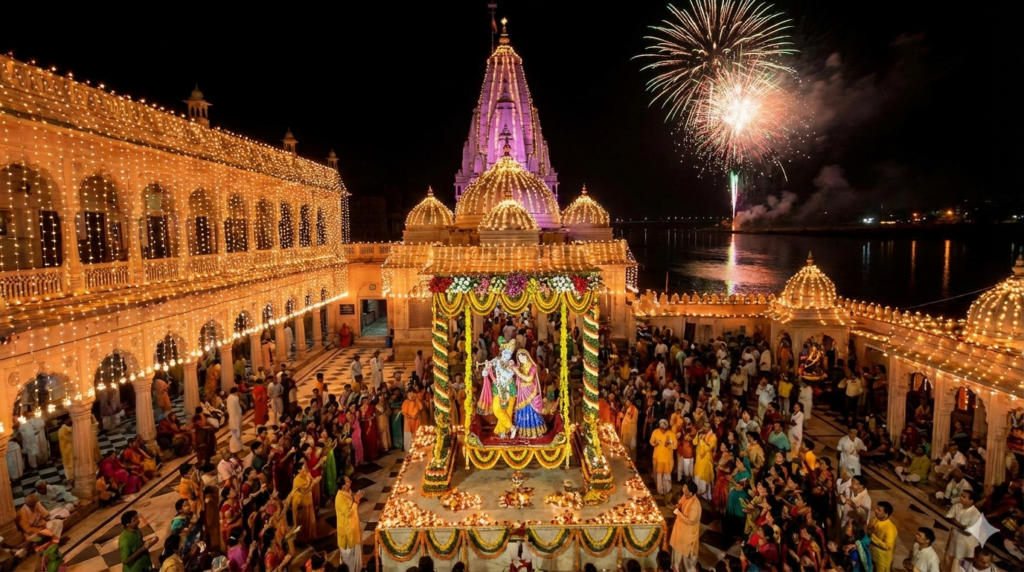
A practical vrindavan darshan guide is essential for first-time visitors, as different temples follow different timing schedules and some require advance planning.
Banke Bihari Temple is Vrindavan’s most beloved shrine and the most visited. The darshan timings follow a unique schedule with the curtain (parda) drawn and opened repeatedly throughout the session — a tradition unlike any other Indian temple. Summer timings differ from winter timings, so always confirm vrindavan visiting time before heading out. Photography is strictly prohibited inside. Arrive at least 30 minutes before opening for a comfortable darshan; festive days bring extremely dense crowds.
ISKCON Vrindavan (Krishna-Balaram Mandir) operates on highly organized darshan schedules and is foreigner-friendly with well-maintained premises and multilingual guides. The evening aarti here is particularly spectacular. Vrindavan visiting time at ISKCON: morning session 4:30–8:00 AM and 8:00–11:00 AM; evening session 4:30–5:30 PM and 7:00–8:30 PM (timings vary by season).
Prem Mandir, built by Jagadguru Kripalu Maharaj, is Vrindavan’s most visually striking modern temple — white marble with illuminated evening light shows. Evening visiting time (7:00–9:00 PM) is the most memorable experience when the temple is lit up in multicolored lights. Free entry, no photography restrictions outside.
Shri Radha Raman Temple is one of Vrindavan’s oldest and most spiritually significant temples, with a self-manifested deity. The intimate atmosphere and traditional Vaishnava rituals here offer a profoundly different experience from the larger temples.
Nidhivan, a sacred forest believed to be where Krishna performs His nightly Raas Leela, closes strictly after sunset — no exceptions. Visiting time is daylight hours only; the forest is sealed at dusk by the temple committee.
Vrindavan Parikrama Marg: The 14 km circumambulation route around Vrindavan is best undertaken in October–February during early morning hours (5:00–9:00 AM). Carry comfortable footwear, water, and a small bag for temple offerings along the route.
How to Go to Vrindavan
By Train
Going to vrindavan by train is the most practical and popular option for travelers from across India. The nearest major railway station is Mathura Junction (12 km from Vrindavan), one of North India’s busiest rail junctions with excellent connectivity to Delhi (2 hours), Mumbai (16–18 hours via Rajdhani), Agra (1 hour), Jaipur (5 hours), and all major Indian cities.
From Mathura Junction, Vrindavan Railway Station is directly accessible on a narrow-gauge branch line (the charming toy train-like Mathura-Vrindavan rail link), though auto-rickshaws and e-rickshaws (₹30–50 per person) are faster and more frequent. The journey from Mathura to Vrindavan by road takes 25–35 minutes.
For Mumbai travelers, the Mathura-Vrindavan Tour Package from Mumbai by Frenzy Holidays covers all travel, accommodation, and guided darshan arrangements — explore our Mathura Vrindavan tour package from Mumbai for complete details.
By Road
Vrindavan is well connected by road — 145 km from Delhi via Yamuna Expressway (2.5 hours), 58 km from Agra (1.5 hours), and 12 km from Mathura. UPSRTC buses run regular services from Delhi’s Kashmere Gate ISBT and Agra to Mathura. Private taxis from Delhi cost ₹2,500–4,000 one way.
By Air
The nearest airport is Agra’s Kheria Airport (60 km), though with limited connectivity. Most air travelers fly into Indira Gandhi International Airport, Delhi (155 km) and take road or rail onward to Vrindavan. Pre-booked taxi from Delhi airport to Vrindavan costs ₹3,500–5,000.
Vrindavan Trip Cost: Budget Planning
A well-planned vrindavan trip cost breakdown helps set realistic expectations across different budget levels.
Budget Traveler (2N/3D from Delhi):
- Train from Delhi: ₹100–300 per person
- Dharamshala/budget guesthouse: ₹500–1,000 per night
- Meals (dhabas, prasad): ₹200–400 per day
- Local auto-rickshaw transport: ₹200–300 total
- Total vrindavan trip cost: ₹2,500–5,000 per person
Mid-Range Traveler (2N/3D from Delhi):
- Train/cab from Delhi: ₹300–1,500
- Mid-range hotel: ₹1,500–3,000 per night
- Meals (restaurants): ₹500–800 per day
- Local transport + guided temple tour: ₹500–800
- Total vrindavan trip cost: ₹6,000–10,000 per person
From Mumbai (2N/3D Package):
- Train/flight + local travel: ₹3,000–8,000
- Accommodation: ₹1,500–4,000 per night
- Meals + transport: ₹800–1,200 per day
- Total vrindavan trip cost: ₹10,000–18,000 per person
Festival seasons (Holi, Janmashtami, Kartik) add 30–50% to accommodation costs. Booking a comprehensive Mathura Vrindavan tour package from Mumbai through Frenzy Holidays often works out more economical and stress-free than independent booking during peak periods.
Combining Vrindavan with Nearby Destinations
Vrindavan’s location in the Braj region makes it ideal for combining with several deeply significant nearby destinations.
Mathura (12 km) is Krishna’s actual birthplace and contains the magnificent Shri Krishna Janmabhoomi temple complex. Any Vrindavan trip naturally pairs with a Mathura half-day or full-day visit. Our detailed guide on the best time to visit Mathura provides complete seasonal planning for the sister city.
Agra (58 km) with the Taj Mahal, Agra Fort, and Fatehpur Sikri is a natural extension of a Vrindavan trip, especially for first-time visitors to the region. A combined 4–5 day itinerary covering Vrindavan, Mathura, and Agra is a popular and deeply rewarding choice.
Ayodhya (290 km) — Lord Ram’s sacred birthplace — has seen unprecedented development in recent years and pairs beautifully with a Vrindavan pilgrimage for devotees seeking a dual-dhaam experience. Explore the famous temples in Ayodhya and places to visit around Ayodhya for a comprehensive Ayodhya planning guide.
Govardhan (26 km) and Barsana (50 km) — birthplace of Radha Rani — are essential Braj Mandal parikrama stops that serious pilgrims include in their itinerary, particularly during Holi season.
Essential Vrindavan Travel Tips
Temple Dress Code: Conservative dress is non-negotiable. Shoulders and knees must be covered at all temples. Carry a dupatta or stole. Remove footwear at temple entrances — socks are acceptable.
Photography: Strictly prohibited inside Banke Bihari Temple. Check rules at each shrine individually. Prem Mandir permits photography in outer areas.
Prasad and Food: Vrindavan is a pure vegetarian town — no meat, eggs, or alcohol are available or permitted. The sattvic food at temple langars and local dhabas is wholesome and delicious. Try peda from Mathura (the famous milk sweet) and kachori-sabzi for breakfast.
Beggars and Monkeys: Both are present in significant numbers around major temples. Keep your belongings secure and hold prasad bags tightly — Vrindavan’s monkeys are bold and quick.
Water: Drink only packaged or filtered water. Yamuna Ghat water is sacred for ritual purposes only and not safe for drinking.
Conclusion
The best time to visit Vrindavan for most travelers is October through February, when vrindavan temperature settles into a comfortable 8–28°C range, rain in vrindavan is absent, and the spiritual atmosphere of Kartik month and winter festivals creates an especially profound darshan experience. February–March brings the magical Holi season, making it the best time to visit Vrindavan for those seeking vibrant cultural immersion. Using this vrindavan darshan guide to plan temple visiting times, combining the trip with Mathura, Ayodhya, or Agra, understanding your vrindavan trip cost in advance, and knowing how to go to vrindavan efficiently ensures this pilgrimage becomes a truly memorable and spiritually enriching journey into the heart of Krishna’s Braj Bhoomi.
Frenzy Holidays ensures a smooth and enriching travel experience from start to finish. Visit us at Haware Centurion, S07/34, Nerul East, Sector 19A, Nerul, Navi Mumbai, Maharashtra 400706. For bookings or more information, call +91 7400453140, email [email protected], or visit www.frenzyholidays.com. Pack up and embark on a divine Vrindavan journey with Frenzy Holidays for an unforgettable pilgrimage experience.
Best Time to Visit Vrindavan – FAQs
What is the best time to visit Vrindavan overall?
October to February is the best time to visit Vrindavan for comfortable weather, peaceful darshan, and the spiritually significant Kartik month. Vrindavan temperature stays between 8–28°C, making all activities enjoyable.
What is the vrindavan temperature in march?
Vrindavan temperature in march ranges from 15°C (nights) to 32°C (afternoons), making it warm but manageable, especially in early March. This period coincides with the famous Holi festival, making it one of the most popular times to visit.
Is there heavy rain in vrindavan during monsoon?
Rain in vrindavan is moderate — the Braj region receives 600–800 mm annually, mostly in July–August. While not as heavy as coastal areas, rain in vrindavan makes ghats slippery and outdoor activity challenging. Janmashtami in August still draws massive crowds despite the rain.
What is the vrindavan trip cost for 2N/3D?
Vrindavan trip cost varies by origin and season — ₹2,500–5,000 per person for budget travel from Delhi, ₹6,000–10,000 mid-range, and ₹10,000–18,000 per person from Mumbai including travel. Festival season costs are 30–50% higher.
What are the best vrindavan visiting time hours for temples?
The best vrindavan visiting time is early morning (5:00–9:00 AM) for peaceful darshan and cooler temperatures. Banke Bihari Temple, ISKCON, and Prem Mandir all have specific session timings — verify current schedules before visiting as they change seasonally.
How to go to vrindavan from Mumbai?
Going to vrindavan from Mumbai is easiest by train to Mathura Junction (16–18 hours, overnight Rajdhani or other expresses), then auto-rickshaw or e-rickshaw to Vrindavan (25–35 minutes). Alternatively, fly Delhi and take road/rail. Frenzy Holidays offers convenient Mathura Vrindavan tour packages from Mumbai.
Can I visit Vrindavan and Mathura together?
Absolutely — Mathura is just 12 km from Vrindavan and any trip to either should include both. A 3N/4D itinerary comfortably covers both cities. Check our best time to visit Mathura guide for complete Mathura planning.
Is Vrindavan worth visiting during Holi?
Yes, Vrindavan’s Holi is one of India’s most celebrated and spiritually significant festivals, with events spanning nearly a month. The vrindavan temperature in march during Holi is comfortable. Book accommodation 2–3 months in advance as it sells out quickly.
What should I wear when going to vrindavan temples?
When going to vrindavan temples, wear conservative, full-coverage clothing — no shorts, sleeveless tops, or revealing outfits. Carry a stole or dupatta. Footwear must be removed at temple entrances; socks are permitted.
Can I combine Vrindavan with Ayodhya?
Yes, Vrindavan and Ayodhya (290 km apart) make an excellent dual-dhaam pilgrimage combination. Explore the famous temples in Ayodhya and places to visit around Ayodhya to plan a comprehensive Braj-Awadh pilgrimage circuit.
