
Planning a cherrapunji trip demands a very different approach from most Indian destinations — because Cherrapunji, or Sohra as it is locally known, holds the record for the highest rainfall ever recorded on Earth, and that single fact changes everything about when you visit, what you experience, and how you prepare. Perched at 1,484 metres in the East Khasi Hills of Meghalaya, Cherrapunji is a landscape of jaw-dropping living root bridges, thundering waterfalls plunging into Bangladesh’s plains below, and a misty, cloud-draped atmosphere that feels almost otherworldly regardless of season.
Understanding the cherrapunji best time to visit ensures you experience the destination on your own terms — whether that means chasing the full drama of cascading monsoon waterfalls, trekking comfortably to the famous double-decker living root bridge in pleasant winter conditions, or balancing Cherrapunji with a broader Meghalaya itinerary including Shillong and Mawlynnong. This comprehensive guide covers season-wise analysis, cherrapunjee temperature patterns month by month, cherrapunji weather in june in detail, how to plan your cherrapunji trip cost and logistics, and everything else needed for one of Northeast India’s most spectacular journeys.
Table of Contents
Quick Reference: Cherrapunji Visit Planning
| Season | Best Months | Cherrapunjee Temperature | Conditions | Ideal For |
|---|---|---|---|---|
| Winter | Nov–Feb | 4–18°C | Cool, clear, dry | Trekking, root bridges, waterfalls |
| Spring | Mar–Apr | 12–22°C | Pleasant, mild rain | Comfortable exploration, fewer crowds |
| Monsoon | May–Sep | 16–24°C | Very heavy rain | Waterfall drama, lush scenery |
| Post-Monsoon | Oct | 14–22°C | Clearing skies | Best of both worlds |
Cherrapunji Best Time to Visit: Seasonal Analysis
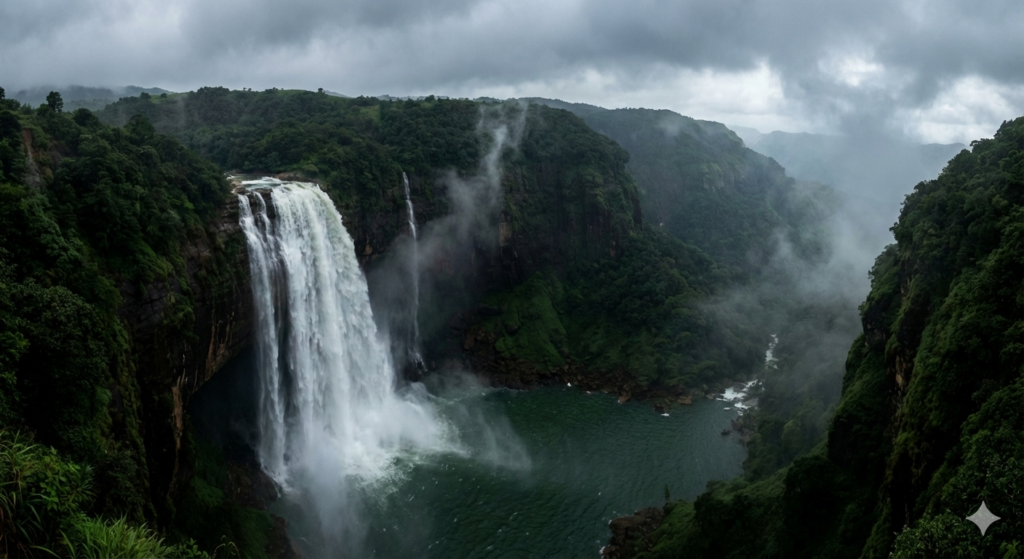
Choosing the cherrapunji best time to visit is ultimately about deciding what kind of experience you want — the raw, dramatic monsoon landscape with its thundering falls and perpetual mist, or the clearer, more comfortable winter window ideal for trekking and photography. Neither is wrong; they are simply different Cherrapunjis.
November to February: Best Season for Comfortable Exploration
For the majority of first-time visitors and trekkers, November through February represents the cherrapunji best time to visit without hesitation. The monsoon has fully retreated, skies clear dramatically, and the cherrapunjee temperature settles into a crisp, invigorating range that makes long treks to living root bridges genuinely enjoyable rather than physically punishing.
Cherrapunjee Temperature (November–February):
- November: 10–18°C, clear skies, manageable chill
- December: 6–15°C, coldest month, foggy mornings
- January: 4–14°C, coldest nights, stunning clear days
- February: 7–17°C, warming gently, excellent visibility
Why This Season Excels:
The living root bridge treks — particularly the famous double-decker root bridge at Nongriat village (3–4 hours return, steep descent and ascent) — are best attempted in these months when trails are dry, footing is secure, and the cherrapunjee temperature is cool enough to make the physical effort comfortable. Waterfalls are still flowing from stored monsoon water, meaning Nohkalikai Falls (India’s tallest plunge waterfall at 340 metres) and Seven Sisters Falls remain spectacular without the dangerous overflow conditions of peak monsoon.
Visibility in winter months allows for the remarkable view from Cherrapunji’s clifftop viewpoints across the Bangladesh plains far below — a panorama that is frequently obscured by clouds during monsoon. Dawan Kyllang Rock, Mawsmai Cave (a fascinating limestone cave system), and the various viewpoints along the Bangladesh border all offer their best visual experiences in clear winter conditions.
December and January are the coldest months with cherrapunjee temperature dropping to 4–6°C at night — carry adequate warm layers, a windproof jacket, and thermal innerwear for early morning excursions. The mist-laden mornings in December have their own poetic beauty, even if visibility is temporarily reduced.
This period also coincides with the best season to visit Shillong, Meghalaya’s capital 54 km away, making a combined Shillong-Cherrapunji itinerary highly practical and rewarding in winter months.
Ideal For: First-time visitors, trekkers, families, photography enthusiasts, couples, those doing root bridge trails.
Cherrapunji Trip Cost (Winter): ₹12,000–20,000 per person for 3N/4D from Guwahati or Shillong; ₹18,000–28,000 from Mumbai including flights.
March to April: Spring — Underrated Sweet Spot
March and April offer an underappreciated window that combines manageable weather with the first hints of Meghalaya’s lush greenery awakening before the monsoon arrives. Cherrapunjee temperature is pleasant, light pre-monsoon showers begin in April adding drama to waterfall views without making trekking impractical, and tourist footfall is noticeably lower than peak winter season.
Cherrapunjee Temperature (March–April):
- March: 12–22°C, warm afternoons, comfortable
- April: 16–24°C, humidity building, occasional showers
What to Expect:
March is arguably one of the most underrated months for a cherrapunji trip — clear enough for good views, warm enough for comfortable trekking, and quiet enough for an unhurried experience at major sites. By April, the first pre-monsoon rains begin arriving, and waterfalls start to swell with renewed energy. The landscape turns a vivid green that intensifies as the season progresses.
This shoulder season also offers lower accommodation rates and easier availability at popular guesthouses and homestays, making it an excellent choice for budget-conscious travelers. The cherrapunji market is most relaxed during these months, and local interactions feel more genuine without the December–January tourist peak.
Ideal For: Budget travelers, repeat visitors, those avoiding peak season crowds, offbeat explorers.
Cherrapunji Trip Cost (Spring): ₹10,000–16,000 per person for 3N/4D — 15–25% lower than peak winter rates.
May to September: Monsoon — The Double-Edged Season
This is where Cherrapunji’s global reputation truly comes alive — and where travel planning requires the most careful thought. Cherrapunji weather in june and the surrounding monsoon months brings rainfall of extraordinary intensity. The town receives the bulk of its annual 11,000+ mm of rainfall during this window, with June and July being particularly ferocious. Understanding cherrapunji weather in june specifically is important because June marks the full onset of the southwest monsoon and the beginning of Cherrapunji’s most dramatic — and most challenging — season.
Cherrapunjee Temperature (May–September):
- May: 18–24°C, pre-monsoon rains intensifying
- June: 16–22°C, full monsoon onset
- July: 16–20°C, heaviest rainfall month
- August: 16–21°C, continuing heavy rain
- September: 16–22°C, rains gradually easing
Cherrapunji Weather in June — What to Realistically Expect:
Cherrapunji weather in june is characterized by near-daily heavy to very heavy rainfall, persistent low cloud cover, reduced visibility at viewpoints, and waterfalls at their absolute most spectacular and powerful. Nohkalikai Falls transforms into a roaring curtain of white water plunging into a turquoise pool below — a genuinely awe-inspiring sight that simply doesn’t exist with the same intensity in any other season. Seven Sisters Falls, Dainthlen Falls, and virtually every stream and crevice in the landscape becomes a waterfall.
However, cherrapunji weather in june also means the Nongriat living root bridge trek becomes genuinely hazardous — wet roots, flooded stream crossings, leeches on the trail, and slippery stone steps demand experienced trekking gear and serious caution. Many local guides advise against the trek in peak monsoon for unprepared visitors. Viewpoints across the Bangladesh plains are frequently — sometimes entirely — obscured by cloud for days at a stretch. Plan with flexibility and realistic expectations.
For those determined to experience Meghalaya in June, our guide to best places to visit in Meghalaya in June provides carefully curated alternatives and monsoon-friendly experiences across the state that complement or substitute a Cherrapunji-focused itinerary.
Who Should Visit in Monsoon:
Photographers seeking waterfall drama, adventure travelers comfortable with wet conditions, and those who find the idea of standing in the clouds at the wettest place on Earth romantically appealing will find the monsoon season deeply rewarding. Repeat visitors who’ve already done the root bridges in winter often return in monsoon purely for the visual spectacle of the landscape at maximum intensity.
Ideal For: Waterfall photographers, adventure seekers, repeat visitors, budget travelers (lowest rates of year).
Cherrapunji Trip Cost (Monsoon): ₹9,000–14,000 per person for 3N/4D — significantly lower accommodation rates offset by slightly higher guide costs for monsoon treks.
October: Post-Monsoon — The Hidden Best Month
October deserves special mention as perhaps Cherrapunji’s most rewarding month for the prepared traveler. The rains are retreating, waterfalls are still flowing at impressive volume from stored monsoon water, the landscape remains brilliantly green, skies begin clearing for good views, and tourist crowds haven’t yet arrived for the winter peak. It combines the visual drama of monsoon with the accessibility of winter — a genuinely special window.
Cherrapunjee Temperature in October: 14–22°C, comfortable and pleasant.
Trekking conditions improve significantly from September, viewpoints begin offering clear panoramas of the Bangladesh plains on good days, and the atmosphere retains the lush, saturated quality of monsoon without the punishing daily downpours. If flexibility allows, targeting late October for a cherrapunji trip offers outstanding value.
Cherrapunjee Temperature: Month-by-Month Breakdown
| Month | Min Temp | Max Temp | Rainfall | Recommendation |
|---|---|---|---|---|
| January | 4°C | 14°C | Very Low | ✅ Excellent |
| February | 7°C | 17°C | Low | ✅ Excellent |
| March | 12°C | 22°C | Low | ✅ Very Good |
| April | 16°C | 24°C | Moderate | ✔️ Good |
| May | 18°C | 24°C | Heavy | ⚠️ Waterfall season |
| June | 16°C | 22°C | Very Heavy | ⚠️ Monsoon drama |
| July | 16°C | 20°C | Heaviest | ❌ Experts only |
| August | 16°C | 21°C | Very Heavy | ❌ Experts only |
| September | 16°C | 22°C | Heavy | ⚠️ Easing |
| October | 14°C | 22°C | Moderate | ✅ Hidden gem |
| November | 10°C | 18°C | Low | ✅ Excellent |
| December | 6°C | 15°C | Very Low | ✅ Very Good |
Cherrapunji Airport & How to Reach
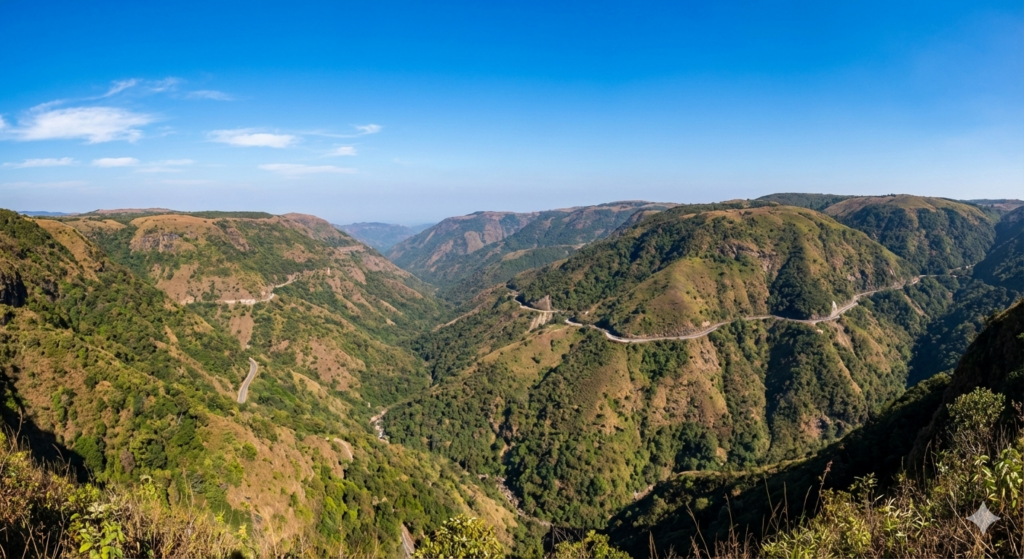
Cherrapunji Airport
There is no dedicated cherrapunji airport — Cherrapunji does not have its own airport, and travelers must fly into Shillong Airport (Umroi Airport), located approximately 85 km from Cherrapunji. Shillong Airport has limited connectivity primarily from Kolkata, with IndiGo and Air India operating select flights. The drive from Shillong Airport to Cherrapunji takes approximately 2–2.5 hours.
The more practical and widely used gateway is Lokpriya Gopinath Bordoloi International Airport in Guwahati, located approximately 185 km from Cherrapunji. Guwahati airport has extensive domestic and international connectivity — flights from Mumbai, Delhi, Kolkata, Bengaluru, and Chennai are frequent. From Guwahati airport, most travelers take a shared or private cab to Shillong (2.5–3 hours, ₹2,000–3,500 private cab) and then onward to Cherrapunji (1.5–2 hours, ₹1,500–2,500).
For Mumbai travelers, Frenzy Holidays offers comprehensive Meghalaya tour packages from Mumbai that handle all transfers, accommodation, and guided experiences seamlessly.
By Road from Shillong
The 54 km drive from Shillong to Cherrapunji via the scenic Shillong-Cherrapunji Road (NH6) takes 1.5–2 hours and is one of Northeast India’s most beautiful drives — passing through rolling Khasi Hills, pine forests, and dramatic valley views. Shared taxis from Shillong’s Police Bazar area depart regularly (₹150–200 per person). Private cabs cost ₹1,500–2,000 one way and allow stops at scenic viewpoints en route.
Cherrapunji Trip: Key Attractions & Experiences
Double-Decker Living Root Bridge (Nongriat): The crown jewel of any cherrapunji trip — a 3,500-step descent into the valley village of Nongriat to see an extraordinary double-tiered living root bridge grown over centuries by the Khasi people. The trek takes 3–4 hours return and is best undertaken November–April. Carry trekking shoes, water, and snacks.
Nohkalikai Falls: India’s tallest plunge waterfall at 340 metres, dropping dramatically into a green pool with the Bangladesh plains as backdrop. Most spectacular June–October; still impressive November–May. Entry ₹20, viewpoint easily accessible by road.
Seven Sisters Falls (Nohsngithiang Falls): Seven distinct streams cascading side by side off a plateau edge — one of Meghalaya’s most photographed sights. Best viewed after rains (June–October); may reduce to trickles in dry winter months.
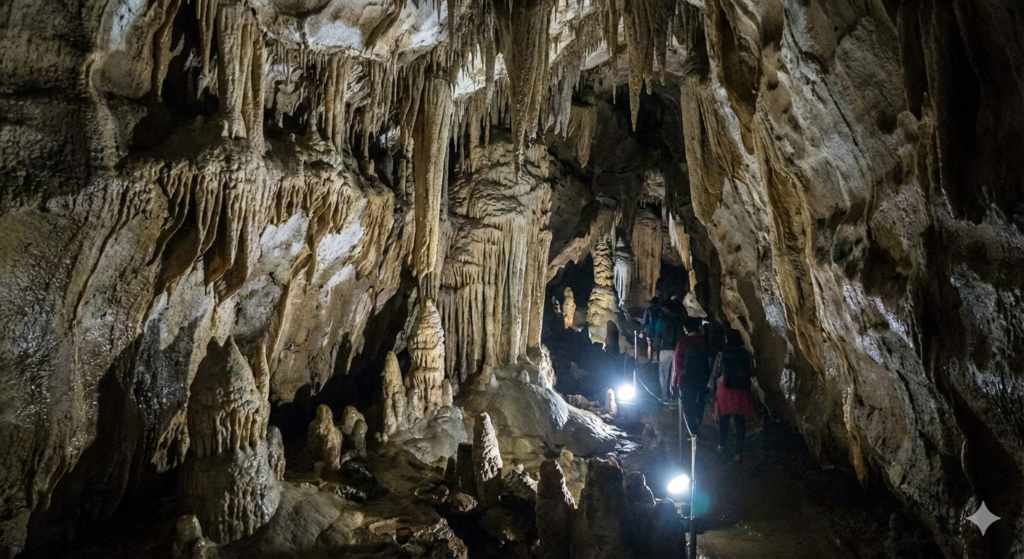
Mawsmai Cave: A 150-metre illuminated limestone cave with impressive stalactite and stalagmite formations — accessible year-round and an excellent wet-day activity. Entry ₹20.
Dawan Kyllang Rock: A massive granite monolith rising 1,000 feet from the valley floor, accessible with a short trek, offering panoramic views best appreciated in clear winter conditions.
Eco Park & Bangladesh Viewpoint: Government-managed park at the cliff edge offering the famous view of the Bangladesh plains stretching to the horizon. Best visibility October–March; frequently cloud-obscured in monsoon.
Beyond Cherrapunji, Meghalaya offers extraordinary depth — from the cleanliness marvel of Mawlynnong to the sacred Nartiang monoliths to the pristine Dawki river. Our guides to offbeat places in Meghalaya, historical places in Meghalaya, and offbeat places to stay in Meghalaya reveal the full breadth of the state beyond the standard tourist circuit.
Best Season to Visit Shillong and Cherrapunji Together
The best season to visit Shillong pairs directly with Cherrapunji planning since most visitors combine both destinations in a single itinerary. October through April represents the best season to visit Shillong for comfortable weather, clear skies over Umiam Lake, pleasant Police Bazar market visits, and comfortable exploration of Ward’s Lake and Don Bosco Museum. December–January brings a festive, almost hill-station-like atmosphere to Shillong that makes it particularly appealing.
A well-structured combined itinerary typically runs 5–6 days — 2 nights in Shillong and 2–3 nights in Cherrapunji — covering both destinations comfortably. Shillong’s café culture, vibrant music scene, and Northeast Indian street food at Police Bazar complement Cherrapunji’s nature-focused experiences perfectly.
Cherrapunji Market & Local Experiences
The cherrapunji market (Sohra Bazar) is a modest but authentic local market where Khasi women in traditional jainsem clothing sell seasonal produce, local honey (Meghalaya’s famous forest honey), dried fish, betel nut, and hand-woven goods. Unlike larger tourist markets, the cherrapunji market operates primarily for local needs and offers a genuine glimpse into Khasi daily life. The best time to visit the cherrapunji market is morning hours (8 AM–12 PM) when it’s most active. Fridays and Saturdays see the most vendors.
Local Khasi cuisine is worth seeking out during a cherrapunji trip — jadoh (rice and pork cooked together with spices), dohneiiong (pork with black sesame), and tungtap (fermented fish chutney) are staples that represent the region’s distinct culinary identity. Several small family-run restaurants near the market serve these dishes at extremely affordable prices (₹80–150 per plate).
Recommended local experiences during a cherrapunji trip:
- Attending a village church service on Sunday (Cherrapunji’s Khasi community is predominantly Christian — a fascinating cultural layer)
- Buying local forest honey directly from villagers near Nongriat
- Sampling tungrymbai (fermented soybean paste) at local eateries
- Witnessing the ancient art of root bridge cultivation at Nongriat village
Cherrapunji Trip Cost: Budget Planning
A realistic cherrapunji trip cost breakdown across budget levels helps set the right expectations.
Budget Traveler (3N/4D from Guwahati):
- Flight to Guwahati: ₹4,000–8,000 (from Mumbai, advance booking)
- Shared cab Guwahati–Shillong–Cherrapunji: ₹600–900 per person
- Budget guesthouse/homestay: ₹800–1,500 per night
- Meals (local dhabas): ₹200–400 per day
- Sightseeing (shared jeep): ₹500–800 total
- Total cherrapunji trip cost: ₹8,000–14,000 per person
Mid-Range Traveler (3N/4D from Guwahati):
- Flight to Guwahati: ₹6,000–12,000
- Private cab transfers: ₹4,000–6,000 total
- Mid-range hotel: ₹2,000–3,500 per night
- Meals + guided trek: ₹800–1,200 per day
- Total cherrapunji trip cost: ₹16,000–24,000 per person
Package from Mumbai (5N/6D Meghalaya):
- Comprehensive packages including flights, accommodation, all transfers, and guided sightseeing: ₹25,000–40,000 per person
- Frenzy Holidays’ Meghalaya tour packages from Mumbai offer well-structured options across budget and comfort levels.
Peak season (November–January) adds 20–30% to accommodation costs. Monsoon season (June–August) offers the lowest rates but highest guide costs for trekking assistance.
Essential Cherrapunji Trip Tips
Footwear is critical: Invest in proper trekking shoes with good grip — the Nongriat root bridge trail involves thousands of wet, mossy stone steps. Slippers and sandals are genuinely dangerous on this route regardless of season.
Layering is essential: Cherrapunjee temperature can swing 10–12°C between afternoon and night even in summer. Always carry a light jacket and a waterproof outer layer regardless of season.
Leeches in monsoon: If visiting May–September, carry salt, tobacco, or a leech repellent sock. Leeches are abundant on forest trails after rain — harmless but disconcerting for the unprepared.
Hire a local guide: For the Nongriat trek and deeper valley trails, a local Khasi guide (₹600–1,000 per day) is invaluable — they know trail conditions, bridge timings, and can communicate with villagers. They also contribute directly to the local economy.
Plastic bags: Many trekkers carry their belongings in plastic bags inside their backpack during monsoon — electronics and dry clothes benefit enormously from this simple protection.
Carry cash: ATMs exist in Shillong but are unreliable in Cherrapunji itself. Carry sufficient cash for accommodation, meals, guides, and entry fees before leaving Shillong.
Conclusion
The cherrapunji best time to visit for most travelers is November through February, when cherrapunjee temperature is crisp and comfortable, the living root bridge trails are safe and accessible, and clear skies reveal Cherrapunji’s extraordinary clifftop views across the Bangladesh plains. October is an outstanding post-monsoon alternative for those wanting lush scenery without full monsoon rainfall. Cherrapunji weather in june and the broader monsoon window (May–September) rewards photographers and adventure seekers with waterfall drama of global scale — but requires realistic expectations and proper preparation. Whether you’re planning a complete cherrapunji trip from Mumbai with a Meghalaya package, exploring the cherrapunji market for local Khasi culture, or combining with the best season to visit Shillong on a broader Northeast itinerary, this destination delivers one of India’s most genuinely unique travel experiences in every season.
Frenzy Holidays ensures a smooth and enriching travel experience from start to finish. Visit us at Haware Centurion, S07/34, Nerul East, Sector 19A, Nerul, Navi Mumbai, Maharashtra 400706. For bookings or more information, call +91 7400453140, email [email protected], or visit www.frenzyholidays.com. Pack up and discover the clouds of Cherrapunji with Frenzy Holidays for an unforgettable Northeast Indian journey.
Cherrapunji Best Time to Visit – FAQs
What is the cherrapunji best time to visit overall?
November to February is the cherrapunji best time to visit for comfortable trekking, clear skies, and accessible living root bridges. Cherrapunjee temperature ranges from 4–18°C — cool, dry, and ideal for outdoor exploration.
What is cherrapunji weather in june like?
Cherrapunji weather in june brings full monsoon onset with very heavy daily rainfall, lush green scenery, and waterfalls at peak drama. Visibility at viewpoints is frequently reduced and trekking becomes challenging — best for waterfall photographers and experienced travelers.
What is the cherrapunjee temperature throughout the year?
Cherrapunjee temperature ranges from 4°C (January nights) to 24°C (May–June afternoons). It’s never truly hot — the high altitude ensures a cool climate year-round, making heavy summer clothing unnecessary even in warmest months.
Is there a cherrapunji airport?
There is no dedicated cherrapunji airport. The nearest airports are Shillong Airport (Umroi, 85 km) with limited connectivity and Guwahati Airport (185 km) with full national connectivity — the recommended arrival point for most cherrapunji trip planners.
What is the cherrapunji trip cost for 3N/4D?
Cherrapunji trip cost ranges from ₹8,000–14,000 per person for budget travel from Guwahati, ₹16,000–24,000 mid-range, and ₹25,000–40,000 for comprehensive Meghalaya packages from Mumbai including flights and all transfers.
What is the best season to visit Shillong and Cherrapunji together?
October to April is the best season to visit Shillong and Cherrapunji together, offering comfortable cherrapunjee temperature, clear weather, and good conditions for both urban Shillong exploration and Cherrapunji’s nature trails.
Can I visit the living root bridge during monsoon?
The Nongriat double-decker root bridge trek is possible during monsoon but significantly more challenging — wet and slippery steps, leeches, and flooded stream crossings make it suitable only for fit, experienced trekkers with proper footwear. November–April is strongly recommended for first-timers.
What should I buy at the cherrapunji market?
The cherrapunji market is ideal for buying local forest honey, dried mushrooms, betel nut, and hand-woven Khasi textiles. Visit in the morning (8 AM–12 PM) on weekdays for the most active market atmosphere.
How many days are needed for a cherrapunji trip?
A minimum of 2 nights in Cherrapunji is recommended to cover the Nongriat root bridge trek, main waterfall viewpoints, and cave visit comfortably. Combined with 2 nights in Shillong, a 5–6 day Meghalaya itinerary covers both destinations well.
What are offbeat experiences near Cherrapunji?
Beyond the main sites, Meghalaya offers extraordinary offbeat experiences — from the cleanliness village of Mawlynnong to ancient stone monoliths at Nartiang. Explore our guides to offbeat places in Meghalaya and offbeat places to stay in Meghalaya for a deeper Meghalaya experience beyond the tourist trail.
