
Best time to visit Spiti Valley for snow is from January to March for heavy spiti snowfall, though June to September offers the safest access. This guide covers current temperature in spiti valley, spiti valley in april transition conditions, spiti valley in summer route planning, and complete travel tips from Manali and Pune.
Spiti Valley, a stark high-altitude cold desert in Himachal Pradesh at 3,800 metres, is one of India’s most extreme landscapes with a narrower safe-access window than most travelers realise. Snowfall in spiti lingers from October through June in many areas, making seasonal timing the single most critical factor in planning your trip.
This guide covers the full seasonal picture including spiti valley in april transition conditions, spiti valley in summer accessibility, current temperature in spiti valley month by month, and spiti snowfall timing for every type of traveler.
Confused where to go for quick escape? Let us plan it for you.
Grab the Best DealTable of Contents
Quick Reference: Spiti Valley Visit Planning
| Season | Months | Temperature | Road Access | Ideal For |
|---|---|---|---|---|
| Deep Winter | Dec–Mar | -15 to 5°C | Manali route closed, Shimla route sometimes open | Snow experience, isolated travel |
| Spring Transition | Apr–May | -5 to 15°C | Roads opening gradually | Offbeat travelers, spiti valley in april |
| Peak Summer | Jun–Sep | 5–25°C | Both routes fully open | First-time visitors, full circuit |
| Autumn | Oct–Nov | -5 to 12°C | Closing by November | Photography, fewer crowds |
Best Time to Visit Spiti Valley for Snow: Seasonal Analysis
Spiti’s seasons are defined not just by temperature and snowfall but by road accessibility, which is the single most important practical factor in Spiti Valley travel planning. The two entry routes — from Manali via Rohtang Pass and Kunzum Pass, and from Shimla via Kinnaur — have very different seasonal windows, and understanding both is essential before fixing your travel dates.
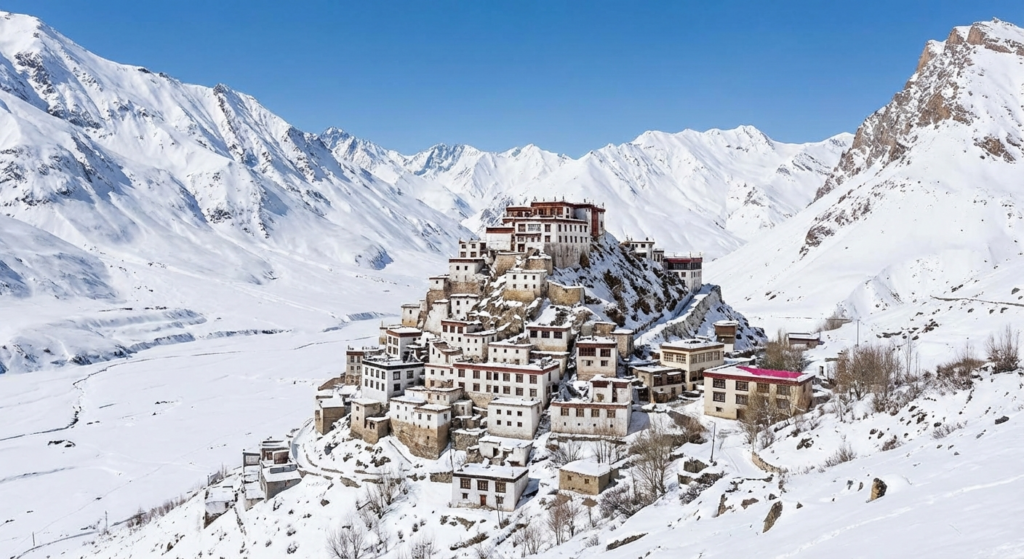
December to March: Peak Snowfall in Spiti — For the Truly Adventurous
December through March delivers the most dramatic snowfall in spiti and represents the period when the valley is at its most visually extraordinary and its most logistically challenging. The Manali route closes completely by October–November with the shutting of Rohtang and Kunzum Passes. The Shimla-Kinnaur route remains technically open but is frequently disrupted by snow and ice, making winter access to Spiti a serious undertaking reserved for experienced high-altitude travelers.
Current Temperature in Spiti Valley (December–March):
- December: -10 to 2°C in valley, -20°C at high passes
- January: -15 to -2°C, coldest month, heavy spiti snowfall
- February: -13 to 0°C, continuing heavy snowfall in spiti
- March: -8 to 5°C, gradual warming, snow still heavy
What the Winter Spiti Snow Experience Delivers:
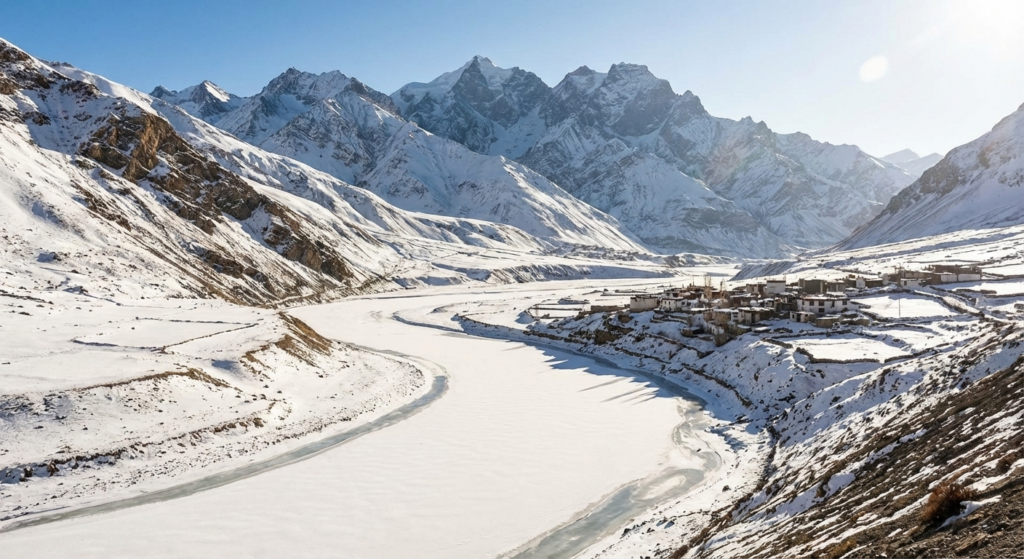
The spiti snowfall in winter transforms an already otherworldly landscape into something that defies easy description. The brown-grey barren mountains that define Spiti’s stark beauty in summer disappear under metres of white, the frozen Spiti River winds silently through the valley floor, and the ancient monasteries of Key and Tabo stand in stark relief against snow-covered ridgelines. Key Monastery at 4,166 metres, perched on its dramatic hilltop, draped in snow against a deep blue winter sky, is one of the most photographically extraordinary sights in India.
The villages of Spiti become largely self-sufficient and deeply quiet in winter, with a handful of homestays in Kaza and Kibber remaining open for the rare winter traveler. Frozen waterfalls, ice formations on the Spiti River cliffs, and the extraordinary clarity of high-altitude winter skies at night (Spiti has among India’s lowest light pollution) create experiences entirely unavailable in the summer tourist season.
The practical requirements for winter Spiti are considerable, however. Current temperature in spiti valley in January and February means night temperatures of -15 to -20°C in Kaza and even colder at higher villages. Proper expedition-grade sleeping bags, layering systems, and cold-weather gear are non-negotiable. Medical preparedness for altitude-related issues at extreme cold is essential. And the knowledge that road closures or weather events could extend your stay by several days means winter Spiti demands both physical fitness and mental flexibility.
Ideal For: Experienced high-altitude travelers, winter photographers, those specifically seeking extreme snowfall in spiti, adventure travelers comfortable with isolation.
Trip Cost (Winter): ₹15,000–25,000 per person for 7 days, with higher guide and logistics costs due to limited infrastructure.
April to May: Spiti Valley in April — The Dramatic Transition
Spiti valley in april is one of the most frequently asked about seasonal windows, and for good reason: it sits at the precise turning point between winter isolation and summer accessibility, creating a travel experience unlike any other month.
Current Temperature in Spiti Valley (April–May):
- April: -5 to 12°C, snow still heavy at higher elevations
- May: 0 to 18°C, significant warming, passes beginning to open
What to Expect in Spiti Valley in April:
Spiti valley in april presents a genuinely split personality. The valley floor around Kaza begins emerging from winter’s grip, with daytime temperatures becoming manageable and the first signs of life returning to the villages. However, the Manali-Spiti route via Kunzum Pass remains firmly closed in April and typically does not open until mid-May to early June depending on the year’s snowfall intensity. The Shimla-Kinnaur route is generally accessible in April with caution, making it the primary entry point for spiti valley in april visitors.
The visual landscape during spiti valley in april is extraordinary: massive snowfields still covering the high ridges contrast with the first tentative green emerging in the valley floor villages, the frozen Spiti River begins cracking and flowing, and the light has a particular clarity and warmth that summer’s dust partially reduces. Spiti valley in april sees very few tourists, meaning homestays are uncrowded, monastery visits are intimate and unhurried, and the entire experience feels like genuine exploration rather than tourism.
The spiti snowfall in april is still very much present above 4,000 metres, meaning treks to high villages like Langza, Hikkim, and Komic involve wading through significant snow. Good waterproof trekking boots and gaiters are essential for spiti valley in april visitors.
Ideal For: Offbeat travelers, photographers, repeat visitors, those seeking Spiti without crowds.
Trip Cost (Spiti Valley in April): ₹12,000–20,000 per person for 7 days.
June to September: Spiti Valley in Summer — Best for First-Time Visitors
Spiti valley in summer is the most accessible, well-serviced, and logistically straightforward period for visiting the valley, and represents the best time to visit spiti valley for most first-time travelers even if the snow experience is reduced compared to winter.
Current Temperature in Spiti Valley (June–September):
- June: 5–22°C, Manali route opening progressively
- July: 8–25°C, peak accessibility, both routes fully open
- August: 8–24°C, occasional brief showers, fully operational
- September: 5–20°C, excellent conditions, crowds thinning
Why Summer Works for Most Travelers:
By July, both the Manali-Spiti route (via Rohtang Pass and Kunzum Pass) and the Shimla-Kinnaur route are fully operational, giving travelers maximum flexibility for one-way circuits that enter via Manali and exit via Shimla (or vice versa). This circular routing is the most popular and rewarding way to experience Spiti and is exclusively possible in the summer window. Our complete guide to how to reach Spiti Valley from Manali covers the Manali route in full detail including road conditions, distances, and key stops, while our resource on how to reach Spiti Valley from Pune helps travelers from Maharashtra and South India plan their approach comprehensively.
The current temperature in spiti valley in summer is ideal for high-altitude trekking, motorcycle touring, and exploration of the valley’s extraordinary monastic heritage. Key Monastery, Tabo Monastery (over 1,000 years old and a UNESCO World Heritage nominee), Dhankar Monastery perched dramatically above the confluence of the Spiti and Pin Rivers, and the Pin Valley National Park are all fully accessible and at their operational best in summer.
The spiti snowfall in summer is confined to the highest passes and peaks, but the visual landscape retains dramatic snow-capped ridgelines above the valley floor that provide a perpetual reminder of the high altitude environment. The Pin Bhaba Pass trek, Chandratal Lake, and the extraordinary lunar landscapes around Langza and Komic all deliver their finest experiences in the summer window.
Ideal For: First-time visitors, families, motorcycle tourers, trekkers, monastery circuit travelers, those combining with Ladakh.
Trip Cost (Summer): ₹10,000–18,000 per person for 7 days, with higher costs in peak July–August.
October to November: Autumn — Last Window Before Winter Closes In
October is a beautiful and underappreciated month in Spiti Valley. Summer crowds have departed, the current temperature in spiti valley drops to a brisk but manageable range, the high-altitude harvest season is underway in valley villages, and the first dusting of spiti snowfall begins appearing on the highest ridges, creating a dramatic colour contrast between golden autumn light and fresh white snow.
Current Temperature in Spiti Valley (October–November):
- October: 0 to 15°C, clear skies, first high-altitude snowfall in spiti
- November: -8 to 5°C, roads closing, serious winter approaching
What to Expect:
October is arguably the best month in Spiti for photography, combining the warmth of summer light with early snowfall in spiti on the high peaks, the harvest activity in Kibber and Langza, and the magnificent post-monsoon clarity of the high-altitude sky. The Manali route typically closes by late October or early November, and the Shimla route sees increasing snow disruption through November. Plan your exit carefully if visiting in October and keep a close eye on weather forecasts and road closure advisories.
By November, Spiti is entering its winter isolation phase and travel is increasingly risky for unprepared visitors. Most guesthouses and tour operators wind down operations by mid-November.
Ideal For: Photographers, experienced Himalayan travelers, harvest season visitors.
Trip Cost (Autumn): ₹11,000–17,000 per person for 7 days.
Snowfall in Spiti: Month-by-Month Breakdown
| Month | Min Temp | Max Temp | Spiti Snowfall | Road Access | Recommendation |
|---|---|---|---|---|---|
| January | -20°C | -2°C | Very Heavy | Manali: Closed, Shimla: Risky | ⚠️ Experts only |
| February | -18°C | 0°C | Very Heavy | Manali: Closed, Shimla: Risky | ⚠️ Experts only |
| March | -12°C | 5°C | Heavy | Manali: Closed, Shimla: Partial | ⚠️ Experienced only |
| April | -5°C | 12°C | Moderate-Heavy | Manali: Closed, Shimla: Open | ✔️ Offbeat travelers |
| May | 0°C | 18°C | Light at high passes | Manali: Opening, Shimla: Open | ✅ Good |
| June | 5°C | 22°C | Passes only | Both routes opening | ✅ Very Good |
| July | 8°C | 25°C | Peaks only | Both routes fully open | ✅ Excellent |
| August | 8°C | 24°C | Peaks only | Both routes fully open | ✅ Excellent |
| September | 5°C | 20°C | High ridges | Both routes open | ✅ Very Good |
| October | 0°C | 15°C | Starting on ridges | Manali: Closing soon | ✅ Good |
| November | -8°C | 5°C | Heavy at altitude | Manali: Closed, Shimla: Risky | ⚠️ Experienced only |
| December | -15°C | 2°C | Very Heavy | Manali: Closed, Shimla: Risky | ⚠️ Experts only |
Key Attractions and Experiences in Spiti Valley
Any visit to Spiti Valley should be built around its extraordinary combination of ancient monastic heritage, extreme high-altitude landscapes, and authentic village life that has remained largely unchanged for centuries.
Key Monastery at 4,166 metres is the largest monastery in Spiti and one of the most dramatically situated Buddhist monasteries anywhere in the Himalayas. The views from Key’s hilltop location across the Spiti River valley are extraordinary in every season but particularly spectacular with winter snowfall in spiti surrounding the ancient structure.
Tabo Monastery, founded in 996 AD, is one of the oldest continuously functioning Buddhist monasteries in the world and houses extraordinary ancient murals and stucco sculptures that justify comparison with the Ajanta caves in their artistic significance. Tabo is accessible year-round via the Shimla-Kinnaur route making it one of the few Spiti attractions that winter and early spring visitors can reliably reach.
Chandratal Lake at 4,250 metres is one of the Himalayas’ most beautiful high-altitude lakes, with its crescent shape and remarkably clear blue water set against snow-capped ridgelines. The lake is accessible July through September and is a highlight of any summer Spiti circuit. Camping by Chandratal overnight is an extraordinary high-altitude experience.
Pin Valley National Park is the only national park in the cold desert zone of the Himalayas and home to the rare snow leopard, Siberian ibex, and Himalayan wolf. Snow leopard sightings are most possible in winter and early spring when prey animals descend to lower elevations.
Langza, Hikkim, and Komic are high-altitude villages above Kaza at 4,400–4,500 metres, famous for marine fossils found in the surrounding hillsides, the Buddha statue at Langza with its panoramic mountain backdrop, and Hikkim’s claim to hosting the world’s highest post office. These villages are best visited July through September via the summer circuit.
For a comprehensive guide to all key attractions across the valley, our detailed resource on places to visit in Spiti Valley covers every major and minor site with planning details. For travelers wanting to go beyond the standard circuit, our guide to offbeat places in Spiti Valley reveals hidden corners and lesser-visited villages that most Spiti itineraries skip.
How to Reach Spiti Valley
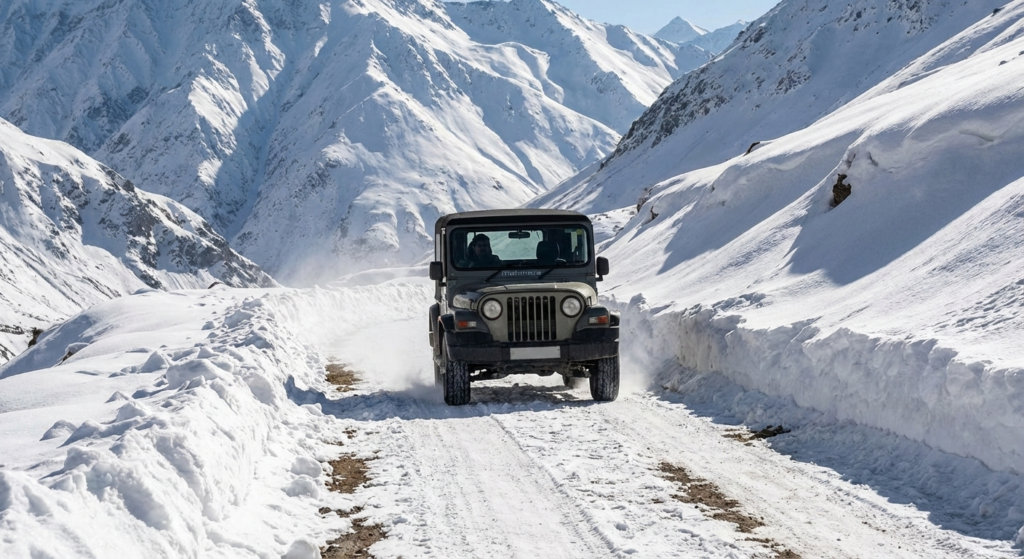
Spiti Valley has two road entry routes, and the best time to visit spiti valley for snow or summer directly determines which route is available to you.
From Manali via Rohtang Pass and Kunzum Pass: The most scenic and popular route, passing through Rohtang Pass (3,978 m), the Lahaul Valley, and Kunzum Pass (4,590 m) before descending into Spiti. This route is typically open from June to October. Manali to Kaza covers approximately 200 km and takes 8–10 hours. Our complete guide to how to reach Spiti Valley from Manali covers every aspect of this route including road conditions, fuel stops, and overnight halt points.
From Shimla via Kinnaur: A longer but lower-altitude route (approximately 412 km, 12–14 hours) that remains partially accessible through most of the year including winter months when the Manali route is firmly closed. This route passes through the dramatic Kinnaur Valley, Sangla Valley, and Nako Lake before entering Spiti at Sumdo. For travelers from Pune and South India, our guide on how to reach Spiti Valley from Pune covers the full journey from Maharashtra including flight connections to Shimla and Chandigarh and onward road travel.
Essential Spiti Valley Travel Tips
Altitude acclimatisation is non-negotiable: Spiti Valley sits at 3,800 metres with many key sites above 4,000 metres. Spend at least one full acclimatisation day in Kaza on arrival before attempting high-altitude treks or village visits. Symptoms of Acute Mountain Sickness including headache, nausea, and breathlessness should be taken seriously.
Inner Line Permit: Foreign nationals require an Inner Line Permit to visit certain restricted areas of Spiti Valley, obtainable at the SDM office in Kaza. Indian nationals do not require a permit.
Cash is essential: There are limited ATMs in Kaza and none in smaller villages. Carry sufficient cash for your entire Spiti stay before entering the valley.
Fuel: Kaza has a petrol pump but fill your tank at every opportunity when travelling the remote Spiti circuit. Distances between fuel points are significant and running out of fuel in Spiti is a serious problem.
Connectivity: Mobile network coverage is limited to BSNL in parts of Spiti. Download offline maps and carry a physical route map. Inform someone of your itinerary before entering the valley.
Medical kit: Carry a comprehensive altitude medicine kit including Diamox (acetazolamide), Dexamethasone, and standard first aid. Consult a doctor before travel for Diamox prescription and dosage guidance.
Conclusion
The best time to visit spiti valley for snow in a dramatic, immersive sense is January through March, when heavy snowfall in spiti blankets the entire landscape and the valley enters its most extraordinary and isolated winter phase. For the vast majority of travelers, however, the best time to visit spiti valley for snow combined with safe access and full circuit capability is June through September, when spiti valley in summer delivers accessible roads, fully operational infrastructure, and the perpetual snow-capped ridgelines that define Spiti’s visual identity year-round. Spiti valley in april offers a compelling middle ground for experienced offbeat travelers seeking snow landscape beauty with emerging accessibility.
Frenzy Holidays ensures a smooth and enriching travel experience from start to finish. Visit us at Haware Centurion, S07/34, Nerul East, Sector 19A, Nerul, Navi Mumbai, Maharashtra 400706. For bookings or more information, call +91 7400453140, email [email protected], or visit www.frenzyholidays.com. Pack up and discover the cold desert magic of Spiti Valley with Frenzy Holidays for an unforgettable Himalayan adventure.
Best Time to Visit Spiti Valley for Snow – FAQs
What is the best time to visit spiti valley for snow?
January to March delivers the heaviest snowfall in spiti, but the Manali route is closed and access is limited to experienced travelers via the Shimla-Kinnaur route. For snow with safe access, October and early November offer the first seasonal snowfall with roads still partially open.
What is spiti valley in april like?
Spiti valley in april sees the valley floor emerging from winter with daytime temperatures of -5 to 12°C, heavy snow still present above 4,000 metres, and the Shimla route open while the Manali route remains closed. It suits experienced, offbeat travelers comfortable with limited facilities.
What is spiti valley in summer like?
Spiti valley in summer (June–September) is the most accessible and tourist-friendly season, with both Manali and Shimla routes open, current temperature in spiti valley ranging from 5–25°C, all monasteries and villages reachable, and full homestay infrastructure operational.
What is the current temperature in spiti valley in winter?
Current temperature in spiti valley in January and February drops to -15 to -20°C at night in Kaza and even colder at higher elevations. Daytime highs barely reach 0°C, making expedition-grade cold weather gear essential for winter visits.
When does snowfall in spiti occur?
Snowfall in spiti occurs from October through May at higher elevations, with the heaviest spiti snowfall falling December through February. The valley floor around Kaza sees significant snow from November through March, while high passes remain snowbound until June.
How do I reach Spiti Valley from Manali?
The Manali route via Rohtang and Kunzum Passes is open June to October and covers approximately 200 km in 8–10 hours. Our detailed guide on how to reach Spiti Valley from Manali covers road conditions, distances, and overnight halt points.
Can I visit Spiti Valley from Pune?
Yes, the most practical route from Pune is to fly to Shimla or Chandigarh and travel onward via the Kinnaur route. Our guide on how to reach Spiti Valley from Pune covers the full journey in detail.
Is Spiti Valley safe in winter?
Winter Spiti is safe for experienced high-altitude travelers with proper gear, medical preparation, and flexibility for weather disruptions. It is not recommended for first-time Spiti visitors, families, or those with limited high-altitude experience.
What are the best offbeat places in Spiti Valley?
Beyond the standard Key-Tabo-Kaza circuit, Spiti has extraordinary offbeat destinations including Dhankar Lake, Tashigang village, Lhalung Monastery, and the Pin Valley villages. Our guide to offbeat places in Spiti Valley covers these in detail.
How many days are required for Spiti Valley?
A minimum of 7 days is needed for a meaningful Spiti experience covering Kaza, Key Monastery, Tabo, and high-altitude villages. Extend to 10–12 days for the full circuit including Pin Valley, Chandratal, and the complete Manali-to-Shimla one-way route.
