
The best time to visit Guruvayur Temple is between October and March, when the weather is cool and pleasant. November and December are especially rewarding as they coincide with the Guruvayur Ekadasi and Mandalam seasons. For a peaceful darshan with minimal crowds, arrive before 4:30 AM on a weekday.
Located in the Thrissur district of Kerala, the Guruvayur Sree Krishna Temple is one of the most sacred Hindu pilgrimage sites in South India. Often referred to as the Dwarka of the South, this ancient temple is dedicated to Lord Guruvayurappan, a four-armed manifestation of Lord Vishnu in his Krishna form. Millions of devotees visit every year for darshan, weddings, Thulabharam offerings, and the grand annual festivals. If you are planning a pilgrimage here, understanding the best time to visit Guruvayur Temple will help you get the most out of your experience, whether you seek spiritual solitude or a festival atmosphere.
Confused where to go for quick escape? Let us plan it for you.
Grab the Best DealTable of Contents
Quick Reference: Guruvayur Temple Visit Planner
Here is a quick overview of key details to help you plan your trip.
| Detail | Information |
|---|---|
| Location | Guruvayur, Thrissur District, Kerala |
| Nearest Railway Station | Guruvayur Railway Station (1 km from temple) |
| Nearest Airport | Cochin International Airport (approx. 80 km) |
| Temple Opening Time | 3:00 AM daily |
| Temple Closing Time | Approx. 10:00 PM |
| Best Time to Visit | October to March |
| Peak Festival Season | Guruvayur Ekadasi (Nov/Dec) and Utsavam (Feb/Mar) |
| Entry Fee | Free |
| Photography | Strictly prohibited inside the temple |
| Non-Hindus | Not permitted inside the inner sanctum |
Best Time to Visit Guruvayur Temple
The best time to visit Guruvayur Temple is from October to March. This period combines comfortable weather, major festivals, and the most spiritually vibrant atmosphere of the year. That said, each season in Guruvayur offers something different, and the right time for your visit depends on what kind of experience you are looking for.
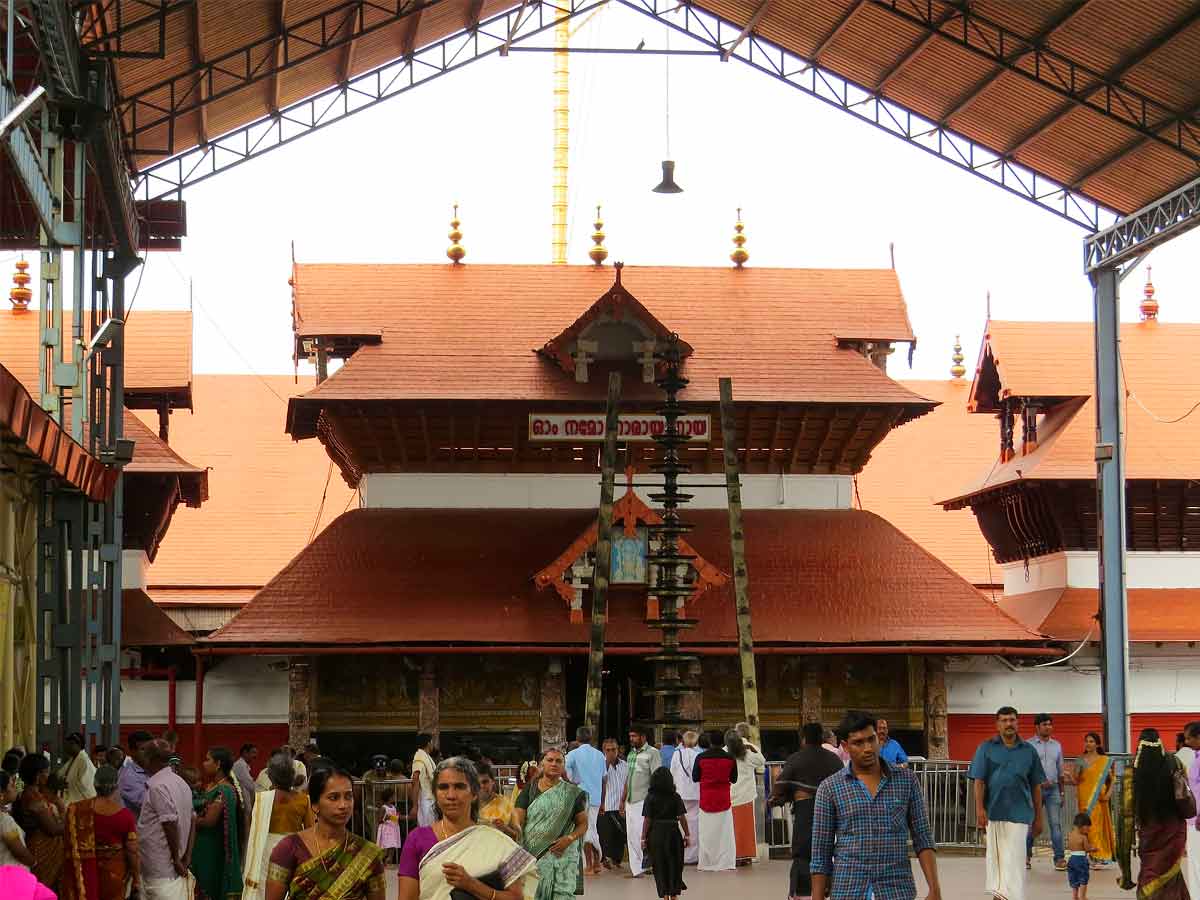
October to February: Peak Season and Festival Window
This is the most popular and recommended period to visit Guruvayur Temple. The Kerala winter brings temperatures between 22°C and 30°C, and the coastal breeze keeps the humidity in check. The conditions are ideal for waiting in darshan queues, participating in rituals, and exploring the temple town on foot.
Two of the most significant events at the temple fall within this window. The Guruvayur Ekadasi, observed in November or December, is among the most auspicious days of the year for Lord Krishna devotees. The temple stays open continuously through the Dasami and Ekadasi days, and the Ekadasi Vilakku, a grand lamp-lighting ritual, attracts lakhs of pilgrims. The Guruvayur Devaswom extends darshan timings by one hour from November 16 to January 19 to accommodate the influx of devotees during the Mandalam-Makaravilakku season.
Mandalam, the 41-day pilgrimage season for Sabarimala, also falls in this period. Many devotees who are on the Sabarimala yatra stop at Guruvayur as well, adding to the devotional atmosphere.
For first-time visitors, October to February is the most rewarding window combining pleasant weather, grand festival experiences, and a fully charged spiritual atmosphere.
February to March: Guruvayur Utsavam
The Guruvayur Utsavam is the temple’s grandest annual festival, lasting 10 days during the Malayalam month of Kumbham (February to March). The festival begins with the hoisting of the temple flag atop the 70-foot Dwajastambham and includes daily elephant processions in the morning, afternoon, and evening. The first day features a celebrated elephant race, and cultural programmes including music, dance, and religious discussions are held at Melpathur Auditorium throughout the festival. The festivities culminate in the Aarattu ceremony on the tenth day.
If witnessing Kerala’s temple festival culture at its grandest is your goal, planning your visit during Utsavam is ideal. Accommodation in Guruvayur fills up quickly during this period, so book well in advance.
March to May: Fewer Crowds, Hot Weather
Summer in Guruvayur runs from March to May with temperatures climbing to 37°C and higher. While this is not the most comfortable season for sightseeing or waiting in queues, the reduced pilgrim footfall makes it a relatively peaceful time for darshan. Accommodation rates also tend to be lower during this period. The Vishu festival in April is celebrated with great enthusiasm at the temple, and thousands of devotees gather to see the Kani (auspicious sight) as the temple doors open at 2:30 AM on Vishu morning.
If you want a quieter darshan experience and do not mind the heat, the summer months offer a practical option.
June to September: Monsoon Season
Kerala’s monsoon arrives in June and lasts through September, bringing heavy rainfall and lush greenery to the Thrissur region. The temple remains open and fully operational, but outdoor movement around the temple complex can be challenging. However, Ashtami Rohini (Janmashtami), the birthday of Lord Krishna, falls during the monsoon in July or August and is celebrated with great devotion at Guruvayur. Devotees offer appam (rice cakes) considered Lord Krishna’s favourite food, and the atmosphere is deeply devotional despite the rains.
The monsoon season also means fewer crowds and a more intimate darshan experience for those who do not mind the rain.
About Guruvayur Temple: History and Significance
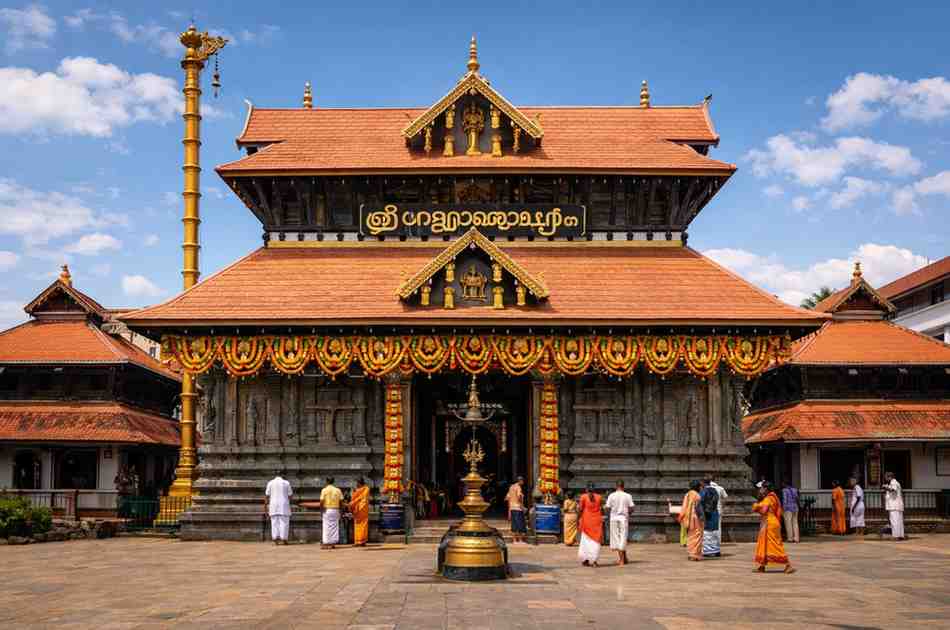
The Guruvayur Sree Krishna Temple is believed to be over 5,000 years old, making it one of the most ancient places of worship in India. According to legend, the sacred idol worshipped here was originally installed by Lord Brahma in Dwaraka. After Dwaraka was submerged in the sea following the passing of Lord Krishna, Guru Brihaspati and Vayu were entrusted with relocating the idol. Guided by sage Parasurama, they consecrated it at the present site in Kerala. The name Guruvayur is derived from Guru (Brihaspati) and Vayu, honouring those who established the shrine.
The presiding deity, Lord Guruvayurappan, is depicted in a standing, four-armed form holding a conch (shankha), discus (chakra), mace (gada), and lotus (padma). The idol is carved from a rare stone called Patala Anjanam and is believed to be the same idol worshipped by Lord Krishna himself in Dwaraka. It is counted among the 108 most divine Vishnu temples in the world.
The temple is built in the classic Kerala style, featuring sloping tiled roofs, intricately carved wooden panels, and a majestic gopuram. The sanctum sanctorum is constructed with laterite stones and adorned with murals depicting episodes from Hindu epics. The temple follows a rigorous ritual system traced to Sri Adi Shankaracharya, with five poojas and three Sreeveli (circumambulatory elephant processions) performed daily.
Guruvayur is also one of the most popular wedding destinations in Kerala. Thousands of couples visit the temple every year to solemnize their marriage in the presence of Lord Guruvayurappan, a tradition that has been followed for centuries.
Daily Pooja and Darshan Schedule
The temple opens at 3:00 AM daily with the Nirmalyam Darshan, considered highly auspicious. During this darshan, devotees see the deity adorned with the flowers and decorations from the previous night. The day then proceeds through a series of rituals including Abhishekam, Usha Pooja, Ethirettu Pooja, Pantheeradi Pooja, and the Seeveli processions where the deity’s Thidambu is carried on an elephant around the temple.
The Ucha Pooja takes place around 11:30 AM, after which the temple closes briefly before reopening for afternoon darshan. The evening Deeparadhana is one of the most visually striking rituals of the day, and the temple closes for the night after the Thrippuka (incense ritual) around 10:00 PM.
On days of Udayasthamana Pooja (full-day worship), there are a total of 21 poojas performed, and the regular darshan schedule is modified significantly. During the November 16 to January 19 extended darshan window, the temple opens at 3:30 PM in the evening and devotees can participate in the Sheeveli procession followed by darshan until the Deeparadhana.
Always verify the current schedule on the official Guruvayur Devaswom website before your visit, especially during festivals and special occasions.
How to Reach Guruvayur Temple
Guruvayur is well connected to the rest of Kerala and India by rail, road, and air.
By Train
Guruvayur Railway Station is just 1 km from the temple and is one of the most convenient access points for pilgrims. The station is connected to major cities in Kerala including Kochi, Thiruvananthapuram, Kozhikode, and also links to Chennai and other cities via the Madurai-Mangalore rail line. Several passenger and express trains serve this route daily.
By Road
Guruvayur is approximately 29 km from Thrissur, 90 km from Kochi, and around 100 km from Kozhikode. State-run KSRTC buses operate frequently from all major Kerala cities to Guruvayur. The local bus stand is located very close to the temple, making it easy to navigate the final stretch. Private taxis and auto-rickshaws are also readily available.
By Air
The nearest airport is Cochin International Airport, approximately 80 km from Guruvayur. From the airport, taxis and buses are available for the onward journey. Calicut International Airport (Kozhikode) is also a feasible option at around 100 km.
Nearby Places to Visit
Punnathur Kotta Elephant Sanctuary: Located just 3 km from the temple, this sanctuary is home to over 50 elephants belonging to the Guruvayur Devaswom. It is one of the largest captive elephant sanctuaries in India and is a must-visit for anyone travelling to Guruvayur. The mahouts and their elephants offer a close and memorable encounter.
Mammiyoor Shiva Temple: Situated adjacent to the Guruvayur Temple complex, Mammiyoor is dedicated to Lord Shiva. It is considered equally sacred and most devotees visit both temples during the same trip.
Parthasarathy Temple: Located close to the main temple, the Parthasarathy Temple is dedicated to Lord Krishna in his form as the charioteer of Arjuna. During the Ekadasi festival, a procession from Guruvayur Temple proceeds to this temple with great ceremony.
Chavakkad Beach: Around 10 km from Guruvayur, Chavakkad is a quiet, uncrowded beach suitable for an evening visit after your temple darshan.
Chettuva Backwater: A peaceful backwater stretch about 16 km from Guruvayur, Chettuva offers boat rides through serene Kerala backwaters and is a good option for a short nature break.
Palayur Church: One of the oldest churches in India, believed to have been established by St. Thomas the Apostle in 52 AD, Palayur is located about 12 km from Guruvayur and adds a fascinating historical dimension to your trip.
Kerala has far more to offer beyond its famous temples and backwaters. If you are planning a broader Kerala trip, explore our guide to coldest places in Kerala for some refreshing hill destinations to pair with your Guruvayur yatra. You can also check out our Kerala group tour packages from Mumbai for a fully planned itinerary covering the best of God’s Own Country.
If you are covering multiple Kerala temples, our guide on the best time to visit Chottanikkara Temple is a useful companion, as Chottanikkara is another deeply revered Devi temple in Kerala that pairs well with a Guruvayur trip.
Essential Tips for Visiting Guruvayur Temple
- The strict dress code is non-negotiable. Men must wear a mundu (white dhoti) without a shirt inside the inner sanctum. Women should wear a saree, set-mundu, or full-length skirt and blouse. Jeans, churidars, shirts for men, and western attire are not permitted.
- Non-Hindus are not allowed inside the inner sanctum of the temple.
- Photography and videography are strictly prohibited inside the temple premises.
- Arrive before 4:30 AM on weekdays for the shortest queues and the most peaceful darshan experience.
- Paid darshan passes that include a ghee lamp offering are available for quicker access through a separate queue.
- Online booking for darshan slots is available through the official Guruvayur Devaswom website.
- Thulabharam (weighing oneself against offerings such as bananas, sugar, or gold) is a popular ritual at the temple and arrangements can be made at the temple office.
- Shoes must be left at designated areas outside the temple. Paid locker facilities are available.
- During Utsavam, Ekadasi, and other major festivals, accommodation in Guruvayur fills up quickly. Book rooms well in advance.
- Prasadam including Thulabharam items and other offerings should be purchased from authorised stalls outside the temple.
Conclusion
Guruvayur Temple is one of those rare pilgrimage destinations where every detail, from the pre-dawn Nirmalyam Darshan to the evening Deeparadhana with its glowing lamps and Sreeveli elephant procession, feels like it was designed to bring the devotee closer to the divine. October to March is the best time to visit Guruvayur Temple for most pilgrims, with the Ekadasi season in November and December and the Utsavam in February and March being the most spiritually and culturally rewarding windows.
Plan your visit well, follow the temple’s guidelines with sincerity, and give yourself at least two days in Guruvayur to fully absorb the spiritual energy of this ancient sacred town.
At Frenzy Holidays, we specialise in pilgrimage and leisure travel across Kerala and South India. Let us plan your Guruvayur yatra from start to finish. Reach out to us at [email protected], call us at 074004 53140, or visit us at Frenzy Holidays, Haware Centurion, S07/34, Nerul East, Sector 19A, Nerul, Navi Mumbai, Maharashtra 400706.
Best Time to Visit Guruvayur Temple FAQs
What is the best time to visit Guruvayur Temple?
October to March is the best time to visit. November and December are particularly auspicious due to the Guruvayur Ekadasi and Mandalam season.
Which festival is the most important at Guruvayur Temple?
The Guruvayur Ekadasi in November or December and the 10-day Utsavam in February or March are the two most significant festivals at the temple.
What time does Guruvayur Temple open?
The temple opens at 3:00 AM daily with the Nirmalyam Darshan. It closes after the night poojas around 10:00 PM.
Can non-Hindus visit Guruvayur Temple?
Non-Hindus are not permitted inside the inner sanctum of the Guruvayur Temple.
What is the dress code at Guruvayur Temple?
Men must wear a mundu (white dhoti) without a shirt inside the inner sanctum. Women should wear a saree, set-mundu, or full-length skirt and blouse. Western attire is not allowed.
How do I reach Guruvayur Temple from Kochi?
Guruvayur is approximately 80 to 90 km from Kochi. You can take a train to Guruvayur Railway Station (1 km from the temple) or hire a taxi for a direct road journey of about 2 hours.
Is there an entry fee at Guruvayur Temple?
No, general darshan is free. Paid passes for quicker access and special pooja bookings are available.
What is Thulabharam at Guruvayur Temple?
Thulabharam is a popular offering ritual where a devotee is weighed against offerings such as bananas, sugar, coconuts, or gold. It is believed to fulfil wishes and is a well-known tradition at Guruvayur.
Is photography allowed at Guruvayur Temple?
No, photography and videography are strictly prohibited inside the temple premises.
How many days are enough for Guruvayur?
Two days are sufficient to cover the temple darshan, Punnathur Kotta Elephant Sanctuary, Mammiyoor Temple, and nearby attractions comfortably.
