
The best time to visit Kavi Kamboi Temple is between November and February, when the weather is pleasant and comfortable for an outdoor coastal visit. For darshan, arrive during low tide, ideally between 2:00 PM and 3:00 PM as a general window, though exact timings shift daily. Purnima and Amavasya days are considered the most spiritually rewarding for witnessing the full submersion phenomenon.
Tucked away in the quiet coastal village of Kavi Kamboi in Gujarat’s Bharuch district, the Stambheshwar Mahadev Temple is unlike any other Shiva temple in India. Situated between the Arabian Sea and the Bay of Cambay (Gulf of Khambhat), this ancient shrine disappears completely into the sea during high tide and re-emerges as the waters recede, twice every day. The ocean itself performs a natural Jal Abhishekam on the 4-foot Shivling, a sight that draws pilgrims and travellers from across the country. Understanding the best time to visit Kavi Kamboi Temple is essential, because here, it is not just the season but the tide that determines whether you get your darshan.
Confused where to go for quick escape? Let us plan it for you.
Grab the Best DealTable of Contents
Quick Reference: Kavi Kamboi Temple Visit Planner
Here is a handy snapshot of everything you need to know before planning your trip.
| Detail | Information |
|---|---|
| Temple Name | Stambheshwar Mahadev Temple |
| Location | Kavi Kamboi village, Jambusar Tehsil, Bharuch District, Gujarat |
| Distance from Vadodara | Approx. 75 to 80 km |
| Distance from Ahmedabad | Approx. 150 to 160 km |
| Nearest Airport | Vadodara International Airport (approx. 81 km) |
| Nearest Railway Station | Vadodara Junction (approx. 80 km) |
| Darshan Timings | During low tide only (varies daily) |
| Best Time of Day | Check tide chart; generally 2:00 PM to 3:00 PM is safe |
| Best Season | November to February |
| Best Days | Purnima and Amavasya |
| Entry Fee | Free |
| Accommodation | Ashram near temple (3.2 km); free lunch available 11:30 AM to 1:30 PM |
Best Time to Visit Kavi Kamboi Temple
Unlike conventional temples with fixed opening hours, the best time to visit Kavi Kamboi Temple is dictated by the tides of the Arabian Sea. The temple submerges during high tide and is accessible only during low tide. Darshan timings shift every single day based on the lunar calendar. Before planning your visit, always check the official temple website at stambheshwarmahadev.com for the exact low tide window on your chosen date.

November to February: Best Season Overall
The winter months between November and February offer the most comfortable conditions for visiting Stambheshwar Mahadev Temple. The weather along the Gujarat coast is pleasant during this period, with cool temperatures and low humidity making the outdoor walk to the temple and the wait on the beach far more enjoyable. This is also the ideal season for a road trip from Vadodara or Ahmedabad, as the highway conditions and general travel comfort are at their best.
For most visitors, November to February is the recommended season, combining comfortable weather with the full experience of watching the tide come in and the temple either emerge from or disappear into the sea.
Shravan Month: Most Auspicious Period
The Hindu month of Shravan (July to August) is the most sacred time for Lord Shiva devotees and sees the highest footfall at Stambheshwar Mahadev Temple. Devotees observe fasts, offer prayers, and undertake the pilgrimage during Shravan as an act of deep devotion. The monsoon rains make the surrounding landscape lush and green, adding a dramatic quality to the coastal setting.
However, the monsoon also brings practical challenges. The roads from Vadodara to Kavi Kamboi can be affected by rains, and the coastal conditions can make the approach to the temple tricky. If you plan to visit during Shravan, monitor weather and road conditions closely and prefer weekday visits to avoid the heaviest crowds.
Maha Shivaratri: Grand Festival Occasion
Maha Shivaratri is celebrated with great enthusiasm at Stambheshwar Mahadev Temple and marks one of the busiest single days of the year at the shrine. The night-long devotional atmosphere, the chanting, and the collective energy of thousands of Shiva devotees gathered at this coastal temple is a truly memorable experience. If your primary goal is the festival experience, Maha Shivaratri is the occasion to plan around, though the crowds will be very large.
Purnima and Amavasya: Best Days for the Phenomenon
Regardless of the season, Purnima (full moon) and Amavasya (new moon) days are considered the most spiritually significant and visually spectacular days to visit Kavi Kamboi Temple. On these lunar days, the tidal range is at its most dramatic, making the submersion and re-emergence of the temple particularly vivid and striking. The flowers placed on the Shivling by devotees during low tide can be seen floating on the surface during high tide, creating a visual that devotees describe as nature’s own offering to Lord Shiva.
March to June: Manageable but Hot
Summer along the Gujarat coast brings rising temperatures, and the open beach approach to the temple can feel harsh in the heat, particularly from April onwards. However, crowds are thinner during this period and the darshan experience is more personal. If you can manage the heat and time your visit to the low tide window, summer visits are perfectly feasible.
Monsoon (July to September): Spiritually Rewarding but Practically Challenging
Beyond Shravan, the broader monsoon period can make coastal travel to Kavi Kamboi difficult. The beach can become waterlogged, the roads from Jambusar onward have patches of uneven surface that worsen in the rains, and the sea conditions can restrict safe access to the temple. Travel during this period only after confirming local conditions.
About Stambheshwar Mahadev Temple: History and Significance

The Stambheshwar Mahadev Temple has a history spanning approximately 150 years in its current form, though the Shivling itself is believed to be thousands of years old. The temple’s name comes from the Sanskrit word Stambh, meaning pillar, as the shrine is built on four pillars that form its main foundation. The word Stambheshwar therefore means Lord of the Pillar, a reference both to the architectural structure and to the mythological significance of the site.
According to legend as described in the Skanda Purana, Lord Kartikeya, the son of Lord Shiva and Goddess Parvati, was born with the divine purpose of slaying the demon Tarakasura, who had conquered all three worlds and oppressed both humans and gods. After killing Tarakasura, Kartikeya felt deep remorse, for the demon was also a devoted worshipper of Lord Shiva. On the advice of Lord Vishnu, Kartikeya installed Shivlings at three sacred sites to atone for this act. Stambheshwar Mahadev in Kavi Kamboi is believed to be one of these three consecrated Shivlings, making it one of the most mythologically significant Shiva shrines in India.
The natural phenomenon of the temple’s twice-daily submersion is understood by devotees as the sea performing Jal Abhishekam on the Shivling, an act of divine reverence by nature itself toward Lord Shiva. The pinnacle added to the temple structure in recent years remains the only visible part during high tide, serving as a marker of where the sacred site lies beneath the waters.
Understanding the Tides: The Most Important Factor
Planning a visit to Kavi Kamboi Temple requires one essential step that no other temple visit demands: checking the tide chart. The temple has no fixed daily darshan timings. Access is granted only during low tide hours, which shift every day following the lunar cycle.
As a general reference, the window between 2:00 PM and 3:00 PM is often cited as a safe time to visit, as high tide typically begins after this hour on many days. However, this is not a fixed rule and varies significantly across the month. On some days, low tide occurs in the morning, and on others, it falls in the late afternoon or evening.
The temple administration publishes tide timings on the official website stambheshwarmahadev.com. It is strongly recommended to check these timings at least a day before your visit and plan your travel accordingly. Arriving too early or too late can mean waiting on the beach or missing darshan entirely.
On Purnima and Amavasya, the tidal range is at its strongest, and the spectacle of the temple submerging is most dramatic. However, crowds on these days are also at their peak.
How to Reach Kavi Kamboi Temple
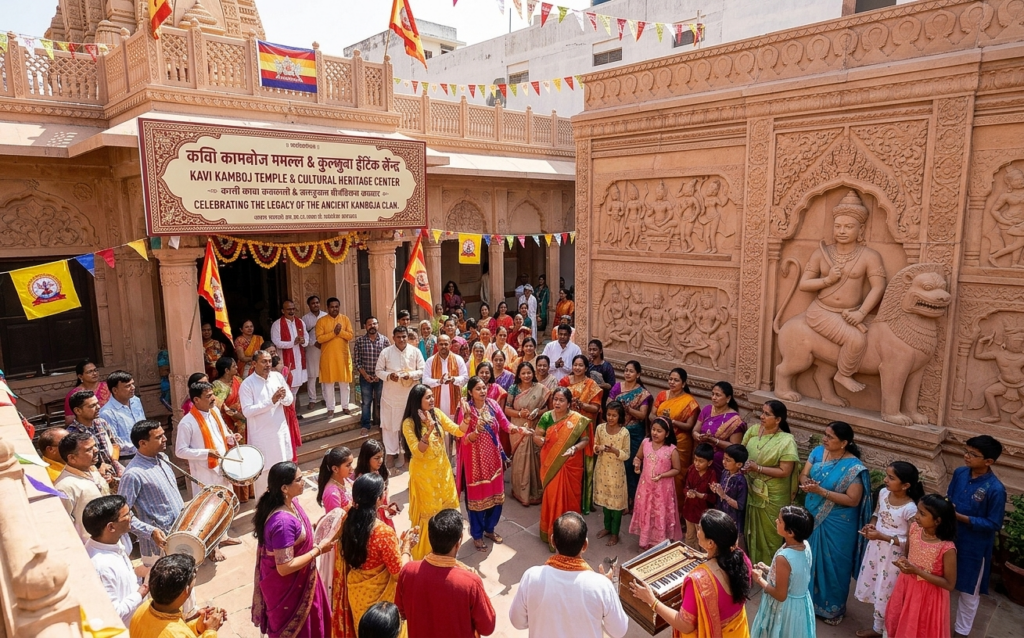
Kavi Kamboi is a small coastal village with limited public transport options. The journey requires advance planning, particularly for the last stretch from Jambusar where roads can be narrow and uneven. Vadodara is the most practical base for most visitors, with private taxis being the easiest way to reach the temple.
How to Reach Kavi Kamboi Temple by Road
Vadodara is the most convenient base for visiting Stambheshwar Mahadev Temple, located approximately 75 to 80 km away. From Vadodara, the route runs via NH48 to Padra, then via SH6 to Jambusar, and onward to Kavi Kamboi. The highway stretch to Jambusar is smooth, but the road within Jambusar town and some sections from Jambusar to Kavi Kamboi are narrow and uneven. Private taxis from Vadodara are the most practical option. From Ahmedabad, the temple is approximately 150 to 160 km away. Bharuch is another feasible base at approximately 80 km from the temple.
How to Reach Kavi Kamboi Temple by Train
Vadodara Junction is the most convenient railhead, well connected to Mumbai, Ahmedabad, Delhi, Surat, and other major cities. From Vadodara station, hire a private taxi or cab for the onward journey to Kavi Kamboi.
How to Reach Kavi Kamboi Temple by Air
Vadodara International Airport is the nearest airport, approximately 81 km from the temple. It has flight connections from Mumbai, Delhi, Bangalore, and Hyderabad. From the airport, a taxi or cab to Kavi Kamboi takes approximately 2 to 2.5 hours.
Nearby Places to Visit
Kavi Kamboi sits in a region rich with history, spirituality, and natural beauty. While the submerging temple is the main draw, the surrounding area offers several worthwhile stops worth adding to your itinerary.
Jambusar: The nearest town to Kavi Kamboi, Jambusar is a convenient stopover for fuel, food, and basic supplies before the final stretch to the temple.
Bharuch (Broach): One of the oldest cities in India, Bharuch sits on the banks of the Narmada River and offers several historical and religious sites including the Bharuch Fort and the Sukan Tirth Jain Temple. It is approximately 45 to 50 km from Kavi Kamboi.
Vadodara: Gujarat’s second-largest city and the ideal base for a Kavi Kamboi trip, Vadodara has a rich heritage including the Lakshmi Vilas Palace, Sayaji Baug, and several museums.
Nishkalank Mahadev Temple, Bhavnagar: Another of the three Shivling temples installed by Lord Kartikeya, Nishkalank Mahadev near Bhavnagar is also a submerging coastal Shiva temple and an excellent companion destination for those on the Stambheshwar yatra.
Champaner-Pavagadh: A UNESCO World Heritage Site approximately 60 km from Vadodara, Champaner offers spectacular Islamic and Hindu architecture alongside a hilltop pilgrimage to the Kalika Mata Temple.
Planning a broader Gujarat trip around your Kavi Kamboi yatra? Our guide on the best time to visit Gujarat covers the state’s seasons, festivals, and travel windows in detail. If you enjoy offbeat spiritual destinations, do not miss our collection of hidden places in Gujarat for more lesser-known gems worth exploring.
For those extending their pilgrimage to the Saurashtra coast, our guides on Somnath and when to plan your 2026 Jyotirlinga pilgrimage and places to visit in Somnath and Dwarka offer a complete picture of Gujarat’s sacred coastline.
Essential Tips for Visiting Kavi Kamboi Temple
- Always check the tide timings on the official temple website before your visit. Darshan is only possible during low tide.
- Start from Vadodara early enough to reach Kavi Kamboi well before the low tide window closes on your chosen day.
- Carry your own food and water. While the Ashram near the temple provides free vegetarian lunch between 11:30 AM and 1:30 PM, options at the site are limited to small tea and snack stalls.
- Parking is free and available near the stalls by the beach.
- The beach water is muddy and not suitable for swimming. Exercise caution near the shoreline, especially as the tide begins to come in.
- Wear modest clothing and footwear that can handle wet sand and occasional water on the approach path.
- Accommodation is available at the Shree Stambheshwar Mahadev Tirth Dharmshala, 3.2 km from the temple, offering basic non-AC rooms at affordable rates. Vadodara is a better option for more comfortable stays.
- Mobile connectivity can be limited in Kavi Kamboi village. Download the tide chart and offline maps before setting out.
- Plan to arrive at least 30 to 45 minutes before the expected low tide to allow time for the walk from the parking area to the temple.
- On Purnima, Amavasya, Maha Shivaratri, and Shravan Mondays, expect significantly larger crowds and plan accordingly.
Conclusion
Stambheshwar Mahadev Temple at Kavi Kamboi is one of those rare places where nature and devotion come together in a way that no guidebook can fully prepare you for. Watching the sea slowly swallow the temple and then give it back is an experience that stays with you, whether you are a devout Shiva bhakt or a curious traveller drawn by the extraordinary.
November to February is the best time to visit Kavi Kamboi Temple for comfortable weather, but the tide will always be the final word on when your darshan actually happens. Plan around the tides, carry the essentials, and give yourself the time to simply sit on the beach and watch the sea perform its daily ritual.

At Frenzy Holidays, we help you plan pilgrimage and travel experiences across Gujarat and beyond. Reach out to us at [email protected], call us at 074004 53140, or visit us at Frenzy Holidays, Haware Centurion, S07/34, Nerul East, Sector 19A, Nerul, Navi Mumbai, Maharashtra 400706, and we will take care of all the planning for your yatra.
Best Time to Visit Kavi Kamboi Temple FAQs
What is the best time to visit Kavi Kamboi Temple?
November to February is the best season for a comfortable visit. For darshan, you must arrive during low tide, which changes daily. Check the official tide chart at stambheshwarmahadev.com before your trip.
What are the darshan timings at Stambheshwar Mahadev Temple?
There are no fixed darshan timings. The temple is accessible only during low tide. As a general reference, between 2:00 PM and 3:00 PM is often a safe window, but this varies every day with the lunar cycle.
Why does Kavi Kamboi Temple disappear into the sea?
The temple is located a few metres from the shoreline of the Arabian Sea. During high tide, the sea level rises and submerges the temple completely. As the tide recedes, the temple re-emerges, revealing the 4-foot Shivling inside.
Which days are best to visit Kavi Kamboi Temple?
Purnima (full moon) and Amavasya (new moon) are the most spiritually significant and visually dramatic days to visit, as the tidal range is at its strongest on these days.
How far is Kavi Kamboi Temple from Vadodara?
The temple is approximately 75 to 80 km from Vadodara, taking around 2 to 2.5 hours by road.
Is there accommodation near Kavi Kamboi Temple?
The Shree Stambheshwar Mahadev Tirth Dharmshala, 3.2 km from the temple, offers basic non-AC rooms. Free vegetarian lunch is also available at the Ashram near the temple between 11:30 AM and 1:30 PM.
Is entry to Kavi Kamboi Temple free?
Yes, entry to the temple is completely free. There are no ticket charges.
What is the significance of Stambheshwar Mahadev Temple?
The temple is believed to be one of three sites where Lord Kartikeya installed a Shivling to atone for slaying the demon Tarakasura. It is also mentioned in the Skanda Purana and is considered one of the most sacred Shiva shrines in Gujarat.
Can I visit Kavi Kamboi Temple during monsoon?
The temple remains accessible during monsoon low tides, and the Shravan month is spiritually very significant. However, road conditions and coastal weather can be challenging. Check conditions before travelling.
What should I carry when visiting Kavi Kamboi Temple?
Carry food, drinking water, modest clothing, comfortable footwear, and cash. Download offline maps and the tide chart before leaving, as connectivity in the village is limited.
