
The offbeat places near Gangtok include Zuluk, Aritar, Lingtam, Temi Tea Garden, Ralang Monastery, and the remote villages of the Old Silk Route corridor. These destinations sit within a few hours of the Sikkim capital and offer a quieter, more intimate Himalayan experience far removed from the tourist crowds at Tsomgo and Nathu La.
Gangtok is a wonderful base, but Sikkim’s real depth lies beyond the city’s well-worn day trip routes. The state is home to some of the most spectacular and least-visited landscapes in the Indian Himalayas, from ancient trade routes along the Zuluk zigzag to tea estates rolling across South Sikkim’s hillsides and remote Buddhist monasteries perched above valleys that most travellers never reach. If you have already covered the main attractions or simply prefer roads less travelled, the offbeat places near Gangtok offer experiences that are genuinely memorable and increasingly sought after by discerning travellers from across India. This guide covers the finest such destinations within a comfortable drive of the Sikkim capital.
Confused where to go for quick escape? Let us plan it for you.
Grab the Best DealTable of Contents
Quick Reference: Offbeat Places Near Gangtok
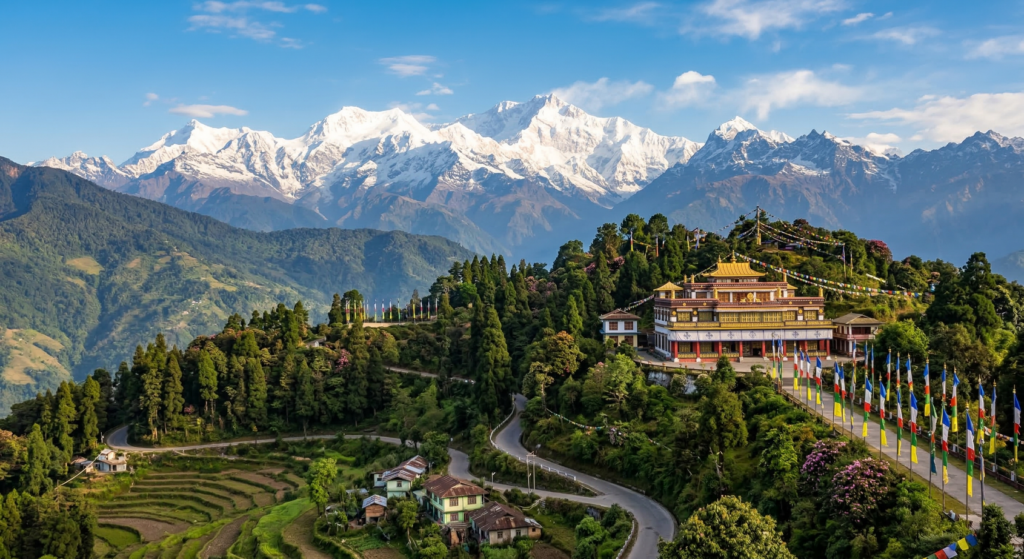
Planning to venture beyond the usual Gangtok circuit? Here is a handy snapshot of the top offbeat destinations near Gangtok, their distances, and what makes each one worth the journey.
| Destination | Distance from Gangtok | Best For | Permit Required |
|---|---|---|---|
| Zuluk | Approx. 92 km | Old Silk Route, zigzag road, views | Inner Line Permit |
| Aritar | Approx. 55 km | Lake, forest, peaceful retreat | No |
| Temi Tea Garden | Approx. 78 km | Tea estate walks, South Sikkim scenery | No |
| Ralang Monastery | Approx. 85 km | Monasteries, Kanchenjunga views | No |
| Lingtam | Approx. 100 km | Remote village, Silk Route heritage | Inner Line Permit |
| Kupup | Approx. 50 km | High altitude lake, Elephant Lake | Protected Area Permit |
| Pangolakha Wildlife Sanctuary | Approx. 95 km | Red Panda, high altitude wildlife | Inner Line Permit |
| Dzongu | Approx. 85 km | Lepcha tribal villages, cardamom forests | Restricted Area Permit |
Offbeat Places Near Gangtok
The following destinations represent the finest offbeat places near Gangtok across East, South, and North Sikkim, covering a range of landscapes, experiences, and difficulty levels for different kinds of travellers.
Zuluk: The Old Silk Route and the Zigzag Road
Zuluk is the crown jewel among all offbeat places near Gangtok and one of the most extraordinary mountain destinations in Northeast India. Situated at approximately 10,000 feet in East Sikkim, Zuluk was a key transit point on the ancient Silk Route trade corridor between India and Tibet and retains a frontier remoteness that is palpable the moment you arrive.
The approach to Zuluk is itself one of the great drives in India. The road winds through the famous 32 hairpin bends of the Zuluk zigzag, a sequence of switchbacks rising sharply through rhododendron and bamboo forest that is one of the most photographed mountain road sections in the Eastern Himalayas. The views from the upper bends, particularly at dawn when the fog lies in the valley below and the Kanchenjunga range glows in the first light, are extraordinary.
The drive from Zuluk continues to Thambi View Point and Lungthung, both offering some of the finest panoramic Himalayan views accessible from any road in Sikkim. On a clear day the view stretches from Kanchenjunga across the entire Sikkim Himalaya to peaks beyond the Tibetan border. An Inner Line Permit is required for Zuluk and must be arranged through a registered Gangtok tour operator.
Aritar: Sikkim’s Forgotten Lake Village
Aritar (also known as Aritar Gaon or Lampokhari) is a small and deeply peaceful village in East Sikkim, approximately 55 km from Gangtok, built around the pristine Lampokhari Lake. One of the few natural lakes in East Sikkim, Lampokhari is fringed by dense rhododendron and oak forest and offers boating, lakeside walks, and a complete absence of tourist infrastructure that makes it one of the most genuinely offbeat stops near Gangtok.
The village is also home to the Aritar Monastery, a quiet and ancient Buddhist gompa overlooking the lake that receives very few visitors. The entire area has a settled, unhurried quality that is unusual in Sikkim’s more visited parts, and it is ideal for travellers seeking a quiet retreat rather than a checklist of sights.
Accommodation in Aritar is limited to simple homestays, which add to the authenticity of the experience. No permit is required for Indian nationals.
Temi Tea Garden: South Sikkim’s Green Slopes
Temi Tea Garden, approximately 78 km from Gangtok in South Sikkim near the town of Temi, is the only commercial tea estate in Sikkim and one of the most scenic in India. Set on rolling hillsides at approximately 1,500 metres with views of the Kanchenjunga range on clear days, the estate produces a small-batch, high-quality organic tea that is exported internationally and considered among the finest teas grown anywhere in Northeast India.
Walks through the estate in the early morning, with mist drifting across the rows of tea bushes and the Himalayan peaks appearing above the clouds, are a genuinely beautiful experience. The estate guesthouse is available for overnight stays, making Temi a perfect quiet overnight stop on a South Sikkim circuit from Gangtok.
The broader South Sikkim region around Temi and Ravangla has a rich cultural and heritage landscape. Our guide to historical places in Sikkim covers the state’s most significant heritage sites in detail, several of which are accessible from the South Sikkim circuit.
Ralang Monastery: Palyul Retreat in the Forests
Ralang Monastery (Palchen Chholing), approximately 85 km from Gangtok near the town of Ravangla in South Sikkim, is one of the most important Nyingma school monasteries in Sikkim and far less visited than the more famous Rumtek. The monastery is set within thick forest above the Rangit river valley and houses a large community of monks, a monastic school, and an impressive main temple with murals and sculptures of outstanding quality.
The area around Ralang is excellent for forest walks and bird watching, and the combination of the monastery, the nearby Buddha Park in Ravangla, and the Temi Tea Garden makes for one of the finest single-day South Sikkim circuits accessible from Gangtok.
Kupup: The Elephant Lake and High Altitude Solitude
Kupup (also called Elephant Lake due to its distinctive shape), approximately 50 km from Gangtok at an altitude of approximately 4,000 metres, is one of the most accessible high-altitude lakes in East Sikkim and a natural add-on to the Tsomgo-Nathu La day trip for travellers who want to venture further. The lake sits in an open alpine bowl with views across the surrounding high-altitude grasslands and is a significant wintering ground for migratory birds including the Bar-headed Goose.
The area around Kupup is also historically significant as the site of the Bir Tibetan Settlement and the Kala Patthar viewpoint which offers commanding views across the border landscape. A Protected Area Permit is required, obtainable through registered Gangtok operators alongside the Tsomgo permit.
Dzongu: The Last Lepcha Reserve
Dzongu in North Sikkim, approximately 85 km from Gangtok, is the homeland of the Lepcha people, Sikkim’s indigenous community, and one of the most restricted and culturally preserved areas in the entire state. The Lepcha are among the oldest inhabitants of the Eastern Himalayas, and their traditions, language, and forest-based way of life are maintained with particular care in Dzongu.
The landscape of Dzongu is extraordinary, a near-vertical world of deep river gorges, cardamom forests, hanging bridges, and ancient Lepcha villages accessible only on foot. A Restricted Area Permit specific to Dzongu is required for all visitors and must be arranged well in advance through a registered operator. Dzongu is not for the casual day tripper but for those with a genuine interest in indigenous culture and off-grid Himalayan travel.
Lingtam: Village at the Edge of the Silk Route
Lingtam, approximately 100 km from Gangtok on the Old Silk Route corridor near Zuluk, is one of the most remote and least visited villages on the entire route. The village sits at a high elevation with sweeping views of the Sikkim Himalaya and retains a traditional character largely unchanged by modern tourism. The surrounding area includes ancient chortens, mani walls, and prayer flags that mark the old trade route between Gangtok and the Nathu La pass.
Lingtam is best visited as part of a two or three day Old Silk Route circuit that includes Zuluk, Thambi View Point, Nathang Valley, and Kupup. The combination makes for one of the most rewarding multi-day offbeat itineraries in the Eastern Himalayas.
Why Explore Offbeat Places Near Gangtok
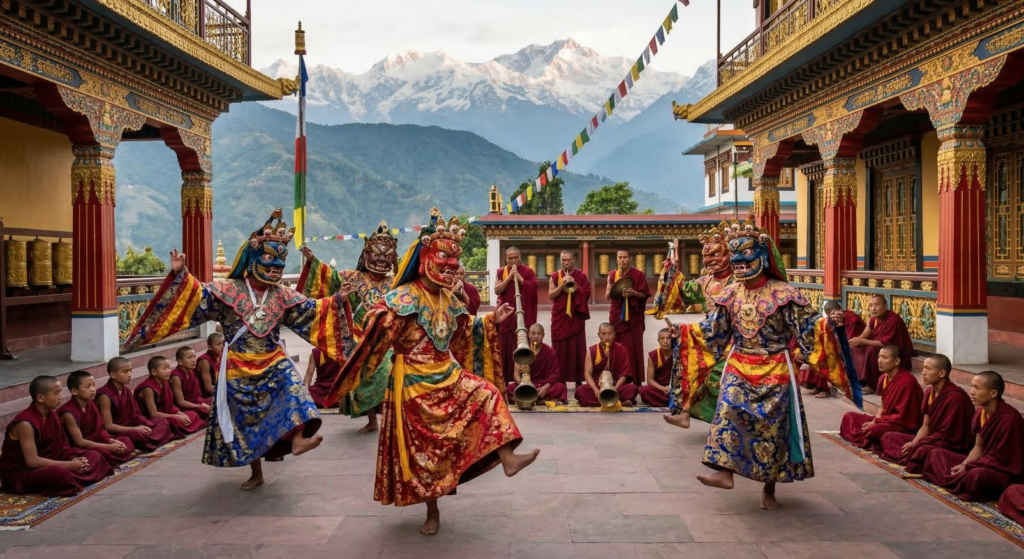
The main tourist circuit around Gangtok is well-developed and justifiably popular, but it covers only a small fraction of what Sikkim has to offer. The state’s diverse ecology, ranging from subtropical river valleys to high arctic alpine zones within a few hours of vertical climb, supports extraordinary biodiversity and an equally diverse range of cultural communities including Lepcha, Bhutia, Nepali, and Tibetan communities each with distinct traditions and heritage.
For travellers who have already covered the best tourist places in Gangtok, including Tsomgo, Nathu La, Rumtek, and MG Marg, our comprehensive guide on best tourist places in Gangtok covers those highlights in full. The offbeat circuit described in this guide is the natural next step for those ready to go deeper into one of India’s most remarkable states.
Gangtok also serves as the gateway to a broader Himalayan travel circuit across Sikkim, Darjeeling, and the Northeast. Our guide on the best time to visit the Himalayas covers the full seasonal picture across the Himalayan region and helps you plan the right timing for any Sikkim offbeat itinerary.
How to Reach Gangtok?
All offbeat destinations near Gangtok are accessed by road from the city. Gangtok itself is reached through Bagdogra Airport or New Jalpaiguri (NJP) Railway Station in West Bengal.
How to Reach Gangtok by Air?
Bagdogra Airport near Siliguri, approximately 125 km from Gangtok, has regular flights from Kolkata, Delhi, Mumbai, and Bengaluru. From the airport, private taxis and shared cabs run directly to Gangtok in approximately 4 to 5 hours. Helicopter services by Pawan Hans also operate on select days between Bagdogra and Gangtok.
How to Reach Gangtok by Train?
New Jalpaiguri (NJP) Railway Station in Siliguri, approximately 120 km from Gangtok, is the nearest major railhead. Trains connect NJP to Kolkata, Delhi, and other major cities. From NJP, private and shared taxis run to Gangtok in approximately 4 hours along the scenic NH10 Teesta valley route.
How to Reach Gangtok by Road?
Gangtok is approximately 114 km from Siliguri via NH10, a drive of 3.5 to 4.5 hours through the Teesta river gorge. Shared jeep services operate from Siliguri’s SNT stand to Gangtok regularly. For Delhi-based travellers planning a broader Sikkim trip, our guide on Sikkim tour packages from Delhi covers the best itinerary and transport options from the capital.
Nearby Places to Visit
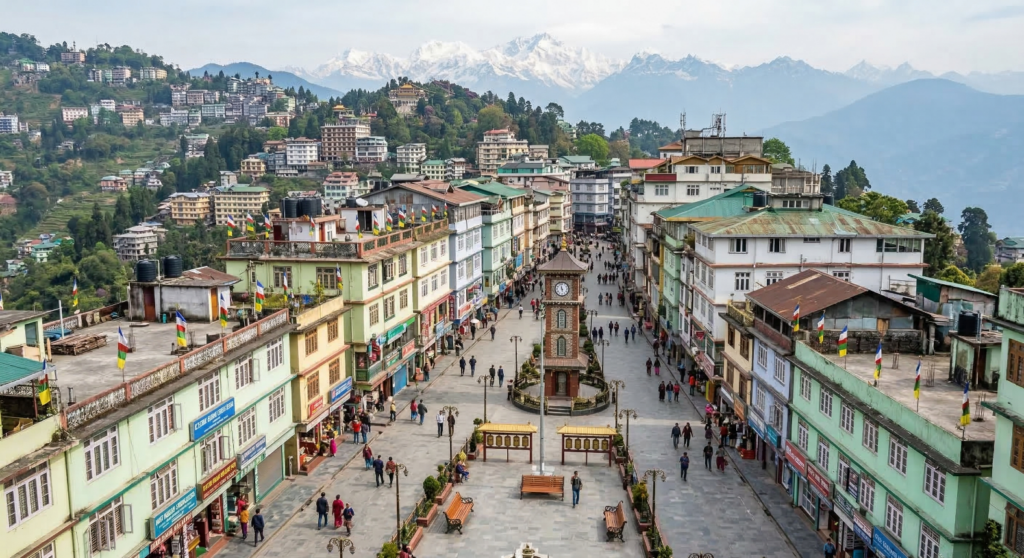
The offbeat Gangtok circuit connects naturally with several well-known and lesser-known destinations across Sikkim and the broader Northeast.
- Nathang Valley: Approximately 105 km from Gangtok on the Old Silk Route, Nathang is a high-altitude grassland at approximately 13,500 feet and one of the most dramatic overnight camping spots in East Sikkim. The valley is carpeted in wildflowers from June to August and covered in snow from December to March.
- Ravangla Buddha Park: The 130-foot Shakyamuni Buddha statue at Ravangla in South Sikkim is one of the most impressive religious monuments in the Eastern Himalayas. The park is serene, well-maintained, and offers commanding views of the Kanchenjunga range on clear mornings.
- Pelling: Approximately 115 km from Gangtok in West Sikkim, Pelling is known for the Pemayangtse Monastery, the Rabdentse ruins, the Skywalk, and the finest ground-level views of Kanchenjunga available from any populated area in Sikkim.
- Yuksom: The first capital of Sikkim and the starting point of the Goecha La trek, Yuksom in West Sikkim is one of the state’s most historically and trekking-significant villages. The Dubdi Monastery here is the oldest in Sikkim.
- Singtam and Rangpo: The small towns on the Teesta river at the base of the Gangtok hill are useful overnight stops for budget travellers and offer a quieter, more everyday Sikkimese experience away from the tourist circuit.
Essential Tips for Visiting Offbeat Places Near Gangtok
Offbeat Sikkim travel requires more careful planning than the standard tourist circuit. The following tips cover the most important practical considerations for exploring the offbeat places near Gangtok safely and responsibly.
- Permits are essential for most offbeat destinations. Inner Line Permits for the Old Silk Route and Zuluk, Protected Area Permits for Kupup, and Restricted Area Permits for Dzongu must all be arranged through registered Gangtok tour operators. Allow at least one to two days for permit processing and carry multiple copies at all times.
- Hire a local guide and driver for offbeat circuits. Roads to Zuluk, Lingtam, and Dzongu are narrow, steep, and require familiarity. A local driver who knows the routes and checkpoints is essential for smooth travel.
- Accommodation is extremely limited at most offbeat destinations. Homestays and basic government guesthouses are the primary options in Zuluk, Aritar, and Dzongu. Book well in advance and confirm availability before setting out.
- Carry sufficient cash from Gangtok. ATMs are unavailable at all offbeat destinations in this guide. Withdraw enough for your entire circuit before leaving the city.
- Mobile connectivity drops off sharply beyond Gangtok on the Old Silk Route and in North Sikkim. BSNL has the widest coverage. Download offline maps and share your itinerary with someone before departing.
- The Old Silk Route circuit including Zuluk, Thambi View Point, Nathang, and Kupup is best done as a two-night trip with overnight stays at Zuluk and Nathang for the full sunrise and sunset experience on the high passes.
- Weather can change rapidly at high-altitude offbeat destinations. Always carry a warm jacket, rain gear, and an extra layer regardless of the forecast at Gangtok’s lower elevation.
- Respect local communities and cultural sites at all offbeat destinations. In Dzongu particularly, follow your guide’s advice strictly on community interactions, photography, and access to restricted areas within the Lepcha reserve.
- The best overall season for offbeat Gangtok circuits is October to December and March to May, when roads are clear, skies are sharp, and the high-altitude landscapes are at their most accessible and photogenic.
Conclusion
Sikkim rewards those who venture beyond the standard circuit with some of the most extraordinary and least-crowded Himalayan experiences available anywhere in India. From the jaw-dropping zigzag road to Zuluk and the misty serenity of Aritar’s lake to the living tribal culture of Dzongu and the rolling tea estates of Temi, the offbeat places near Gangtok offer a depth and authenticity that transforms a good Sikkim trip into an unforgettable one.
Plan your permits carefully, travel with a knowledgeable local operator, and give yourself at least 7 to 10 days to do justice to both the main Gangtok circuit and the offbeat destinations beyond. Sikkim is small in area but vast in experience, and every additional kilometre you travel from the city centre reveals something new worth remembering.

At Frenzy Holidays, we help you plan exceptional offbeat and immersive travel experiences across Sikkim and Northeast India. Reach out to us at [email protected], call us at 074004 53140, or visit us at Frenzy Holidays, Haware Centurion, S07/34, Nerul East, Sector 19A, Nerul, Navi Mumbai, Maharashtra 400706, and we will take care of every detail of your Sikkim offbeat journey.
Offbeat Places Near Gangtok: FAQs
What are the best offbeat places near Gangtok?
Zuluk, Aritar, Temi Tea Garden, Ralang Monastery, Kupup, Dzongu, and Lingtam are the top offbeat destinations, each offering a distinct and less-visited Himalayan experience.
Do I need a permit for offbeat places near Gangtok?
Yes, for most destinations. Zuluk and the Old Silk Route require an Inner Line Permit, Kupup requires a Protected Area Permit, and Dzongu requires a Restricted Area Permit. All are arranged through registered Gangtok operators.
How far is Zuluk from Gangtok?
Zuluk is approximately 92 km from Gangtok by road, a drive of 3 to 4 hours through the East Sikkim hills.
Is Aritar worth visiting?
Yes. Aritar’s Lampokhari Lake, ancient monastery, and peaceful forest setting make it one of the most rewarding and completely uncrowded offbeat stops near Gangtok.
What is the Old Silk Route circuit?
The Old Silk Route circuit covers Zuluk, Thambi View Point, Lungthung, Nathang Valley, and Kupup across East Sikkim and is best done as a two to three day trip from Gangtok.
What is the best time to visit offbeat places near Gangtok?
October to December and March to May are the best windows for clear skies, accessible roads, and the finest mountain views across the East Sikkim offbeat circuit.
Can I visit Dzongu independently?
No. Dzongu requires a Restricted Area Permit and is best visited with a registered local guide who has relationships with the Lepcha communities and knowledge of restricted access areas.
What should I carry for an offbeat Gangtok circuit?
Warm layers, rain gear, trekking shoes, sufficient cash for the entire trip, offline maps, and multiple copies of your permits and ID documents.
How do I reach Gangtok from Delhi?
Fly to Bagdogra Airport near Siliguri and take a taxi to Gangtok, approximately 4 to 5 hours. Alternatively, take an overnight train to New Jalpaiguri and hire a taxi onward.
Is a private vehicle necessary for offbeat Sikkim travel?
Yes. A private vehicle with a knowledgeable local driver is strongly recommended for all offbeat destinations. Public transport does not serve most of the routes covered in this guide.
