
The best time to visit Jawai is October to March, when the weather is cool and pleasant, leopard sightings are most frequent, and migratory birds arrive at the Jawai Bandh. November to February is the peak window for wildlife photography and safari experiences. The reserve is open from early September to mid-May.
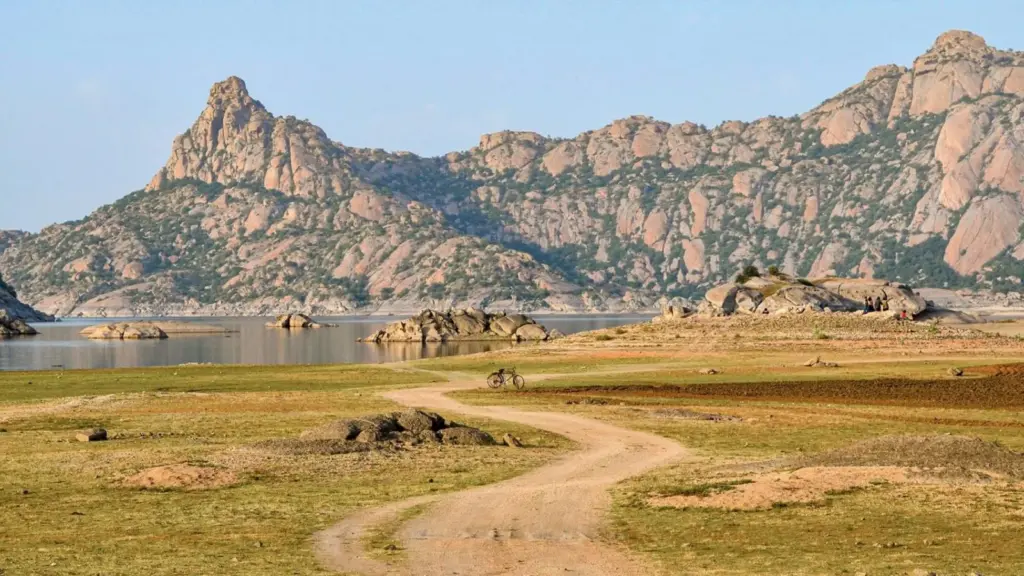
Jawai, known as the “Land of the Leopards”, is one of Rajasthan’s most extraordinary and least-crowded wildlife destinations. Located in the Pali district roughly midway between Udaipur and Jodhpur, Jawai is built around the Jawai Bandh, the largest dam in western Rajasthan, and the dramatic granite hills of the Aravalli range that rise sharply from the surrounding plains. What makes Jawai unlike any other wildlife destination in India is the coexistence between its 60 to 70 free-roaming leopards and the local Rabari tribe, a pastoral community that has lived alongside these big cats for generations, considering them sacred guardians of their local deity.
Leopards here wander through village edges, rest on temple steps, and sit atop granite outcrops in full view. Beyond leopards, Jawai offers crocodile spotting at the dam, over 100 species of birds including migratory flamingos and cranes, ancient hill temples, and immersive Rabari village walks. It is one of Rajasthan’s finest offbeat destinations for those seeking a genuine wildlife experience away from the crowds of Ranthambore.
Confused where to go for quick escape? Let us plan it for you.
Grab the Best DealTable of Contents
Best Time to Visit Jawai — Season Wise Guide
Jawai can be visited throughout the year, but each season offers a markedly different experience in terms of leopard activity, weather comfort, and overall safari quality. Here is a quick reference followed by the detailed seasonal breakdown.
| Detail | Information |
|---|---|
| Location | Pali District, Rajasthan |
| Nearest Town | Bera / Sumerpur |
| Distance from Udaipur | 150 km (3.5 hours) |
| Distance from Jodhpur | 160 km (4 hours) |
| Best Time to Visit | October to March |
| Peak Season | November to February |
| Best for Leopard Sightings | October to April |
| Reserve Open | Early September to Mid-May |
| Safari Timings | Morning: 6:00 AM to 9:00 AM / Evening: 5:00 PM to 8:00 PM |
| Nearest Railway Station | Falna (30 km) / Jawai Bandh Station (on-site) |
| Nearest Airport | Udaipur (150 km) / Jodhpur (160 km) |
October to March (Peak Season) is the best time to visit Jawai. Temperatures range from a comfortable 10°C to 25°C, making mornings and evenings ideal for open-jeep safaris. Leopards are most active during these cooler months, regularly spotted on the granite outcrops, at waterholes, and crossing open ground between the hills and villages. November is widely considered the single best month, with clear skies, 25°C days, 15°C nights, peak migratory bird activity at the dam, and extremely active leopards at dawn and dusk. Wildlife photographers specifically target November to February for the combination of excellent light and high sighting frequency.
April to June (Summer Season) sees temperatures rise to 35°C to 45°C in the afternoons. Leopards and other animals gravitate toward waterholes during this period, often making them more predictable to spot if you time your safari for the very early morning. Crowds are low and accommodation prices drop noticeably. Early morning safaris starting at 6:00 AM are strongly recommended during this period.
July to September (Monsoon Season) brings rainfall to Jawai and the surrounding Aravalli hills. The landscape turns dramatically green, the dam fills, and crocodile sightings at the water’s edge are excellent. Leopard sightings continue throughout this period, as Jawai’s leopards are visible year-round unlike in many other Indian reserves. However, safari tracks can become muddy and some operations may be affected by rain. The reserve officially reopens for peak operations in early September.
Jawai Leopard Safari-Timings, Tips and What to Expect
The Jawai Leopard Safari is the primary draw for most visitors and one of the highest-probability leopard sighting experiences in all of India. Safari operators regularly report a 90 to 95 percent sighting rate on guided safaris, a figure that is genuinely exceptional by Indian wildlife standards. The reason is simple: Jawai’s leopards are habituated to human presence and move freely across the granite landscape without the wariness found in conventional tiger reserves.
Safaris run in two daily slots. Morning safaris start at approximately 6:00 AM and run until 9:00 AM, covering the most active period when leopards return to their caves after nocturnal hunting. Evening safaris run from 5:00 PM to 8:00 PM, catching the golden hour and the period when leopards emerge from daytime rest. Morning safaris consistently deliver better sighting rates, but evening safaris offer extraordinary light for photography as the granite hills glow pink and orange at sunset.
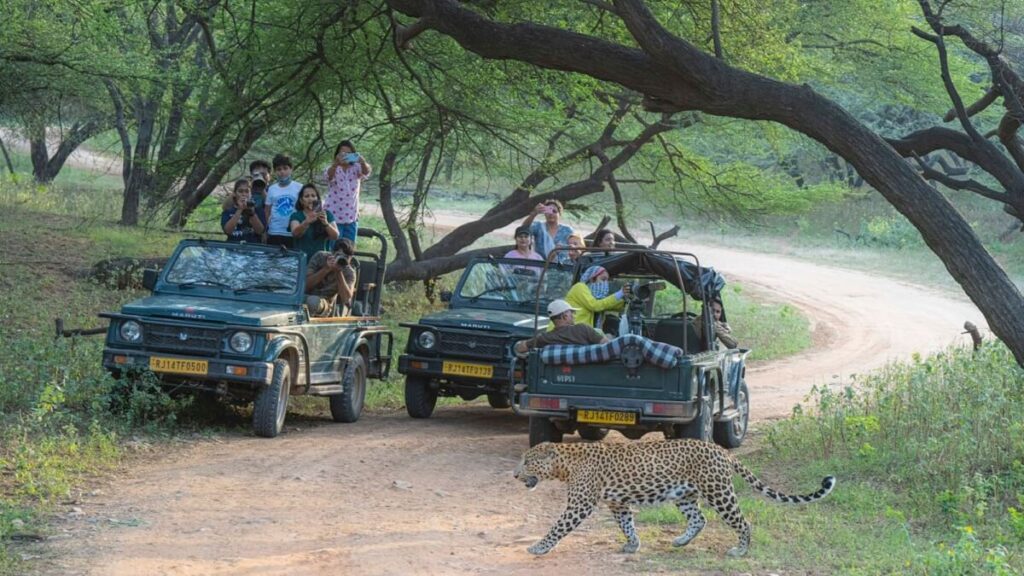
Each safari jeep accommodates up to 6 guests with an experienced local guide and spotter. The guides, many of whom are from the Rabari community, know individual leopard territories and den locations intimately. Night safaris are also offered by select operators and are particularly good for spotting hyenas, jackals, and leopards in hunting mode.
Wear neutral earth-toned clothing on safari. Avoid bright colours, strong perfumes, and sudden movements. Binoculars and a camera with a zoom lens are strongly recommended. Book your safari slot at least a day in advance during October to March, and several days ahead over weekends and public holidays.
Wildlife at Jawai- What You Can Spot
Jawai’s biodiversity extends well beyond its celebrated leopard population. The combination of granite hills, scrub forest, and the Jawai Bandh creates a varied habitat that supports a wide range of species. Here is what you can expect to encounter across different safaris and visits.
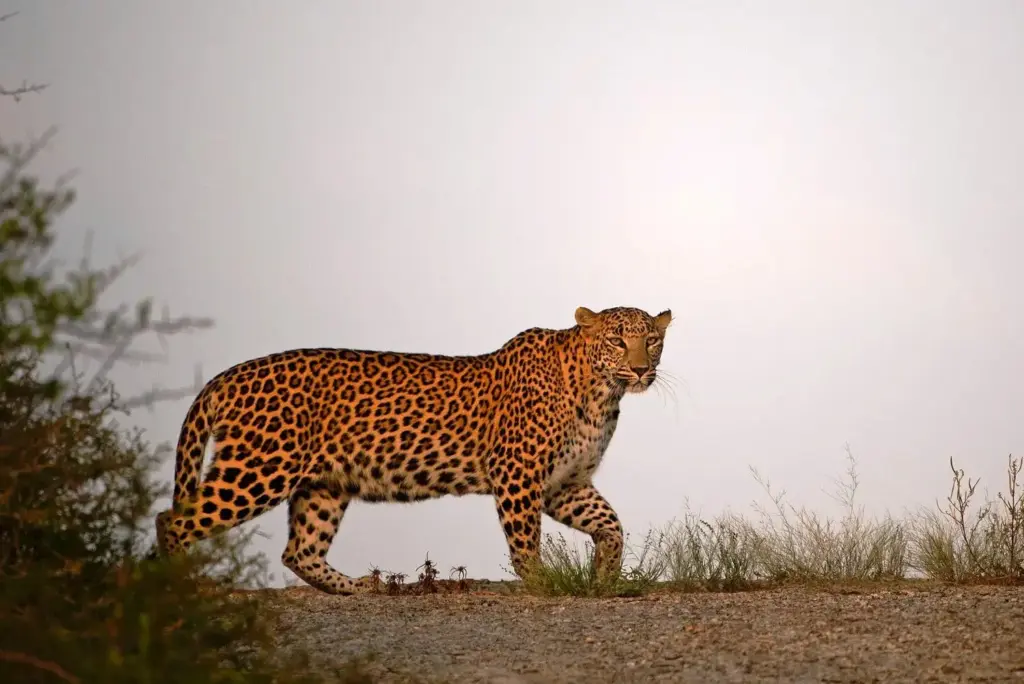
Leopards are the star attraction and the most reliably spotted big cat in any Indian reserve. With an estimated 60 to 70 individuals across 16 villages and 9 safari zones, leopards are spotted at multiple points on nearly every guided safari.
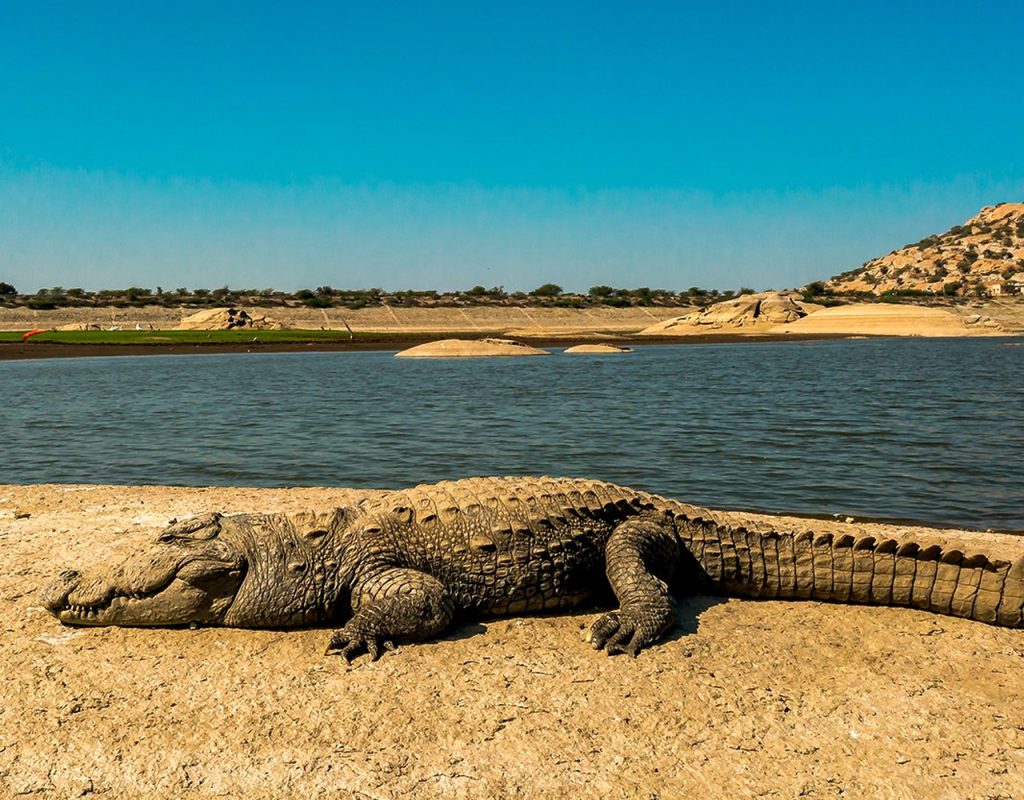
Marsh Crocodiles are a major secondary attraction. Hundreds of crocodiles inhabit the Jawai Bandh and can be seen basking on rocks along the dam’s edge, particularly in the morning. Boat rides on the dam bring visitors face to face with these reptiles at close range.
Sloth Bears, Hyenas, Indian Wolves, Jackals, and Jungle Cats are all present in the Jawai landscape and spotted with some regularity during safaris. Striped Hyenas in particular are frequently seen after dark on night safaris.
Migratory Birds make Jawai a birdwatcher’s destination in its own right. Over 100 species have been recorded including flamingos, demoiselle cranes, sarus cranes, bar-headed geese, knob-billed ducks, and painted storks. October to March is the best period for birdwatching, with the largest concentrations of migratory species at the Jawai Bandh.
Nilgai, Wild Boar, and Langurs are also commonly seen during jeep safaris across the scrub terrain.
Places to Visit Near Jawai
Jawai’s location between Udaipur and Jodhpur makes it a natural addition to a broader Rajasthan itinerary. Several outstanding destinations are within easy reach and can be combined into a fulfilling multi-day circuit. The religious places in Rajasthan guide by Frenzy Holidays covers key pilgrimage sites that pair well with a Jawai wildlife visit.
- Jawai Bandh (Dam) is the centrepiece of the entire region. Built by Maharaja Umaid Singh of Jodhpur and completed in 1957, the dam stretches across 13 sq km and is the largest in western Rajasthan. Sunset views from the dam edge are spectacular.
- Rabari Village Walks offer an authentic window into the lifestyle of the Rabari tribe. A guided village walk includes tea with local families, insight into the tribe’s relationship with leopards, and a look at traditional crafts and livestock herding practices.
- Devgiri Temple and Kambeshwar Mahadev Temple are ancient hill temples carved into the granite formations of the Jawai hills. Leopards are frequently spotted resting on the temple steps or the surrounding rocks, creating a remarkable combination of wildlife and spiritual heritage.
- Ranakpur Jain Temple is approximately 60 km from Jawai and is one of the finest examples of Jain temple architecture in India. The 15th-century temple complex with its 1,444 intricately carved marble pillars is a must-visit.
- Mount Abu, Rajasthan’s only hill station, is approximately 130 km from Jawai. Frenzy Holidays covers the best time to visit Mount Abu with family for those planning a combined itinerary.
- Kumbhalgarh Fort, about 100 km from Jawai, is a UNESCO World Heritage Site and home to the second-longest wall in the world after the Great Wall of China.
For travellers interested in Rajasthan’s darker legends, the most haunted places in Rajasthan make for fascinating reading alongside a broader exploration of the state.
How to Reach Jawai?
Jawai is well connected to Rajasthan’s major cities via road, rail, and air. Most visitors arrive via Udaipur or Jodhpur and then travel by road or train to Bera or Sumerpur. Here is a breakdown of all travel options.
How to Reach Jawai by Air?
Udaipur Airport (Maharana Pratap Airport) is the nearest major airport, approximately 150 km from Jawai. Jodhpur Airport is another option at approximately 160 km. Both airports have direct flights connecting to Delhi, Mumbai, and other major cities. From either airport, taxis are available for the 3 to 3.5-hour drive to Jawai.
How to Reach Jawai by Train?
Falna Railway Station is the nearest major railhead, approximately 30 km from Jawai. Jawai Bandh Railway Station also sits directly within the area and is served by trains on the Ahmedabad to Ajmer route. Trains from Delhi, Mumbai, Ahmedabad, and Jaipur connect to both stations. From Falna, taxis cover the remaining distance to Bera and the safari camps in approximately 45 minutes.
How to Reach Jawai by Road?
Jawai is 150 km from Udaipur (approximately 3.5 hours), 160 km from Jodhpur (approximately 4 hours), 130 km from Mount Abu (approximately 2.5 hours), and 87 km from Ranakpur. National Highway 27 connects Jawai to both Udaipur and Jodhpur via scenic Aravalli landscape. Private taxis and self-drive are the most convenient road options as direct bus connectivity to the safari zones is limited.
Practical Tips for Visiting Jawai
Jawai is a relaxed, relatively infrastructure-light destination where a little preparation makes a significant difference to the experience. Whether you are visiting for the first time or returning for another safari season, these practical points will help you get the most out of your trip.
- Book safari slots in advance during October to March, especially on weekends and public holidays when jeeps fill up quickly. Most luxury camps manage their own safari bookings and can arrange slots for guests.
- Stay at or near the safari zones in Bera, Varawal, or Bisalpur for easy early morning access. Resorts further away add unnecessary travel time to 6:00 AM safari departures.
- Carry warm clothing for winter morning safaris. Open jeep safaris before sunrise in December and January can be quite cold. A fleece jacket and light thermals are recommended.
- Respect wildlife distances. While Jawai’s leopards are habituated to human presence, maintaining a respectful distance and remaining quiet in the jeep ensures both safety and better sighting quality.
- Combine a morning and evening safari on the same day if possible. Each slot covers different leopard behaviour and lighting conditions and together they offer the most complete Jawai experience.
- Carry cash. The Jawai area has limited ATM infrastructure. Carry sufficient cash for safari fees, guide tips, and local purchases before arriving.
Conclusion
The best time to visit Jawai is October to March, when cool weather, clear skies, and peak leopard activity combine to create one of the most rewarding wildlife experiences in Rajasthan. November and December are the standout months, offering the finest weather, the most active leopard movement, and the full complement of migratory birds at the Jawai Bandh. Whether you are a wildlife photographer, a first-time safari traveller, or simply someone looking for an authentic and relatively undiscovered corner of Rajasthan, Jawai delivers something that the more famous tiger reserves cannot: the sight of wild leopards living in genuine, centuries-old coexistence with the people around them.

Frenzy Holidays ensures a smooth and enriching travel experience from start to finish. Visit us at Haware Centurion, S07/34, Nerul East, Sector 19A, Nerul, Navi Mumbai, Maharashtra 400706. For bookings or more information, call +91 7400453140, email [email protected], or visit www.frenzyholidays.com.
Best Time to Visit Jawai – FAQs
What is the best time to visit Jawai?
The best time to visit Jawai is October to March when the weather is cool and pleasant, leopard sightings are most frequent, and migratory birds are present at the Jawai Bandh.
Which month is best for leopard sightings in Jawai?
November is widely considered the best month for leopard sightings in Jawai, with cool temperatures, clear skies, and extremely active leopards at dawn and dusk. November to February as a whole is the peak window for wildlife photography.
What are the safari timings at Jawai?
Morning safaris at Jawai run from approximately 6:00 AM to 9:00 AM and evening safaris from 5:00 PM to 8:00 PM. Timings may shift slightly depending on sunrise and sunset. Night safaris are also offered by select operators.
Is Jawai open during monsoon?
Yes, Jawai remains open during the monsoon season, though safari operations can be affected by muddy tracks and rain. Leopard sightings continue year-round at Jawai. The reserve reopens for full peak season operations in early September.
What wildlife can be seen at Jawai besides leopards?
Besides leopards, Jawai is home to marsh crocodiles, sloth bears, striped hyenas, Indian wolves, jackals, jungle cats, nilgai, and over 100 bird species including migratory flamingos, demoiselle cranes, and sarus cranes.
How far is Jawai from Udaipur?
Jawai is approximately 150 km from Udaipur, a road journey of around 3 to 3.5 hours via National Highway 27.
What is the Jawai Bandh?
The Jawai Bandh is the largest dam in western Rajasthan, built across the Jawai River and completed in 1957 under Maharaja Umaid Singh of Jodhpur. It is the primary water source for the Pali district and a major attraction for crocodile spotting and birdwatching.
Who are the Rabari tribe at Jawai?
The Rabari tribe is a pastoral community that has lived alongside leopards in the Jawai region for generations. They consider leopards sacred guardians of their local deity and are largely responsible for the peaceful coexistence between humans and wild leopards in the area.
How do I reach Jawai from Delhi?
From Delhi, the most convenient route to Jawai is by overnight train to Falna or Jawai Bandh Railway Station. Falna is approximately 30 km from the safari zones and is well connected to Delhi by trains on the Ahmedabad route. The train journey takes approximately 10 to 12 hours.
What are the places to visit near Jawai?
Ranakpur Jain Temple, Kumbhalgarh Fort, Mount Abu, and the Devgiri and Kambeshwar Mahadev temples in the Jawai hills are all within reach of Jawai and make excellent additions to any Rajasthan itinerary built around the leopard safari experience.
