
Exploring Hampi Karnataka means stepping into one of the most extraordinary landscapes in India — a UNESCO World Heritage Site where over 1,600 ancient monuments, temples, royal enclosures, and market streets lie scattered across a surreal terrain of giant boulders, banana plantations, and the gently flowing Tungabhadra River. Once the capital of the Vijayanagara Empire and believed to have been the second-largest city in the medieval world, Hampi today stands as one of the most humbling and memorable destinations in South India.
Hampi is located in the Vijayanagara district of Karnataka, approximately 340 km from Bengaluru and 13 km from Hosapete. The name derives from Pampa, the ancient name of the Tungabhadra River, and the site is associated with Kishkinda of the Ramayana. The Vijayanagara Empire flourished here from the 14th to the mid-16th century, growing into one of the wealthiest empires in Indian history before falling after the Battle of Talikota in 1565 CE. What remains is a sprawling open-air archaeological site declared a UNESCO World Heritage Site in 1986. Exploring Hampi Karnataka demands at least 3 days, with a week or more for those who want to do full justice to its scale.
Confused where to go for quick escape? Let us plan it for you.
Grab the Best DealTable of Contents
Exploring Hampi Karnataka: Season Wise Guide
The climate of Hampi is hot and dry for most of the year, given its location on the Deccan Plateau. Choosing the right season for exploring Hampi Karnataka significantly affects your comfort and the overall experience. Here is a quick reference followed by the full seasonal breakdown.

| Detail | Information |
|---|---|
| Location | Vijayanagara District, Karnataka |
| Distance from Bengaluru | Approximately 340 km (6 to 7 hours by road) |
| Distance from Hosapete | Approximately 13 km |
| Best Time to Visit | October to March |
| Peak Season | November to February |
| Monsoon Season | June to September |
| Nearest Railway Station | Hosapete Junction (13 km) |
| Nearest Airport | Jindal Vijaynagar Airport, Toranagallu (approx. 40 km from Hosapete) |
| Entry Fee | Most temples free; Vijaya Vittala Temple approx. Rs. 40 (Indians), Rs. 600 (foreigners) |
| UNESCO Status | World Heritage Site since 1986 |
Season Wise Guide to Exploring Hampi Karnataka
October to March (Best Season for Exploring Hampi Karnataka)
- Temperatures: 15°C to 30°C, cool mornings and pleasant afternoons
- October to March is the ideal window for exploring Hampi Karnataka comfortably, with the heat manageable and the skies clear
- November to February is the peak season with the largest tourist footfall
- The Hampi Utsav (Vijaya Utsav) festival, held in November, is a spectacular celebration of Vijayanagara culture with folk performances, light and sound shows, and cultural events
- Book accommodation in advance for November to January as this period fills up weeks ahead
June to September (Monsoon Season)
- Temperatures: 24°C to 32°C, heavy and sustained rainfall
- Monsoon transforms Hampi’s boulder landscape with patches of green and the Tungabhadra fills dramatically
- Many roads and coracle services can be disrupted during heavy monsoon spells
- Fewer crowds, and a different kind of beauty in the landscape, but outdoor exploration can be uncomfortable
- The Tungabhadra occasionally floods low-lying areas near the river bank
April to June (Summer Season)
- Temperatures: 30°C to 42°C, extreme heat, particularly from noon onwards
- Not recommended for extensive outdoor sightseeing due to the intense heat
- Early morning and late evening visits to monuments are still possible if you start by 6:00 AM and return by 10:00 AM
Places to Visit While Exploring Hampi Karnataka
Exploring Hampi Karnataka is essentially a journey through the remains of an entire empire. Here are the most important monuments, sites, and experiences to include in your itinerary.
Virupaksha Temple

The Virupaksha Temple is the living heart of Hampi, a fully active place of worship dedicated to Lord Shiva in his form as Virupaksha, consort of the local goddess Pampadevi. The temple dates to the 7th century CE and was expanded significantly during the Vijayanagara period. Its 50-metre tall Gopuram is visible from across Hampi Bazaar and is the primary landmark of the town. One of the most extraordinary features of the temple is the inverted shadow of the gopuram cast onto the inner wall of a dark chamber, a natural optical phenomenon whose exact cause has puzzled observers for centuries. The temple’s elephant, banana gardens behind the inner sanctum, and the active daily rituals make Virupaksha one of the most atmospheric temple experiences in Karnataka. Entry is free and the temple is open from early morning to evening.
Vijaya Vittala Temple and the Stone Chariot

The Vijaya Vittala Temple Complex is the most celebrated monument in Hampi and among the finest examples of Vijayanagara architecture anywhere in India. Built in the 15th and 16th centuries and dedicated to Lord Vishnu in his form as Vittala, the complex is famous above all for the Stone Chariot, an elaborately carved granite chariot in the temple courtyard that is one of the most iconic images of Hampi. The temple’s Musical Pillars, which produce different musical tones when tapped, are another extraordinary feature. The complex also has a towering entrance gateway, ornate mandapas, and a processional street leading to the river. The complex is a short distance from the main town and can be reached by cycle or auto. Entry fee applies.
Hampi Bazaar and Hemakuta Hill

Hampi Bazaar stretches directly in front of the Virupaksha Temple and was once the grandest marketplace of the Vijayanagara Empire, where merchants traded silk, jewels, horses, and spices. The old pavilions lining both sides of the bazaar still stand and give a powerful sense of the original scale of the market. Today it is lined with small shops and restaurants. Adjacent Hemakuta Hill is a rocky outcrop studded with Shiva temples, carved gateways, and boulder viewpoints offering sweeping views over Hampi Bazaar, the Virupaksha Temple, and the Tungabhadra River. Hemakuta is one of the best spots for sunrise and sunset in Hampi.
Lotus Mahal and the Royal Enclosure

The Royal Enclosure was the administrative and residential centre of the Vijayanagara rulers and contains several of Hampi’s most architecturally distinctive structures. The Lotus Mahal is a delicate two-storey pavilion named for its lotus-shaped upper storey, combining Hindu and Indo-Islamic architectural elements in a way that UNESCO describes as reflective of the empire’s multi-religious character. The Elephant Stables, a long row of domed chambers that once housed the imperial war elephants, are another highlight of the enclosure. The Queen’s Bath, a large bathing complex with corridors, balconies, and an ornamental moat, is a short distance away.
Matanga Hill
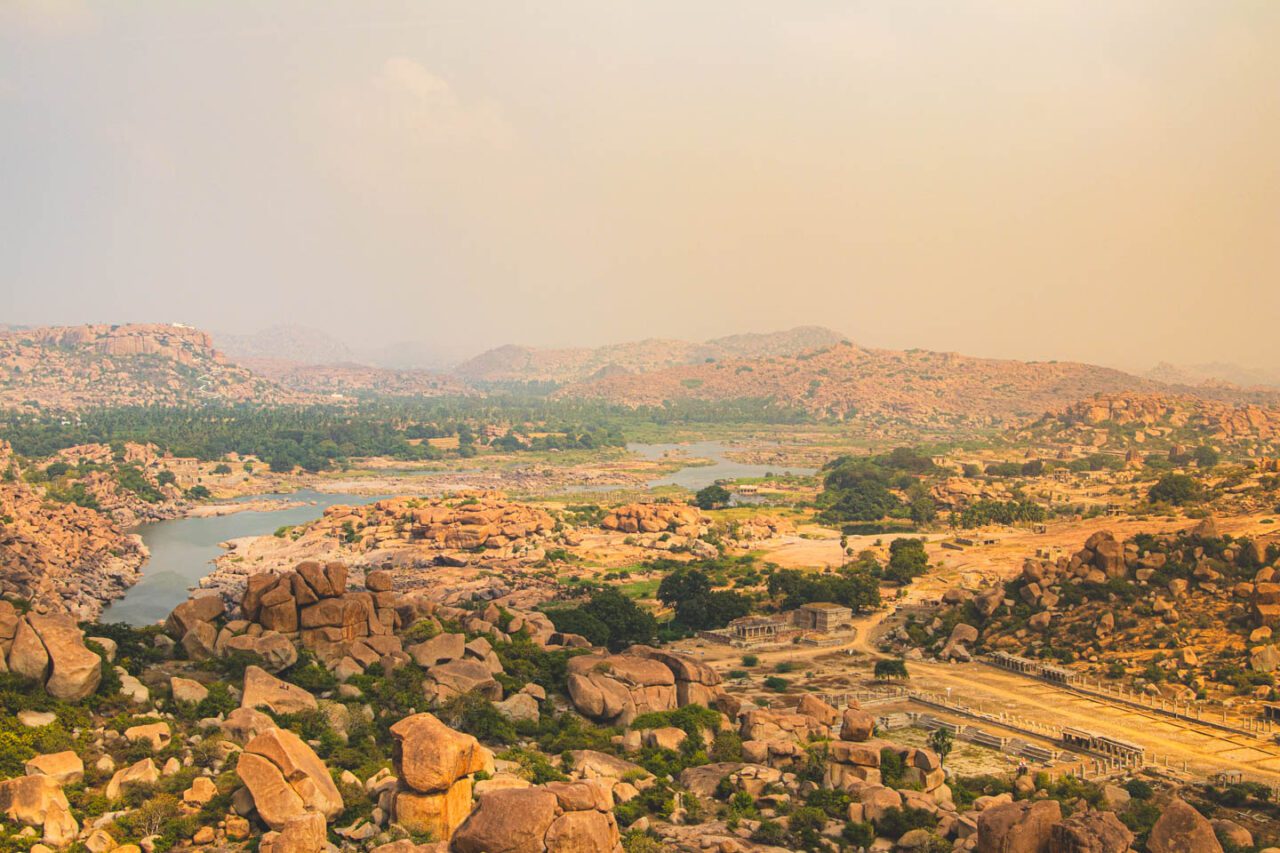
Matanga Hill is the highest point in Hampi and offers the most panoramic views available anywhere in the site, with the entire boulder-strewn landscape, the Tungabhadra, the green paddy fields, and the ruins of a once-great empire spread out in every direction. According to Hindu tradition, Matanga Hill is associated with the sage Matanga from the Ramayana. Climbing the hill takes approximately 30 minutes and involves stepping up stone paths between giant boulders. Sunrise from Matanga Hill is considered one of the finest natural spectacles in Karnataka and draws visitors who make the climb in the pre-dawn darkness. Start by 5:30 AM to reach the top for sunrise.
Ugra Narasimha Statue
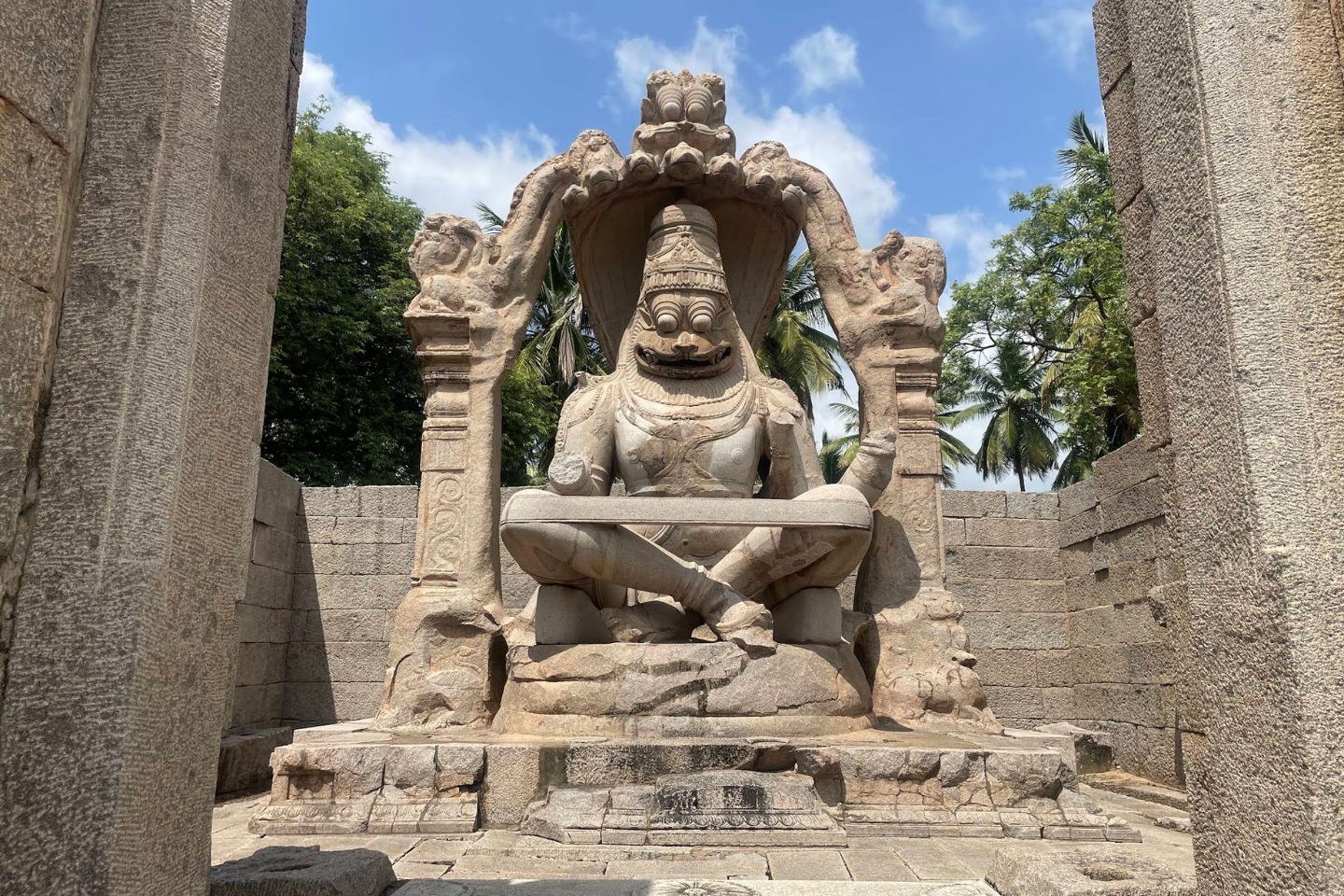
The Ugra Narasimha is the largest monolithic statue in Hampi, a massive sculpture of Lord Narasimha (the man-lion avatar of Vishnu) sitting on the coils of the seven-headed serpent Shesha. Carved from a single boulder and standing approximately 6.7 metres tall, the statue is one of the most powerful artistic expressions in the entire site. A large Shivalinga nearby adds to the religious significance of the complex.
Tungabhadra River and Coracle Rides

The Tungabhadra River is the soul of Hampi, flowing along the northern edge of the main monument zone and separating it from the hippie island village of Virupapur Gaddi on the opposite bank. A coracle ride on the Tungabhadra, in the traditional round wicker boats that have been used here since at least the 15th century, is one of the most defining experiences of exploring Hampi Karnataka. Coracle rides are available from the main ghat and take visitors across to the other side of the river, where a quieter, more laid-back atmosphere and guesthouses cater to travellers seeking a slower Hampi experience.
Anegundi Village
Anegundi, across the Tungabhadra from the main Hampi zone, is one of the oldest inhabited settlements in the region and predates Hampi itself as a centre of power. The village is associated with the Kishkinda of the Ramayana and has its own set of monuments including the Aramane Palace ruins, the Huchappayana Matha Temple, and the Ranganatha Temple. The pace of life in Anegundi is noticeably slower and the village gives a rare glimpse of traditional rural Karnataka life within walking distance of a UNESCO World Heritage Site.
Boulder Climbing and Trekking
Hampi’s extraordinary landscape of giant granite boulders makes it one of the finest rock climbing and bouldering destinations in Asia. The Hampi boulder fields attract serious climbers from around the world, with routes ranging from beginner-friendly scrambles to advanced technical climbs. Even for non-climbers, scrambling up the boulders around the monument zone offers constantly changing views and a physical engagement with the landscape that no vehicle-based tour can replicate.
For those planning to explore the wider Karnataka region, Frenzy Holidays has curated guides to unexplored places in Karnataka, places to visit in rainy season in Karnataka, and hidden places in Coorg for those looking to combine Hampi with a broader Karnataka itinerary. For spiritual travel in Karnataka, also explore our guide to places to visit in Ganagapur. For those heading to the Karnataka coast after Hampi, our Gokarna best time to visit guide is a useful companion.
How to Reach Hampi
Hampi is accessible by air, rail, and road, with the nearby town of Hosapete serving as the main transport hub.
How to Reach Hampi by Air?
The nearest airport to Hampi is Jindal Vijaynagar Airport in Toranagallu, approximately 40 km from Hosapete. The nearest international airport is Kempegowda International Airport in Bengaluru, approximately 340 km away. From Bengaluru airport, buses, trains from the city, and taxis are available to Hosapete, from where Hampi is a short auto or taxi ride away.
How to Reach Hampi by Train?
Hosapete Junction is the nearest railway station to Hampi, approximately 13 km away. Hosapete is well connected by train to Bengaluru (overnight trains available), Hubballi, Goa, and other major Karnataka cities. From Hosapete, autos and local buses run regularly to Hampi town. The journey from Hosapete to Hampi takes approximately 20 to 30 minutes by auto.
How to Reach Hampi by Road?
From Bengaluru, Hampi is approximately 340 km by road via NH50 and NH48, taking around 6 to 7 hours by car or bus. Overnight buses from Bengaluru (Majestic Bus Stand) to Hosapete are available. From Goa, Hampi is approximately 280 to 290 km (around 5 to 6 hours) and is a popular add-on for travellers on a South India circuit. From Hosapete, local buses, autos, and taxis cover the final 13 km to Hampi.
Practical Tips for Exploring Hampi Karnataka
Key points to keep in mind before and during your visit to Hampi.
- Start your days early. Hampi’s heat can be intense from mid-morning, particularly between March and October. The best exploring hours are 6:00 AM to 10:00 AM and 4:00 PM to sunset. Sunrise at Matanga Hill and early morning at Virupaksha Temple are particularly rewarding.
- Rent a bicycle or scooter. The monuments in Hampi are spread across a large area. A bicycle or rented scooter is the best way to cover the main zone at your own pace. Bicycles are widely available for rent in Hampi Bazaar.
- Hire a local guide for at least one day. The history, mythology, and architectural details of Hampi’s monuments are far richer with a knowledgeable local guide. A full-day guided tour covers significantly more ground than self-exploration and brings the stories of the Vijayanagara Empire to life.
- Carry cash. ATMs in Hampi are limited. Carry sufficient cash from Hosapete for accommodation, food, entry fees, and local transport.
- Non-vegetarian food is not available on the temple side. The main Hampi side of the Tungabhadra river, which hosts most monuments and the Virupaksha Temple, is a vegetarian-only zone. Non-vegetarian food is available on the other side of the river (Virupapur Gaddi).
- Wear comfortable footwear. You will walk considerable distances on uneven ground, cobblestones, and boulder paths. Sturdy, comfortable shoes are essential. Many temples require you to remove footwear, so slip-ons are practical.
- Book accommodation in advance for October to February. Peak season accommodation in Hampi fills up quickly, particularly around the Hampi Utsav festival in November.
- Respect the active temples. Virupaksha Temple is a living place of worship with daily rituals and a large local congregation. Dress modestly, remove footwear at the entrance, and behave respectfully throughout.
Conclusion
Exploring Hampi Karnataka is one of the most rewarding travel experiences in India, combining extraordinary archaeological heritage with a landscape unlike anything else on the subcontinent. The ruins of the Vijayanagara Empire, spread across kilometres of boulder-strewn terrain beside the Tungabhadra, carry a weight of history and a quality of silence that is genuinely moving. Whether you spend three days or a full week exploring Hampi Karnataka, the site stays with you long after you leave.

Frenzy Holidays ensures a smooth and enriching travel experience from start to finish. Visit us at Haware Centurion, S07/34, Nerul East, Sector 19A, Nerul, Navi Mumbai, Maharashtra 400706. For bookings or more information, call +91 7400453140, email [email protected], or visit www.frenzyholidays.com.
Exploring Hampi Karnataka: FAQs
What is the best time for exploring Hampi Karnataka?
October to March. November to February is peak season with the most comfortable weather. Hampi Utsav in November is a major cultural highlight.
How many days are needed to explore Hampi Karnataka?
Minimum 3 days. Five to seven days allows for boulder climbing, coracle rides, Anegundi, and quieter monument zones.
How far is Hampi from Bengaluru?
Approximately 340 km by road, taking 6 to 7 hours. Overnight buses from Bengaluru to Hosapete are a convenient option.
Is Hampi a UNESCO World Heritage Site?
Yes. The Group of Monuments at Hampi was declared a UNESCO World Heritage Site in 1986.
What is the entry fee for Hampi?
Most monuments are free. Vijaya Vittala Temple charges approximately Rs. 40 for Indians and Rs. 600 for foreign tourists. Carry cash.
What are the must-see monuments when exploring Hampi Karnataka?
Virupaksha Temple, Vijaya Vittala Temple, Stone Chariot, Lotus Mahal, Elephant Stables, Matanga Hill, and Ugra Narasimha Statue.
Is Hampi good for solo travellers?
Yes. Hampi is one of India’s most popular backpacker destinations with budget guesthouses, bicycle rentals, and a relaxed atmosphere, especially on the Virupapur Gaddi side.
What is a coracle ride in Hampi?
A traditional round wicker boat ride on the Tungabhadra River, ferrying visitors between the main monument zone and Virupapur Gaddi. One of Hampi’s most iconic experiences.
Can I combine Hampi with other Karnataka destinations?
Yes. Badami, Aihole, and Pattadakal pair well for a heritage circuit. Goa is 280 km away. Bengaluru, Mysore, and Coorg are also practical additions.
Where should I stay in Hampi?
Hampi town suits those focused on monuments. Virupapur Gaddi across the river is quieter and popular with backpackers. Book in advance for November to February.
