
Kutch is one of those destinations where the experience changes dramatically depending on when you visit. What is a good time to visit Kutch is not a simple question with a single answer, because the White Rann looks completely different in October than it does in February, the craft villages operate on rhythms tied to the festival calendar, and the coast at Mandvi is best in winter while the Banni grasslands are most rewarding just after the monsoon. Getting the timing right makes an enormous difference to what you see and feel in Kutch.
Have you ever wondered what is a good time to visit Kutch if you specifically want the full Rann Utsav experience, or the best conditions for the salt desert at sunrise, or the craft village circuit without the summer heat? Or are you planning a Gujarat trip in 2026 and trying to lock in the ideal month for your Kutch visit? This guide breaks down what is a good time to visit Kutch season by season and month by month, with practical recommendations for every type of traveler and every kind of Kutch experience.
Confused where to go for quick escape? Let us plan it for you.
Grab the Best DealTable of Contents
Where is Kutch
Kutch is a district in the western corner of Gujarat, India, bordered by Pakistan to the north and northwest, the Arabian Sea to the south and west, and the Gulf of Kutch to the southeast. It is the largest district in India by area, covering approximately 45,000 square kilometres, which makes it larger than some Indian states.Distance from Major Indian Cities:
- Mumbai to Kutch (Bhuj): Approximately 900 km by road (around 15 to 16 hours) or 1 hour 20 minutes by direct flight from Mumbai to Bhuj. Overnight trains from Mumbai Central to Bhuj (via Gandhidham) take approximately 16 to 18 hours.
- Delhi to Kutch (Bhuj): Approximately 1,400 km by road or 2 hours by direct flight from Delhi to Bhuj. Train options include the Kutch Express from Delhi Sarai Rohilla to Bhuj, taking approximately 24 hours.
- Ahmedabad to Kutch (Bhuj): Approximately 330 km by road, around 5 to 6 hours. Regular bus services and trains operate between Ahmedabad and Bhuj daily.
- Surat to Kutch (Bhuj): Approximately 620 km by road, around 9 to 10 hours. Flights via Ahmedabad or direct drive through Gujarat state highways.
Bhuj Airport receives direct flights from Mumbai, Delhi, and Ahmedabad, making air travel the most convenient option for visitors from distant cities. The Bhuj Railway Station is connected to major Gujarat cities and has direct trains from Mumbai and Delhi.
What is a Good Time to Visit Kutch: Quick Overview
Kutch is best visited between October and March when the White Rann is accessible, the Rann Utsav festival is running, and temperatures are comfortable. The peak of the peak is November to February, when the salt desert is at its most spectacular and full moon nights turn the Rann silver.
| Season | Months | Conditions | Best For |
| Peak Season | November to February | Cool, dry, White Rann at its best | Rann Utsav, full moon nights, all activities |
| Shoulder Season | October and March | Warm but comfortable | Craft villages, Bhuj, fewer crowds |
| Summer | April to June | Very hot (40+ degrees) | Not recommended for most travelers |
| Monsoon | July to September | Heavy rainfall, Rann flooded | Not suitable for White Rann visit |
Timing your Kutch visit correctly is the single most important decision you will make in planning this trip. Read our guide on the Best Time to Visit Gujarat for a full state-wide seasonal breakdown that covers Kutch alongside Ahmedabad, Somnath, and Saurashtra.
Why Timing Matters So Much in Kutch
Kutch is unlike most Indian hill stations or coastal destinations where the difference between seasons is mainly about temperature and rainfall. In Kutch, timing determines whether the White Rann is accessible at all. The Great Rann of Kutch is a salt desert, but during the monsoon from July to September it floods with shallow water from the Arabian Sea and from rainfall across the region, becoming impassable and visually unrecognisable from the shimmering white landscape that makes it famous. The White Rann only reveals itself in its full iconic form after the monsoon recedes, from October onward, when the salt crust dries and whitens to create the vast mirror-flat landscape that draws visitors from across India.
The Rann Utsav festival, the organised cultural celebration that transforms the Dhordo tent city into one of India’s finest festival experiences, runs from October to early March. What is a good time to visit Kutch for the Rann Utsav specifically is any of these months, but the full moon nights from November to February are the most sought-after dates, when the White Rann turns silver under the moonlight in a visual experience that has no equivalent anywhere in India.
October: The Opening of the Rann Season
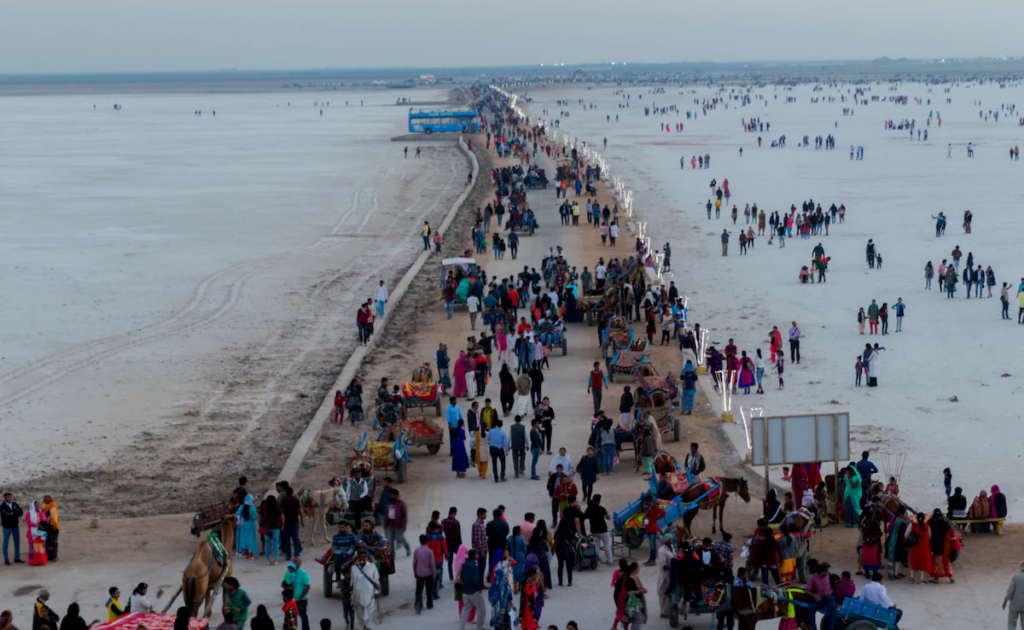
October marks the beginning of what is a good time to visit Kutch in the festival sense. The monsoon has retreated, the White Rann is beginning to dry, and the Rann Utsav festival opens at Dhordo. The temperatures in October are warm but not the oppressive heat of summer, typically between 25 and 35 degrees during the day and considerably cooler at night. The Banni grasslands north of Bhuj are at their most lush and green in October, with the post-monsoon vegetation giving the landscape a richness that the dry winter months do not have.
- Temperature: 25 to 35 degrees day, 15 to 20 degrees night
- Weather: Dry and clear, warm days with comfortable evenings; occasional humidity early in the month
- Things to Do: Visit the White Rann at Dhordo for the season opening; birdwatch at Chhari Dhandh wetland for flamingos, pelicans, and migratory raptors; explore the Banni grasslands while they are at their greenest; visit craft villages without peak season queues
- Best for: Rann opening, Banni grasslands, birdwatching, fewer crowds and easier bookings
- Avoid if: You want the White Rann at its absolute whitest and driest, which peaks in January
November and December: The Heart of the Rann Utsav Season
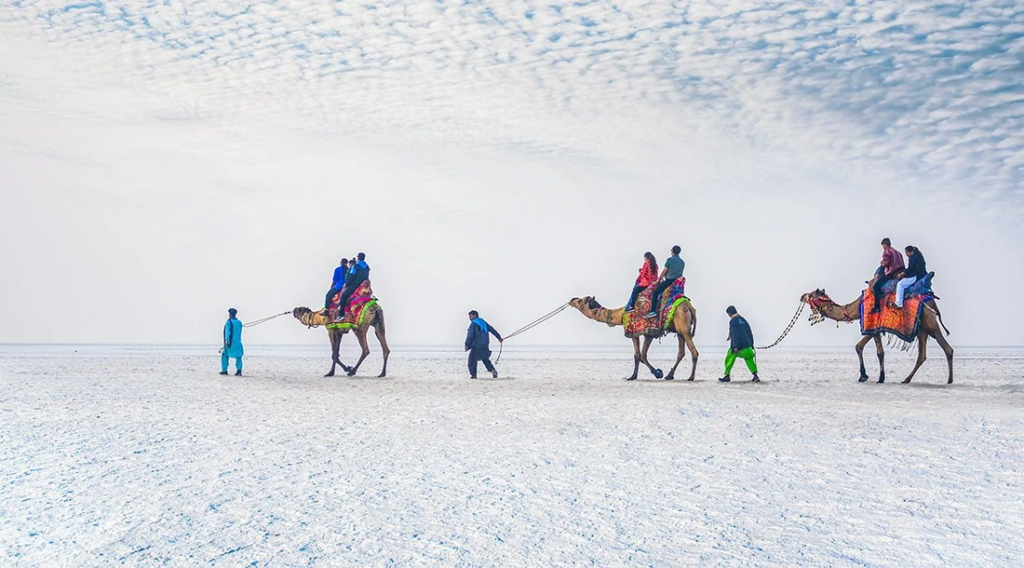
November brings the spectacular lupin wildflower season to parts of Kutch and the craft village circuit is operating at full energy, with artisan families welcoming visitors to their workshops before the busiest festive period of the year. The Rann Utsav tent city at Dhordo is running its full programme of folk music, dance performances, camel rides, and cultural experiences. For travelers who want to combine Kutch with other Gujarat destinations, our guide on Hidden Places in Gujarat covers offbeat destinations that pair well with a November or December Kutch itinerary.
- Temperature: 20 to 28 degrees day, 10 to 15 degrees night
- Weather: Cool, clear, and dry. Nights require a jacket but are comfortable for outdoor sitting
- Things to Do: Watch sunset and sunrise on the White Rann salt flats; attend folk music and dance performances at the Dhordo Tent City; take a camel cart ride across the Rann; visit Rogan art family in Nirona and block-printing workshops in Ajrakhpur; experience the full moon Rann when the salt turns silver
- Best for: Full Rann Utsav experience, full moon nights, craft villages, ideal weather for all outdoor activities
- Advance booking: Essential for full moon dates; advisable for all weekends
January and February: Peak Season with Perfect Conditions
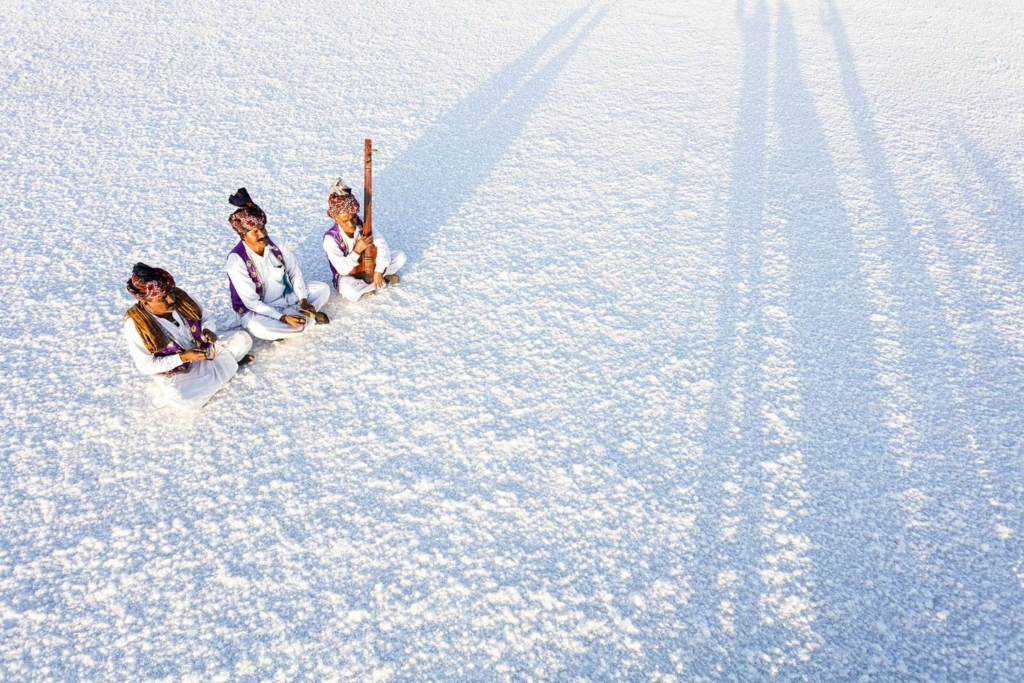
For shopping, January and February are also the best months in Kutch. The Rann Utsav itself hosts a large craft market at the Tent City where artisans from across Kutch bring their work directly to the festival. For a guide to what to buy and where, our article on What is Famous in Bhuj for Shopping covers every major Kutchi craft from embroidery to Rogan art to Ajrakh block prints.
The absolute peak. The White Rann is at its whitest and driest, the Rann Utsav cultural programme is at full capacity, and conditions across Kutch are at their most comfortable for every kind of activity.
- Temperature: 15 to 25 degrees day, 7 to 10 degrees night
- Weather: Cool, clear, and dry with excellent visibility; nights cold enough for a warm layer
- Things to Do: Walk the White Rann at sunrise for the finest light of the year; shop the Rann Utsav craft market for embroidery, Rogan art, and Ajrakh block prints; visit Aina Mahal and Prag Mahal in Bhuj; explore the full craft village circuit; day trip to Mandvi Beach and Vijay Vilas Palace
- Best for: Everything. This is the peak of what is a good time to visit Kutch
- Advance booking: Essential for full moon dates and weekends; book 2 to 3 months ahead
March: The Last of the Good Season
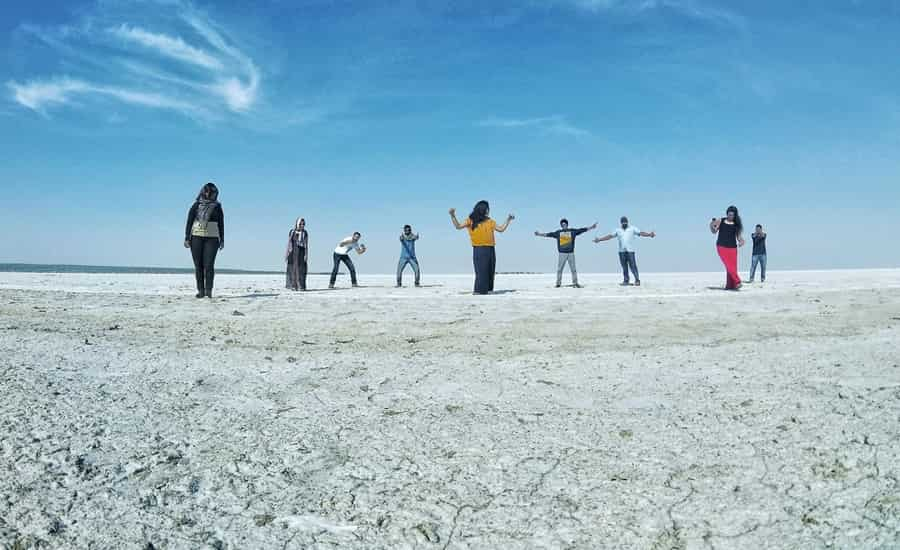
March is the closing month of what is a good time to visit Kutch in the festival sense. The Rann Utsav typically ends in early March, after which the tent city at Dhordo closes for the season. March itself still offers excellent conditions for Kutch travel: the temperatures are warm and rising but not yet uncomfortable, the White Rann is still accessible, and the post-festival period means significantly fewer crowds and better accommodation availability than January and February.
- Temperature: 25 to 35 degrees day, 15 to 18 degrees night
- Weather: Warm and dry; temperatures rising but still comfortable for outdoor exploration
- Things to Do: Deep-dive the craft village circuit with more time at each artisan’s workshop; visit the White Rann before it closes for the summer; explore Dholavira while temperatures are still manageable; walk through the Bhuj old city bazaar; day trip to Lakhpat Fort
- Best for: Craft village immersion, post-festival quiet, Rann access without crowds, value pricing
- Avoid if: You specifically want the Rann Utsav cultural programme, which ends in early March
April to June: Summer in Kutch

April to June is not a good time to visit Kutch for most travelers. The temperatures across Kutch during these months reach 40 to 45 degrees Celsius and occasionally higher in the interior areas near the Rann. The White Rann is accessible in April and early May but the midday heat makes extended time on the salt flats genuinely uncomfortable and potentially dangerous without proper preparation. The craft villages are operating but the artisan families work primarily in the cooler morning hours.
- Temperature: 38 to 45 degrees day; nights above 25 degrees
- Weather: Very hot, dry, and dusty; first monsoon rains arrive in late June
- Things to Do: Early morning visits to Bhuj heritage sites and craft villages in April only; avoid the White Rann entirely from May onward
- Best for: Only for travelers with no other option; early April is the most manageable month
- Avoid: White Rann visits, midday outdoor activity, long road journeys
July to September: Monsoon Season
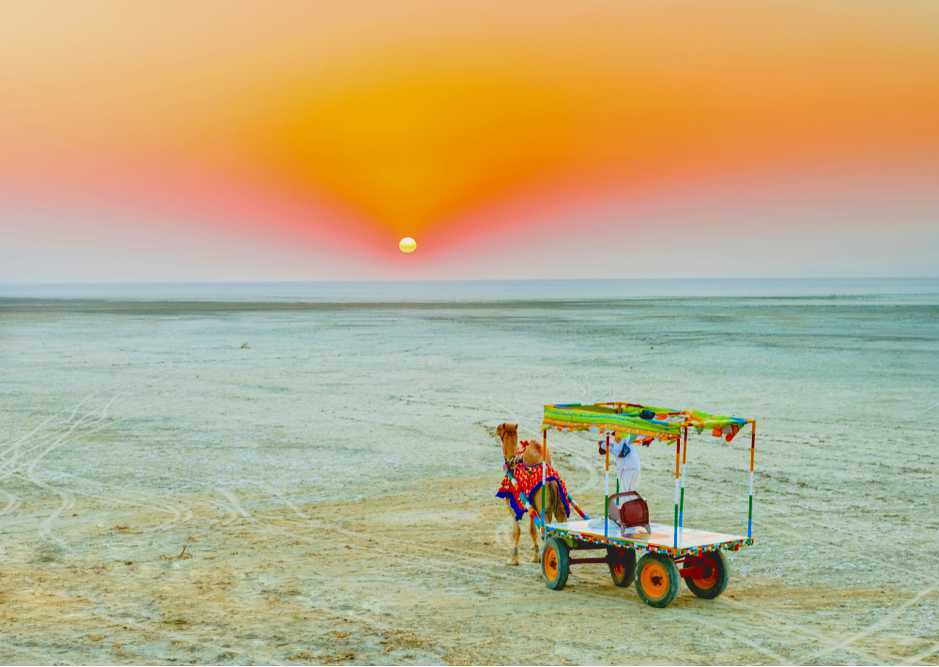
July to September is definitively not a good time to visit Kutch for the White Rann experience. The monsoon floods the Great Rann with shallow water from July onward, transforming the salt desert into a vast shallow lake that is impassable and entirely unlike the famous white landscape. The Rann Utsav does not operate during the monsoon months.
- Temperature: 28 to 38 degrees day; humid
- Weather: Heavy monsoon rainfall July to August; tapering in September; rural roads can become difficult
- Things to Do: Explore the green Banni grasslands and meet artisan communities; birdwatch at Chhari Dhandh for the highest bird diversity of the year; visit craft villages in Bhujodi and Nirona that continue working through the rains
- Best for: Banni grasslands ecology, birdwatching, off-season craft village visits, uncrowded Bhuj
- Avoid: White Rann visits (flooded and inaccessible); long rural road journeys
What is a Good Time to Visit Kutch by Activity
- For the White Rann: November to March, with January and February the peak. The Rann is closed or flooded from July to October.
- For the Rann Utsav festival: October to early March. Full moon nights from November to February are the most spectacular.
- For Craft Village Visits: October to March for the full experience. March specifically for post-festival quiet and more artisan availability.
- For Birdwatching: October to February for migratory species at Chhari Dhandh and the Banni wetlands. August to September for the highest biodiversity.
- For the Banni Grasslands: October to November for green post-monsoon landscapes combined with Rann accessibility.
- For Mandvi Beach: October to March for the most comfortable coastal conditions.
- For Dholavira: October to March, avoiding the summer heat that makes the exposed archaeological site very uncomfortable.
- For Budget Travel: October and March offer the lowest prices of the Rann season with good conditions. April to June has very low prices but difficult conditions.
Practical Tips for Timing Your Kutch Visit
The White Rann entry permit must be obtained at the Dhordo gate or in advance. Full moon nights are the highest demand dates of the entire Kutch year and tent accommodation at Dhordo for these nights should be booked at least 2 to 3 months in advance. The Rann Utsav festival dates and special event nights are announced by Gujarat Tourism before each season begins, typically by September for the October start. Bhuj is the best base for all Kutch travel and has accommodation available year round, unlike Dhordo which operates only during the October to March season.
Things to Do in Kutch
Kutch offers a range of experiences that go well beyond the White Rann, and knowing what is available helps travelers plan the right duration for their visit.
- White Rann at Dhordo: The defining Kutch experience. Walking on the salt flats at sunset and sunrise, camel cart rides across the white desert, and full moon nights under an open sky.
- Rann Utsav Festival: Folk music, Kutchi dance performances, craft exhibitions, and cultural events at the Dhordo Tent City from October to March.
- Craft Village Circuit: Rogan art in Nirona, block-printing in Ajrakhpur, weaving in Bhujodi, embroidery in Hodka, copper bell-making, and leather craft across the villages surrounding Bhuj.
- Bhuj Heritage Sites: Aina Mahal (Palace of Mirrors), Prag Mahal, the Kutch Museum, and the old city bazaar for local handicrafts and Kutchi embroidery.
- Kalo Dungar (Black Hill): The highest point in Kutch at 462 metres, with a panoramic view across the Great Rann landscape.
- Dholavira: A UNESCO World Heritage Site on Khadir Island, one of the largest Harappan cities ever excavated, dating back 5,000 years.
- Mandvi Beach and Vijay Vilas Palace: A clean and uncrowded Arabian Sea beach below the 1929 heritage palace, combined with the active ship-building yards on the Rukmavati River.
- Banni Grasslands: A vast pastoral landscape north of Bhuj dotted with artisan villages of the Rabari, Mutwa, and Jat communities, famous for India’s finest mirror-work embroidery.
- Lakhpat Fort: An abandoned walled city at the westernmost tip of Kutch with an intact 7 km fortification, a historic Gurudwara, and an atmosphere of absolute stillness.
Chhari Dhandh Wetland: A seasonal wetland in the Banni region that hosts flamingos, pelicans, and migratory birds from October to February.
Conclusion
What is a good time to visit Kutch has a clear answer for most travelers: October to March, with November to February being the peak of the peak. These months give the White Rann in its full glory, the Rann Utsav cultural programme at its most vibrant, the craft villages in full operation, and the temperatures at their most comfortable for outdoor exploration. March is the ideal choice for those who want the craft experience with fewer festival crowds. October is excellent for birdwatchers and travelers who want to be among the first to see the Rann as it opens for the season. Whatever month you choose within this window, Kutch will reward the visit more than almost any other destination in India.

Frenzy Holidays ensures a smooth and enriching travel experience from start to finish. You can visit us at Haware Centurion, S07/34, Nerul East, Sector 19A, Nerul, Navi Mumbai, Maharashtra 400706. For bookings or more information, call +91 7400453140, email [email protected], or visit www.frenzyholidays.com. So pack up and explore India with Frenzy Holidays for an unforgettable journey.
What is a Good Time to Visit Kutch: FAQs
What is a good time to visit Kutch?
November to February is the best time, with the White Rann fully revealed, temperatures comfortable, and the Rann Utsav festival running at full capacity.
Which month is best for the White Rann?
January and February offer the driest, whitest, and most visually spectacular conditions on the White Rann.
Is October a good time to visit Kutch?
Yes. October marks the opening of the Rann season with post-monsoon green Banni grasslands, the start of Rann Utsav, and fewer crowds than peak season.
Can I visit Kutch in summer?
April is manageable for craft village and heritage visits in the early morning. May and June are not recommended due to extreme heat exceeding 40 degrees.
Is Kutch good in the monsoon?
The White Rann is flooded and inaccessible July to September. The Banni grasslands and birdwatching are at their best during this period.
When is the Rann Utsav held?
October to early March annually. Full moon nights from November to February are the most spectacular and highest demand dates.
How far in advance should I book for full moon nights at the Rann?
At least 2 to 3 months in advance for tent accommodation at Dhordo on full moon nights.
Is March a good month to visit Kutch?
Yes. March is excellent for craft village visits, post-festival quiet, and comfortable temperatures before the summer heat arrives.
What is the temperature in Kutch in January?
15 to 25 degrees during the day and 7 to 10 degrees at night, making it the most comfortable month for outdoor exploration.
What is the worst time to visit Kutch?
May and June, when temperatures reach 40 to 45 degrees and the Rann Utsav has ended for the season.
