
The best time to visit Dwarka and Somnath is October to March, when Gujarat’s winter weather makes temple visits, coastal exploration, and sightseeing genuinely comfortable. November to February is the peak season. Janmashtami in August is the best time to visit Dwarka for festival seekers, while Maha Shivaratri in February is the spiritual highlight at Somnath.
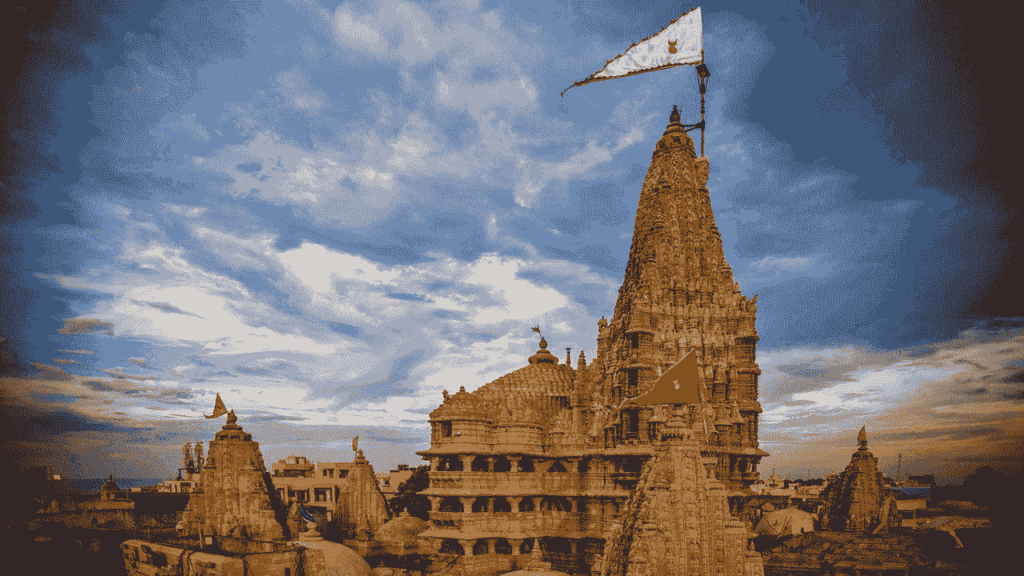
Dwarka and Somnath represent two of the most significant pilgrimage destinations in India, and together they form the most important spiritual circuit in Gujarat. Dwarka, located on the western tip of the Saurashtra peninsula, is one of the four sacred Char Dham pilgrimage sites and one of the seven holy cities (Sapta Puris) of Hinduism. It is believed to be the ancient kingdom of Lord Krishna, and the Dwarkadhish Temple — standing at the confluence of the Gomti River and the Arabian Sea — draws millions of devotees every year. Somnath, approximately 230 km south of Dwarka along the Gujarat coast, is home to the Somnath Jyotirlinga, the first and most revered of the 12 Jyotirlingas of Lord Shiva. The temple has been destroyed and rebuilt 17 times across centuries, making it one of the most potent symbols of spiritual resilience in all of India.
Planning the right season to visit both temples ensures comfortable darshan, access to key festivals, and a more enriching overall experience. Frenzy Holidays covers everything you need to know about the places to visit in Somnath and Dwarka to help you build the perfect Gujarat pilgrimage itinerary.
Confused where to go for quick escape? Let us plan it for you.
Grab the Best DealTable of Contents
Best Time to Visit Dwarka and Somnath by Season
Both Dwarka and Somnath are coastal destinations and their weather follows a broadly similar tropical pattern. The right season dramatically shapes the experience at both temples.
| Detail | Information |
|---|---|
| Dwarka Location | Western tip of Saurashtra, Gujarat |
| Somnath Location | Prabhas Patan, Veraval, Gujarat |
| Distance Between the Two | Approx. 230 km (5–6 hours by road) |
| Best Time to Visit | October to March |
| Peak Season | November to February |
| Best for Janmashtami | August (Dwarka) |
| Best for Maha Shivaratri | February (Somnath) |
| Dwarkadhish Temple Timings | 6:30 AM – 1:00 PM & 5:00 PM – 9:30 PM |
| Somnath Temple Timings | 6:00 AM – 10:00 PM |
| Entry Fee | Free at both temples |
| Nearest Airport | Jamnagar (137 km from Dwarka) / Rajkot (200 km from Somnath) |
October to March is the best time to visit Dwarka and Somnath. Temperatures across the Gujarat coast during these months stay between a comfortable 12°C and 28°C, with clear skies, gentle sea breezes, and dry conditions that make long walks between temple precincts, ghats, and beaches genuinely pleasant. Both Dwarkadhish and Somnath temples are fully accessible with no weather-related disruptions, and the evening aartis during this season have an extraordinary atmosphere. This period also coincides with key festivals including Diwali, Makar Sankranti, and Maha Shivaratri, adding cultural richness to the pilgrimage experience. Accommodation and travel prices are at their highest during December and January — booking well in advance is essential.
April to June sees temperatures rising sharply along the Gujarat coast, regularly crossing 40°C by May. Morning and evening temple visits remain manageable, but afternoon exploration is uncomfortable. April is still a reasonable month if visiting before the heat peaks. May and June are best avoided for outdoor sightseeing.
July to September is the monsoon season. Both Dwarka and Somnath receive moderate to heavy rainfall, and the coastal weather can be humid and occasionally rough. That said, Janmashtami — Lord Krishna’s birth anniversary — falls in August or September and is celebrated with extraordinary devotion at Dwarka. The entire town transforms during Janmashtami, with midnight ceremonies at the Dwarkadhish Temple drawing lakhs of devotees. If witnessing this festival is a priority, the monsoon discomfort is well worth it.
Festivals at Dwarka and Somnath – Best Times for a Special Darshan
Both temples have rich festival calendars. Timing your visit around a major event transforms the darshan experience entirely.
Janmashtami at Dwarka (August)
Janmashtami is the most significant and spectacular festival at Dwarka, celebrating Lord Krishna’s birth anniversary. The entire city comes alive — the Dwarkadhish Temple is adorned with lights and flowers, and the midnight ceremony (marking the exact moment of Krishna’s birth) draws lakhs of pilgrims who fast through the day and offer prayers in an atmosphere of extraordinary devotion. The sound of hymns, conch shells, and the sight of the illuminated temple against the dark Arabian Sea is something pilgrims describe as a once-in-a-lifetime experience. Accommodation must be booked months in advance for Janmashtami.
Maha Shivaratri at Somnath (February)
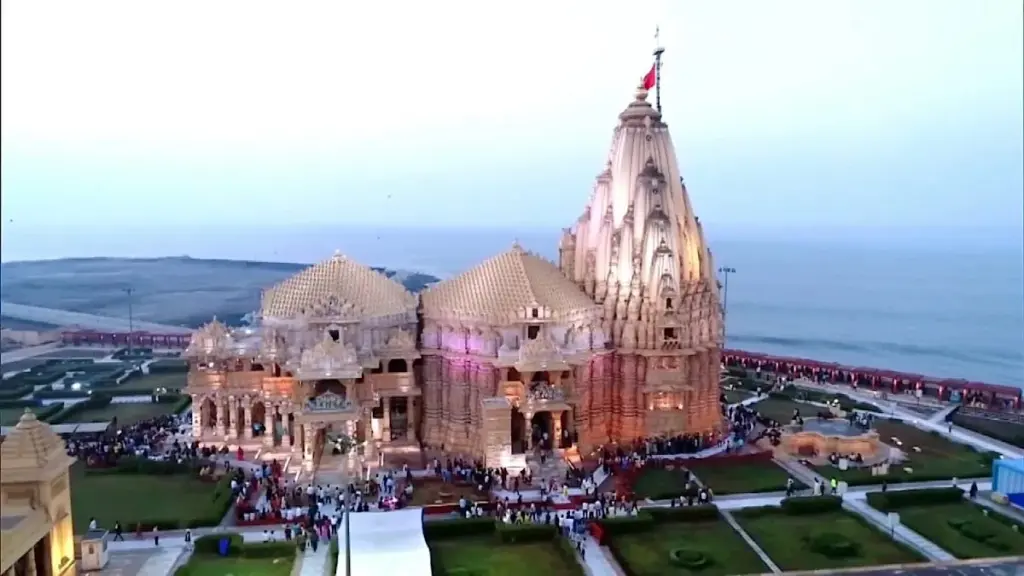
Maha Shivaratri is the biggest festival at Somnath Temple and one of the most significant in the entire Jyotirlinga pilgrimage circuit. The temple is elaborately decorated, the aarti sessions are extended and deeply ceremonial, and a grand fair is held nearby. Thousands of devotees flock to Somnath specifically for this occasion, many travelling from across Gujarat and beyond. The sight of Somnath Temple illuminated on Maha Shivaratri night, with the sound of the sea in the background, is profoundly moving. The best time to visit Somnath in detail is covered in Frenzy Holidays’ dedicated Somnath guide.
Diwali and Annakoot Utsav (October – November)
Diwali brings a spectacular atmosphere to both Dwarka and Somnath, with the temples illuminated and cultural festivities filling the streets. The day after Diwali, Annakoot Utsav is celebrated at Dwarkadhish Temple — a unique festival where an enormous variety of food items are offered to Lord Krishna and then distributed as prasad. This is one of the most joyful and visually striking celebrations at the temple.
Makar Sankranti (January)
Makar Sankranti in January is celebrated across Gujarat with kite flying, and both Dwarka and Somnath participate with great enthusiasm. The skies above the coastal towns fill with colourful kites, and the temples see special darshan and rituals on this auspicious day.
Somnath Dance Festival (February)
The Somnath Dance Festival is an annual classical dance event held against the stunning backdrop of the Somnath Temple in February. Renowned classical dancers from across India perform Bharatanatyam, Odissi, Kathak, and other forms, creating a cultural experience that pairs beautifully with the spiritual atmosphere of this pilgrimage site.
Dwarkadhish Temple – Darshan Timings and Key Details
The Dwarkadhish Temple (also known as Jagat Mandir) is one of the oldest and most significant temples in India, dating back over 2,500 years in its origins. The temple sits at the confluence of the Gomti River and the Arabian Sea, and its 72-pillared hall and elaborately carved 51.8-metre shikhara are considered masterpieces of Chalukya-style architecture. Entry to the temple is free for all devotees.
Darshan Timings: 6:30 AM to 1:00 PM and 5:00 PM to 9:30 PM daily.
Aarti Timings:
- Mangala Aarti: 6:30 AM
- Shringar Aarti: 10:30 AM
- Sandhya Aarti: 7:30 PM
- Shayan Aarti: 8:30 PM
The temple flag — bearing the sun and moon symbol — is changed five times daily, and witnessing this ceremony is a memorable experience for pilgrims. Photography and videography are strictly prohibited inside the temple. Dress conservatively; sleeveless clothing and shorts are not permitted. For a detailed guide to the best time to visit Dwarka Temple, Frenzy Holidays’ dedicated Dwarka guide covers darshan planning, nearby temples, and travel tips in full.
Somnath Temple – Darshan Timings and Key Details
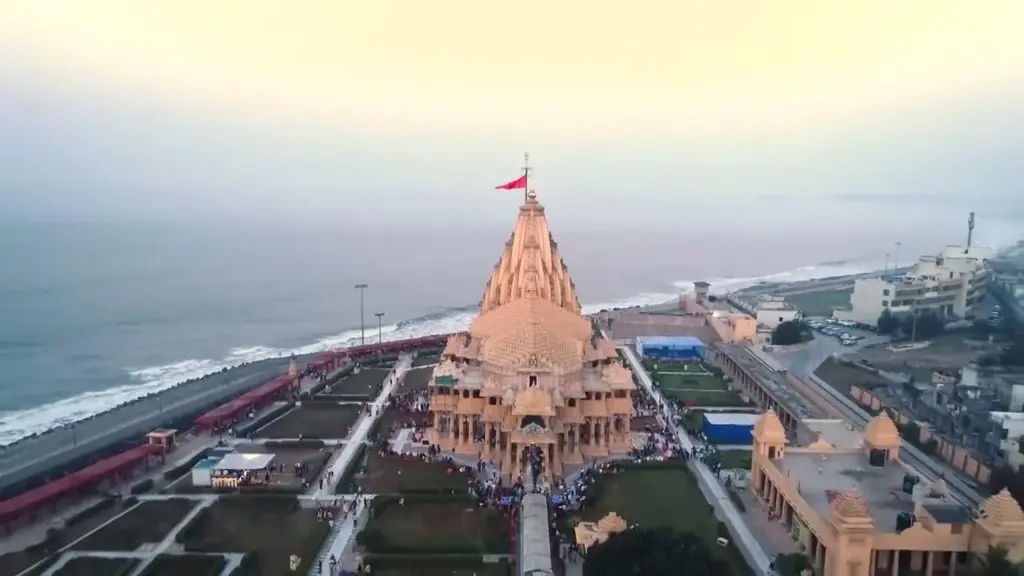
The current Somnath Temple was consecrated in 1951 by President Rajendra Prasad, with Sardar Vallabhbhai Patel championing its reconstruction as a symbol of national resilience. The temple stands on the western coast directly facing the Arabian Sea, with a Sound and Light Show narrated by Amitabh Bachchan held every evening at the temple complex. Entry is free.
Darshan Timings: 6:00 AM to 10:00 PM daily.
Aarti Timings:
- Morning Aarti: 7:00 AM
- Noon Aarti: 12:00 PM
- Evening Aarti: 7:00 PM
The Sound and Light Show runs for approximately 45 minutes in the evenings and is strongly recommended. Arrive by 5:30 AM for the morning aarti for the most peaceful darshan experience before the day crowds build up. Online booking for puja sevas is available through the official temple website at somnath.org.
Places to Visit Near Dwarka and Somnath
Both pilgrimage towns have several key attractions that enrich the overall experience beyond temple darshan.
Near Dwarka:
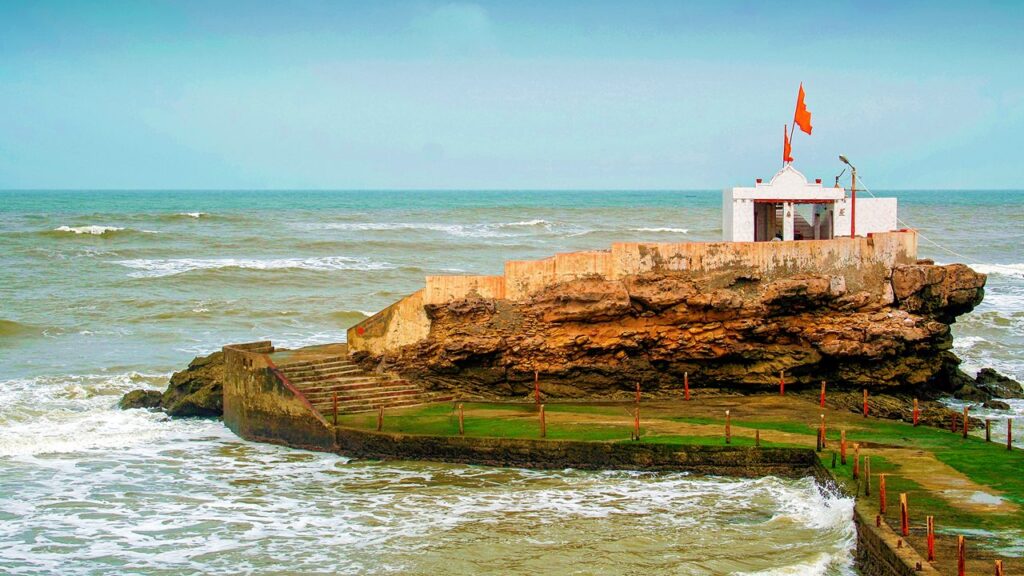
- Bet Dwarka (Beyt Dwarka) — An island accessible by ferry from Okha, believed to be Lord Krishna’s actual residence. The ferry crossing takes about 20–30 minutes and the island has several ancient temples. A must-visit as part of any Dwarka itinerary.
- Nageshwar Jyotirlinga — One of the 12 Jyotirlingas, approximately 17 km from Dwarka. A sacred Shiva temple that draws pilgrims from across India and pairs naturally with the Dwarka circuit.
- Rukmini Devi Temple — A beautifully carved temple dedicated to Lord Krishna’s consort Rukmini, located about 2 km from the Dwarkadhish Temple.
- Gomti Ghat — The sacred riverbank where the Gomti meets the Arabian Sea, adjacent to the Dwarkadhish Temple. An atmospheric spot for prayers, especially at sunrise.
Near Somnath:
- Bhalka Tirth — The sacred site where Lord Krishna is believed to have left his mortal body, approximately 4 km from Somnath Temple. One of the most poignant and significant stops on the Somnath circuit.
- Triveni Sangam — The confluence of three rivers (Hiran, Kapila, and Saraswati) with the sea, a short distance from the temple. Considered highly auspicious for ritual bathing.
- Somnath Beach — Located just behind the temple, this is an excellent spot for a peaceful walk, especially in the early morning or evening after darshan.
- Kavi Kamboi Temple — A lesser-known but spiritually significant temple near Somnath worth including in your itinerary. Frenzy Holidays’ guide on the best time to visit Kavi Kamboi Temple has all the details.
How to Reach Dwarka and Somnath
Dwarka and Somnath are well connected to major Gujarat cities and the rest of India by air, train, and road. Most pilgrims use Ahmedabad or Rajkot as the primary entry point and then travel by road or train to cover both destinations on the same trip. Here is a breakdown of all travel options.
By Air: Jamnagar Airport is the nearest airport to Dwarka, approximately 137 km away. Rajkot Airport is the most convenient option for Somnath at around 200 km. Ahmedabad’s Sardar Vallabhbhai Patel International Airport is the main gateway to Gujarat and is connected to both destinations by road.
By Train: Dwarka Railway Station is just 3 km from the Dwarkadhish Temple and is well connected to Ahmedabad, Rajkot, and Mumbai. Veraval Railway Station (10 km from Somnath) and Somnath Railway Station are the closest railheads for Somnath.
By Road: The two temples are approximately 230 km apart and are connected by a well-maintained coastal highway. The drive takes 5–6 hours by private cab or bus. From Ahmedabad, Dwarka is approximately 450 km (7–8 hours) and Somnath is approximately 420 km (6–7 hours). State and private buses connect both cities from Rajkot, Jamnagar, and Ahmedabad.
Practical Tips for Visiting Dwarka and Somnath
A well-planned Dwarka–Somnath trip ensures peaceful darshan, minimal waiting, and a spiritually fulfilling experience at both destinations. Keep these practical points in mind before you travel.
- Plan a minimum of 4–5 days to cover both destinations comfortably, including Bet Dwarka, Nageshwar Jyotirlinga, Bhalka Tirth, and Triveni Sangam.
- Dress conservatively at both temples. Sleeveless clothing, shorts, and revealing attire are not permitted inside the temple precincts.
- Arrive early for morning aarti — at Somnath, arriving by 5:30 AM ensures a peaceful experience before the crowds build up. At Dwarkadhish, the Mangala Aarti at 6:30 AM is the most serene session of the day.
- Photography is prohibited inside both temples. Carry only what you need and use the locker facilities provided.
- Gujarat is a dry state — alcohol is not available. Keep this in mind when planning your stay.
- Book accommodation in advance during peak season (October–March) and especially during Janmashtami and Maha Shivaratri when rooms fill up weeks ahead.
Also you can check out our blog about the Best Time to Visit Dwarka Temple so that it can help you find the best time on your next trip.
Conclusion
The best time to visit Dwarka and Somnath is October to March, when Gujarat’s pleasant winter climate makes temple darshan, coastal sightseeing, and the journey between these two sacred cities genuinely enjoyable. November to February is the peak season, with cool temperatures, clear skies, and the richest festival calendar. For devotees seeking a festival-centred experience, Janmashtami in August at Dwarka and Maha Shivaratri in February at Somnath are unmissable occasions. Whether you are visiting as a first-time pilgrim or returning to deepen your connection with two of Hinduism’s most significant shrines, timing your Dwarka and Somnath trip well transforms it from a simple tour into a deeply moving spiritual journey.

Frenzy Holidays ensures a smooth and enriching travel experience from start to finish. Visit us at Haware Centurion, S07/34, Nerul East, Sector 19A, Nerul, Navi Mumbai, Maharashtra 400706. For bookings or more information, call +91 7400453140, email [email protected], or visit www.frenzyholidays.com.
Best Time to Visit Dwarka and Somnath – FAQs
What is the best time to visit Dwarka and Somnath?
The best time to visit Dwarka and Somnath is October to March when the weather is cool and pleasant, all attractions are accessible, and the festival calendar is at its richest.
Which month is best for Dwarka and Somnath?
November and December are the best months to visit Dwarka and Somnath. The weather is ideal, the temples are beautifully lit during Diwali, and the cool sea breeze makes darshan and coastal exploration very comfortable.
What are the Dwarkadhish Temple darshan timings?
Dwarkadhish Temple is open for darshan from 6:30 AM to 1:00 PM and 5:00 PM to 9:30 PM daily. Aarti sessions are held at 6:30 AM (Mangala), 10:30 AM (Shringar), and 7:30 PM (Sandhya).
What are the Somnath Temple darshan timings?
Somnath Temple is open for darshan from 6:00 AM to 10:00 PM daily. Aartis are conducted at 7:00 AM, 12:00 PM, and 7:00 PM. The evening Sound and Light Show is held after the evening aarti.
What is the best time to visit Dwarka for Janmashtami?
Janmashtami at Dwarka falls in August or September and is the most spectacular festival at the Dwarkadhish Temple. The midnight ceremony marking Lord Krishna’s birth is an extraordinary experience worth planning a trip around.
Is Somnath worth visiting during Maha Shivaratri?
Yes, Maha Shivaratri in February is the most important festival at Somnath Temple. The temple is elaborately decorated, extended aartis are performed, and thousands of devotees gather for an extraordinarily devotional atmosphere.
How many days are needed to cover Dwarka and Somnath?
A minimum of 4–5 days is recommended to comfortably cover both destinations including Bet Dwarka, Nageshwar Jyotirlinga, Bhalka Tirth, Triveni Sangam, and key temples at both locations.
How far is Somnath from Dwarka?
Somnath is approximately 230 km from Dwarka. The drive takes 5–6 hours by road via the coastal highway connecting the two pilgrimage towns.
Is entry free at Dwarkadhish and Somnath temples?
Yes, entry is free at both the Dwarkadhish Temple in Dwarka and the Somnath Temple. Puja sevas and offerings are optional and can be booked separately.
What are the places to visit near Somnath and Dwarka?
Near Dwarka, Bet Dwarka, Nageshwar Jyotirlinga, Rukmini Devi Temple, and Gomti Ghat are the key attractions. Near Somnath, Bhalka Tirth, Triveni Sangam, Somnath Beach, and Kavi Kamboi Temple are important stops.
