
The best time to visit Gurudongmar Lake is from April to June and October to November, when the weather is clear, roads are accessible, and the lake reveals its extraordinary turquoise beauty against a backdrop of snow-capped Himalayan peaks. April to June is the most popular window. Monsoon (July to mid-September) brings heavy rainfall, landslides, and dangerous road conditions that make the high-altitude journey inadvisable.
Gurudongmar Lake sits at an elevation of approximately 17,800 feet (5,430 metres) in the North district of Sikkim, making it one of the highest lakes in the world. Located just 5 km from the Indo-China border, it falls within a protected military zone and is open only to Indian nationals with a valid Protected Area Permit. Named after Guru Padmasambhava, who is believed to have blessed the lake in the 8th century, Gurudongmar is sacred to Buddhists, Hindus, and Sikhs alike — and one small portion of the lake is said to never freeze, even at -20°C. The lake is also one of the primary sources of the River Teesta. At roughly 175 km from Gangtok via Lachen, the journey passes through Thangu Valley and Chopta Valley, two of the most scenic alpine corridors in Northeast India.
Frenzy Holidays recommends pairing a Gurudongmar Lake trip with a broader North Sikkim itinerary. For ideas on what else to explore in the region, check out our guide to offbeat places in Sikkim and historical places in Sikkim.
Confused where to go for quick escape? Let us plan it for you.
Grab the Best DealTable of Contents
Best Time to Visit Gurudongmar Lake — Season Wise Guide
Gurudongmar Lake’s extreme altitude means its seasons are sharp and unforgiving, each offering a completely different experience. The right time to visit depends on whether you want to see the lake thawed and reflective, blanketed in winter ice, or framed by blooming alpine flowers. Here is a quick reference followed by the full seasonal breakdown.
| Detail | Information |
|---|---|
| Location | North District, Sikkim (near Indo-China Border) |
| Altitude | 17,800 ft (5,430 m) above sea level |
| Distance from Gangtok | Approximately 175 km |
| Distance from Lachen | Approximately 68–70 km |
| Best Time to Visit | April to June and October to November |
| Peak Season | May to June |
| Winter Visit Window | November to March (frozen lake, extreme cold) |
| Monsoon / Avoid | July to mid-September |
| Nearest Airport | Bagdogra Airport, Siliguri (approx. 200 km from Gangtok) |
| Nearest Railway Station | New Jalpaiguri (NJP), West Bengal (approx. 220 km from Gangtok) |
| Permit Required | Protected Area Permit (PAP) — Indian nationals only |
| Foreign Nationals | Not permitted beyond Thangu Village |
Season Wise Best Time to Visit Gurudongmar Lake
Each season at Gurudongmar Lake brings a distinct experience — from mirror-clear turquoise waters in spring to a frozen ice sheet in deep winter. Here is a breakdown to help you choose the right time based on what kind of experience you are looking for.
April to June (Peak Season — Best Time to Visit Gurudongmar Lake)
- Temperatures: -5°C to 5°C at the lake; milder at Lachen
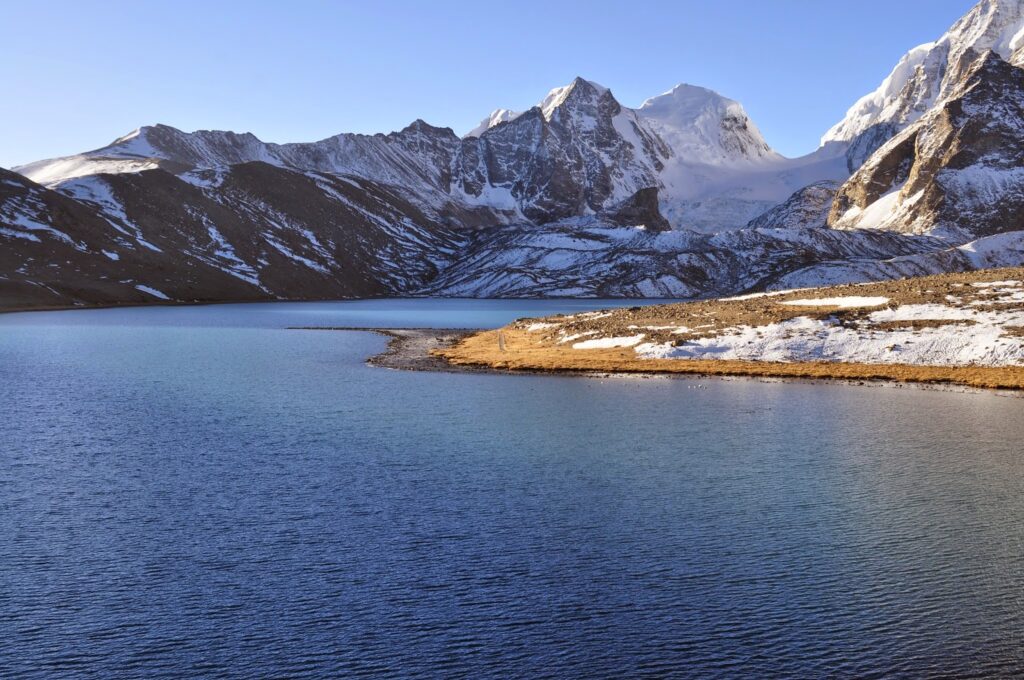
- The ice on the lake melts through April and May, revealing the famous turquoise blue water
- Rhododendrons, orchids, and alpine wildflowers bloom across Thangu and Chopta Valley during May and June
- Road conditions are at their most stable and accessible
- Skies are largely clear, offering excellent photography conditions
- May is the single best month — pleasant weather, clear water, blooming valleys
- Book Lachen accommodation well in advance as this is the busiest season
October to November (Shoulder Season — Second Best Window)
- Temperatures: -15°C to -2°C in November; marginally warmer in October
- Crisp, clear air with excellent visibility across the Kanchenjunga Range
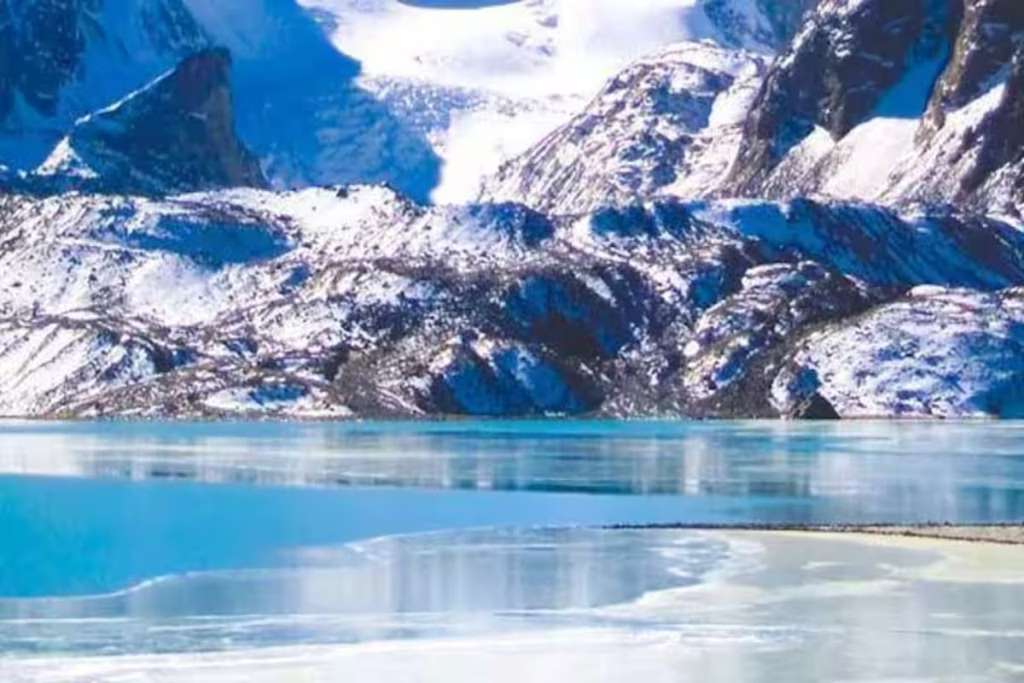
- The lake is partially frozen by November — a stunning visual with ice forming at the edges
- Far fewer tourists than the April to June peak season
- October and November are ideal for photographers seeking dramatic, crowd-free landscapes
- Road conditions remain manageable before the heaviest winter snowfall
December to March (Winter Season)
- Temperatures: -20°C to -8°C, with extreme cold and heavy snowfall
- The lake is almost entirely frozen, with only the legendarily unfrozen portion remaining open
- Road conditions can be dangerous; road blocks due to snowfall are a significant risk
- Recommended only for well-prepared travellers who specifically want a snow and ice experience
- Children below 5 years and individuals above 65 years are advised not to visit due to altitude and cold
July to mid-September (Monsoon — Avoid)
- Temperatures: 0°C to 10°C, heavy and continuous rainfall
- North Sikkim is a landslide-prone region; roads to Lachen and the lake are frequently blocked or dangerous
- Gurudongmar Lake is effectively inaccessible for most of this period
- Not recommended for a visit under any circumstances during the monsoon peak
Gurudongmar Lake Season Wise Highlights
April to June (Peak Season): Ice melts to reveal turquoise waters, rhododendron and orchid blooms across Thangu and Chopta Valley, best road conditions, peak photography season. May is the single most rewarding month. Book Lachen stays several weeks in advance.
October to November (Post-Monsoon): Crisp skies and excellent visibility, partially frozen lake by November, fewer crowds. Ideal for photographers and those seeking solitude in the Himalayan landscape.
December to March (Winter): Fully or largely frozen lake, extreme temperatures down to -20°C, heavy snowfall and risk of road blocks. For experienced cold-weather travellers only. Not suitable for children under 5 or elderly visitors.
July to mid-September (Monsoon): Avoid. Landslides, blocked roads, and inaccessible high-altitude terrain make this period unsafe for the Gurudongmar Lake journey.
Places to Visit Near Gurudongmar Lake
The journey to Gurudongmar Lake passes through some of North Sikkim’s finest landscapes. Several destinations along the route and in the wider region are well worth including in your itinerary.
Lachen Village
Lachen is the essential overnight base for all visits to Gurudongmar Lake, positioned at an altitude of 2,750 metres in the mountains of northern Sikkim. This quiet Himalayan hamlet, far removed from the bustle of Gangtok, offers guesthouses, homestays, and local restaurants serving Sikkimese, Indian, and Chinese food. An overnight acclimatisation stop in Lachen is not just recommended — it is necessary for safety before ascending to the extreme altitude of Gurudongmar Lake. The village also serves as the base for visits to Chopta Valley.
Thangu Valley
Thangu Valley is a high-altitude alpine meadow approximately 2 hours from Lachen, and the first major stop on the morning drive to Gurudongmar Lake. Sitting at around 3,900 metres, Thangu is famous for its seasonal wildflowers, particularly during May and June. A small hamlet with tea stalls and army presence, it is a popular breakfast stop on the way to the lake. Foreign nationals who cannot proceed to the lake are permitted to visit Thangu with a local guide.
Chopta Valley
Chopta Valley, between Thangu and Gurudongmar Lake, is one of the most scenic stretches of the entire North Sikkim circuit. Known for its riot of alpine flowers and sweeping mountain panoramas in spring, Chopta Valley is often described as a miniature Valley of Flowers. During winter, the entire valley is covered in snow, presenting a spectacular white landscape.
Yumthang Valley (Valley of Flowers)
Yumthang Valley, approximately 24 km from Lachung, is one of Sikkim’s most celebrated destinations and is often combined with a Gurudongmar Lake trip as part of a 3-day North Sikkim circuit. Known as the Sikkim Valley of Flowers, Yumthang bursts into bloom with rhododendrons and alpine flowers from March to May. The valley also has natural hot springs and panoramic views of the surrounding peaks.
Zero Point (Yumesamdong)
Zero Point, at an altitude of approximately 15,300 feet, is the farthest point on the Lachung route that civilians are permitted to access. Covered in snow for most of the year, Zero Point offers a raw, elemental landscape of ice, snow, and high-altitude silence. It is typically combined with a Yumthang Valley visit on Day 3 of the standard North Sikkim itinerary.
Lachung Village
Lachung is a picturesque mountain village described by the 19th-century botanist Joseph Dalton Hooker as the most beautiful village in Sikkim. Surrounded by apple orchards, dense pine forests, waterfalls, and the historic Lachung Monastery, the village serves as the base for Yumthang Valley visits and is a natural overnight stop on the North Sikkim circuit.
For those keen to explore the wider Gangtok region before or after a Gurudongmar trip, Frenzy Holidays has curated guides to the best tourist places in Gangtok and offbeat places near Gangtok to help you plan a complete Sikkim itinerary.
How to Reach Gurudongmar Lake
Getting to Gurudongmar Lake is a multi-day journey that requires careful planning, prior permits, and an overnight acclimatisation stop at Lachen. Here is a breakdown of all travel options.
How to Reach Gurudongmar Lake by Air?
The nearest airport to Gurudongmar Lake is Bagdogra Airport in Siliguri, West Bengal, approximately 200 km from Gangtok. Bagdogra is well connected to major Indian cities including Kolkata, Delhi, and Mumbai. From Bagdogra, a shared or private taxi to Gangtok takes approximately 3 to 4 hours. Pakyong Airport near Gangtok also operates limited flights. From Gangtok, the journey to Lachen takes 6 to 7 hours by road, followed by the early morning drive to the lake from Lachen.
How to Reach Gurudongmar Lake by Train?
The nearest major railway station is New Jalpaiguri (NJP) in West Bengal, approximately 220 km from Gangtok. NJP is well connected to Kolkata, Delhi, and other major cities. From NJP, taxis and shared cabs to Gangtok are readily available and take approximately 4 to 5 hours. From Gangtok, travellers proceed to Lachen by road before the final drive to the lake.
How to Reach Gurudongmar Lake by Road?
From Gangtok, Lachen is approximately 120 km by road, taking around 6 to 7 hours through mountain terrain via the Teesta River route and Chungthang. An overnight stay in Lachen is mandatory. Travellers depart Lachen very early the next morning — around 4:00 to 5:00 AM — and reach Gurudongmar Lake after a 3 to 4 hour drive through Thangu Valley and Chopta Valley. The total road distance from Gangtok to the lake is approximately 175 km. Only suitable high-clearance vehicles such as Tata Sumo, Mahindra Scorpio, or Xylo can manage the rough terrain on the final stretch to the lake.
Permit Information for Gurudongmar Lake
A Protected Area Permit (PAP) is mandatory for all Indian nationals wishing to visit Gurudongmar Lake. Foreign nationals are not permitted beyond Thangu Village due to the lake’s proximity to the Indo-China border.
- Permits are issued through registered tour operators in Gangtok or directly at the Tourism and Civil Aviation Department
- Documents required: valid government-issued photo ID (Aadhaar card, Voter ID, Passport, or Driving Licence) and two passport-sized photographs
- Apply at least one day before departing for Lachen; permits are generally issued by noon each day
- Carry multiple photocopies of your permit and ID as they will be checked at several military checkpoints en route
- A minimum group of two persons is required for permit issuance
- It is strongly recommended to use a registered tour operator who will handle all permit paperwork as part of the package
Practical Tips for Visiting Gurudongmar Lake
A few important points to keep in mind before heading to one of the world’s highest lakes.
- Acclimatise at Lachen before ascending. Spend at least one night in Lachen at 2,750 metres before attempting the drive to the lake at 5,430 metres. Skipping acclimatisation significantly increases the risk of altitude sickness.
- Depart from Lachen by 4:00 to 5:00 AM. An early start is essential to reach the lake before afternoon cloud cover rolls in and to complete the round trip safely before nightfall.
- Carry warm clothing regardless of the month. Temperatures at the lake can drop sharply at any time of year, especially in the early morning. Carry thermal layers, gloves, and a windproof jacket even if visiting in May or June.
- Limit time at the lake to 30 to 45 minutes. The extreme altitude means prolonged exposure can cause dizziness, breathlessness, and altitude sickness. Take photographs, absorb the view, and begin the descent on time.
- Children below 5 years and travellers above 65 years should not visit. The Indian Army enforces age restrictions at checkpoints due to the extreme altitude and oxygen levels.
- Consult a doctor about altitude medication. Diamox (acetazolamide) is commonly recommended by travel doctors for high-altitude visits. Carry it as a precaution.
- Mobile connectivity is patchy beyond Lachen. Download offline maps, inform your guesthouse of your return plan, and carry all emergency contacts in written form.
- Book Lachen accommodation well in advance for April to June. This is the peak season and guesthouses fill up quickly, particularly on weekends and long holidays.
Conclusion
The best time to visit Gurudongmar Lake is April to June, when the lake is fully thawed, alpine flowers line the route through Thangu and Chopta Valley, and roads are at their most accessible. October and November are the best alternative, offering crisp skies and a partially frozen lake with fewer crowds. Whenever you visit, the journey through Lachen and the high-altitude valleys of North Sikkim is as memorable as the lake itself.

Frenzy Holidays ensures a smooth and enriching travel experience from start to finish. Visit us at Haware Centurion, S07/34, Nerul East, Sector 19A, Nerul, Navi Mumbai, Maharashtra 400706. For bookings or more information, call +91 7400453140, email [email protected], or visit www.frenzyholidays.com.
Best Time to Visit Gurudongmar Lake — FAQs
What is the best time to visit Gurudongmar Lake?
April to June is the best time to visit Gurudongmar Lake, with clear skies and accessible roads. October to November is a good second window. Avoid monsoon (July to mid-September) due to landslides and blocked roads.
What is the altitude of Gurudongmar Lake?
Gurudongmar Lake sits at approximately 17,800 feet (5,430 metres) above sea level, making it one of the highest lakes in the world.
Is a permit required to visit Gurudongmar Lake?
Yes. Indian nationals need a Protected Area Permit (PAP), obtainable through a registered tour operator in Gangtok at least one day before departure. Foreign nationals are not permitted beyond Thangu Village.
Can foreign tourists visit Gurudongmar Lake?
No. Foreign nationals cannot visit Gurudongmar Lake due to its proximity to the Indo-China border. They may travel up to Thangu Village with a local guide.
How far is Gurudongmar Lake from Gangtok?
Gurudongmar Lake is approximately 175 km from Gangtok by road, requiring an overnight stop in Lachen before the early morning drive to the lake.
What is the legend behind Gurudongmar Lake?
The lake is named after Guru Padmasambhava, who is believed to have blessed it in the 8th century. Legend says he touched a portion of the lake with his staff, and that portion has never frozen since — even at -20°C.
Does Gurudongmar Lake freeze in winter?
Yes, almost entirely between December and March. One small section is believed never to freeze due to Guru Rinpoche’s blessing. In November, you can see the ice forming at the edges.
How many days are needed to visit Gurudongmar Lake?
A minimum of 3 days from Gangtok — Day 1 to Lachen, Day 2 for the lake visit and onward to Lachung, Day 3 for Yumthang Valley and return to Gangtok. Keep a buffer day for permits or weather delays.
Where should I stay for a visit to Gurudongmar Lake?
Lachen is the overnight base. It has guesthouses and homestays. There is no accommodation near the lake itself, and a night in Lachen is essential for acclimatisation.
What are the places to visit near Gurudongmar Lake?
Lachen, Thangu Valley, Chopta Valley, Yumthang Valley, Zero Point, and Lachung are the key stops, typically covered as part of a 3-day North Sikkim circuit from Gangtok.
