
The best time to visit Hemkund Sahib is from late May to June and September to early October, when the weather is clear, trekking trails are safe, and the Gurudwara is fully accessible. June is the most comfortable month for first-time pilgrims. Hemkund Sahib remains completely closed from October to May due to heavy snowfall and inaccessible high-altitude terrain.
Hemkund Sahib is one of the highest Sikh Gurudwaras in the world, located in the Chamoli district of Uttarakhand at an elevation of approximately 4,329 metres (14,200 feet) in the Garhwal Himalayas. The Gurudwara sits beside the pristine glacial Hemkund Lake, encircled by seven snow-covered peaks, creating one of the most spiritually charged and visually extraordinary settings in all of India. According to Sikh tradition, Guru Gobind Singh Ji, the tenth Sikh Guru, meditated at this very location in a previous life, as described in his autobiography the Dasam Granth. The Gurudwara was rediscovered in the early 20th century and has since become one of the most important pilgrimage sites in the country. The trek to Hemkund Sahib begins at Govindghat, approximately 275 km from Rishikesh, and passes through the base village of Ghangaria before the final steep ascent to the Gurudwara. The site is also the gateway to the Valley of Flowers, a UNESCO World Heritage Site, making a combined pilgrimage and nature visit one of the most rewarding Himalayan experiences in Uttarakhand.
For a broader look at what the region has to offer, explore Frenzy Holidays’ curated guide to religious places in Uttarakhand and offbeat places in Uttarakhand.
Confused where to go for quick escape? Let us plan it for you.
Grab the Best DealTable of Contents
Best Time to Visit Hemkund Sahib — Season Wise Guide
Hemkund Sahib is open for pilgrims for only five to six months each year. The Gurudwara’s extreme altitude and the Himalayan weather patterns make the timing of your visit critical, both for safety and for the quality of the experience. Here is a quick reference followed by the full seasonal breakdown.
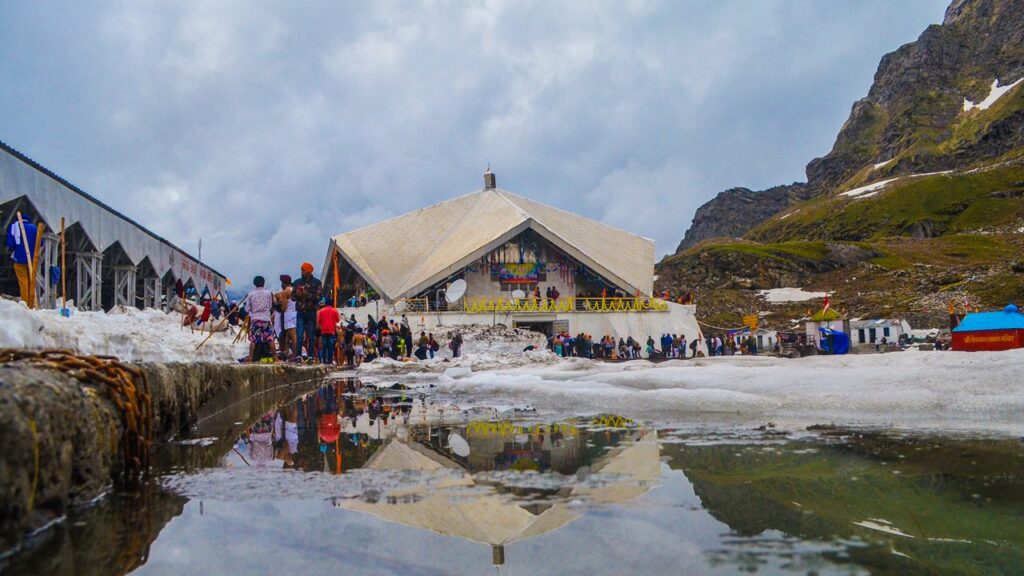
| Detail | Information |
|---|---|
| Location | Chamoli District, Uttarakhand (Garhwal Himalayas) |
| Altitude | 4,329 m (14,200 ft) above sea level |
| Opening Date 2026 | 25 May 2026 |
| Closing Date | Early October (weather-dependent, typically around 10 October) |
| Best Time to Visit | Late May to June and September to early October |
| Peak Season | June and September |
| Monsoon Season | Mid-July to August (open but risky) |
| Closed Season | October to late May |
| Trek Starting Point | Govindghat (approx. 275 km from Rishikesh) |
| Total Trek Distance | Approx. 20 km from Govindghat (14 km to Ghangaria + 6 km to Hemkund Sahib) |
| Nearest Airport | Jolly Grant Airport, Dehradun (approx. 300 km) |
| Nearest Railway Station | Haridwar / Rishikesh |
Season Wise Best Time to Visit Hemkund Sahib
Each season at Hemkund Sahib offers a distinct experience for pilgrims and trekkers. Understanding the best time to visit Hemkund Sahib helps you choose a window that is safe, comfortable, and spiritually fulfilling.
Late May to June (Peak Season — Best Time to Visit Hemkund Sahib)
- Temperatures: 10°C to 20°C, cool and comfortable for trekking
- The Gurudwara opens in late May after snow clearance through Kar Seva (volunteer service) by the Sikh community
- Trails are at their most accessible, with lower risks of landslides compared to monsoon months
- June is widely considered the best and safest month for first-time pilgrims and senior citizens
- Skies are generally clear in the early weeks of June before monsoon sets in
- Hemkund Lake is partially ice-covered in late May, offering a dramatic winter-edge landscape
- Accommodation at Ghangaria and Govindghat fills up fast — book well in advance
September to Early October (Second Best Window)
- Temperatures: 5°C to 15°C, crisp and cool
- Post-monsoon skies are at their clearest, with excellent visibility across the surrounding peaks
- The Valley of Flowers is at its most colourful and fully bloomed during this period
- Significantly fewer crowds compared to June, making for a more peaceful darshan experience
- Trails are generally stable after the monsoon, though some sections may still be muddy
- The Gurudwara typically closes around 10 October — plan your visit to allow a comfortable buffer
Mid-July to August (Monsoon Season — Open but Caution Required)
- Temperatures: 12°C to 22°C, heavy rainfall throughout the region
- This is when the Valley of Flowers reaches peak bloom, with over 500 species of alpine flowers in full colour
- Landslides and slippery trails are a significant risk, particularly on the Govindghat to Ghangaria stretch
- The Gurudwara remains open but weather disruptions can cause temporary closures
- Not recommended for first-time visitors, elderly pilgrims, or those without prior trekking experience
- Travel with a registered tour operator and monitor weather forecasts closely
October to Late May (Closed Season)
- Hemkund Sahib is completely inaccessible during this period
- Heavy snowfall blankets all trekking routes, and the Gurudwara premises are shut
- Ghangaria is entirely vacated by local residents who move to lower altitudes for winter
- No darshan is possible during this period under any circumstances
Hemkund Sahib Season Wise Highlights
Here is a quick snapshot of what each season offers to help you decide the best time to visit Hemkund Sahib based on your travel priorities.
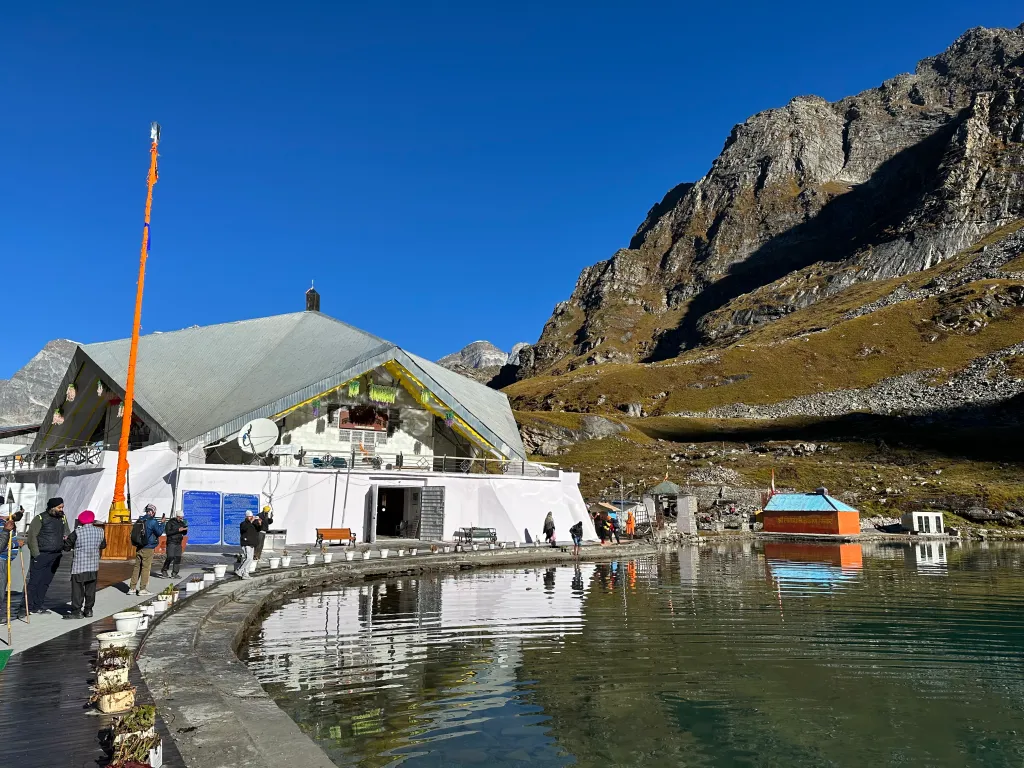
Late May to June (Best Time): Pleasant trekking temperatures, trails open and accessible, clear skies, best conditions for senior pilgrims and first-timers. Hemkund Lake partially frozen in late May. Book accommodation weeks ahead.
September to October (Post-Monsoon): Crisp post-monsoon skies, Valley of Flowers in full bloom, fewer crowds, peaceful darshan experience. Gurudwara closes by early October — plan accordingly.
Mid-July to August (Monsoon): Valley of Flowers at peak bloom, Gurudwara open, but heavy rains and landslide risks make this challenging. Recommended only for experienced trekkers with a flexible itinerary.
October to May (Closed): Hemkund Sahib is completely shut. All trekking routes are snow-covered and inaccessible. No pilgrimage is possible during this period.
Places to Visit Near Hemkund Sahib
The region surrounding Hemkund Sahib is rich with natural and spiritual attractions that can be combined into a fuller Uttarakhand itinerary. Since the best time to visit Hemkund Sahib overlaps with the peak season for several nearby destinations, planning a multi-stop trip is both practical and rewarding. Whether you are visiting for the darshan, the high-altitude trekking, or the valley landscapes, the places below are well worth adding to your itinerary.
Valley of Flowers
The Valley of Flowers National Park is a UNESCO World Heritage Site located approximately 3 km from Ghangaria, making it the most natural companion to a Hemkund Sahib yatra. The valley is home to over 500 species of alpine wildflowers, including the rare Himalayan Blue Poppy, Brahma Kamal, and Bistorta. From mid-July to August, the valley transforms into a sweeping carpet of colour that is unlike anything else in India. The Valley of Flowers trek from Ghangaria is a moderate 7 to 8 km round trip and is accessible from the same base camp as Hemkund Sahib.
Ghangaria
Ghangaria (also spelled Ghangharia), at an altitude of approximately 3,100 metres, is the base camp for both Hemkund Sahib and the Valley of Flowers. This small mountain settlement has guesthouses, dharamsalas, dhabas, a helipad, and basic supplies. An overnight stay at Ghangaria is essential for acclimatisation before the steep ascent to Hemkund Sahib. The Gurudwara at Ghangaria also provides free langar (community meals) for pilgrims.
Lokpal Lakshman Temple
Lokpal Temple, dedicated to Lord Lakshman, stands right beside Gurdwara Hemkund Sahib at the same altitude. According to Hindu belief, Lord Lakshman performed penance at this very site after killing Meghnad, the son of Ravana. The temple makes Hemkund Sahib equally significant as a Hindu pilgrimage site alongside its Sikh spiritual importance.
Govindghat
Govindghat is the gateway town and trek starting point for Hemkund Sahib, located at approximately 1,828 metres on the Rishikesh-Badrinath National Highway. The town has hotels, a large Gurudwara, restaurants, and essential trekking supply shops. Most pilgrims spend the first night here before beginning the trek to Ghangaria the following morning.
Joshimath
Joshimath, approximately 22 km from Govindghat, is a major base town for the entire region. At an elevation of around 1,875 metres, Joshimath serves as the winter seat of Lord Badrinath and is home to several ancient temples including the Narasimha Temple and the historic Adi Shankaracharya Math. The town is a natural overnight stop for those travelling from Rishikesh or Haridwar toward Hemkund Sahib.
Badrinath Dham
Badrinath, one of the four Char Dham pilgrimage sites, is approximately 45 km from Govindghat and is a natural addition to a Hemkund Sahib yatra. The famous Badrinath Temple, dedicated to Lord Vishnu, sits at an altitude of 3,133 metres beside the Alaknanda River with the Neelkanth Peak as a backdrop. Hemkund Sahib is often referred to as the Fifth Dham of Uttarakhand, and the two sites are frequently combined.
Frenzy Holidays also recommends pairing your Hemkund Sahib yatra with a visit to place to visit in Kumaon for a broader Uttarakhand mountain experience. If you are exploring other spiritual destinations in the hills, our guide to the best time to visit Kainchi Dham is a useful companion read.
How to Reach Hemkund Sahib
The journey to Hemkund Sahib is a combination of road travel and trekking. All routes converge at Govindghat, from where the trek begins. Since the best time to visit Hemkund Sahib is late May to June and September to early October, planning your travel connections around these windows ensures the most reliable road conditions and transport availability. Most pilgrims start from Haridwar or Rishikesh and make their way to Govindghat via Joshimath before beginning the two-stage trek to the Gurudwara.
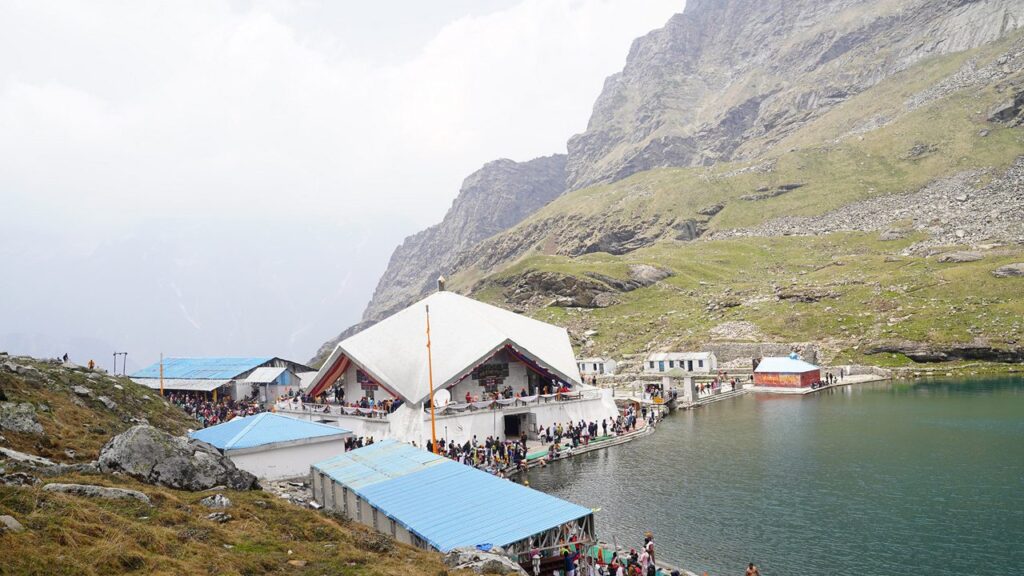
How to Reach Hemkund Sahib by Air?
The nearest airport to Hemkund Sahib is Jolly Grant Airport in Dehradun, approximately 300 km from Govindghat. From the airport, taxis and buses are available to Rishikesh and Haridwar, from where onward road transport to Govindghat can be arranged. The full journey from Dehradun to Govindghat takes approximately 9 to 10 hours by road.
How to Reach Hemkund Sahib by Train?
The nearest major railway stations are Haridwar and Rishikesh, both well connected to Delhi, Mumbai, Kolkata, and other major cities. From Haridwar or Rishikesh, the road journey to Govindghat covers approximately 270 to 275 km and takes around 9 to 10 hours by taxi or bus, passing through Devprayag, Rudraprayag, Chamoli, and Joshimath.
How to Reach Hemkund Sahib by Road?
From Delhi, Govindghat is approximately 500 km by road via Haridwar, Rishikesh, and Joshimath. Overnight buses from Delhi to Rishikesh or Haridwar are available, followed by onward taxis or shared jeeps to Govindghat. From Govindghat, a shared taxi or private vehicle can cover the first 4 km to Pulna village, reducing the trek to Ghangaria from 14 km to approximately 10 km. From Ghangaria, the final 6 km steep ascent to Hemkund Sahib is done entirely on foot.
How to Reach Hemkund Sahib by Helicopter?
A helicopter service from Govindghat to Ghangaria is available during the Yatra season, offering an 8 to 10 minute flight that bypasses the 14 km Govindghat-Ghangaria trek. This is particularly popular with elderly pilgrims, families with young children, and those with physical limitations. Helicopter tickets should be booked well in advance, especially during peak season in June.
Practical Tips for Visiting Hemkund Sahib
Key points to keep in mind before heading on the Hemkund Sahib Yatra.
- Start your trek from Govindghat early in the morning. The Gurudwara closes between 12:00 PM and 2:00 PM daily and for the evening after approximately 7:00 PM. An early start from Ghangaria by 5:00 to 6:00 AM ensures you reach Hemkund Sahib in time for morning darshan.
- Acclimatise at Ghangaria overnight. Rushing directly from Govindghat to Hemkund Sahib in a single day is not advisable. A night at Ghangaria (3,100 m) helps your body adjust before the final ascent to 4,329 m.
- Carry warm clothing regardless of the month. Temperatures at Hemkund Sahib can drop sharply even in June. Thermal layers, a windproof jacket, gloves, and a woollen cap are essential.
- Pony, palki, and porter services are available from Govindghat to Ghangaria for pilgrims who need assistance. Ponies are not allowed on the Ghangaria to Hemkund Sahib stretch.
- Collect your entry card at Govindghat. A free entry card with your photo and details is issued at the registration booth near the Gurudwara at Govindghat. This is for administrative and safety tracking purposes.
- Combine your visit with the Valley of Flowers. Adding one extra day at Ghangaria to explore the Valley of Flowers is strongly recommended. The Valley is at its most spectacular from late July to August.
- Check the official opening and closing dates each year. Hemkund Sahib’s opening date is announced by the Gurdwara Shri Hemkund Sahib Management Trust and may vary by a few days depending on snow clearance.
- Book Ghangaria accommodation well in advance for peak season (June). Guesthouses and dharamsalas fill up quickly during the busiest weeks of the Yatra.
Conclusion
The best time to visit Hemkund Sahib is late May to June, when the trails are accessible, weather is at its most comfortable, and darshan at this breathtaking high-altitude Gurudwara is a truly unforgettable spiritual experience. September and early October offer a peaceful, crowd-free alternative with clear post-monsoon skies and the added bonus of the Valley of Flowers in full bloom.

Frenzy Holidays ensures a smooth and enriching travel experience from start to finish. Visit us at Haware Centurion, S07/34, Nerul East, Sector 19A, Nerul, Navi Mumbai, Maharashtra 400706. For bookings or more information, call +91 7400453140, email [email protected], or visit www.frenzyholidays.com.
Best Time to Visit Hemkund Sahib — FAQs
What is the best time to visit Hemkund Sahib?
Late May to June and September to early October. June is best for comfortable trekking; September is ideal for fewer crowds and clear skies.
When does Hemkund Sahib open and close in 2026?
Hemkund Sahib opens on 25 May 2026 and closes around 10 October 2026. Dates may vary based on weather — always verify before travelling.
Can senior citizens visit Hemkund Sahib?
Yes. Pony, palki, and porter services are available from Govindghat to Ghangaria. A helicopter option is also available. The final 6 km to Hemkund Sahib is on foot, so basic fitness is required.
What is the total trek distance for Hemkund Sahib?
Approximately 20 km from Govindghat — 14 km to Ghangaria and 6 km from Ghangaria to Hemkund Sahib. The first 4 km can be covered by shared taxi up to Pulna.
Is Hemkund Sahib open during monsoon?
Yes, but it is not recommended for first-timers or elderly pilgrims due to landslide risks and slippery trails. July to August is when the Valley of Flowers is at peak bloom.
What is the significance of Hemkund Sahib?
It is believed to be the site where Guru Gobind Singh Ji meditated in a previous life, as mentioned in the Dasam Granth. The adjacent Lokpal Temple is also sacred to Hindus as the penance site of Lord Lakshman.
Is a permit required to visit Hemkund Sahib?
No permit is needed. Pilgrims collect a free entry card at the registration booth near the Govindghat Gurudwara for safety tracking purposes.
How many days are needed to visit Hemkund Sahib?
Minimum 3 to 4 days from Rishikesh — Day 1 to Govindghat, Day 2 to Ghangaria, Day 3 for darshan and return to Ghangaria, Day 4 descent. Add a day for the Valley of Flowers.
Where should I stay for Hemkund Sahib?
Ghangaria is the base camp with guesthouses, dharamsalas, and free langar at the Gurudwara. Govindghat has hotels for the first night. No accommodation exists at Hemkund Sahib.
Can Hemkund Sahib be combined with Badrinath Dham?
Yes. Badrinath is approximately 45 km from Govindghat and is frequently combined with Hemkund Sahib in a 6 to 7 day itinerary from Haridwar or Rishikesh.
