
The best time to visit Kedarkantha is between December and April, when the trail is blanketed in deep snow and the summit offers one of the most spectacular winter panoramas in the Indian Himalayas. March and April are ideal for those who want a high-altitude snow trek without the most extreme cold, while December and January deliver the full magic of a pristine white landscape.
Rising to an altitude of approximately 3,800 metres in the Govind Pashu Vihar National Park of Uttarkashi district, Kedarkantha is one of the most popular and accessible winter treks in India. Known for its dense pine and oak forests, frozen lakes, open meadows, and a 360-degree summit view stretching across peaks including Swargarohini, Bandarpunch, Kala Nag, and Ranglana, this trek has earned its place as an essential Himalayan experience for beginners and seasoned trekkers alike. Understanding the best time to visit Kedarkantha ensures you plan around the right snow conditions, the right trail access, and the most rewarding summit experience this iconic trek has to offer.
Confused where to go for quick escape? Let us plan it for you.
Grab the Best DealTable of Contents
Quick Reference: Best Time to Visit Kedarkantha
Planning a trek to one of Uttarakhand’s most celebrated winter summits? Here is a handy snapshot of everything you need to know before booking your trek and accommodation.
| Detail | Information |
|---|---|
| Location | Uttarkashi District, Uttarakhand |
| Summit Altitude | Approximately 3,800 metres |
| Base Camp | Sankri Village (approx. 1,950 metres) |
| Nearest Town | Purola (approx. 45 km from Sankri) |
| Nearest City | Dehradun (approx. 200 km from Sankri) |
| Nearest Airport | Jolly Grant Airport, Dehradun (approx. 210 km) |
| Nearest Railway Station | Dehradun Railway Station (approx. 200 km) |
| Best Season | December to April |
| Peak Snow Month | January and February |
| Best Month for Beginners | March and April |
| Winter Temperature | -10°C to 10°C |
| Summer Temperature | 10°C to 20°C |
| Trek Duration | 5 to 6 days (from Sankri) |
| Difficulty Level | Easy to Moderate |
Best Time to Visit Kedarkantha
The best time to visit Kedarkantha is from December to April, when the mountain is under snow and the trek delivers the iconic winter landscape for which it is famous across India’s trekking community. Each month within this window offers a different experience, from the deep powder snow of January to the softer spring conditions of April.
December to February: Peak Snow Season
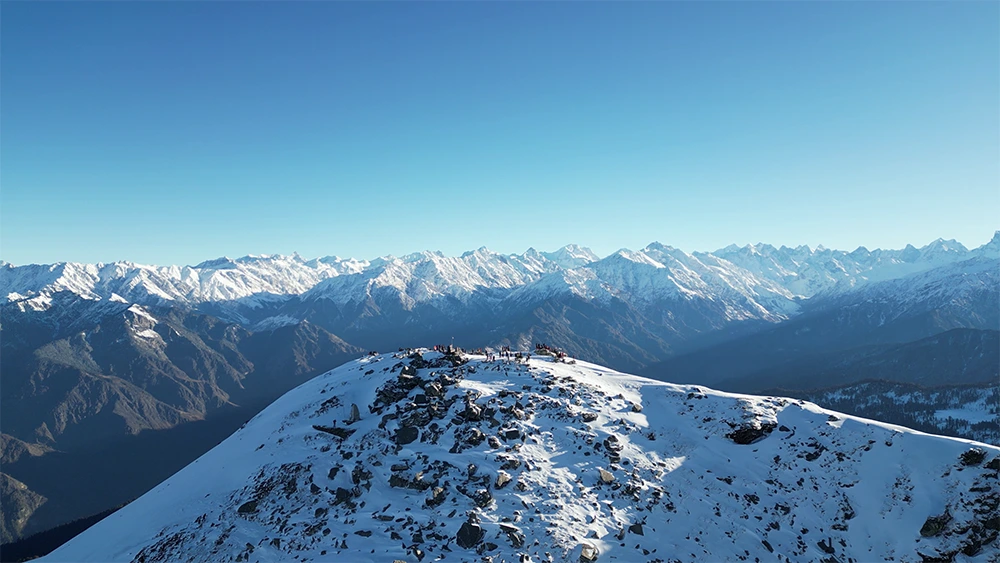
December through February is the most celebrated window for the Kedarkantha trek and the period when the mountain is at its most visually dramatic. The entire trail from Sankri to the summit is covered in thick snow, the pine forests are frosted white, and the campsites at Juda Ka Talab and Kedarkantha Base Camp sit under a canopy of stars in some of the clearest skies of the year.
December marks the beginning of serious snowfall on the Kedarkantha trail. By mid-December, the route above Sankri is consistently snow-covered, and the summit views on clear days are breathtaking. Christmas and New Year are particularly popular slots, with many trekking groups scheduling their ascent around the holiday period. Temperatures in December range between -5°C and 5°C at camp, dropping further at the summit.
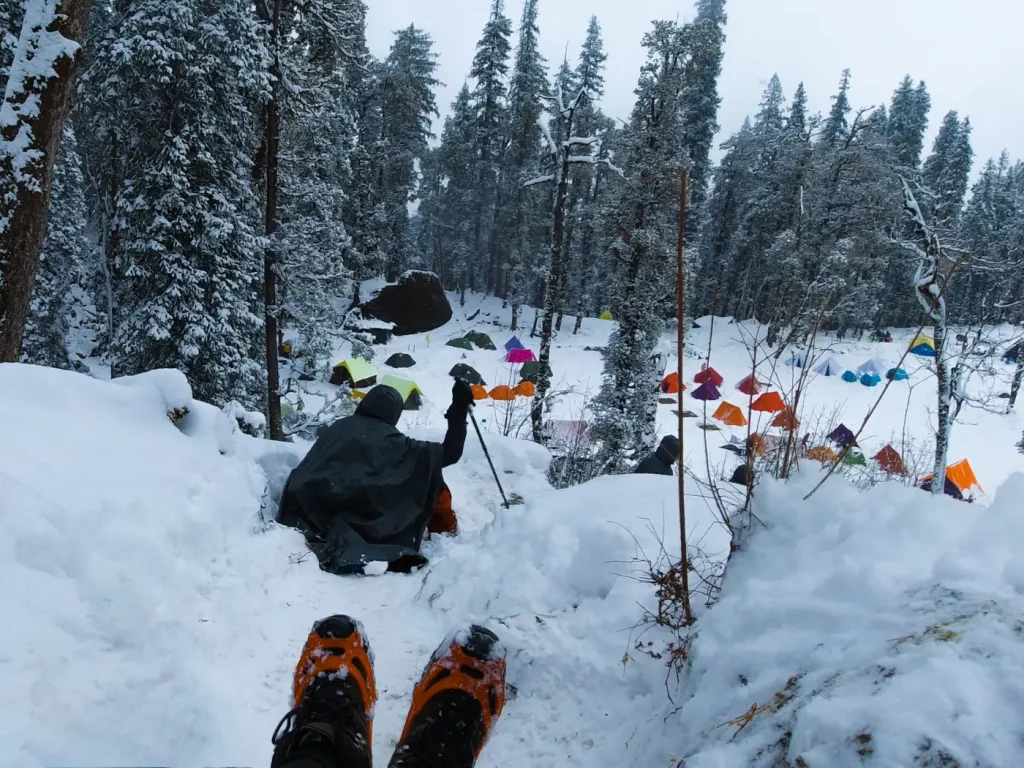
January and February bring the heaviest snowfall of the season. Snow depths on the upper trail and summit can reach 3 to 4 feet, and temperatures at camp drop to between -10°C and 0°C at night. This is the most demanding and most rewarding time on the mountain, ideal for experienced cold-weather trekkers who are well-equipped and have prior high-altitude experience. The summit views in January and February, on a clear morning, are among the finest available on any moderate-difficulty trek in India.
The broader Himalayan region of Uttarakhand is at its most spectacular in this window. Our guide on the best time to visit the Himalayas covers the full seasonal picture across different Himalayan zones and helps you plan a wider Uttarakhand itinerary around your Kedarkantha trek.
March and April: Best Season for Beginners
March and April represent the best time to visit Kedarkantha for first-time trekkers and those who want excellent snow conditions without the extreme cold of mid-winter. Temperatures rise gradually to between 0°C and 10°C at camp during the day, making the trek far more physically manageable, while the trail above the treeline remains well covered in snow through most of April.
The days are longer in March and April, the light is golden and warm, and the rhododendron forests below Sankri begin to bloom from late March onward, adding a vivid layer of colour to the approach trail. The summit views remain outstanding, and the snow on the upper mountain is in excellent condition for crampons and ice axe use.
April sees a gradual softening of the snowpack. The lower sections of the trail may be partially clear of snow by mid-April, but the upper campsites and summit remain well covered through the end of the month. April is widely considered the most balanced month on the Kedarkantha trail, offering comfortable temperatures, beautiful light, and reliable summit snow.
For trekkers exploring the spiritual landscape of the Uttarkashi and Rudraprayag belt alongside their Kedarkantha trip, the Triyuginarayan Temple is one of Uttarakhand’s most sacred and historically significant sites. Our guide on the best time to visit Triyuginarayan Temple covers the temple in detail and helps you plan a combined trek and pilgrimage itinerary.
May to November: Off Season
The Kedarkantha trek is technically doable from May through November, but the experience is fundamentally different from the winter season. The snow melts by May, the meadows turn green, and the trail becomes a summer hike through pine forests and alpine pastures. While the scenery is beautiful in its own right, the iconic snow experience for which the best time to visit Kedarkantha is celebrated is entirely absent.
May and June are manageable with pleasant temperatures between 10°C and 20°C, and the meadows around the summit area are carpeted in wildflowers. However, the trek sees far fewer visitors in this period, and many organised trekking operators scale back their schedules or suspend departures between July and November due to the monsoon.
July to September bring the monsoon to the Uttarkashi hills, with moderate to heavy rainfall, slippery trails, and reduced visibility. Leeches are active on the lower forest trail in July and August. This period is not recommended for the Kedarkantha trek for most travellers. October and November see the trail return to dry, clear conditions and offer good views, but the snow has not yet arrived on the upper mountain. December is the recommended starting point for the snow experience.
About Kedarkantha: The Trek and the Mountain
Kedarkantha is approached from Sankri village, the base camp and trek starting point, which sits at approximately 1,950 metres in the Tons river valley. Sankri is a charming village with homestays, basic guesthouses, and a growing trekking infrastructure. The drive from Dehradun to Sankri takes approximately 8 to 9 hours along a scenic but winding mountain road via Mussoorie, Nainbag, and Mori.
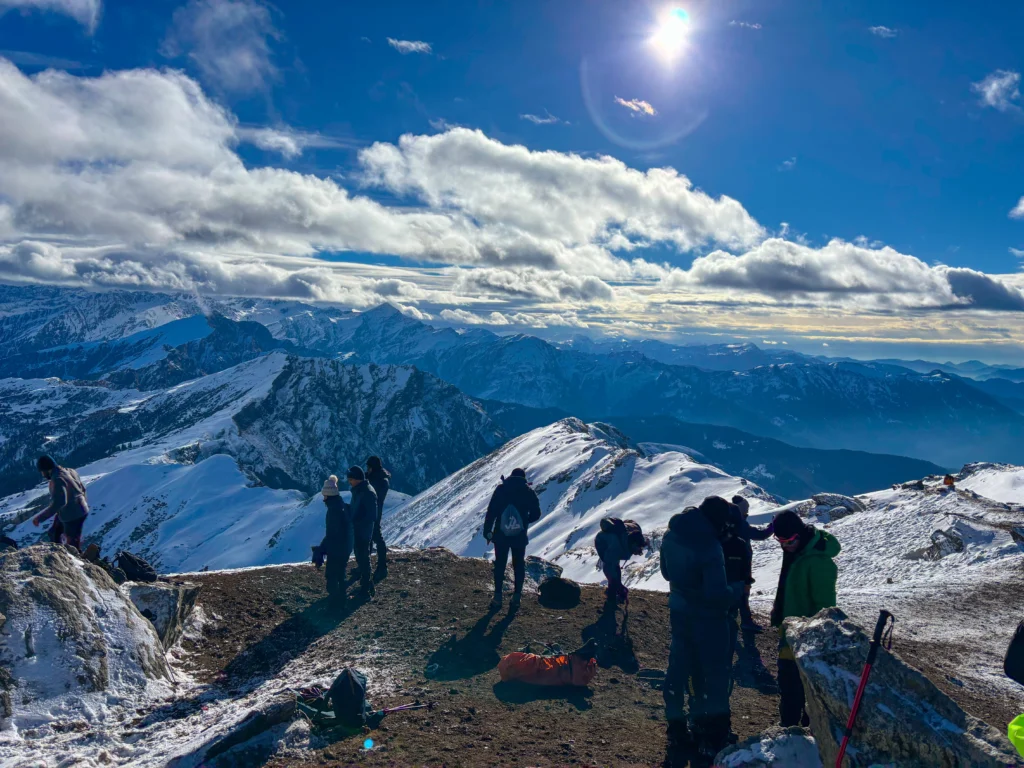
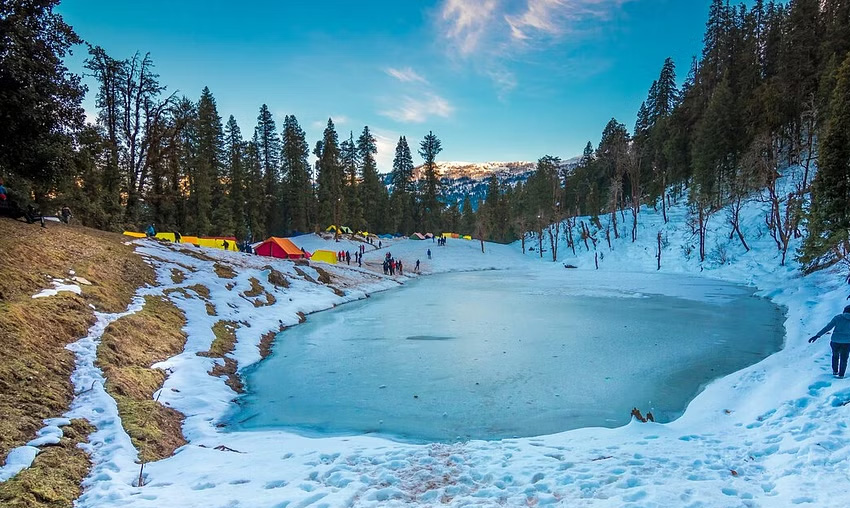
The standard Kedarkantha trek covers approximately 20 to 23 km from Sankri to the summit and back over 5 to 6 days, passing through the campsite villages of Juda Ka Talab (a small frozen lake at approximately 3,100 metres) and Kedarkantha Base Camp (approximately 3,500 metres) before the final summit push. The summit ascent on the last day is a steep climb of approximately 300 metres that most fit trekkers complete in 3 to 4 hours.
The 360-degree summit view from Kedarkantha on a clear winter morning is the defining reward of the trek. The visible peaks include Swargarohini, Bandarpunch, Kala Nag, Ranglana, and on exceptional days, a distant view of the Kedarnath range. The view is most consistently clear in December, January, and March.
For trekkers wanting to extend their Uttarakhand exploration beyond the Kedarkantha trail, the confluence town of Devprayag is one of the region’s most spiritually and visually arresting destinations. Our guide on places to visit in Devprayag covers the town in detail and makes it an easy addition to any Kedarkantha road trip via Rishikesh and Tehri.
The Tehri Dam, one of Asia’s tallest dams, is approximately 130 km from Sankri and a popular stop on the drive back from the trek toward Dehradun. Our guide on the best time to visit Tehri Dam covers the dam, the reservoir, and the surrounding water sports in detail.
How to Reach Kedarkantha?
All routes to the Kedarkantha trek converge on Sankri village in Uttarkashi district. Dehradun is the primary gateway for most trekkers arriving from across India.
How to Reach Kedarkantha by Air?
Jolly Grant Airport in Dehradun is the nearest airport, approximately 210 km from Sankri. It has regular flight connections from Delhi, Mumbai, and Bengaluru. From the airport, hire a private taxi or join a shared vehicle to Sankri, a drive of approximately 8 to 9 hours. Most organised trekking groups arrange shared transfers from Dehradun to Sankri as part of their trek package.
How to Reach Kedarkantha by Train?
Dehradun Railway Station is the nearest major railhead, approximately 200 km from Sankri. It is well connected to Delhi, Mumbai, and other major cities. The overnight trains from Delhi to Dehradun are a popular option for trekkers heading to the Tons valley. From Dehradun station, private taxis and shared vehicles are available to Sankri.
How to Reach Kedarkantha by Road?
The drive from Dehradun to Sankri covers approximately 200 km and takes 8 to 9 hours via Mussoorie, Kempty, Nainbag, Barkot, and Mori. The road is scenic but demanding in sections, particularly beyond Nainbag. In winter, the road can be affected by snow beyond Mori, and chains or snow-ready tyres are advisable for vehicles travelling between December and February. Most trekking operators run dedicated transfers from Dehradun to Sankri, making it the most practical option for independent trekkers.
Nearby Places to Visit
Kedarkantha sits within the Uttarkashi and Tons valley region, with several rewarding destinations within reach for trekkers and leisure travellers extending their trip.
- Sankri Village: The base camp for the Kedarkantha trek is a destination in itself. The village has a traditional character, mountain views, and a growing number of good homestays. Spending an extra day in Sankri before or after the trek to explore the village and surrounding forests is highly recommended.
- Har Ki Dun Valley: Approximately 35 km from Sankri, Har Ki Dun is one of Uttarakhand’s most celebrated trekking valleys, surrounded by ancient Himalayan villages and high-altitude meadows. It makes a natural companion destination for trekkers who have already done Kedarkantha and want to explore the wider Tons river basin.
- Devprayag: The sacred confluence of the Alaknanda and Bhagirathi rivers, which together form the Ganga, is approximately 150 km from Sankri via the Tehri road. It is one of Uttarakhand’s most atmospherically powerful pilgrimage towns and an ideal stop on the drive between Dehradun and the trek base.
- Tehri Dam: Asia’s one of the tallest dams sits approximately 130 km from Sankri and is a popular stop on the return journey toward Dehradun. The vast turquoise reservoir, bungee jumping, jet skiing, and the recently developed lakeside promenade make it a worthwhile half-day addition to any Kedarkantha itinerary.
- Triyuginarayan Temple: Located in Rudraprayag district approximately 250 km from Sankri, Triyuginarayan is one of Uttarakhand’s most sacred temples, believed to be the site of the divine wedding of Lord Shiva and Goddess Parvati. The eternal flame burning in its courtyard is a deeply moving sight and the temple makes a meaningful addition to a broader Uttarakhand pilgrimage and trekking circuit.
- Barkot: A small town approximately 50 km from Sankri, Barkot is a useful overnight stop on the drive from Dehradun to Sankri and the gateway to the Yamunotri trek. It has several comfortable guesthouses and serves as a natural break on the long mountain drive.
Essential Tips for Visiting Kedarkantha
A little preparation goes a long way on the Kedarkantha trail. Whether you are a first-time trekker or returning to the Himalayas, keeping these practical tips in mind will help you stay safe, comfortable, and fully prepared for everything the mountain has to offer.
- The best time to visit Kedarkantha for snow is December through February. Book trek slots at least 4 to 6 weeks in advance for December and the Christmas-New Year window, as departures fill up extremely fast.
- Always trek with a registered trekking operator for the Kedarkantha route. Solo trekking above Sankri without a guide is not advisable, particularly in winter snow conditions.
- Carry quality cold-weather gear including a sleeping bag rated to at least -10°C, thermal base layers, a down jacket, waterproof outer shell, and insulated trekking gloves. Hiring gear is possible in Dehradun and from some operators in Sankri.
- Crampons and microspikes are essential above the treeline from December through March. Most organised operators provide these as part of the kit, but confirm in advance.
- Acclimatise properly before the summit day. Spend your first night in Sankri and do not rush the ascent. Altitude sickness is uncommon at Kedarkantha’s elevations but can affect trekkers who ascend too quickly.
- Carry sufficient cash from Dehradun. There are no ATMs in Sankri or on the trek route. Most homestays and operators accept cash only.
- Mobile connectivity is available in Sankri with Jio and BSNL but becomes patchy and unreliable above the treeline. Inform someone of your trek schedule before departing Sankri.
- The Kedarkantha summit push starts before dawn, typically between 2:00 AM and 4:00 AM, to reach the top for sunrise. This is the most physically demanding part of the trek. Ensure you are well-rested and well-fed the evening before.
- Dress in multiple thin layers rather than single heavy garments. The temperature changes significantly between the valley, the treeline, and the summit, and layering allows you to adjust throughout the day.
- Plastic and non-biodegradable waste must be carried back from the trail. The Kedarkantha trek route is within a protected national park, and responsible waste disposal is mandatory.
Conclusion
Kedarkantha is one of India’s finest winter treks, offering accessible terrain and a summit view that rivals far more demanding Himalayan routes. December to April is the best time to visit Kedarkantha, with March and April ideal for beginners and December to February delivering the most dramatic snow conditions. Book early, gear up well, and allow the full 5 to 6 days on the mountain to do it justice.

At Frenzy Holidays, we help you plan exceptional trekking and travel experiences across Uttarakhand and the Himalayas. Reach out to us at [email protected], call us at 074004 53140, or visit us at Frenzy Holidays, Haware Centurion, S07/34, Nerul East, Sector 19A, Nerul, Navi Mumbai, Maharashtra 400706, and we will take care of every detail of your Kedarkantha journey.
Best Time to Visit Kedarkantha: FAQs
What is the best time to visit Kedarkantha?
December to April is the best time, when the trail is under snow. March and April are ideal for beginners, while December to February offers the deepest snow and most dramatic winter conditions.
How difficult is the Kedarkantha trek?
Kedarkantha is rated easy to moderate. It is suitable for first-time trekkers with a basic level of fitness. The summit day involves a steep ascent of approximately 300 metres that requires determination but no technical climbing skills.
How long does the Kedarkantha trek take?
The standard trek takes 5 to 6 days from Sankri, covering approximately 20 to 23 km in total including the summit ascent and return.
What is the temperature at Kedarkantha in January?
Temperatures at camp range between -10°C and 0°C at night in January, with daytime highs of around 2°C to 5°C on the trail. The summit can be significantly colder, especially in wind.
How do I reach Sankri for the Kedarkantha trek?
Fly or take a train to Dehradun, then drive approximately 200 km to Sankri via Mussoorie and Barkot. The drive takes 8 to 9 hours. Most trekking operators arrange shared transfers.
Is Kedarkantha open in summer?
Yes, but the snow melts by May and the trail becomes a summer hike through green meadows. The iconic snow experience is absent from May onward. The trek is best done between December and April.
Do I need prior trekking experience for Kedarkantha?
No prior trekking experience is required, but a reasonable level of fitness and comfort with walking 6 to 8 km per day on uneven terrain is necessary. March and April are recommended for absolute beginners.
What should I pack for the Kedarkantha trek?
A sleeping bag rated to -10°C, thermal base layers, down jacket, waterproof shell, insulated gloves, crampons or microspikes, trekking poles, warm socks, and sufficient cash for the entire trek duration.
Can I do the Kedarkantha trek solo?
Solo trekking above Sankri without a guide is not advisable, particularly in winter snow conditions. Always trek with a registered operator or a certified local guide familiar with the winter route.
What is the altitude of the Kedarkantha summit?
The Kedarkantha summit sits at approximately 3,800 metres above sea level. Altitude sickness is uncommon at this elevation but can affect trekkers who ascend too quickly without proper acclimatisation.
