
Planning a pilgrimage to Mathura requires understanding seasonal variations, festival calendars, and practical logistics that transform your spiritual experience at Lord Krishna’s birthplace. Located in Uttar Pradesh on the banks of Yamuna River, Mathura experiences extreme weather fluctuations affecting everything from temple darshan comfort to exploring nearby Vrindavan, with mathura climate ranging from pleasant winter mornings to scorching summer heat that dramatically impacts pilgrimage planning and enjoyment.
Understanding the best time to visit mathura ensures optimal spiritual experiences balancing comfortable mathura climate conditions, strategic mathura itinerary planning around major festivals, convenient access from city near mathura locations, identifying hill station near mathura for combined trips, comprehensive mathura tour guide insights, practical mathura trip plan execution, and complete knowledge about mathura including its sacred significance. This comprehensive resource provides seasonal analysis, cultural festival timing, nearby destination options, and complete travel planning for experiencing the holy land where Lord Krishna was born.
Table of Contents
Quick Reference: Mathura Visit Planning
| Season | Best Months | Temperature | Crowd Level | Festival Highlights |
|---|---|---|---|---|
| Winter | Nov-Feb | 8-25°C | High | Kartik Purnima, pleasant weather |
| Spring | Mar-Apr | 18-35°C | Very High | Holi, comfortable mornings |
| Summer | May-Aug | 35-45°C | Low | Janmashtami (Aug), extreme heat |
| Autumn | Sep-Oct | 25-38°C | Moderate | Post-monsoon clarity |
Best Time to Visit Mathura: Festival-Focused Seasonal Planning
Determining the best time to visit mathura requires understanding both weather comfort and sacred festival timing, as religious celebrations create extraordinary spiritual atmospheres despite crowd challenges.
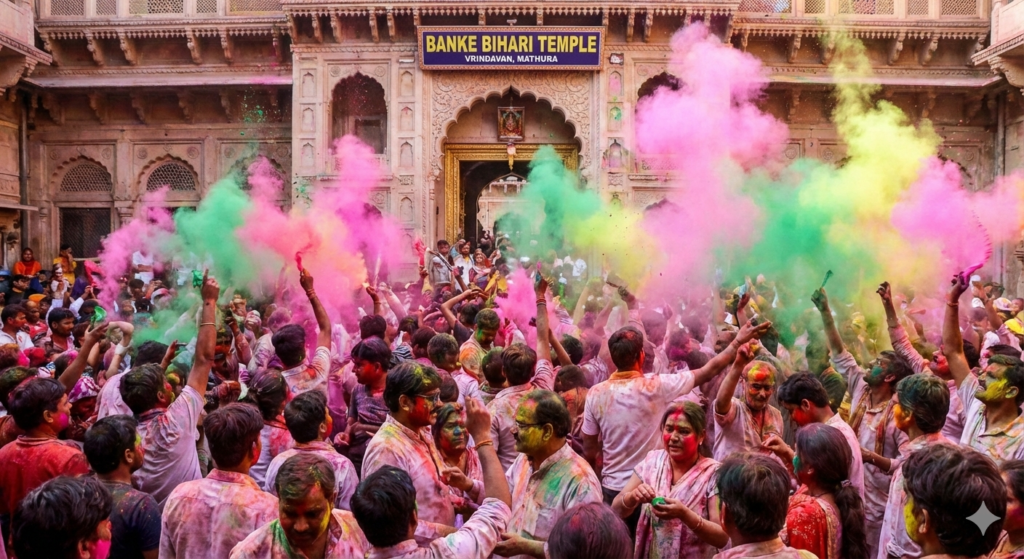
August-September: Janmashtami Divine Celebration
Janmashtami represents the most spiritually significant though most crowded period as the best time to visit mathura, celebrating Lord Krishna’s birth with elaborate ceremonies, night-long festivities, and intense devotional energy.
Mathura Climate & Weather:
- Temperature: 28-38°C day, 24-30°C night
- Humid conditions post-monsoon
- Occasional rain showers in August
- Hot but manageable compared to May-June
Janmashtami Festival (August/September):
- Lord Krishna’s birth anniversary
- Midnight celebration at Krishna Janmabhoomi temple
- Elaborate decorations throughout Mathura-Vrindavan
- Ras Leela performances and cultural programs
- Dahi Handi celebrations
- Millions of devotees converging
Advantages: Unparalleled spiritual energy and devotional atmosphere, authentic Krishna Leela performances citywide, spectacular temple decorations and lighting, traditional bhajans and kirtans throughout night, profound religious significance creating lifetime memories, ultimate spiritual experience for Krishna devotees.
Considerations: Maximum annual crowd density with 5-10 lakh additional visitors, accommodation booking essential 3-4 months advance, hotel prices triple during festival period, extreme temple queues (4-8 hours wait), transportation heavily congested, requires advanced mathura trip plan including backup accommodations.
Janmashtami Visit Strategy:
- Book accommodation 3-4 months advance (December-January for August festival)
- Arrive 2 days before festival for settling
- Plan midnight temple visit (main celebration time)
- Expect crowd challenges throughout stay
- Budget ₹5,000-10,000 per person (3 days) during festival
February-March: Holi Festival Spectacular
Holi celebration represents another extraordinary period as the best time to visit mathura, offering unique cultural experiences with traditional Lathmar Holi and vibrant color celebrations rooted in Krishna legends.
Mathura Climate & Weather:
- Temperature: 15-30°C day, 10-20°C night
- Pleasant spring weather
- Comfortable for outdoor celebrations
- Occasional dust storms by late March
Holi Festival Highlights:
- Lathmar Holi (Barsana, near Mathura): Women playfully beat men with sticks celebrating Krishna-Radha legends
- Phoolon ki Holi (Vrindavan): Flower Holi at Banke Bihari temple
- Week-long celebrations across Mathura-Vrindavan
- Traditional colors, music, dance performances
- Unique regional Holi traditions
Advantages: Authentic cultural immersion in Krishna’s playground, comfortable mathura climate for outdoor festivities, unique Lathmar Holi experience unavailable elsewhere, week-long celebrations providing extended cultural exposure, excellent weather for temple visits and exploration, photogenic festival documentation opportunities.
Considerations: Second-highest crowd density after Janmashtami, accommodation booking requires 2-3 months advance, color celebrations messy (old clothes essential), festival period premium hotel rates, need respect for cultural traditions during participation.
Holi Visit Strategy:
- Book accommodations by December-January
- Carry old clothes for color celebrations
- Protect cameras and electronics
- Plan day trips to Barsana (Lathmar Holi)
- Budget ₹4,000-8,000 per person (3-4 days)
November to February: Winter Comfort Excellence
Winter represents the best time to visit mathura for comfortable weather-focused pilgrims, offering pleasant temperatures ideal for extensive temple visits, though festival periods bring significant crowd increases.
Mathura Climate & Weather:
- Temperature: 8-25°C day, 5-15°C night
- Cool comfortable mornings
- Pleasant daytime exploration
- Cold nights requiring warm clothing
- Clear skies with excellent visibility
Winter Festival Highlights:
- Kartik Purnima (November): Sacred month for Yamuna bathing, temple illuminations
- Gita Jayanti (December): Bhagavad Gita recitation programs
- Regular temple activities without extreme crowds
Advantages: Perfect mathura climate for extended temple exploration, comfortable walking between Mathura-Vrindavan sites, pleasant weather for nearby hill station near mathura day trips, ideal for senior citizens and families with children, affordable accommodation outside festival peaks, excellent conditions for comprehensive mathura itinerary execution.
Considerations: Morning and evening cold requiring warm layers, fog may affect early morning travel occasionally, moderate crowds during Kartik Purnima, December-January sees increased domestic tourism, popular wedding season affects accommodation availability.
Winter Visit Strategy:
- Pack warm clothes (sweaters, jackets) for morning/evening
- Visit weekdays for minimal crowds
- Plan 3-4 day mathura itinerary covering Mathura-Vrindavan
- Budget ₹2,500-5,000 per person (comfortable trip)
April to June: Summer Heat Challenge
Summer presents the most challenging conditions with extreme heat making it least ideal as the best time to visit mathura, though drastically reduced crowds and lowest costs appeal to budget pilgrims with heat tolerance.
Mathura Climate & Weather:
- Temperature: 35-45°C day, 28-35°C night
- Extreme heat during May-June
- Hot dry winds (loo) common
- Very low humidity
- Harsh afternoon sun
Advantages: Absolute lowest tourist density throughout year, shortest temple darshan queues (30 minutes vs 2-3 hours), significantly reduced accommodation costs (50-60% cheaper), peaceful spiritual experiences without crowds, authentic local atmosphere without tourist commercialization, budget-friendly mathura trip plan execution.
Considerations: Extreme heat limiting outdoor exploration hours, afternoon visits almost impossible (40-45°C), frequent hydration breaks essential, marble temple floors extremely hot, limited comfortable exploration windows, health risks for elderly/children in extreme heat.
Summer Visit Strategy:
- Visit early morning only (5-10 AM)
- Indoor rest during afternoon (12-5 PM)
- Evening temple visits (6-8 PM)
- Stay hydrated constantly
- Consider Janmashtami preparation visits (July-early August)
- Budget ₹1,500-3,000 per person (budget trip)
About Mathura: Sacred Significance & Cultural Heritage
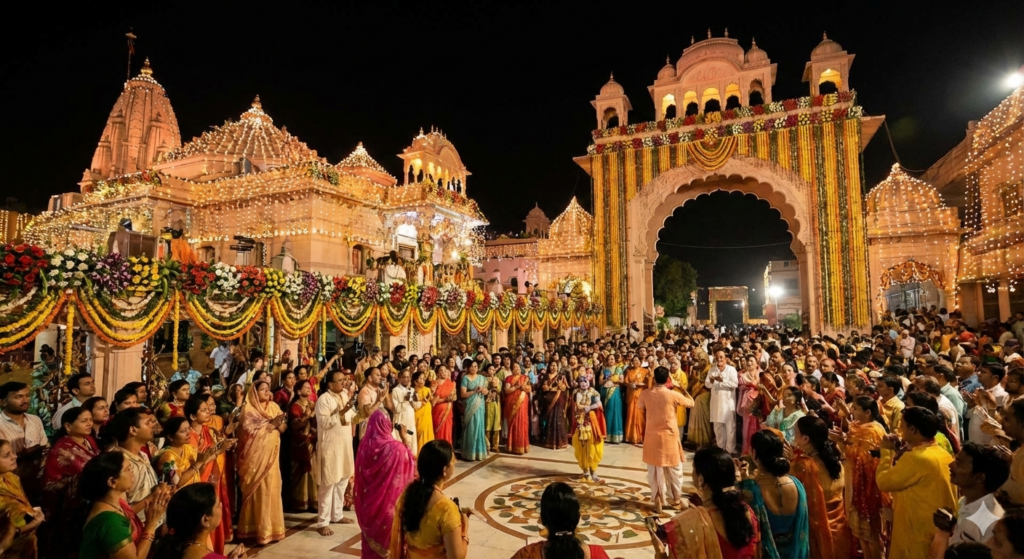
Understanding about mathura enriches spiritual experiences by connecting with the city’s profound religious significance, ancient history, and cultural importance in Hindu tradition.
Religious Significance
Lord Krishna’s Birthplace:
- Birthplace of Lord Krishna in Kansa’s prison
- Krishna Janmabhoomi temple marks exact birth spot
- One of seven sacred cities (Sapta Puri) for moksha
- Major pilgrimage destination for Vaishnavites
- Connected to entire Krishna Leela narrative
Sacred Geography:
- Located on banks of holy Yamuna River
- Part of Braj Bhoomi (Krishna’s childhood playground)
- Connected to 12 forests (vans) of Krishna legends
- Sister city to Vrindavan (3 km away)
- Surrounded by numerous sacred sites
Historical Background
Ancient Heritage:
- Mentioned in Ramayana and Mahabharata
- Capital of Surasena kingdom (6th century BCE)
- Flourishing Buddhist center under Ashoka
- Destroyed and rebuilt multiple times through history
- Rich archaeological heritage
Architectural Heritage:
- Ancient temples and ghats
- Mughal-era architecture influences
- British colonial period structures
- Modern temple complexes
- Archaeological museum collections
Mathura Itinerary: Strategic Temple Circuit Planning
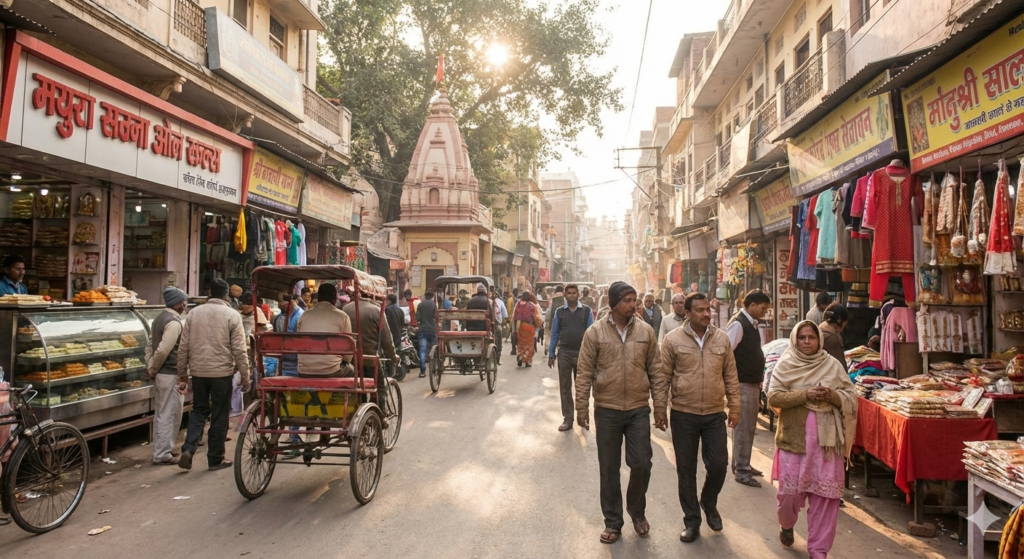
Creating effective mathura itinerary requires balancing must-visit temples, optimal timing, and practical logistics for comprehensive spiritual experiences.
2-Day Mathura-Vrindavan Itinerary
Day 1: Mathura Temples
Morning (6:00 AM – 12:00 PM):
- Yamuna Aarti at Vishram Ghat (6:30 AM)
- Krishna Janmabhoomi Temple complex (2-3 hours)
- Dwarkadhish Temple darshan
- Vishram Ghat area exploration
- Local breakfast (poha, kachori, jalebi)
Afternoon (12:00 PM – 4:00 PM):
- Hotel rest during peak heat
- Lunch break
- Visit Mathura Museum (government museum with archaeological artifacts)
Evening (4:00 PM – 8:00 PM):
- Gita Mandir visit
- Keshav Dev Temple
- Evening aarti at Vishram Ghat (7:00 PM)
- Local market shopping (Chowk Bazaar)
- Dinner at local restaurant
Day 2: Vrindavan Exploration
Morning (6:00 AM – 12:00 PM):
- Early departure to Vrindavan (3 km, 15 minutes)
- Banke Bihari Temple (reach by 6 AM to avoid queues)
- ISKCON Temple Vrindavan
- Prem Mandir (magnificent modern temple)
- Local breakfast
Afternoon (12:00 PM – 4:00 PM):
- Hotel rest or afternoon aarti at Prem Mandir
- Lunch in Vrindavan
Evening (4:00 PM – 8:00 PM):
- Nidhivan forest (mystical Krishna Leela site)
- Radha Vallabh Temple
- Seva Kunj and other smaller temples
- Evening aarti experiences
- Return to Mathura
3-Day Extended Itinerary
Day 3: Nearby Sacred Sites
- Morning: Govardhan Hill parikrama (23 km circuit, 5-6 hours)
- Alternative: Visit Barsana (Radha’s birthplace, 45 km)
- Nandgaon (Krishna’s foster home, 50 km)
- Return evening to Mathura
Mathura Tour Guide: Essential Temples
Must-Visit Temples:
- Krishna Janmabhoomi: Birth place, main attraction
- Dwarkadhish Temple: Beautiful architecture, active worship
- Vishram Ghat: Yamuna riverbank, sacred bathing
- Banke Bihari (Vrindavan): Most famous Vrindavan temple
- ISKCON Temple: Modern, well-maintained, cultural programs
- Prem Mandir: Spectacular evening illumination
Temple Etiquette:
- Remove shoes at entrance (paid shoe storage available)
- Modest clothing (covered shoulders, knees)
- Photography restrictions vary (ask permission)
- Queue discipline during crowded times
- Respect prayer and aarti timings
City Near Mathura & Hill Station Near Mathura: Extended Trip Options
Understanding nearby destinations helps create comprehensive mathura trip plan combining pilgrimage with sightseeing and leisure experiences.
City Near Mathura: Day Trip Destinations
Agra (55 km, 1.5 hours):
- Taj Mahal UNESCO World Heritage Site
- Agra Fort and Fatehpur Sikri
- Combined Mathura-Agra itinerary popular
- Same-day return possible
- Train/bus connectivity excellent
Delhi (150 km, 3 hours):
- National capital with multiple attractions
- Major transportation hub for Mathura access
- Can combine Delhi sightseeing with Mathura pilgrimage
- Regular train and bus services
Vrindavan (3 km, 15 minutes):
- Integral part of Mathura pilgrimage
- Hundreds of Krishna temples
- Must-visit, not optional
- Can be covered same day as Mathura
Govardhan (23 km, 45 minutes):
- Sacred hill lifted by Krishna
- Parikrama circuit (circumambulation)
- Multiple temples and kunds (sacred ponds)
- Half-day excursion
Barsana (45 km, 1.5 hours):
- Radha’s birthplace
- Famous for Lathmar Holi
- Temples dedicated to Radha
- Full-day excursion recommended
Hill Station Near Mathura: Weekend Escapes
While Mathura itself is plains, several hill stations accessible for extended trips:
Nainital (420 km, 9-10 hours):
- Nearest proper hill station
- Beautiful lake and mountain views
- 2-3 day extension after Mathura pilgrimage
- Best combined trip: Delhi-Mathura-Nainital
Mussoorie (380 km, 8-9 hours):
- Queen of Hills
- Colonial charm and scenic beauty
- Weekend extension option
- Access via Dehradun
Shimla/Manali (500+ km):
- Too distant for quick extension
- Requires separate dedicated trip
- Better as independent Himachal tour
Practical Tip: Most pilgrims don’t combine hill stations with Mathura due to distance. Instead, common combinations include Mathura-Agra (cultural), Mathura-Vrindavan-Barsana-Govardhan (complete Braj circuit), or Mathura-Ayodhya-Varanasi (spiritual circuit).
Transportation & Practical Information
Getting to Mathura:
- By Air: Nearest airport Agra (60 km), Delhi (150 km)
- By Train: Mathura Junction (major railway station)
- Delhi to Mathura: 2-3 hours, multiple trains daily
- Mumbai to Mathura: 18-20 hours direct trains
- Agra to Mathura: 1 hour, frequent trains
- By Road: NH-44, excellent connectivity
- Delhi: 150 km, 3 hours
- Agra: 55 km, 1.5 hours
- Jaipur: 240 km, 5 hours
Local Transportation:
- Auto-rickshaws: ₹30-100 within city
- Cycle-rickshaws: ₹20-50 short distances
- Taxis: ₹500-1,000 full day
- Mathura-Vrindavan: ₹50-100 (auto)
Accommodation:
- Budget: ₹500-1,200/night (dharamshalas, budget hotels)
- Mid-range: ₹1,500-3,500/night (comfortable hotels)
- Premium: ₹4,000-10,000/night (resort-style)
- Festival rates: 2-3x normal rates
Food:
- Strict vegetarian city (religious significance)
- Local specialties: Peda (milk sweet), mathura famous food
- Street food: Kachori, samosa, aloo tikki
- Restaurant meals: ₹100-300 per person
- Prasad shops: Near all major temples
For comprehensive spiritual journeys, explore Mathura Vrindavan tour package from Mumbai for complete arrangements, discover Varanasi Ayodhya tour package from Mumbai for extended pilgrimage circuits, learn how to reach Ayodhya from Varanasi for connecting sacred sites, or visit famous temples in Ayodhya for Ram Janmabhoomi darshan.
Conclusion
Determining the best time to visit mathura depends on balancing spiritual priorities with weather comfort and crowd tolerance. Janmashtami (August-September) and Holi (February-March) offer unparalleled cultural and spiritual experiences despite extreme crowds, while winter months (November-February) provide comfortable mathura climate for comprehensive mathura itinerary execution. Understanding about mathura’s sacred significance, identifying convenient city near mathura for combined tours, exploring limited hill station near mathura options, following practical mathura tour guide recommendations, and creating flexible mathura trip plan considering seasonal mathura climate variations ensures transformative pilgrimage experiences at Lord Krishna’s divine birthplace.
Strategic planning considering festival calendars, weather patterns, and nearby destination opportunities creates memorable spiritual journeys through Krishna’s sacred land. Frenzy Holidays ensures a smooth and enriching travel experience from start to finish. You can visit us at Haware Centurion, S07/34, Nerul East, Sector 19A, Nerul, Navi Mumbai, Maharashtra 400706. For bookings or more information, call +91 7400453140, email [email protected], or visit www.frenzyholidays.com. So pack up and explore INDIA with Frenzy Holidays to have an unforgettable journey.
Best Time to Visit Mathura – FAQs
What is the best time to visit Mathura for comfortable weather?
November to February is the best time to visit mathura for comfortable weather with pleasant mathura climate (8-25°C), though winter months see moderate crowds at temples.
When should I visit Mathura for Janmashtami celebrations?
Janmashtami (August/September) offers most spiritual experience as Krishna’s birthplace celebration but requires 3-4 months advance booking and crowd management strategies for best time to visit mathura experience.
What is a good mathura itinerary for 2-3 days?
Mathura itinerary for 2-3 days: Day 1 – Krishna Janmabhoomi, Vishram Ghat, Dwarkadhish Temple; Day 2 – Vrindavan temples (Banke Bihari, ISKCON, Prem Mandir); Day 3 – Govardhan/Barsana.
Which city near Mathura can be combined for extended trips?
Agra (55 km) is the best city near mathura for combined trips offering Taj Mahal visit. Delhi (150 km) and Vrindavan (3 km) also popular combinations for extended mathura trip plan.
Are there any hill station near Mathura for quick getaways?
Nainital (420 km) and Mussoorie (380 km) are nearest hill station near mathura options, though distances make them more suitable for separate trips rather than quick Mathura pilgrimage extensions.
What should I know about Mathura before visiting?
About mathura: Lord Krishna’s birthplace, one of seven sacred cities, located on Yamuna banks, strictly vegetarian city, connected to Vrindavan (3 km), requires modest dress at temples.
What is the mathura climate during summer months?
Mathura climate during summer (April-June) features extreme heat (35-45°C) making it challenging for temple visits, though this creates lowest crowds and accommodation costs for budget travelers.
Do I need a mathura tour guide for temple visits?
Mathura tour guide not mandatory as temples well-signposted and locals helpful. However, guides (₹500-1,000/day) provide cultural context, queue navigation, and efficient mathura itinerary execution.
How to create an effective mathura trip plan?
Mathura trip plan should consider: festival season for spiritual experience vs comfort season for weather, 2-3 days minimum duration, Vrindavan inclusion (essential), advance accommodation booking during peak seasons.
What is the temperature range in Mathura throughout the year?
Mathura climate ranges from cold winters (8-25°C, November-February), pleasant spring (18-35°C, March-April), extreme summer heat (35-45°C, May-August), to moderate autumn (25-38°C, September-October).
