
The best time to visit Nashik is between November and February, when the weather is cool and comfortable, the vineyards are lush and active, and the city’s temples, ghats, and heritage landmarks are at their most pleasant to explore. October is also an excellent month, offering post-monsoon freshness with the Godavari still running full and the surrounding hills a vibrant green.
Situated at an altitude of approximately 565 metres along the banks of the Godavari river in northwestern Maharashtra, Nashik is one of India’s most multifaceted destinations. It is simultaneously a sacred Hindu pilgrimage city, one of India’s fastest-growing wine regions, a gateway to Maharashtra’s hill forts and wilderness, and the host city of the Kumbh Mela every 12 years. From the ancient temple ghats of Panchavati and the cave shrines of Pandav Leni to the vineyards of Sula, York, and Grover Zampa, Nashik rewards every kind of traveller with experiences that are genuinely difficult to find in a single city elsewhere in the country. Understanding the best time to visit Nashik ensures you plan around the right season, the right festivals, and the most rewarding conditions for this remarkable city.
Confused where to go for quick escape? Let us plan it for you.
Grab the Best DealTable of Contents
Quick Reference: Best Time to Visit Nashik
Planning a trip to Maharashtra’s wine capital and sacred pilgrim city? Here is a handy snapshot of everything you need to know before booking your journey to Nashik.
| Detail | Information |
|---|---|
| Location | Nashik District, Northwestern Maharashtra |
| Altitude | Approximately 565 metres |
| Nearest Airport | Ozar Airport, Nashik (approx. 24 km from city centre) |
| Nearest Railway Station | Nashik Road Railway Station |
| Nearest Major City | Mumbai (approx. 167 km) / Pune (approx. 210 km) |
| Best Season | November to February |
| Peak Month | December and January |
| Grape Harvest Season | February to March |
| Winter Temperature | 10°C to 28°C |
| Summer Temperature | 24°C to 40°C |
| Key Festivals | Kumbh Mela (every 12 years), Sula Fest (February) |
| State Capital | Mumbai |
Best Time to Visit Nashik
The best time to visit Nashik is from November to February. The city’s moderate elevation gives it a more comfortable climate than the Maharashtra coast or the Deccan plateau interior, and the winter months bring the most pleasant conditions for sightseeing, vineyard visits, and outdoor exploration. This window also includes the famous Sula Fest and the grape harvest season, making it the richest period for first-time and returning visitors alike.
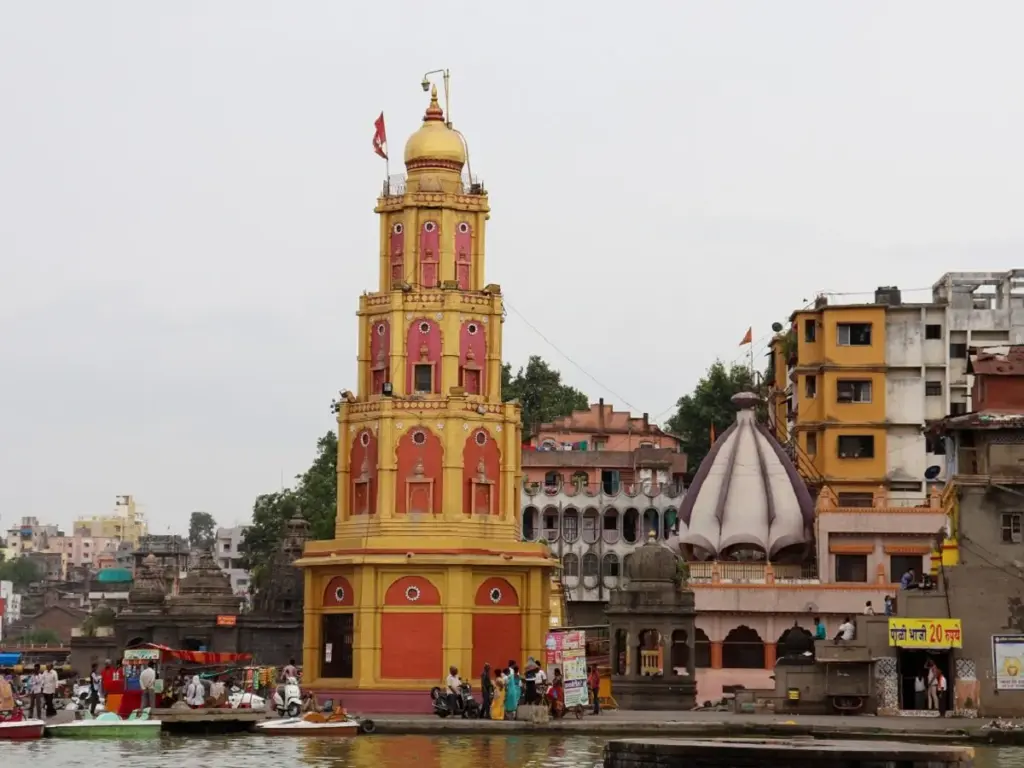
November to February: Best Season Overall
November through February is the most rewarding period for visiting Nashik across every dimension of travel. Temperatures range between 10°C and 28°C, with cool mornings, pleasant afternoons, and crisp evenings that make temple walks, vineyard tours, and fort treks genuinely enjoyable. The post-monsoon landscape retains its green character through November and December before gradually drying toward February, and the Godavari river flows at a healthy level through the temple ghats of Panchavati.
November and December are particularly good months. The crowds are manageable, the air is fresh, and the vineyards around Nashik have completed their growing cycle with the harvest period approaching. The grape vines are lush and the winery tasting rooms are fully operational through this period, making December one of the best months for combining heritage sightseeing with Maharashtra’s wine country experience.
January and February are the peak months for vineyard and wine tourism in Nashik. The Sula Fest, one of India’s most popular outdoor music and wine festivals, is held at Sula Vineyards in the last weekend of January or first weekend of February every year. Drawing tens of thousands of visitors from across India and internationally, Sula Fest transforms Nashik’s wine country into an outdoor festival ground with live music, wine tastings, food stalls, and camping. Book accommodation months in advance if your visit coincides with Sula Fest.
February and March are the grape harvest season in Nashik, the period when the vineyards are at their most active and visually stunning, with heavy clusters of Chenin Blanc, Cabernet Sauvignon, and Shiraz grapes ready for picking. Several vineyards offer harvest experiences where visitors can participate in grape picking and pressing, making this one of the most unique and hands-on travel experiences available anywhere in Maharashtra.
March to May: Pre-Monsoon and Summer
March is still a manageable and rewarding month for Nashik travel, with the grape harvest in full swing and temperatures between 22°C and 34°C. April and May bring significant heat, with temperatures climbing to 38°C to 40°C by May, and outdoor sightseeing becomes uncomfortable during midday hours. The hill forts and wine regions are still visitable in the early morning hours of April, but May is the least recommended month for most travellers.
Summer is best suited to early morning temple visits and winery tours rather than extended outdoor exploration. Hotels offer lower rates in this period and the city is significantly less crowded than in winter.
June to September: Monsoon
The monsoon arrives in Nashik by mid-June and continues through September, with July and August receiving the heaviest rainfall. The landscape around Nashik transforms dramatically during the monsoon, with the Western Ghats foothills turning a deep, saturated green and the Godavari river filling to an impressive volume through the Panchavati ghats.
The Sahyadri hill forts surrounding Nashik, including Trimbakeshwar, Anjaneri, and Harihar, offer some of Maharashtra’s finest monsoon trekking. The trails are lush, the waterfalls are spectacular, and the misty fort walls create an atmosphere unlike anything in the dry season. Our guide to best monsoon treks in Maharashtra covers the finest trekking routes across the state in monsoon detail, with several trails accessible directly from Nashik.
The monsoon is also the best season to visit some of Maharashtra’s most atmospheric and offbeat destinations across the region. Our guide to unexplored places in Maharashtra covers the state’s most rewarding hidden corners, many of which are at their most beautiful during the rains.
October: Post-Monsoon Sweet Spot
October deserves special mention as a transitional month that offers the best of both worlds. The monsoon has largely withdrawn, the hills are still brilliantly green, the Godavari is flowing well, and temperatures drop to a comfortable 20°C to 30°C. October is one of the most visually beautiful months in Nashik, and travellers who visit in this month often find it the most memorable time of the year for the combination of lush landscape, cool air, and active temples during the Navratri and Diwali festival season.
About Nashik: Where Pilgrimage Meets the Vineyard
Nashik occupies a unique position in India as a city that is simultaneously sacred and sybaritic. The Panchavati area along the Godavari is the spiritual heart of the city, believed to be the place where Lord Rama, Sita, and Lakshmana spent a significant portion of their exile during the Ramayana. The Kalaram Temple, the Sita Gumpha cave, the Tapovan ashram, and the Ram Kund bathing ghat are all clustered within Panchavati and form the core of Nashik’s pilgrimage circuit. Our detailed guide on places to visit in Panchavati Nashik covers the entire Panchavati temple and heritage circuit in full.
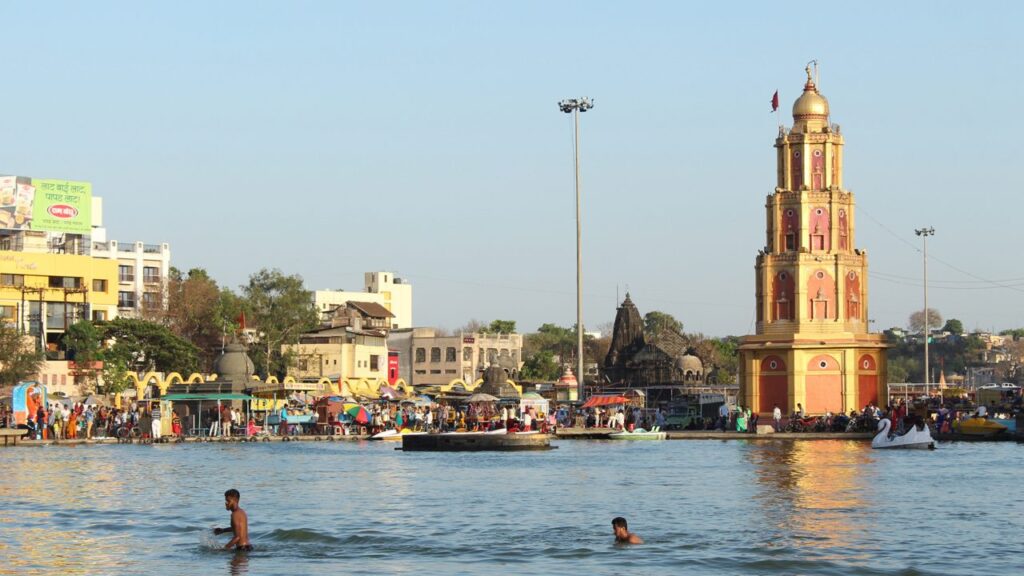
The Trimbakeshwar Temple, approximately 28 km from Nashik, is one of the 12 Jyotirlingas of Lord Shiva and one of the most significant Shaivite pilgrimage sites in India. The temple sits at the source of the Godavari river at the foot of the Brahmagiri hills and draws hundreds of thousands of pilgrims year-round, with the Shravan month and Mahashivaratri drawing the largest crowds.
Nashik is also the undisputed capital of Indian wine. With over 50 wineries in and around the city, the Nashik wine region produces the majority of India’s commercially sold wine. The most prominent wineries open to visitors include Sula Vineyards, York Winery, Grover Zampa, and Soma Vine Village, all of which offer tastings, vineyard tours, and restaurant experiences. Sula’s resort and tasting room overlooking the Gangapur reservoir is one of the most picturesque vineyard settings in Asia.
The city’s broader region also has a surprisingly varied offering for those interested in the unusual and offbeat. Our guide to haunted places in Maharashtra covers some of the state’s most atmospheric and legend-rich locations, several of which are accessible from Nashik.
For those extending their Maharashtra trip to the coast, our guide on the best time to visit Tarkarli covers this stunning beach and coral destination on the Konkan coast, easily combined with a Nashik visit on a broader Maharashtra circuit.
How to Reach Nashik?
Nashik is well connected by road and rail from Mumbai and Pune, and has a domestic airport with limited connections.
How to Reach Nashik by Air?
Ozar Airport (Gandhinagar Airport), approximately 24 km from Nashik city centre, has limited domestic connections. Chhatrapati Shivaji Maharaj International Airport in Mumbai, approximately 167 km from Nashik, is the most practical air gateway with connections from all major Indian cities and international destinations. From Mumbai airport, hire a private taxi or take a bus to Nashik, a journey of approximately 3.5 to 4.5 hours depending on traffic.
How to Reach Nashik by Train?
Nashik Road Railway Station is the main railhead, approximately 8 km from the city centre, with connections to Mumbai, Pune, Delhi, Bengaluru, and other major cities. The Mumbai to Nashik train journey takes approximately 4 to 5 hours on the fastest services. The Panchavati Express is a popular and well-regarded train on the Mumbai-Nashik route. From Nashik Road station, autos and taxis are readily available to the city centre and Panchavati.
How to Reach Nashik by Road?
Nashik is approximately 167 km from Mumbai via NH3, a drive of 3 to 4 hours depending on traffic. From Pune, the distance is approximately 210 km via Sangamner, a drive of 4 to 5 hours. Luxury bus services run regularly from Mumbai’s Dadar and CBS bus stands to Nashik. Self-drive is a very popular option for travellers from Mumbai and Pune and the Mumbai-Nashik expressway makes the drive smooth and efficient.
Nearby Places to Visit
Nashik sits at the heart of a rich travel region in northwestern Maharashtra, with heritage sites, pilgrimage destinations, and natural landscapes within comfortable reach.
- Trimbakeshwar Temple: One of the 12 Jyotirlingas, located approximately 28 km from Nashik at the source of the Godavari river. An essential pilgrimage stop for any Nashik visitor and one of Maharashtra’s most significant religious sites.
- Sula Vineyards: India’s most celebrated winery, located approximately 15 km from Nashik city centre near the Gangapur reservoir. Sula offers vineyard tours, tastings, a resort, and one of the most scenic winery restaurant settings in the country.
- Pandav Leni Caves: A group of 24 ancient Buddhist rock-cut caves carved between the 1st century BCE and the 6th century CE, located approximately 8 km from Nashik on the Trirashmi hill. The caves contain excellent examples of early Buddhist sculpture and are one of Nashik’s most underappreciated heritage sites.
- Anjaneri Hill: The birthplace of Lord Hanuman according to local tradition, Anjaneri is approximately 25 km from Nashik and offers a rewarding trek through Sahyadri forest to the hilltop temple. The views of the surrounding valley from the summit are outstanding.
- Igatpuri: A small hill station approximately 50 km from Nashik on the Western Ghats escarpment, Igatpuri is known for the Vipassana International Academy (one of the world’s largest meditation centres), scenic lake views, and the dramatic Kasara Ghat on the Mumbai-Nashik railway line.
- Shirdi: The famous pilgrimage town of Sai Baba, approximately 87 km from Nashik, is one of the most visited pilgrimage sites in India and a natural addition to any Nashik itinerary for spiritual travellers.
Essential Tips for Visiting Nashik
Nashik is an easy city to navigate, but a few practical tips will help you make the most of your time across the city’s diverse attractions.
- The best time to visit Nashik for the Sula Fest is the last weekend of January or first weekend of February. Book accommodation and festival tickets months in advance as the event sells out rapidly and hotels within 30 km of Nashik fill completely.
- Winery visits are best arranged in advance. Most major wineries including Sula, York, and Soma offer guided tours and tastings that should be booked online before your visit, particularly during the harvest season of February and March.
- The Trimbakeshwar Temple has a dress code and separate entry queues for men and women. Non-Hindu visitors are permitted in the outer courtyard but not always the inner sanctum. Confirm current entry policies before visiting.
- Ram Kund, the sacred bathing ghat on the Godavari in Panchavati, is most atmospheric in the early morning during the sunrise aarti. Visit between 5:30 AM and 7:00 AM for the most spiritually immersive experience.
- The Pandav Leni Caves are best visited in the morning before the heat builds. Carry water and wear comfortable shoes as the path involves a moderate climb.
- Nashik’s wine country is spread across the area north and northwest of the city near the Gangapur reservoir. Hiring a private vehicle for a half-day winery circuit is the most practical approach as the wineries are spread across several kilometres of rural road.
- Carry sufficient cash for temple donations, auto fares in the old city areas, and street food in Panchavati. Most wineries and larger restaurants accept cards.
- Nashik’s street food is excellent. Misal Pav, Vada Pav, and Sabudana Khichdi are the essential local breakfast dishes, and the area around CBS bus stand and Panchavati has some of the best street food stalls in the city.
- During the Kumbh Mela (held every 12 years at Nashik, next due in 2027), the city sees millions of pilgrims. Plan very carefully around Kumbh dates if your visit falls in that period.
Conclusion
Nashik is one of Maharashtra’s most rewarding and genuinely surprising destinations, a city that offers the depth of a sacred pilgrimage circuit, the pleasure of some of India’s finest wine experiences, and access to the Sahyadri’s most dramatic hill forts and monsoon landscapes. Whether you come for the winter vineyard season, the spiritual atmosphere of Panchavati, or the lush monsoon beauty of the surrounding hills, the best time to visit Nashik delivers something memorable in every season.
November to February is the best time to visit Nashik for comfortable weather, active wineries, and the full cultural experience the city has to offer, with January and February being the most rewarding months for the harvest season and the Sula Fest. Plan your accommodation and winery visits in advance, explore Panchavati on foot, and give yourself at least 3 days to absorb everything this city has to offer.

At Frenzy Holidays, we help you plan exceptional travel experiences across Maharashtra and beyond. Reach out to us at [email protected], call us at 074004 53140, or visit us at Frenzy Holidays, Haware Centurion, S07/34, Nerul East, Sector 19A, Nerul, Navi Mumbai, Maharashtra 400706, and we will take care of every detail of your Nashik journey.
Best Time to Visit Nashik: FAQs
What is the best time to visit Nashik?
November to February is the best time, with cool temperatures between 10°C and 28°C. January and February are peak months for the grape harvest and Sula Fest.
What is the Sula Fest and when is it held?
Sula Fest is Nashik’s famous outdoor wine and music festival, held at Sula Vineyards in the last weekend of January or first weekend of February every year.
When is grape harvest season in Nashik?
February and March are the peak harvest months, when vineyards are at their most active and visitors can participate in grape picking and pressing experiences.
How far is Nashik from Mumbai?
Approximately 167 km via NH3, a drive of 3 to 4 hours depending on traffic. Regular bus and train services also connect the two cities.
Is Nashik good to visit during monsoon?
Yes, for trekkers and nature lovers. The Sahyadri hills and forts around Nashik are spectacular in the monsoon. However, temple ghats can flood and road conditions can be unpredictable.
What is Nashik famous for?
Nashik is famous for its sacred Godavari ghats and Panchavati temples, the Trimbakeshwar Jyotirlinga, India’s wine capital status, and the Kumbh Mela held every 12 years.
What are the best wineries to visit in Nashik?
Sula Vineyards, York Winery, Grover Zampa, and Soma Vine Village are the top options, all offering tours, tastings, and restaurant experiences.
What is the temperature in Nashik in December?
December temperatures range between 10°C and 24°C, with cool mornings and pleasant afternoons. It is one of the most comfortable months to visit.
Can I visit both Nashik and Shirdi in one trip?
Yes. Shirdi is approximately 87 km from Nashik and is easily combined as a day trip or an overnight addition to any Nashik itinerary.
What should I pack for a Nashik trip?
Light cotton clothing for most of the year, a warm jacket for December and January evenings, comfortable walking shoes for temple and cave visits, and sunscreen for summer months.
