
Perched at an altitude of around 3,000 metres above sea level in the Champawat district of Uttarakhand, Maa Purnagiri Temple is one of the most revered Shakti Peethas in India. Dedicated to Goddess Purnagiri Devi, this sacred shrine draws lakhs of devotees every year- some seeking blessings, others fulfilling vows, and many simply drawn to its raw spiritual energy. If you are planning a pilgrimage here, knowing the best time to visit Purnagiri Temple can make all the difference between a fulfilling yatra and a difficult one.
Confused where to go for quick escape? Let us plan it for you.
Grab the Best DealTable of Contents
Quick Reference: Purnagiri Temple Visit Planner
Here is a quick overview to help you plan your trip at a glance.
| Detail | Information |
|---|---|
| Location | Champawat District, Uttarakhand |
| Nearest Town | Tanakpur (approx. 20 km) |
| Altitude | ~3,000 metres above sea level |
| Temple Timings | 6:00 AM – 12:00 PM and 4:00 PM – 8:00 PM |
| Trek Distance | ~3 km from Thulligad |
| Best Time to Visit | March to June and October to November |
| Peak Season | Chaitra Navratri (March–April) |
| Avoid | July to September (Monsoon) |
| Entry Fee | None |
| Photography | Not Allowed inside temple |
You can also explore our affordable Uttarakhand Tour Packages designed for Budget Travellers.
Best Time to Visit Purnagiri Temple
The best time to visit Purnagiri Temple broadly falls between March and June and then again from October to November. Each season offers a different experience, and your choice should depend on whether you want a festive, crowd-filled pilgrimage or a quieter, more meditative visit.
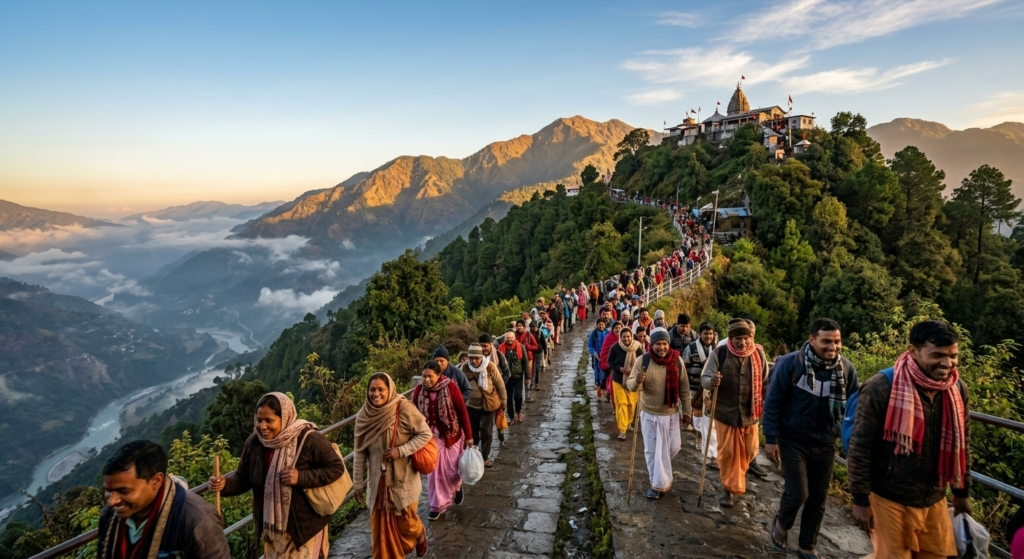
March to April : Best Time to Visit Purnagiri Temple overall
This is the most spiritually significant time to visit Purnagiri Temple. The Chaitra Navratri Mela, celebrated during the Hindu month of Chaitra, runs for approximately 40 days — with the last 10 days considered the most auspicious. Lakhs of devotees from across India travel to seek Maa Purnagiri’s darshan during this period. The weather transitions pleasantly from winter to spring, making the trek comfortable despite the crowds. Shops along the trail are active, bhandara (free food) camps are set up, and the atmosphere carries a deeply devotional energy that is hard to replicate at any other time of year.
If you want to experience the Purnagiri Mela in its full form, plan your visit between mid-March and the end of April.
May to June: Ideal for Peaceful Pilgrims
Once the Navratri Mela winds down, the footfall reduces considerably. May and June offer clear skies, moderate temperatures, and well-maintained trekking trails. This is a good window for families and elderly devotees who prefer a calmer yatra without the festive rush. The surrounding forests are green and the views of the Sarda (Kali) River from the hilltop are particularly vivid during these months.
Summers can get warm during the day, but mornings and evenings remain cool at this altitude, so planning your trek early in the day is advisable.
October to November: Post-Monsoon Serenity
The post-monsoon months bring crisp air, clear mountain views, and rejuvenated greenery to the Purnagiri hillside. The trails dry out after the rains and are safe for trekking by October. Sharad Navratri, observed in September-October, also sees a meaningful influx of pilgrims. However, this period is generally much quieter than the Chaitra season. If you are someone who values solitude and wants to spend time in prayer without the pressure of large crowds, October and November are excellent months.
December to February: Cold but Accessible
The temple remains open during winter, but temperatures drop significantly in Champawat and the surrounding Kumaon hills. The trek can become demanding in the cold, and the approach roads may occasionally be affected by frost. That said, for devotees who do not mind the chill, winter offers an uncrowded and deeply serene darshan experience. Carrying warm clothing is essential if you plan to visit during these months.
July to September: Best Avoided
The monsoon season brings heavy rainfall to this part of Uttarakhand, making the trekking path to Purnagiri Temple slippery and prone to landslides. The trail from Thulligad is not well-maintained during this period, and road connectivity to Tanakpur can also be disrupted. Most travel advisors recommend avoiding July and August entirely. If your schedule only permits a monsoon visit, keep a close eye on weather and road conditions before you depart.
About Purnagiri Temple: Significance and Mythology
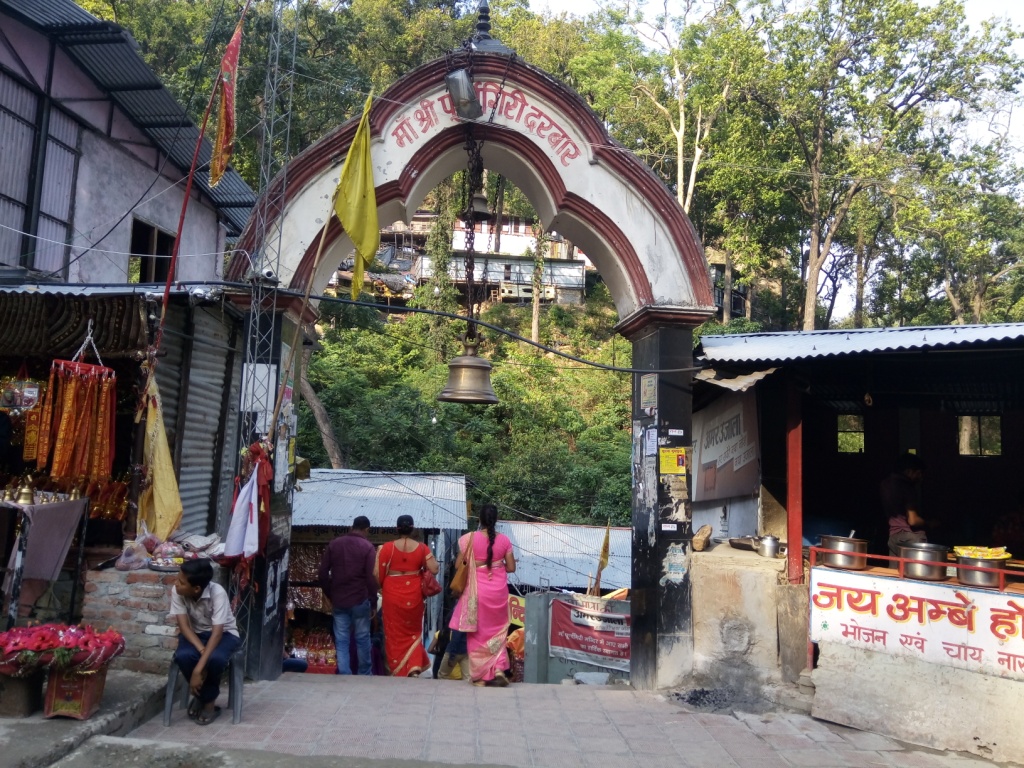
- Purnagiri Temple is considered highly sacred in Hinduism and is counted among both the 108 Siddha Peethas and 51 Shakti Peethas.
- It is believed to be the place where the navel (nabhi) of Goddess Sati fell during Lord Vishnu’s act of dismembering her body.
- The temple is located amidst scenic mountain ranges including Mallikagiri, Kalikagiri, and Hamla peaks.
- The temple was formally established around 1632 CE by a Gujarati merchant named Chandra Tiwari after a divine vision.
- Since then, it has remained a major center of devotion and pilgrimage.
- According to local belief, the yatra is complete only after visiting Siddh Baba Mandir, located across the Nepal border.
- Pilgrims also visit Bhairon Baba Temple before starting the trek, as it is considered an important ritual.
- The story of the Jhoota Mandir is popular among devotees, linked to a trader who fulfilled his promise to the goddess after seeking forgiveness.
The Best Time to Visit Purnagiri Temple is during the months of March to June and September to November, when the weather is pleasant and suitable for trekking. The temple also sees a huge number of devotees during the Chaitra Navratri festival, making it a spiritually vibrant time to visit, although it can be crowded.
How to Reach Purnagiri Temple
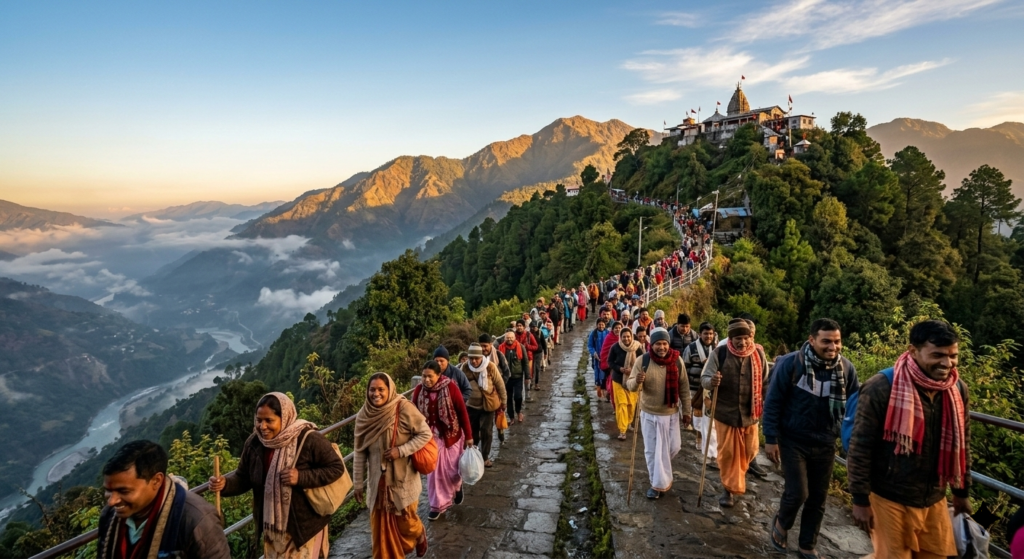
Planning to visit Purnagiri Temple? The temple is accessible by road, rail, and air, with Tanakpur serving as the main base for all pilgrims.
By Road
Tanakpur is well connected by road to major cities in North India, including Delhi (approximately 330 km), Haldwani, Bareilly, and Lucknow. From Tanakpur, the route continues to Thulligad (around 20 km), which is the last motorable point before the best time to visit Purnagiri Temple trek begins. From Thulligad, a 3-km trek with stairs and slopes leads up to the main temple. Shared jeeps and local taxis operate between Tanakpur and Thulligad, making the base journey affordable and accessible.
By Train
The nearest railway station is Tanakpur Railway Station, approximately 20 km from the temple. It has good connectivity with Delhi and other major cities. Trains like the Purnagiri Jan Shatabdi Express and the Tanakpur Express are commonly used by pilgrims travelling to the temple.
By Air
The nearest airport is Pantnagar Airport, around 130–160 km from Tanakpur. From Pantnagar, taxis and buses are available to continue the journey toward the temple.
The Trek to Purnagiri Temple
The trek from Thulligad to Purnagiri Temple is approximately 3 km and takes about 2 to 3 hours depending on your pace and fitness level. The path involves ascending stairs through forested terrain, with small shops selling prasad, snacks, and offerings along the way. The route also passes through Hanuman Chatti (formerly Awalakhan), the Kali Temple, and the Purnagiri Charan Mandir at the starting point of the trek.
The trek is moderate in difficulty and manageable for most age groups, though elderly visitors and those with health conditions should consult their doctor beforehand. Sturdy footwear, a water bottle, and light snacks are recommended for all trekkers.
During the Chaitra Navratri Mela, the local administration sets up additional medical camps, drinking water points, and facilities to assist the large volume of pilgrims. The temple is open 24 hours during this festival period.
For those interested in offbeat places in Uttarakhand, the Kumaon region around Tanakpur has much more to offer beyond the temple itself — from the quiet lakeside of Shyamlatal to the wildlife corridors of the Nandhaur Wildlife Sanctuary.
What to See Near Purnagiri Temple
Boom Temple: Located beside the Sarda River along the route back from Purnagiri, this is a significant stop for pilgrims completing their yatra.
Champawat Town: A hill station in its own right, Champawat has the historic Baleshwar Temple and considerable natural beauty. It serves as a comfortable base for pilgrims.
Shyamlatal Lake: About 30 km from Tanakpur, this peaceful lake surrounded by green hills is a good add-on for nature lovers.
Tanakpur Barrage (Sharda Barrage): A calm spot on the Sharda River near Tanakpur, popular for quiet picnics and riverside evenings.
Siddh Baba Mandir, Nepal: Just across the border, this temple is considered an essential part of completing the Purnagiri yatra for many devout pilgrims.
Uttarakhand is home to several powerful pilgrimage sites beyond Purnagiri. If you are planning a broader spiritual journey, explore our guide to religious places in Uttarakhand for a fuller picture of what the state has to offer. You may also want to explore the places to visit in Kumaon to combine your Purnagiri yatra with other gems from this beautiful region.
Essential Tips for Visiting Purnagiri Temple
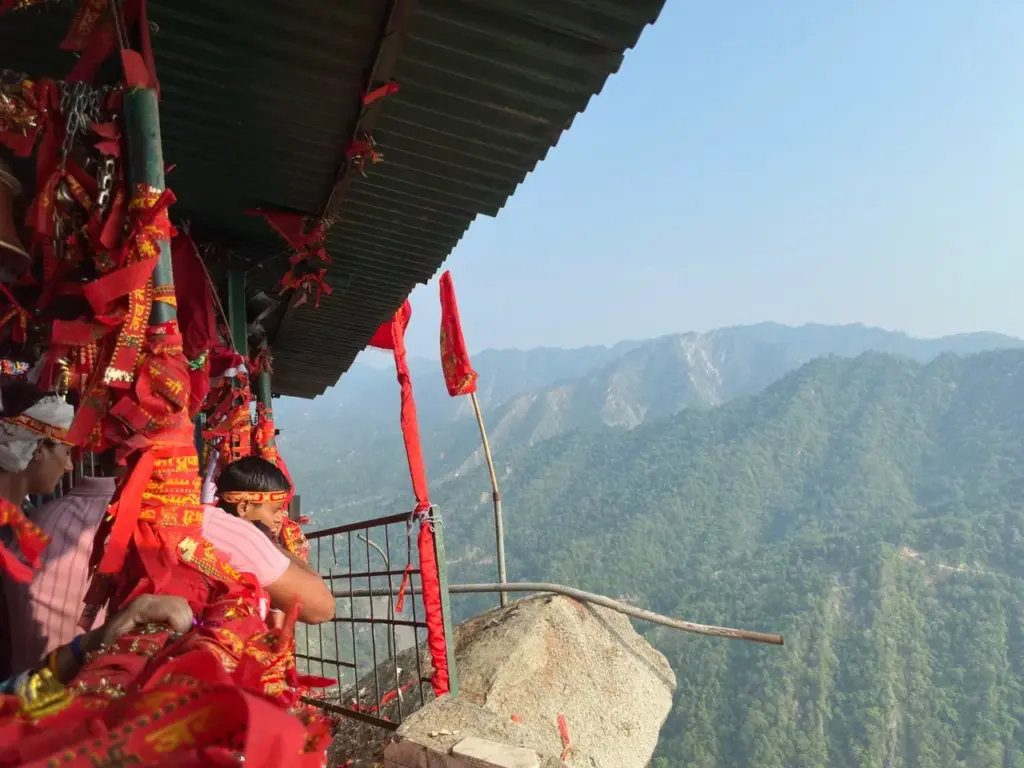
- Photography is not permitted inside the temple premises.
- Carry cash, as ATM access near Thulligad and the trek route is limited.
- Wear comfortable, non-slippery footwear for the trek.
- Begin the trek early in the morning to avoid afternoon heat and crowds.
- During the Navratri Mela, accommodation in Tanakpur fills up quickly — book in advance.
- Devotees typically offer flowers, fruits, coconut, dried fruits, and sarees to Maa Purnagiri.
- The temple follows a darshan gap between noon and 4 PM, so plan your timing accordingly.
- Monsoon trekking (July–August) is not safe and should be avoided.
If you are also planning to visit hill temples in Garhwal during the same trip, check out our guide on the best time to visit Surkanda Devi Temple for a complete Uttarakhand pilgrimage plan.
Conclusion
Purnagiri Temple is one of those rare pilgrimage sites that combines deep mythological significance, a spiritually charged environment, and genuine natural beauty. Whether you come during the festive energy of Chaitra Navratri or prefer the calm of a post-monsoon visit in October, the experience of climbing to Maa Purnagiri’s sanctum and looking out at the Sarda River valley below is one that stays with you.

Plan your visit in the right season, prepare for the trek, and allow yourself the time to experience both the temple and the Kumaon countryside around it. At Frenzy Holidays, we help you plan personalised pilgrimage and travel itineraries across Uttarakhand — from Purnagiri and Champawat to the broader Kumaon and Garhwal regions. Reach out to us at [email protected], call us at 074004 53140, or visit us at Frenzy Holidays, Haware Centurion, S07/34, Nerul East, Sector 19A, Nerul, Navi Mumbai, Maharashtra 400706, and let us take care of the planning so you can focus entirely on your yatra.
Best Time to Visit Purnagiri Temple : FAQs
What is the best time to visit Purnagiri Temple?
March to June and October to November are the ideal months. March–April is the most auspicious due to the Chaitra Navratri Mela.
Which best time to visit Purnagiri Temple for Purnagiri Mela?
The Purnagiri Mela falls during the Hindu month of Chaitra (March–April). The last 10 days are the most auspicious.
Can Purnagiri Temple be visited in winter?
Yes, the temple remains open in winter. However, temperatures drop sharply, so carry warm clothing. The trek can be tiring in the cold.
Is it safe to visit Purnagiri Temple during monsoon?
It is not advisable. Heavy rains make the trek slippery and landslides are common on roads leading to Thulligad.
How long does the Purnagiri Temple trek take?
The 3-km trek from Thulligad takes about 2–3 hours one way. The return journey takes around 1–2 hours.
What are the temple timings at Purnagiri?
The temple is open from 6:00 AM to 12:00 PM and 4:00 PM to 8:00 PM. During Chaitra Navratri, it stays open 24 hours.
Is there accommodation near Purnagiri Temple?
Tanakpur offers several budget and mid-range guesthouses. Book in advance during the Navratri Mela season.
What is the nearest railway station to Purnagiri Temple?
Tanakpur Railway Station, approximately 20 km from the temple.
Is there an entry fee at Purnagiri Temple around best time to visit Purnagiri Temple?
No, entry is free for all devotees.
What is the significance of Purnagiri Temple?
It is believed to be the Shakti Peeth where the navel of Goddess Sati fell. It is counted among both the 108 Siddha Peethas and the 51 Shakti Peethas.
