
Situated on Pamban Island in Tamil Nadu, the Ramanathaswamy Temple at Rameshwaram is one of the most sacred pilgrimage sites in India. Counted among the 12 Jyotirlingas and a part of the Char Dham circuit, this magnificent Dravidian temple draws millions of devotees every year for its sacred 22 theerthams, its legendary corridors, and its deep connection to the Ramayana. If you are planning a yatra here, knowing the best time to visit Rameshwaram Temple will help you make the most of your pilgrimage, whether you are seeking a festival experience or a quieter, more personal darshan.
Confused where to go for quick escape? Let us plan it for you.
Grab the Best DealTable of Contents
Quick Reference: Rameshwaram Temple Trip Planner
Here is a snapshot of the key details to help you plan your trip efficiently.
| Detail | Information |
|---|---|
| Location | Pamban Island, Ramanathapuram District, Tamil Nadu |
| Nearest Town | Rameshwaram town (1.5 km from temple) |
| Temple Timings | 5:00 AM to 1:00 PM and 3:00 PM to 9:00 PM |
| 22 Theerthams Timings | 5:30 AM to 12:00 PM and 3:30 PM to 6:00 PM |
| Best Time to Visit | October to April |
| Peak Festival Season | Maha Shivaratri (Feb/Mar) and Arudra Darshanam (Dec) |
| Avoid | Peak summer afternoons (May to June) |
| Entry Fee | No entry fee for darshan |
| Nearest Railway Station | Rameshwaram Railway Station (1.5 km) |
| Nearest Airport | Madurai Airport (approx. 170 km) |
Best Time to Visit Rameshwaram Temple
The best time to visit Rameshwaram Temple is from October to April, when the weather is pleasant and the conditions are comfortable for both the trek around the temple complex and the 22 theertham ritual. That said, each season brings its own character to Rameshwaram, and your ideal window depends on what kind of experience you are looking for.
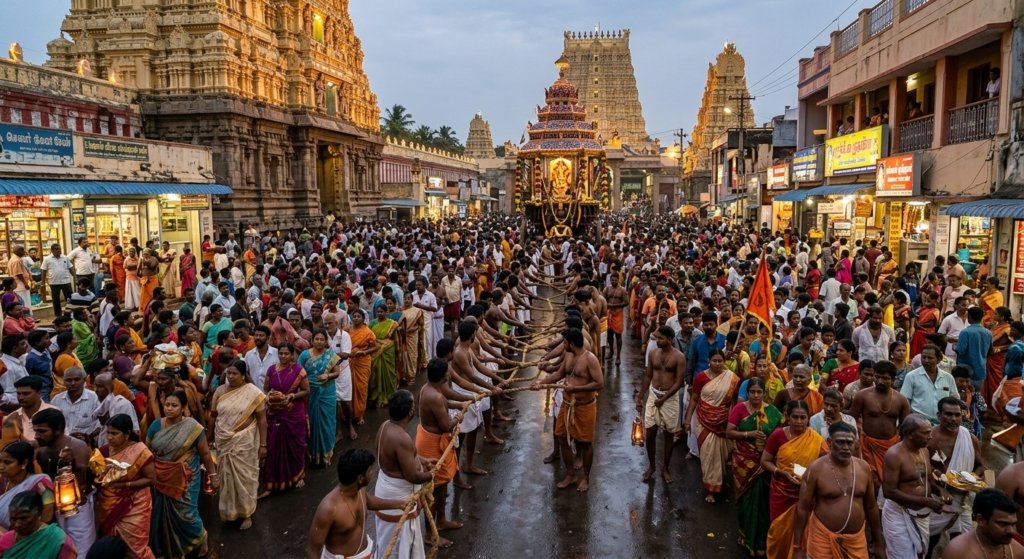
October to February: The Peak Season
This is widely considered the best period to visit Rameshwaram Temple. Temperatures during these months range between 20°C and 30°C, and the cool coastal breeze makes the long corridors and theertham rituals much more manageable. The skies are clear, sightseeing is pleasant, and the overall experience is comfortable for pilgrims of all ages.
Two significant festivals fall in this window. Arudra Darshanam is celebrated in December, when the emerald statue of Nataraj covered in sandalwood is unveiled to devotees, making it a spiritually rare occasion. Kanda Sashti in November, dedicated to Lord Murugan, is also celebrated grandly across the temples of Rameshwaram.
If you are travelling with family or elderly relatives, October to February is the most suitable and comfortable time to plan your visit.
February to March: Festival Peak
Maha Shivaratri is the single most auspicious time to visit Ramanathaswamy Temple. Celebrated in February or March depending on the Hindu calendar, this festival sees enormous crowds at the temple with special poojas, processions, and all-night celebrations. The spiritual energy during this period is unmatched, and the devotional atmosphere is something every pilgrim should experience at least once.
Be prepared for large crowds and book your accommodation well in advance if you plan to visit during Maha Shivaratri.
April to June: Manageable but Warm
Summer in Rameshwaram runs from April to June, with temperatures climbing to 35°C and occasionally touching 40°C. The afternoons can be quite harsh, especially for the outdoor theertham ritual at Agni Theertham by the sea. However, the summer months are considered the pilgrim season in Rameshwaram, and the town remains active with devotees throughout. If you plan to visit during summer, start your darshan early in the morning and avoid stepping out between noon and 4 PM.
Crowds are generally lower than the festival season, and accommodation rates tend to be friendlier during this period.
July to September: Monsoon Season
The southwest monsoon brings moderate to heavy rainfall to Rameshwaram during July and September. While the island turns lush and the coastal scenery is beautiful, travel can become challenging due to wet roads and occasional flooding. The temple itself remains open, but outdoor activities including Agni Theertham and sightseeing around Dhanushkodi are significantly affected.
Rameshwaram is a fascinating destination for bird watchers during the monsoon, as the numerous water bodies on the island fill up and attract both native and migratory birds. However, for a pilgrimage focused on darshan and rituals, the monsoon is the least ideal season to visit.
About Ramanathaswamy Temple: Significance and History
The Ramanathaswamy Temple holds a place of extraordinary importance in Hindu tradition. It is one of the 12 Jyotirlingas, one of the Char Dham pilgrimage sites, and also one of the Tevara Stalams of the Pandya region. According to the Ramayana, Lord Rama worshipped Lord Shiva at this very spot to atone for the sin of killing Ravana, a Brahmin. He is said to have installed the Ramalingam here, while the Vishwalingam (also known as Hanumalingam) was brought by Hanuman from Kailash. As per Lord Rama’s instructions, devotees are required to first offer prayers at the Hanumalingam before the main Ramanathaswamy shrine.
The popular belief that a pilgrimage to Kashi is incomplete without a visit to Rameshwaram underlines the spiritual weight this temple carries in Hindu faith.
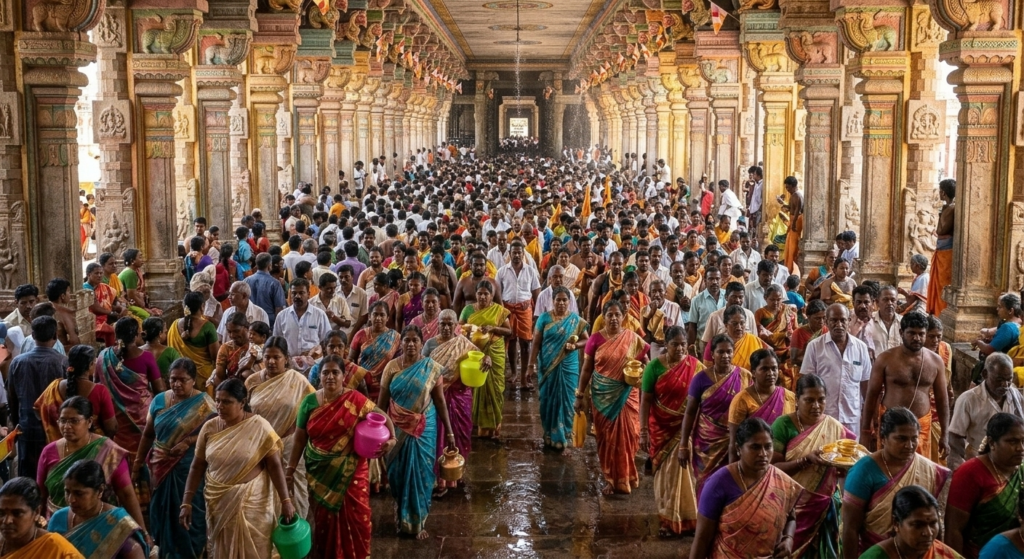
The present temple structure was built and expanded between the 12th and 16th centuries by several dynasties including the Pandyas, the Jaffna kingdom, and the Sethupathis of Ramanathapuram. The temple complex spreads across 15 acres and features the longest temple corridor in the world, stretching approximately 3,850 feet with over 1,200 intricately carved stone pillars. The East Gopuram (Rajagopuram) rises to nearly 126 feet across nine tiers.
The 22 Theerthams: The Heart of the Pilgrimage
For most devotees, the ritual bath at the 22 sacred theerthams is as important as the darshan itself. According to the Sethu Puranam, there are 64 theerthas in and around Rameshwaram, of which 22 are located inside the Ramanathaswamy Temple. Each well is believed to have a distinct taste, mineral composition, and spiritual significance. Bathing in all 22 theerthams in order is believed to cleanse sins accumulated over multiple lifetimes.
The 22 in the number represents the 22 arrows in Lord Rama’s quiver. Before entering the temple complex for theertham snanam, pilgrims traditionally take a dip at Agni Theertham, the sacred stretch of sea located just outside the temple’s East Gate. This is considered the first and most essential step of the purification ritual.
The theertham bathing session takes between 45 minutes and 2 hours depending on the crowd. Tickets cost Rs. 25 per person and are available at the East Gate entrance. Carry a separate set of dry clothes as devotees are not permitted to enter the sanctum in wet clothing. Changing rooms are available near the well area.
For a peaceful theertham experience, the early morning slot between 5:30 AM and 8:00 AM on a weekday is ideal.
How to Reach Rameshwaram Temple
Rameshwaram is well connected to the rest of Tamil Nadu and South India by road, rail, and air.
By Road
Rameshwaram is accessible by road from major Tamil Nadu cities. Madurai is approximately 170 km away, Chennai is around 570 km, and Kanyakumari is roughly 330 km. State-run buses and private coaches operate regularly from Madurai, Trichy, and Chennai to Rameshwaram. From the bus stand, the temple is a short auto or taxi ride away.
By Train
Rameshwaram Railway Station is located just 1.5 km from the temple and is directly connected to Madurai, Trichy, Chennai, Thanjavur, and Coimbatore. Several trains including the Rameshwaram Express serve this route, making rail travel a convenient and scenic option for pilgrims. The iconic Pamban Bridge, which the train crosses over the sea, is an experience in itself.
By Air
Rameshwaram does not have its own airport. The nearest airport is Madurai Airport, approximately 170 km away. From Madurai, taxis and buses are available to complete the journey to Rameshwaram.
Nearby Places to Visit
Agni Theertham: The sacred stretch of the Bay of Bengal just outside the East Gate of the temple. Every pilgrim takes a dip here before beginning the 22 theertham ritual inside.
Dhanushkodi: Located about 18 km from Rameshwaram town, Dhanushkodi is the southeastern tip of Pamban Island where the Bay of Bengal and the Indian Ocean meet. It is also the closest point to the legendary Ram Setu. The ruins of the old town, wiped out by a cyclone in 1964, give it a hauntingly beautiful atmosphere.
Gandhamadhana Parvatham: A small hillock about 3 km from the temple where Lord Rama’s footprints are enshrined. It offers a panoramic view of the island and the surrounding sea.
Pamban Bridge: One of India’s most iconic railway bridges, stretching over 2 km across the sea to connect Pamban Island with the mainland. The view from or of the bridge is one of the most photographed sights in Tamil Nadu.
Kothandaramaswamy Temple: Located about 12 km from Rameshwaram, this is believed to be the spot where Vibhishana surrendered to Lord Rama. The temple sits right on the seashore and is especially beautiful at sunrise.
Panchamukhi Hanuman Temple: One of the few temples in India housing a five-faced idol of Lord Hanuman, this is an important stop for devotees completing their Rameshwaram yatra.
Rameshwaram makes an excellent base for exploring the broader southern Tamil Nadu coast. If you are interested in going beyond the pilgrimage trail, check out our guide to hidden tourist places in Tamil Nadu for some lesser-known gems worth adding to your itinerary. You can also explore our best places to visit now in South India for a wider South India travel plan that pairs well with a Rameshwaram trip.
If you are combining your visit with a trip to the French coast, our guide to hidden places in Pondicherry is worth a read. Those extending their journey further south will find our guides on hidden places in Nagercoil and hidden places in Salem useful for planning a fuller Tamil Nadu circuit.
Essential Tips for Visiting Rameshwaram Temple
- Carry two sets of clothes. One for the theertham ritual and one dry set for darshan inside the sanctum.
- Mobiles and cameras are not permitted inside the main sanctum. Leave them at the paid locker counters outside.
- Men should wear a dhoti or pyjamas with a shirt. Women should wear a saree, salwar, or churidar.
- Leather items are not permitted inside the temple premises.
- A Rs. 50 special ticket is available for Spatika Lingam darshan, a rare early morning darshan of the crystal Shiva Lingam.
- For a quicker darshan experience, a Rs. 50 special ticket for the main sanctum is also available.
- Arrive by 5:00 AM on weekdays for the least crowded experience.
- During Maha Shivaratri and other festivals, the temple sees extremely large crowds. Plan and book accommodation well in advance.
- The entire temple visit including the theertham ritual and darshan can comfortably be covered in half a day if planned well.
Conclusion
Rameshwaram Temple is not simply a destination. It is a complete spiritual experience that combines mythology, ritual, architecture, and the sheer power of the sea all in one place. Whether you come for the 22 theerthams, the Maha Shivaratri celebrations, or simply to stand inside those ancient corridors and feel the weight of centuries of devotion, the visit will stay with you long after you leave.
October to April is the best time to visit Rameshwaram Temple for most travellers, with February and March being the most auspicious window for festival seekers. Plan your visit with care, follow the rituals with an open heart, and allow yourself at least two days to do justice to this sacred island town.
At Frenzy Holidays, we help you plan personalised pilgrimage and travel itineraries across Tamil Nadu and South India. Reach out to us at [email protected], call us at 074004 53140, or visit us at Frenzy Holidays, Haware Centurion, S07/34, Nerul East, Sector 19A, Nerul, Navi Mumbai, Maharashtra 400706, and let us take care of the planning so you can focus entirely on your yatra.
Best Time to Visit Rameshwaram Temple FAQs
What is the best time to visit Rameshwaram Temple?
October to April is the best time to visit Rameshwaram Temple. The weather is pleasant, temperatures are comfortable, and the major festivals fall within this window.
Which is the most auspicious time to visit Rameshwaram?
Maha Shivaratri, celebrated in February or March, is the most auspicious time to visit Ramanathaswamy Temple. Arudra Darshanam in December is another spiritually significant occasion.
Can we visit Rameshwaram Temple during summer?
Yes, the temple is open throughout summer. However, afternoons can be very hot and humid. Plan your darshan and theertham ritual in the early morning hours to avoid the peak heat.
Is Rameshwaram worth visiting during monsoon?
The temple remains open during monsoon, but outdoor activities and sightseeing are affected by heavy rains. It is not the recommended season for a pilgrimage visit.
What are the timings for the 22 theerthams at Rameshwaram?
The 22 theertham bath is available from 5:30 AM to 12:00 PM and 3:30 PM to 6:00 PM. Tickets cost Rs. 25 per person and are available at the East Gate.
What is the entry fee for Rameshwaram Temple?
There is no entry fee for general darshan. Special tickets of Rs. 50 each are available for Spatika Lingam darshan and for quicker access to the main sanctum.
What is the temple timing at Rameshwaram?
The temple is open from 5:00 AM to 1:00 PM and 3:00 PM to 9:00 PM daily. Timings may vary on festival days.
How many days are enough for Rameshwaram?
Two days are generally sufficient to cover the Ramanathaswamy Temple, the 22 theerthams, Agni Theertham, Dhanushkodi, Gandhamadhana Parvatham, and the other nearby temples.
Is photography allowed inside Rameshwaram Temple?
Photography inside the main sanctum is not permitted. Mobiles and cameras must be deposited at paid locker counters outside the temple.
What should I wear to Rameshwaram Temple?
Men should wear a dhoti or pyjamas with a shirt. Women should wear a saree, salwar, or churidar. Leather items are not allowed inside the temple.
