
The best time to visit Sandakphu is April to May for rhododendron blooms and October to November for crystal-clear Himalayan views. December to February offers a magical snow-covered experience for winter trekkers. The trek remains officially closed from mid-June to mid-September during the monsoon season.
Sandakphu, standing at an altitude of 3,636 metres (11,929 feet), is the highest peak in West Bengal and the crown of the Singalila Ridge along the India–Nepal border in Darjeeling district. It holds the rare distinction of offering a panoramic view of four of the world’s five highest peaks — Everest, Kanchenjunga, Lhotse, and Makalu — from a single vantage point. The famous “Sleeping Buddha” silhouette formed by the Kanchenjunga range as seen from the summit is one of the most iconic sights in all of Indian trekking. The entire trek route passes through Singalila National Park, home to Red Pandas, Himalayan Black Bears, Clouded Leopards, Pangolins, and over 600 varieties of orchids — the largest concentration in any single geographical area in the world.
The trek to Sandakphu starts from Manebhanjan, a small township at 7,054 feet, approximately 26 km from Darjeeling. The route zigzags along the India–Nepal border, passing through rhododendron forests, alpine meadows, and remote Himalayan villages, covering approximately 48–68 km depending on the itinerary. For those exploring the broader Eastern Himalayan region, Frenzy Holidays also offers guidance on the offbeat places near Gangtok that can be combined with a Sandakphu visit for a fuller Himalayan experience.
Confused where to go for quick escape? Let us plan it for you.
Grab the Best DealTable of Contents
Best Time to Visit Sandakphu by Season
Each season at Sandakphu offers a distinct experience. The right time depends on whether you are chasing rhododendron blooms, clear mountain views, snow, or a quieter trail. Here is a quick reference followed by a detailed seasonal breakdown.
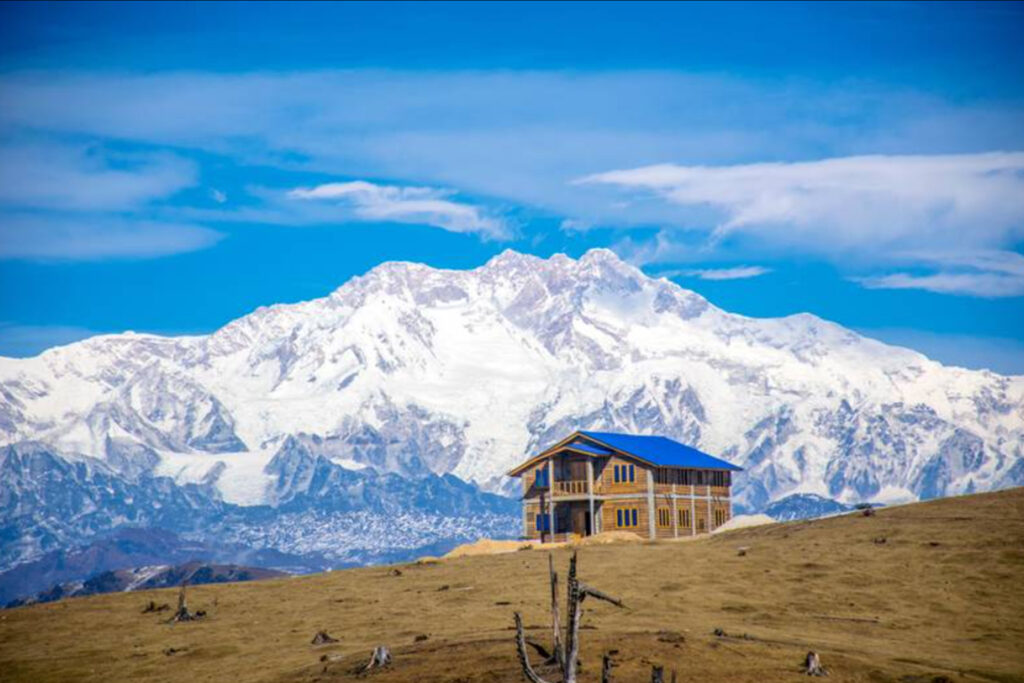
| Detail | Information |
|---|---|
| Location | Darjeeling District, West Bengal |
| Altitude | 3,636 m (11,929 ft) |
| Trek Base | Manebhanjan (26 km from Darjeeling) |
| Best Time for Rhododendrons | April to May |
| Best Time for Himalayan Views | October to November |
| Best Time for Snow | December to February |
| Trek Closed | Mid-June to Mid-September (Monsoon) |
| Trek Difficulty | Easy to Moderate |
| Trek Duration | 5 to 7 days |
| Singalila National Park Permit | ₹100 (Indians), ₹200 (Foreign nationals) |
| Nearest Airport | Bagdogra Airport (100 km from Manebhanjan) |
| Nearest Railway Station | New Jalpaiguri — NJP (90 km from Manebhanjan) |
Sandakphu offers a dramatically different experience in each season. Here is a season-by-season breakdown to help you decide which window suits your trek goals best.
Spring — April to May
- Temperature: 8°C to 20°C during the day
- Highlights: Rhododendrons and Giant Magnolias in full bloom, carpeting the forests in vivid shades of pink, red, and white
- Views: Good Himalayan views in the morning before afternoon clouds gather; early March still has lingering snow patches
- Best for: First-time trekkers, families, honeymooners, and photographers who want colour and comfort
- Note: April is the standout month, offering the rare combination of snow patches and spring blooms on the same trail
Autumn — October to November
- Temperature: 5°C to 18°C during the day, dropping sharply at night
- Highlights: Crystal-clear blue skies, dry trails, and the Sleeping Buddha profile of Kanchenjunga visible with exceptional clarity
- Views: The best season for Himalayan views — Everest, Kanchenjunga, Lhotse, and Makalu all visible in a single panoramic frame
- Best for: Photographers, solo trekkers, and those seeking the fullest visual experience of the Eastern Himalayas
- Note: October can bring occasional early snowfall at the summit, adding an adventurous edge to the clear-sky experience
Winter — December to February
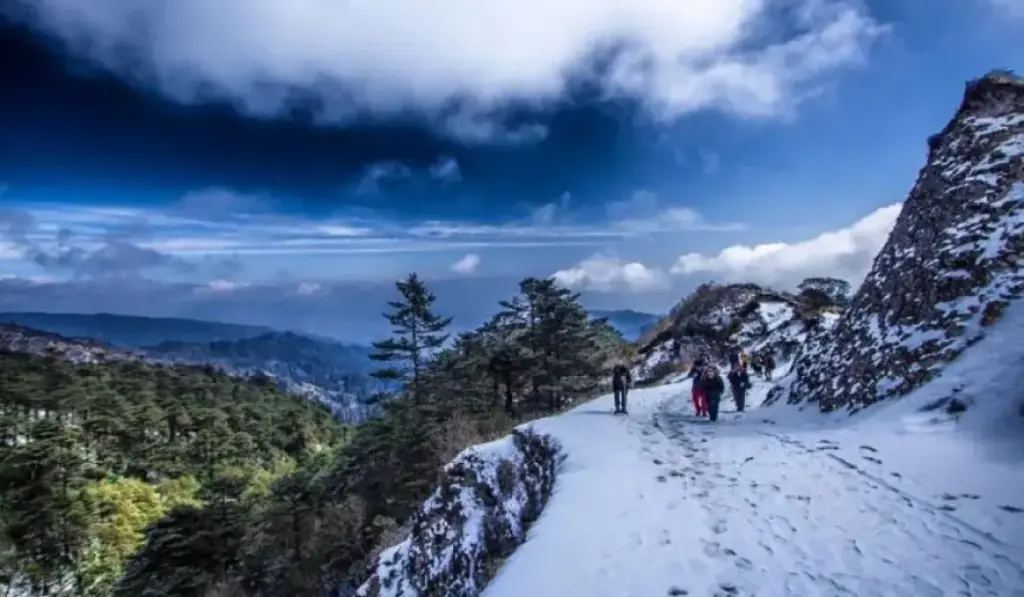
- Temperature: -10°C to -15°C at night; trail fully snow-blanketed by mid-January
- Highlights: Pristine white landscapes, uncrowded trails, and spectacular clear-sky Himalayan views in winter light
- Best for: Experienced snow trekkers seeking a challenging and deeply rewarding winter adventure
- Note: Mandatory gear includes thermal layers, microspikes, gaiters, and a -15°C sleeping bag. Trek operator support is strongly recommended during this period
Monsoon — Mid-June to Mid-September
- Status: Trek officially CLOSED
- Singalila National Park closes from 15th June to 15th September
- Trails become dangerously slippery, landslides are a real risk, and mountain visibility is almost entirely lost due to cloud cover
- This period must be strictly avoided for the Sandakphu trek
Permits Required for Sandakphu Trek
Since the Sandakphu trek passes through Singalila National Park, trekkers must obtain an entry permit before beginning the trek. Permits are issued at the Manebhanjan Forest Office and at the park entry gate near Tumling.
Permit costs are ₹100 per person for Indian nationals and ₹200 per person for foreign nationals. Camera fees are ₹100 for still cameras and ₹400 for video cameras. Foreign nationals must carry their passport and visa copies. Permits can also be arranged through registered trekking agencies, which is the most convenient option for organised group treks.
How to Reach Sandakphu
Sandakphu is accessible from major cities via a combination of flight or train to the Siliguri–Bagdogra hub, followed by a road transfer to Manebhanjan — the base of the trek. The journey itself through the Darjeeling hills is scenic and well worth the effort. Here is a breakdown of all the options.
How to Reach Sandakphu by Air?
Bagdogra Airport (IXB) is the nearest airport, approximately 100 km from Manebhanjan. Direct flights connect Bagdogra to Kolkata, Delhi, Mumbai, Chennai, and Bengaluru. From the airport, hire a taxi or shared jeep to Manebhanjan (approximately 3.5 hours).
How to Reach Sandakphu by Train?
New Jalpaiguri Railway Station (NJP) is the nearest major railhead, approximately 90 km from Manebhanjan. NJP is well connected to Kolkata, Delhi, and other major cities. Shared jeeps and private taxis cover the distance from NJP to Manebhanjan in approximately 3 hours.
How to Reach Sandakphu from Darjeeling?
Manebhanjan is just 26 km from Darjeeling town. A taxi from Darjeeling to Manebhanjan takes about one hour and is the most common starting point for trekkers already based in Darjeeling.
How to Reach Sandakphu from Manebhanjan?
From Manebhanjan, trekkers can either begin the trek on foot or take a vintage Land Rover or Bolero 4×4 on the rough mountain road to Sandakphu (approximately 2.5 hours by vehicle). The trekking route passes through Chitrey, Meghma, Gairibas, Kalipokhri, and the summit at Sandakphu over 5–7 days depending on the itinerary chosen.
Places to Visit Near Sandakphu
Sandakphu’s location on the West Bengal–Nepal border and its proximity to Darjeeling and Sikkim means there is no shortage of remarkable destinations to explore before or after the trek. Whether you prefer more mountain trails, cultural heritage, or sacred pilgrimage sites, the surrounding region has something for every traveller.
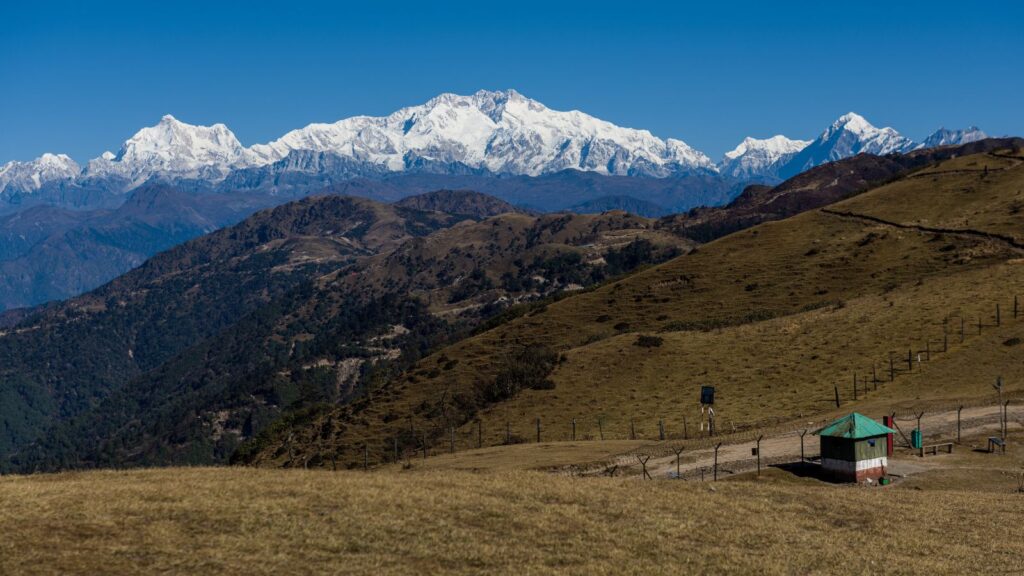
- Phalut (3,600 m), approximately 21 km further along the Singalila Ridge, is the natural extension of the Sandakphu trek. It offers an even wider panoramic view of the Kanchenjunga massif and is part of the extended Sandakphu–Phalut itinerary that most serious trekkers prefer.
- Kalipokhri is a sacred black-water lake at 3,170 m along the trek route, considered holy by local communities. It is a popular overnight halt and a scenic point well worth pausing at.
- Darjeeling, just 26 km from Manebhanjan, is the most natural base before and after the trek. Tiger Hill, the Darjeeling Himalayan Railway (Toy Train), and the famous tea gardens are all excellent complementary stops.
- Sikkim, bordering West Bengal, is easily accessible from Darjeeling and offers its own extraordinary Himalayan heritage. The historical places in Sikkim make for a compelling extension of any Eastern Himalayan trip.
- Mustang, Nepal is within reach for those looking to extend their Himalayan journey across the border. Frenzy Holidays covers the best time to visit Mustang in Nepal for travellers planning a cross-border itinerary.
- Pashupatinath Temple, Kathmandu is a natural sacred complement to a Nepal-side Himalayan trip. The best time to visit Pashupatinath Temple can be planned alongside the Nepal leg of such a journey.
Practical Tips for Visiting Sandakphu
A little preparation goes a long way on the Sandakphu trek. From packing the right gear to managing altitude and mobile connectivity, here are the key things to keep in mind before you set off.
- Physical fitness is essential. The trek is rated easy to moderate but covers 48–68 km over 5–7 days at high altitude. Building cardiovascular endurance through regular jogging in the weeks before the trek is strongly recommended. Beginners should ideally cover 5 km in under 45 minutes before attempting it.
- Gear up for your season. Spring and autumn trekkers need warm layers, a waterproof jacket, trekking boots, and trekking poles. Winter trekkers additionally need thermal base layers, gaiters, microspikes, heavy-duty gloves, and a sleeping bag rated to at least -15°C.
- Mobile network is largely unavailable along the trek route. Vodafone and BSNL work in patches. At several points along the India-Nepal border, your phone may switch to Nepal international roaming — be careful about call costs.
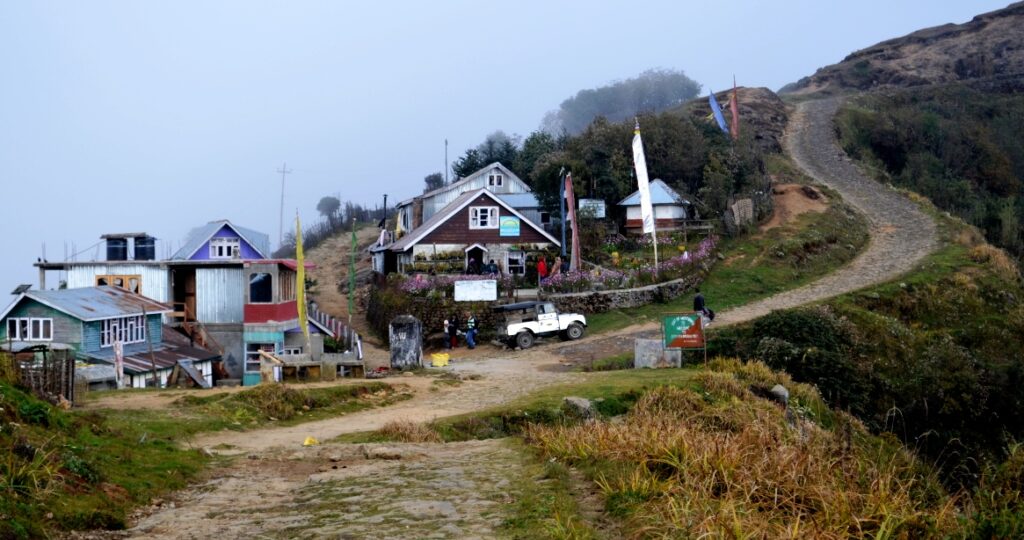
- Book accommodation in advance during the October–November and April–May peak seasons. Trekkers’ huts and homestays at Tumling, Kalipokhri, and Sandakphu fill up quickly on weekends and during peak periods.
- Take altitude sickness seriously. At 11,929 feet, staying well hydrated, avoiding overexertion on the first day, and acclimatizing at intermediate stops like Tumling or Kalipokhri before pushing to the summit is strongly advisable.
Conclusion
The best time to visit Sandakphu is April to May for spring blooms and October to November for the clearest Himalayan views. Winter trekkers willing to brave -15°C temperatures will find December to February equally extraordinary, with snow-blanketed trails and pristine mountain panoramas. Whatever season you choose, Sandakphu offers one of the finest trekking experiences in India — the rare privilege of seeing Everest, Kanchenjunga, Makalu, and Lhotse in a single panoramic frame, from the highest point in West Bengal, through forests rich with rhododendrons, Red Pandas, and high-altitude birdlife. Plan your season wisely, prepare well, and Sandakphu will reward you with memories that last a lifetime.

Frenzy Holidays ensures a smooth and enriching travel experience from start to finish. Visit us at Haware Centurion, S07/34, Nerul East, Sector 19A, Nerul, Navi Mumbai, Maharashtra 400706. For bookings or more information, call +91 7400453140, email [email protected], or visit www.frenzyholidays.com.
Best Time to Visit Sandakphu – FAQs
What is the best time to visit Sandakphu?
The best time to visit Sandakphu is April to May for rhododendron blooms and October to November for clear Himalayan views. December to February is ideal for snow trekking but requires full winter gear and experience.
Is Sandakphu trek open during winter?
Yes, the Sandakphu trek is open during winter from December to February. However, it is recommended only for experienced trekkers with proper cold-weather gear as temperatures can drop to -15°C.
When is Sandakphu closed?
Sandakphu and Singalila National Park are officially closed from 15th June to 15th September during the monsoon season due to slippery trails and risk of landslides.
What peaks can be seen from Sandakphu?
From Sandakphu, on a clear day, you can see four of the world’s five highest peaks — Everest, Kanchenjunga, Lhotse, and Makalu — in a single panoramic view, along with the iconic Sleeping Buddha formation of the Kanchenjunga range.
What permits are required for the Sandakphu trek?
Trekkers need a Singalila National Park entry permit, available at the Manebhanjan Forest Office or the park entry gate near Tumling. The cost is ₹100 for Indian nationals and ₹200 for foreign nationals.
How difficult is the Sandakphu trek?
The Sandakphu trek is rated easy to moderate. It is beginner-friendly for those with good cardiovascular fitness, covering approximately 48–68 km over 5–7 days with some steep ascent sections.
How do I reach Sandakphu?
The nearest airport is Bagdogra (100 km from Manebhanjan) and the nearest railway station is New Jalpaiguri (90 km from Manebhanjan). From either point, a taxi to Manebhanjan takes 3–3.5 hours. The trek begins from Manebhanjan.
Can I drive to Sandakphu instead of trekking?
Yes, a 4-wheel drive Land Rover or Bolero can be hired from Manebhanjan to drive to Sandakphu in approximately 2.5 hours on the rough mountain road. However, trekking the route is strongly recommended for the complete experience.
What is the altitude of Sandakphu?
Sandakphu stands at an altitude of 3,636 metres (11,929 feet), making it the highest peak in West Bengal and the highest point of the Singalila Ridge.
What wildlife can be spotted on the Sandakphu trek?
The Singalila National Park through which the trek passes is home to Red Pandas, Himalayan Black Bears, Clouded Leopards, Pangolins, Barking Deer, and over 600 varieties of orchids, along with a rich diversity of high-altitude bird species.
