
Shimla, famously known as the Queen of Hills and located at an altitude of 2,205 metres in the Shivalik range, is one of India’s most popular hill stations where the timing of your visit plays a crucial role-especially if you’re hoping to witness snowfall. The experience can vary greatly depending on the season, from waking up to snow-covered colonial rooftops to exploring the town in pleasant spring weather or even arriving during monsoon when the charm feels different. This guide covers everything you need to plan your trip better, including the best time to visit Shimla for snowfall, month-wise weather patterns, average temperatures, nearby snowfall spots, ideal trip duration, and insights into the rainy season, helping you choose the perfect time for your visit.
Confused where to go for quick escape? Let us plan it for you.
Grab the Best DealTable of Contents
Quick Reference: Shimla Visit Planning
| Season | Best Months | Average Temperature in Shimla | Conditions | Ideal For |
|---|---|---|---|---|
| Snowfall Peak | Jan–Feb | -2 to 8°C | Heavy snow, magical | Snowfall experience, winter sports |
| Spring | Mar–Apr | 8–20°C | Pleasant, clear | Comfortable sightseeing, apple blooms |
| Summer | May–Jun | 15–25°C | Cool, refreshing | Escape from plains heat |
| Monsoon | Jul–Sep | 15–22°C | Shimla rainy season | Lush greenery, lower prices |
| Autumn | Oct–Nov | 8–18°C | Clear, golden | Photography, comfortable trekking |
You can also explore our affordable Himachal Pradesh Tour Packages From Mumbai designed for Budget Travellers.
Best Time to Visit Shimla for Snowfall: Seasonal Analysis
Shimla’s seasons are distinct enough that visiting in the wrong month can mean missing the snowfall experience entirely while paying peak prices. Understanding each season’s character helps you match your travel dates precisely to what you want from the trip.
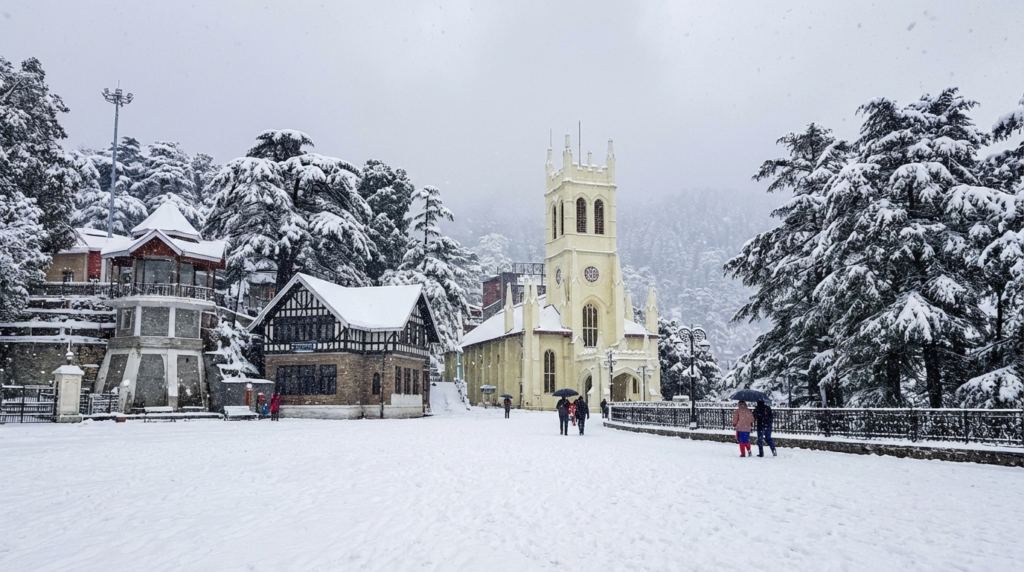
January to February: Best Time to Visit Shimla for Snowfall
January and February are the undisputed best time to visit shimla for snowfall. These two months deliver the heaviest and most consistent snowfall of the year, transforming the town into a white-draped winter landscape that justifies every traveler’s snow dream.
Average Temperature in Shimla (January–February):
- January: -2 to 7°C, heaviest snowfall month
- February: 0 to 9°C, continuing heavy snow with occasional clear spells
What Makes This the Best Time to Visit Shimla for Snowfall:
- Shimla receives most of its snowfall during January and February, caused by western disturbances from Central Asia.
- A strong weather system can bring 30–60 cm of snow within 1–2 days, transforming areas like Mall Road and The Ridge into scenic winter landscapes.
- Snowfall also enhances the beauty of landmarks like Jakhu Temple, making the town look like a postcard destination.
- Temperatures in January drop to -2°C to -5°C at night, while daytime temperatures usually stay below 7–8°C.
- The cold weather helps snow remain on the ground for longer, offering a complete snowfall experience.
- Colonial-era buildings like Viceregal Lodge, Gaiety Theatre, and Christ Church look especially stunning during snowfall.
- Heavy snowfall can sometimes disrupt travel by blocking roads like the Kalka–Shimla Highway (NH5).
- It is advisable to check road conditions, carry snow chains, and keep buffer time in your itinerary.
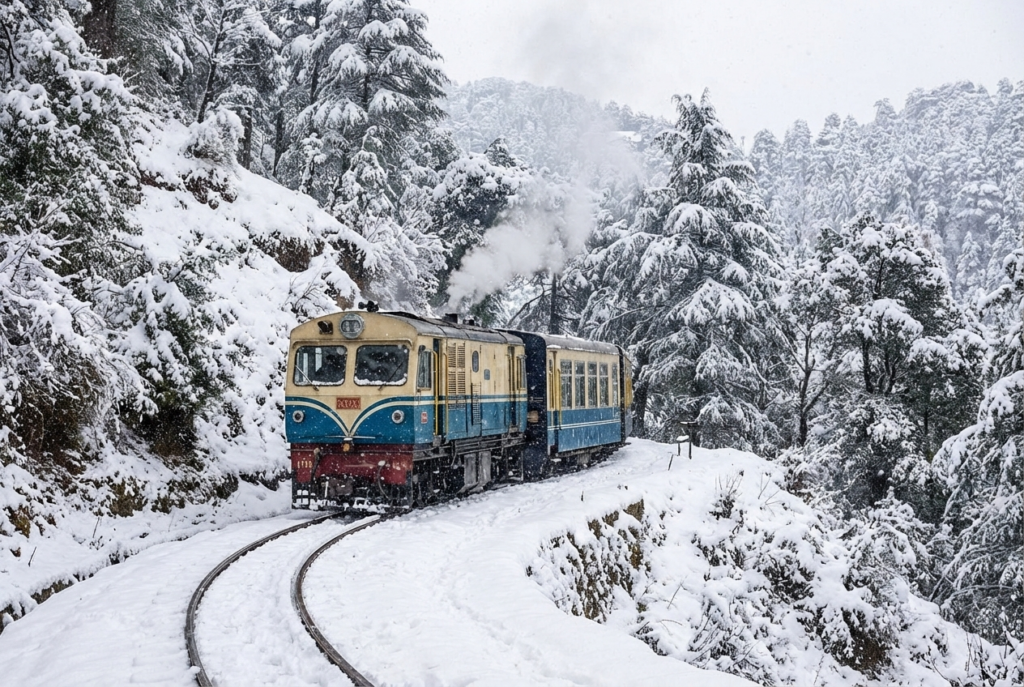
- The Kalka-Shimla Toy Train usually operates even during snowfall and offers a unique winter travel experience.
Booking note: January and February weekends, particularly around Republic Day and school winter break, see very heavy demand. Book accommodation 4–6 weeks in advance for these periods.
Ideal For: First-time snowfall seekers, couples, families with older children, winter photography enthusiasts.
Trip Cost (Snowfall Season): ₹10,000–18,000 per person for 3N/4D from Delhi including travel.
March to April:
March and April offer one of Shimla’s most underrated seasonal windows. The snowfall has largely retreated to higher elevations, the average temperature in shimla climbs to a genuinely pleasant range, and the apple orchards surrounding the town burst into spectacular white and pink blossom that transforms the hillsides into something almost as visually striking as the winter snow.
Average Temperature in Shimla (March–April):
- March: 8–18°C, snow melting, bright and clear
- April: 12–22°C, warm and pleasant, occasional light showers
What to Expect:
- Mall Road and The Ridge are most enjoyable in spring with pleasant weather and fewer crowds.
- Ideal time for walking, shopping, and exploring colonial architecture comfortably.
- The trek to Jakhu Temple (around 2 km) is best during this season, offering clear views of the Himalayas.
- Perfect time for day trips to Chail (known for the world’s highest cricket ground) and Kufri (which may still have snow in early March).
- Accommodation prices are lower compared to peak winter months, making it a great option for budget travelers.
Ideal For: Budget travelers, couples, heritage enthusiasts, apple orchards photography.
Trip Cost (Spring): ₹7,500–13,000 per person for 3N/4D.
May to June:
May and June bring Shimla its busiest tourist season as travelers from Delhi, Punjab, Haryana, and the plains states pour in to escape the punishing summer heat below. The average temperature in shimla during these months is a refreshingly cool 15–25°C, making it genuinely comfortable while the plains swelter at 40–45°C. This seasonal dynamic has defined Shimla’s identity since its days as the British summer capital.
Average Temperature in Shimla (May–June):
- May: 15–25°C, warm and sunny, peak crowds
- June: 16–24°C, pre-monsoon warmth, crowded
What to Expect:
- Mall Road, The Ridge, and Lakkar Bazaar are very crowded in May and June, especially on weekends.
- Hotels tend to fill up weeks in advance, so early booking is recommended.
- The Kalka-Shimla Toy Train gets fully booked quickly, making advance IRCTC reservations necessary.
- Weather during these months is pleasant and ideal for sightseeing, with longer daylight hours allowing more exploration.
- All tourist facilities and services operate at full capacity during peak summer.
- Snowfall is not visible in Shimla during this time, as it is limited to higher altitudes above 3,500 metres.
- However, summer is perfect for enjoying Shimla’s cool climate and colonial charm.
Ideal For: Plains travelers seeking a cool escape, first-time Shimla visitors focused on general sightseeing.
Trip Cost (Summer Peak): ₹12,000–22,000 per person for 3N/4D, highest rates of the year.
July to September:
The shimla rainy season arrives with the southwest monsoon in late June and persists through September, bringing heavy rainfall, mist-draped valleys, and the lushest green landscape of the year. The shimla rainy season is a genuinely divisive period for travel planning with both significant appeal and real practical challenges.
Average Temperature in Shimla (July–September):
- July: 15–22°C, heavy shimla rainy season onset
- August: 15–21°C, continuing heavy rainfall
- September: 13–20°C, monsoon gradually easing
What to Expect:
- The monsoon season in Shimla turns the hills into a lush green landscape with mist, flowing streams, and dense cedar and oak forests.
- The Kalka-Shimla Toy Train offers a scenic and atmospheric journey through rain-soaked forests and bridges during this time.
- Accommodation rates are at their lowest, making it a budget-friendly season to visit.
- However, landslides can affect roads like the Shimla–Kalka highway, sometimes causing delays or temporary closures.
- Outdoor activities like sightseeing and trekking may be disrupted due to frequent rainfall.
- Routes such as the path to Jakhu Temple can become slippery and difficult to navigate.
- It is advisable to keep travel insurance, plan flexible itineraries, and stay updated on weather conditions.
- Travelers can also consider visiting nearby destinations like Palampur, which experiences a milder monsoon and offers scenic beauty during this season.
Ideal For: Budget travelers, monsoon romantics, toy train enthusiasts, nature photographers.
Trip Cost (Shimla Rainy Season): ₹6,000–10,000 per person for 3N/4D, lowest accommodation rates of the year.
October to November:
October and November represent Shimla’s most underappreciated season. The shimla rainy season has cleared, skies turn a deep Himalayan blue, the apple harvest season fills the orchards with activity and colour, and the average temperature in shimla settles into a brisk, invigorating range that is ideal for trekking and outdoor exploration. The first dusting of snow begins appearing on higher peaks by late November, building anticipation for the snowfall season ahead.
Average Temperature in Shimla (October–November):
- October: 10–20°C, clear skies, excellent visibility
- November: 5–15°C, cooling rapidly, first higher elevation snow
What to Expect:
- October is one of the best months to visit Shimla if snowfall is not the main goal.
- The clear post-monsoon weather offers excellent views of the higher Himalayan ranges.
- Treks to Jakhu Hill and Prospect Hill are especially enjoyable during this time.
- Nearby areas like Fagu and Mashobra showcase apple harvest activities, adding a local cultural experience.
- Tourist crowds are lower compared to peak summer and winter seasons, and accommodation prices remain reasonable.
- By late November, temperatures drop close to freezing at night.
- Occasional early snowfall may begin, offering a preview of the winter season in Shimla.
Ideal For: Trekkers, photography enthusiasts, apple harvest visitors, those seeking Shimla without crowds.
Trip Cost (Autumn): ₹8,000–14,000 per person for 3N/4D.
Shimla Monthly Weather:
| Month | Min Temp | Max Temp | Snowfall | Recommendation |
|---|---|---|---|---|
| January | -2°C | 7°C | Heavy | ✅ Best for snowfall |
| February | 0°C | 9°C | Heavy | ✅ Best for snowfall |
| March | 5°C | 16°C | Rare | ✅ Very Good |
| April | 10°C | 22°C | None | ✅ Excellent |
| May | 14°C | 25°C | None | ✔️ Crowded but good |
| June | 16°C | 24°C | None | ✔️ Peak crowds |
| July | 15°C | 22°C | None | ⚠️ Rainy season |
| August | 15°C | 21°C | None | ⚠️ Rainy season |
| September | 13°C | 20°C | None | ⚠️ Easing rains |
| October | 10°C | 20°C | None | ✅ Excellent |
| November | 5°C | 15°C | Possible at higher elevation | ✅ Very Good |
| December | 0°C | 10°C | Light to moderate | ✅ Good for early snow |
Snowfall Places Near Shimla
For travelers whose primary goal is the best time to visit shimla for snowfall and who want more guaranteed or deeper snow than Shimla town itself can always deliver, several snowfall places near shimla offer reliably heavier accumulations due to higher elevation.
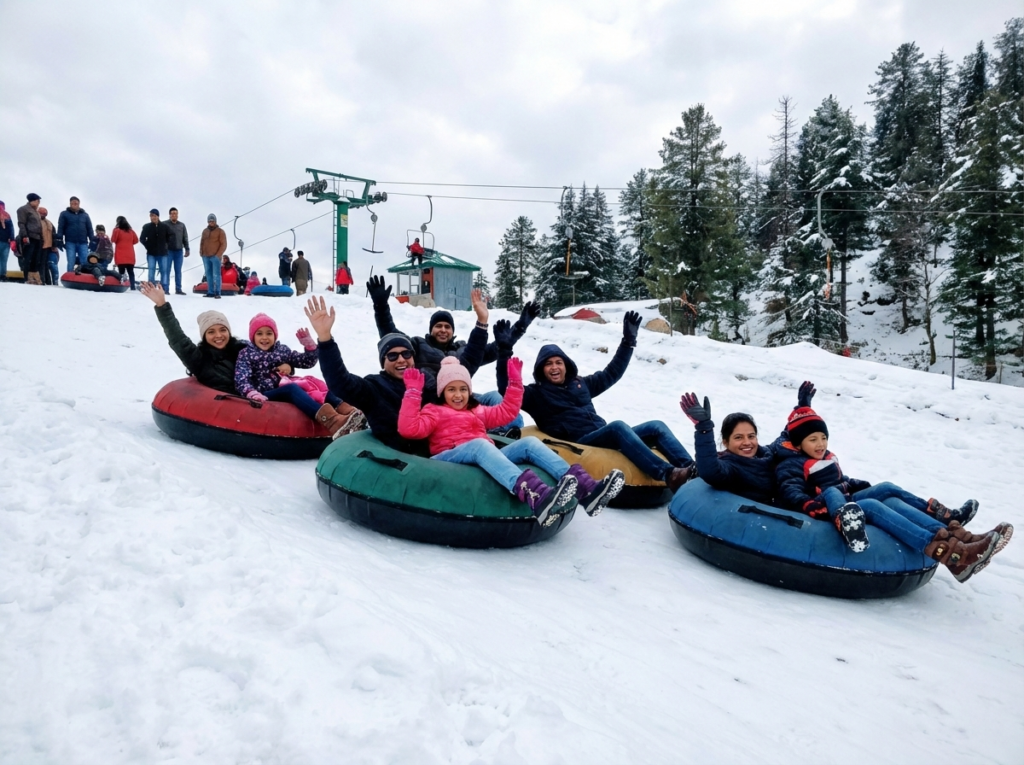
Kufri (17 km from Shimla, 2,600 metres) is the most popular and accessible of all snowfall places near shimla, receiving heavier snowfall than the town due to its higher elevation. Kufri’s open hillside meadows and ski slopes operate from January through March, and the snow typically accumulates 50–100 cm deeper than at Shimla town level. Horse rides and snow activity operators line the Kufri meadow in peak snowfall season.
Narkanda (65 km from Shimla, 2,700 metres) is one of the finest snowfall places near shimla for those seeking an uncrowded, authentic Himachal snow experience. The Hatu Peak forest trek from Narkanda reaches 3,400 metres and offers extraordinary winter snowscape views. Narkanda apple orchards in spring are also exceptional. The town sits on the old Hindustan-Tibet Road and has a handful of comfortable guesthouses.
Chail (45 km from Shimla, 2,250 metres) is a serene, forested alternative to Shimla’s crowds, with a palace hotel, the world’s highest cricket pitch, and excellent snowfall accumulation in January–February. Chail is best accessed from Shimla via Kufri on a clear day.
Fagu (22 km from Shimla) and Mashobra (13 km) are closer snowfall places near shimla that receive good snowfall in January and are less commercialised than Kufri, making them excellent choices for day trips from Shimla during the snowfall season.
For those looking to extend the Himachal snow experience well beyond Shimla’s immediate vicinity, the high-altitude landscapes of Spiti Valley offer one of India’s most dramatic winter environments. Our guide to places to visit in Spiti Valley covers the full cold desert circuit for adventurous winter travelers.
How Many Days Required to Visit Shimla
One of the most commonly searched questions about the destination is how many days required to visit shimla, and the answer varies meaningfully depending on your interests and whether you plan to include nearby excursions.
How Many Days Are Enough for Shimla (Town Only): 2 Nights / 3 Days
For the town of Shimla itself, 2 nights and 3 days covers the essential experiences: Mall Road and Ridge strolling, Jakhu Temple trek, Christ Church and Viceregal Lodge visits, Lakkar Bazaar shopping, and a sunset from Prospect Hill. This is how many days are enough for shimla if your itinerary is focused purely on the town.
How Many Days Required to Visit Shimla with Day Trips: 3 Nights / 4 Days
Adding Kufri, Chail, and Mashobra as day trips requires 3 nights minimum. This is the most popular itinerary format and the most satisfying for first-time visitors, allowing town exploration alongside the surrounding hill and forest landscape.
How Many Days Required to Visit Shimla with Broader Himachal: 5–7 Days
Combining Shimla with Manali, Dharamsala, or Palampur extends the trip to 5–7 days and creates a comprehensive Himachal circuit. For those incorporating Spiti Valley or the offbeat Himachal circuit, 10–14 days is the realistic minimum for a meaningful experience. Our guide to offbeat places in Himachal Pradesh reveals destinations across the state that pair beautifully with a Shimla base.
How to Reach Shimla
By Train: The UNESCO World Heritage Kalka-Shimla Narrow Gauge Railway is the most iconic way to reach Shimla, with toy trains departing Kalka (3 hours from Delhi by broad gauge) for a 96 km, 5-hour journey through 102 tunnels and over 800 bridges. Book on IRCTC at least 3–4 weeks in advance for peak season and snowfall months.
By Road: Shimla is 343 km from Delhi via NH5 (6–7 hours). Volvo buses operated by HRTC depart Delhi’s ISBT Kashmere Gate regularly, with overnight options available. Private taxis from Delhi cost approximately ₹4,000–5,500 one way.
By Air: Shimla Airport (Jubbarhatti) is 23 km from the town with limited connectivity from Delhi, primarily operated by Alliance Air on select days. Most air travelers fly to Chandigarh Airport (116 km) and take a taxi or bus onward.
Essential Shimla Travel Tips
Road conditions in winter: Always check the HRTC website and local news for NH5 status before travelling during the snowfall season. Carry chains if self-driving and ensure your vehicle has adequate winter tyres.
Toy train booking: Book the Kalka-Shimla toy train via IRCTC at least 3–4 weeks in advance for January–February snowfall season visits. The Shivalik Deluxe Express and Himalayan Queen are the most popular services with the best views.
Walking shoes: Shimla’s terrain is steep and the Mall Road can be icy in winter. Carry ankle-support walking shoes with grip, and waterproof footwear for the snowfall season.
Altitude adjustment: At 2,205 metres, Shimla is accessible to virtually all fitness levels without altitude concern. However, treks to Jakhu (2,455 metres) and day trips to Narkanda (2,700 metres) may cause mild breathlessness in very sedentary travelers. Hydrate well and take the first day gently.
Porter and cart services: Vehicles are restricted on the Mall Road. Porter and cart services operate from the main cart road below to carry luggage uphill to hotels, costing ₹100–300 depending on distance and weight.
Combining Shimla with the Broader Himachal Circuit
Shimla makes an excellent anchor for a broader Himachal Pradesh itinerary that extends into some of India’s most spectacular mountain landscapes. The best time to visit shimla for snowfall in January–February pairs naturally with the broader Himalayan winter experience covered in our guide to the best time to visit Himalayas, which contextualises Shimla’s seasonal patterns within the larger arc of Himalayan travel planning.
The Kangra Valley and its tea gardens at Palampur offer a beautifully contrasting experience to Shimla’s colonial hill station character, and our guide to 15 best places to visit in Palampur covers the full Kangra circuit for travelers extending their Himachal journey westward. For the most adventurous travelers, the stark cold desert landscapes of Spiti Valley represent a completely different face of Himachal that can be incorporated into a longer circuit from Shimla via Narkanda and Kinnaur. Our places to visit in Spiti Valley guide covers the full circuit in detail.
Conclusion
The best time to visit shimla for snowfall is January and February, when western disturbances deliver consistent, heavy snowfall and average temperature in shimla stays well below freezing at night, creating the classic white-draped Shimla that travelers dream of year-round. Understanding shimla monthly weather patterns, knowing the snowfall places near shimla like Kufri, Narkanda, and Chail for deeper snow experiences, planning around the shimla rainy season to avoid disruption, and deciding how many days required to visit shimla based on your specific itinerary all ensure a trip that fully delivers on the Queen of Hills’ legendary promise. Whether you visit for two nights of snowfall magic or seven days of comprehensive Himachal exploration, Shimla rewards every season of the year in its own distinctive way.

Frenzy Holidays ensures a smooth and enriching travel experience from start to finish. Visit us at Haware Centurion, S07/34, Nerul East, Sector 19A, Nerul, Navi Mumbai, Maharashtra 400706. For bookings or more information, call +91 7400453140, email [email protected], or visit www.frenzyholidays.com. Pack up and experience the magic of Shimla with Frenzy Holidays for an unforgettable Himalayan journey.
Best Time to Visit Shimla for Snowfall – FAQs
What is the best time to visit shimla for snowfall?
January and February are the best time to visit shimla for snowfall, with heavy western disturbance snowfall and average temperatures of -2 to 9°C keeping snow on the ground for extended periods.
Is October a good time to visit Shimla if snowfall is not the priority?
Yes, October is a great time to visit Shimla, especially if you’re not focused on snowfall. The weather is cool and pleasant, with clear skies, beautiful autumn colors, and temperatures ranging between 10–20°C, making it perfect for sightseeing, trekking, and photography without heavy crowds.
What is the best time to visit Shimla for snowfall and snow experiences?
Snowfall in Shimla typically begins in late December and continues through January and early February, making this the ideal period for snow lovers. During these months, visitors can enjoy snowfall, ice skating, and nearby snow activities in places like Kufri, along with a peaceful and scenic winter atmosphere.
How many days required to visit shimla?
2 nights and 3 days covers Shimla town essentials. 3 nights and 4 days is ideal with Kufri and Chail day trips included. How many days are enough for shimla depends on whether you extend to broader Himachal.
How many days are enough for shimla with nearby attractions?
3 nights and 4 days is how many days are enough for shimla when including Kufri, Chail, and Mashobra day trips comfortably alongside the main town sightseeing circuit.
What are the best snowfall places near shimla?
The best snowfall places near shimla are Kufri (17 km, 2,600 m), Narkanda (65 km, 2,700 m), Chail (45 km), Fagu (22 km), and Mashobra (13 km), all receiving heavier snowfall than Shimla town due to higher elevation.
What about visiting Shimla during the monsoon season?
The shimla Mansoon season runs from late June through September, with July and August seeing the heaviest rainfall. Landslides can affect roads during the shimla rainy season, so build flexibility into your travel plans.
Is December a good time to visit shimla for snowfall?
December sees light to moderate snowfall in Shimla, with the first proper snowfall often arriving in late December. For guaranteed heavy snowfall, January and February are more reliable than December.
Can I combine Shimla with Manali or Spiti?
Yes, a Shimla-Manali circuit takes 6–7 days minimum. Spiti Valley from Shimla via Kinnaur requires 8–10 days. Our guide to places to visit in Spiti Valley covers the full high-altitude circuit in detail.
What should I pack for visiting shimla in winter?
Pack heavy woollen layers, a windproof and waterproof outer jacket, thermal innerwear, waterproof ankle boots with grip, gloves, a woollen cap, and hand warmers for January–February snowfall season visits to Shimla.
