
The best time to visit Siddhivinayak Temple is early morning on weekdays between October and February. Tuesdays are most auspicious but very crowded. For a grand experience, plan around Ganesh Chaturthi.
Located in the heart of Prabhadevi, Mumbai, the Shree Siddhivinayak Ganapati Mandir is one of the most powerful and widely visited temples in India. Dedicated to Lord Ganesha, the remover of obstacles and the bestower of success, this sacred shrine has been fulfilling the wishes of devotees for over two centuries. Whether you are a first-time visitor or a regular pilgrim, knowing the best time to visit Siddhivinayak Temple will help you plan a smooth, spiritually fulfilling darshan without unnecessary wait times or crowds.
Confused where to go for quick escape? Let us plan it for you.
Grab the Best DealTable of Contents
Quick Reference: Siddhivinayak Temple Visit Planner
Here is a handy overview of everything you need to know before planning your visit.
| Detail | Information |
|---|---|
| Location | S.K. Bole Marg, Prabhadevi, Mumbai 400028 |
| Nearest Railway Station | Dadar (approx. 2 km) |
| Nearest Airport | Chhatrapati Shivaji Maharaj International Airport (approx. 12 km) |
| Temple Timings (Wed to Mon) | 5:30 AM to 9:50 PM |
| Temple Timings (Tuesday) | 3:15 AM to 12:30 AM (midnight) |
| Best Day to Avoid | Tuesday (most crowded) |
| Best Time of Day | Early morning (5:30 AM to 8:00 AM) on weekdays |
| Best Season to Visit | October to February |
| Entry Fee | Free (Special Darshan at Rs. 50) |
| Photography | Not permitted inside the temple |
You can also explore our affordable Pilgrimage Tour Packages designed for Budget Travellers.
Best Time to Visit Siddhivinayak Temple
Siddhivinayak doesn’t close for a season or slow down for a month – it’s Mumbai, it’s open, and it’s busy pretty much always.
So when people ask about the best time to visit Siddhivinayak Temple, the honest answer is that the when matters more than the which month. A Tuesday in October at 6am is a completely different experience from a Tuesday in October at noon. The temple itself doesn’t change – the crowd does. Time of day and day of the week are the two variables that actually determine your visit. Get those right, and the season becomes almost irrelevant. That’s what this guide is built around – not vague seasonal advice, but the specific windows that make your visit calm, meaningful, and worth the trip.
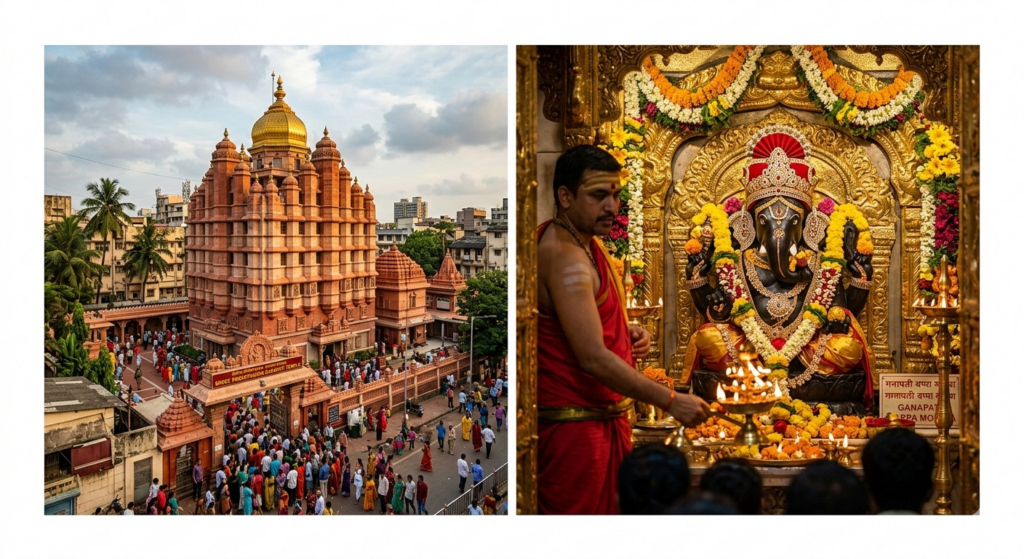
October to February: Most Comfortable Season
October to February is when Mumbai finally becomes comfortable – and that matters more than people realise when you’re standing in a temple queue.
Temperatures sit between 18°C and 30°C through this period, humidity drops to actually manageable levels, and the whole experience of waiting, walking, and moving through the temple complex becomes significantly less draining. If you’ve ever stood in an outdoor queue in Mumbai in May, you’ll understand immediately why this distinction is worth making.
This window also lines up well with some of the city’s better moments – Diwali and Ganesh Jayanti both fall here, and the spiritual atmosphere around the temple during these festivals carries a different kind of energy. More people, yes, but also more intention, more devotion, more of what makes a temple visit feel like something beyond just showing up.
For anyone travelling specifically to Mumbai for darshan and wanting the most comfortable experience possible – October to February is the window. The best time to visit Siddhivinayak Temple if weather is your primary concern, and honestly a strong contender even if it isn’t.
Pair it with some time exploring the rest of Mumbai and the trip earns itself easily.
Early Morning Weekdays: Best Time of Day
If there’s one piece of advice worth taking seriously for Siddhivinayak – it’s this: go early on a weekday.
The temple opens at 5:30 AM, and the window between 5:30 AM and 8:00 AM on a Monday, Wednesday, or Thursday is genuinely a different experience from anything later in the day. Shorter queues, calmer energy, cooler air, and enough space to actually be present rather than just moving with the crowd.
The Kakad Aarti at 5:30 AM is worth building your entire morning around if you can manage it. The first prayer of the day, in a temple that old and that significant, carries a stillness that disappears once the city fully wakes up.
Avoid 9:00 AM to 12:00 PM if at all possible – that’s when the mid-morning rush hits properly, and on weekends or public holidays it compounds significantly. The wait gets long, the crowd gets dense, and the experience becomes more about endurance than devotion.
For the best time to visit Siddhivinayak Temple in practical terms – early morning, middle of the week, before Mumbai decides to show up. Simple, but it makes all the difference.
Tuesday: Most Auspicious but Most Crowded
Tuesday at Siddhivinayak is its own category entirely.
Lakhs of devotees, doors opening at 3:15 AM, the temple running past midnight – it’s the most sacred day for Lord Ganesha and the crowd reflects that completely. The devotional energy on a Tuesday is genuinely unlike anything else the temple offers through the week. But so is the wait. Peak hours can stretch to several hours in queue, and that’s not an exaggeration.
If experiencing a Tuesday darshan is specifically what you’re after – and it’s worth experiencing at least once – arrive before 4:00 AM. That window before the city fully mobilises gives you a fighting chance at a reasonable wait time.
The other option is the paid Shree Darshan at Rs. 50, which moves considerably faster and is worth considering if time is limited or the queue looks unmanageable. No spiritual compromise involved – just a practical choice.
For the best time to visit Siddhivinayak Temple on a Tuesday specifically, early morning is the only real answer. The energy at that hour, before the rush peaks, is something most visitors remember long after the trip.
Ganesh Chaturthi: Grand but Extremely Crowded
The 10-day Ganesh Chaturthi festival, which falls in August or September, is the grandest event at Siddhivinayak Temple. The entire complex is decorated lavishly, special aartis and abhishekams are performed throughout the day, and hundreds of thousands of devotees visit during the festival period. Modaks and laddoos are distributed as prasad, and the atmosphere is one of pure devotion and celebration.
However, for first-time visitors or those with elderly family members, Ganesh Chaturthi is not the best time for a comfortable darshan. The wait times are exceptionally long and crowd management is intense. If you do plan to visit during this festival, arrive very early in the morning and book a VIP or paid darshan slot in advance through the official temple website.
Sankashti Chaturthi: Monthly Auspicious Visit
Sankashti Chaturthi, observed once every month on the fourth day after the full moon, is another highly auspicious day for Lord Ganesha. Devotees who maintain the ritual of visiting the temple on 21 consecutive Tuesdays or on each Sankashti are a regular part of the Siddhivinayak pilgrimage tradition. The temple sees significantly higher footfall on these days, so plan accordingly.
Monsoon Season (June to September): Manageable but Humid
Mumbai’s monsoon brings heavy rainfall and high humidity from June through September. The temple remains open and accessible, but the queues can be uncomfortable in the rain. Visiting during monsoon is perfectly feasible but requires some practical preparation like carrying an umbrella and wearing footwear that can handle wet floors. The Ganesh Chaturthi festival always falls during or just after the monsoon, so this season still draws a large number of pilgrims.
About Siddhivinayak Temple: History and Significance
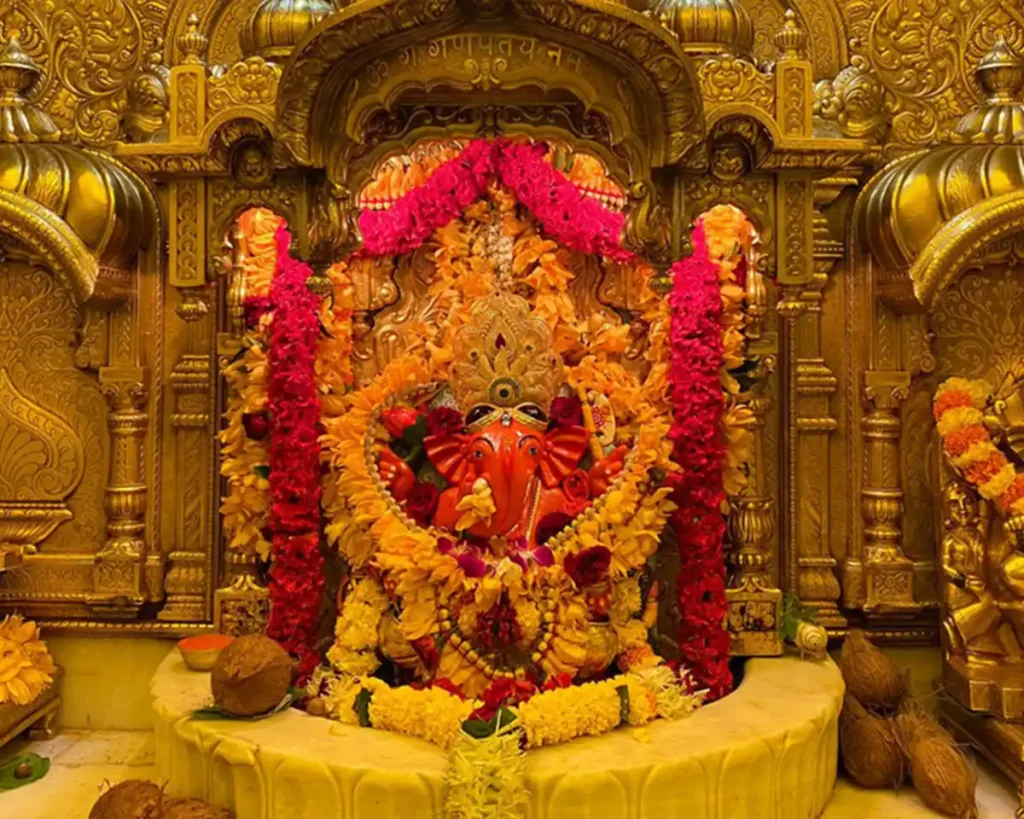
The Shree Siddhivinayak Ganapati Mandir was originally established on November 19, 1801, by Laxman Vithu and Deubai Patil. The temple was initially a modest structure in what was then a relatively undeveloped area of Mumbai. Over two centuries, as the city grew around it, the temple grew in stature, wealth, and spiritual significance.
The name Siddhivinayak comes from two Sanskrit words: Siddhi, meaning power or accomplishment, and Vinayak, another name for Ganesha meaning the remover of obstacles. The temple is therefore known as the shrine of the Ganesha who fulfils wishes and grants success to his devotees.
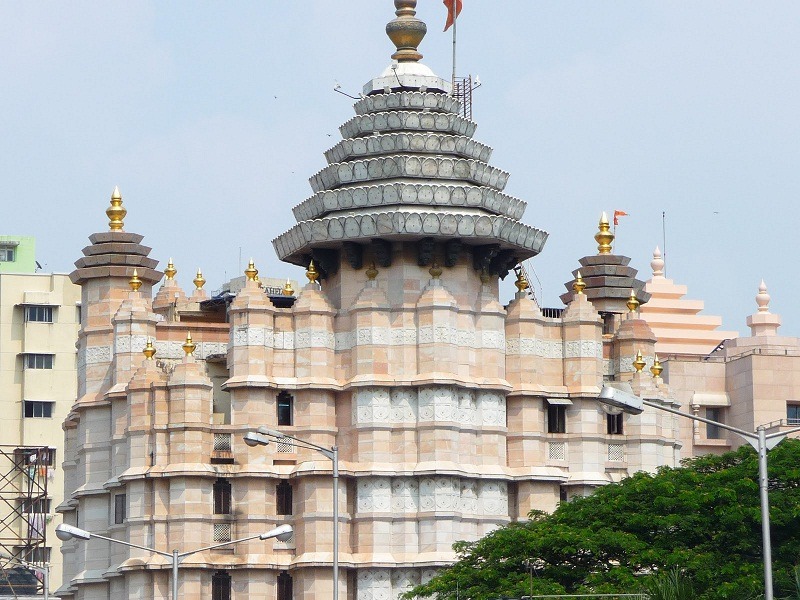
The temple underwent a major renovation in 1990 under the initiative of the Maharashtra Government, with the current majestic structure inaugurated in June 1994. The present building is a multi-storey complex with a gold-plated dome that is illuminated with changing colours in the evenings. The sanctum houses the main idol of Lord Ganesha, carved from a single black stone, standing 2.5 feet tall. The idol has the distinctive right-sided trunk, which is considered extremely powerful and rare. Lord Ganesha is flanked by the goddesses Riddhi and Siddhi on either side, and the inner roof of the sanctum is plated with gold.
The wooden doors leading to the sanctum are carved with the Ashtavinayaka, the eight sacred manifestations of Ganesha across Maharashtra. The temple complex also includes a Hanuman shrine, a library with over 8,000 books available free to all, and a large kitchen for preparing prasad and food during festivals.
Siddhivinayak is counted among the wealthiest temples in India, receiving annual donations estimated between Rs. 100 to 150 million. Politicians, Bollywood celebrities, sportspersons, and business leaders regularly visit the temple before beginning new ventures, which has only added to its fame and footfall over the decades.
Daily Aarti Schedule at Siddhivinayak Temple
The temple follows a structured daily ritual schedule that shapes the flow of darshan throughout the day.
On regular days from Wednesday to Monday, the Kakad Aarti (morning prayer) takes place from 5:30 AM to 6:00 AM. Shree Darshan begins at 6:00 AM and continues until 12:15 PM. Naivedhya (food offering) is observed from 12:15 PM to 12:30 PM, followed by an afternoon Shree Darshan from 12:30 PM to 7:20 PM. The evening Aarti takes place from 7:30 PM to 8:00 PM, after which general darshan continues until the temple closes.
On Tuesdays, the schedule begins earlier with Shree Darshan from 3:15 AM to 4:45 AM, the Kakad Aarti from 5:00 AM to 5:30 AM, and darshan continuing through the day with extended hours.
Note that during the Maha Abhisheka ritual, devotees are not permitted inside the main temple and offerings of flowers and fruits are also not allowed. Always verify the current schedule on the official website at siddhivinayak.org before your visit.
How to Reach Siddhivinayak Temple
Siddhivinayak Temple is centrally located in Prabhadevi and is one of the most accessible temples in Mumbai, well connected by train, road, and air.
By Train
The nearest railway station is Dadar, located approximately 2 km from the temple. Dadar is one of Mumbai’s busiest junction stations and is well connected on both the Central and Western Railway lines. From Dadar, the temple can be reached by auto-rickshaw, taxi, or even on foot in about 15 to 20 minutes.
By Road
The temple is centrally located in Prabhadevi and is easily accessible from all parts of Mumbai by bus, auto-rickshaw, or cab. Bus services from across the city pass through or near Prabhadevi. For those using Ola or Uber, the temple is a commonly listed destination and drivers are familiar with the route.
By Air
The Chhatrapati Shivaji Maharaj International Airport is approximately 12 to 15 km from the temple. From the airport, taxis and app-based cabs are readily available to reach Prabhadevi.
Nearby Places to Visit
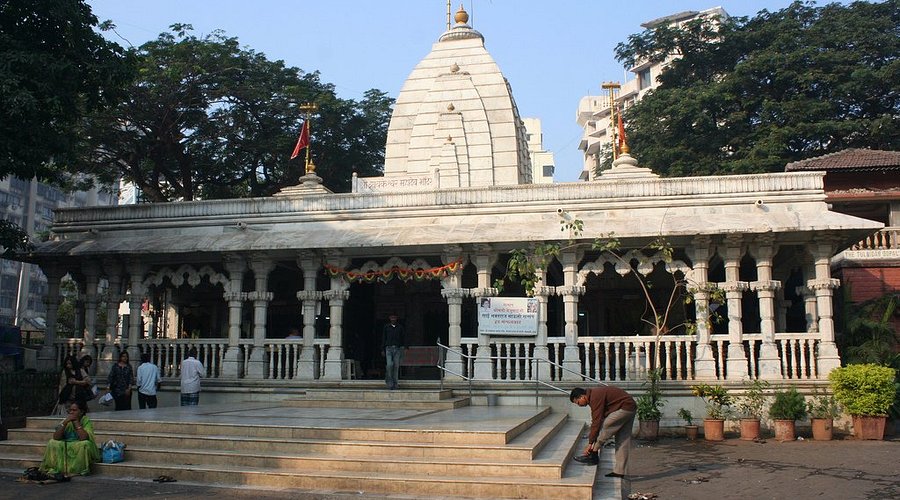
Shree Mahalakshmi Temple: Located a short distance from Siddhivinayak, this is another important place of worship in Mumbai dedicated to Goddess Mahalakshmi. It is a natural pairing for a Mumbai pilgrimage itinerary.
Worli Sea Face: Just a few minutes from the temple, the Worli seafront offers a pleasant stretch for a morning or evening walk with views of the Bandra-Worli Sea Link.
Dadar Flower Market: One of Mumbai’s most vibrant and photogenic spots, the Dadar Phool Bazaar near the railway station is especially lively in the early morning hours.
Prabhadevi Beach: A quieter alternative to Mumbai’s more popular beaches, Prabhadevi Beach offers a calm spot near the temple for a short break.
Sewri Fort: A lesser-known Portuguese-era fort in South Mumbai, Sewri is worth a visit for those interested in history.
Mumbai is a city of layers, from its spiritual landmarks to its colonial-era architecture and hidden coastal corners. If you want to go beyond the usual tourist trail, our guide to hidden gems in Mumbai covers some of the city’s most underrated spots. History enthusiasts will enjoy our guide to places to visit in Fort Mumbai for a walk through the city’s colonial past.
If you are based in or visiting Navi Mumbai, do not miss our guide to hidden places in Navi Mumbai for some excellent offbeat options close to home. And if a South India pilgrimage is on your mind after your Siddhivinayak darshan, check out our Rameshwaram tour package from Mumbai for a well-planned yatra to one of India’s holiest coastal towns.
Essential Tips for Visiting Siddhivinayak Temple
- Arrive by 5:30 AM on a weekday for the most peaceful darshan experience.
- Mobile phones, cameras, and large bags are not permitted inside the temple. Paid locker services are available outside.
- Dress modestly. Men should wear formal trousers or dhoti with a shirt. Women should wear a saree, salwar, or churidar. Shorts, sleeveless tops, and torn jeans are not allowed.
- Leather items are not permitted inside the temple premises.
- A paid Shree Darshan ticket at Rs. 50 is available for a faster queue. VIP darshan can also be booked online at siddhivinayak.org.
- Modaks and laddoos are Lord Ganesha’s favourite offerings and are widely available in the Phool Gali outside the temple.
- For those who cannot visit in person, the temple offers live darshan on its official website and app.
- During festivals and Tuesdays, plan for at least 2 to 3 hours for the full darshan experience including queue time.
- Elderly and differently-abled devotees can avail of wheelchairs and dedicated ramps available at the temple.
Conclusion
Siddhivinayak Temple is not just a place of worship. It is the spiritual heartbeat of Mumbai, a city where faith runs as deep as its energy. Whether you come on a quiet Wednesday morning for a meditative darshan or join the lakhs of devotees during Ganesh Chaturthi, the experience of standing before the right-trunked idol of Bappa and offering your prayers is one that resonates long after you leave.
The best time to visit Siddhivinayak Temple for most devotees is a weekday morning between October and February, when the weather is kind and the crowds are manageable. Plan ahead, follow the temple guidelines, and give yourself enough time to soak in the atmosphere of one of India’s most beloved Ganesha shrines.

At Frenzy Holidays, we help you plan personalised pilgrimage and travel experiences across Mumbai and beyond. Reach out to us at [email protected], call us at 074004 53140, or visit us at Frenzy Holidays, Haware Centurion, S07/34, Nerul East, Sector 19A, Nerul, Navi Mumbai, Maharashtra 400706, and we will take care of all the planning so your trip is smooth and memorable.
Best Time to Visit Siddhivinayak Temple : FAQs
What is the best time to visit Siddhivinayak Temple?
Early morning on weekdays between October and February is the best time to visit. Arriving by 5:30 AM ensures minimal crowds and a peaceful darshan.
Which day is most auspicious to visit Siddhivinayak Temple?
Tuesday is the most auspicious day for Lord Ganesha darshan. However, it is also the most crowded day. Arrive before 4:00 AM on Tuesdays to avoid long queues.
What are the Siddhivinayak Temple timings?
From Wednesday to Monday, the temple is open from 5:30 AM to 9:50 PM. On Tuesdays, it opens at 3:15 AM and stays open past midnight.
Is there an entry fee at Siddhivinayak Temple?
General darshan is free. A paid Shree Darshan queue is available for Rs. 50 which reduces waiting time significantly.
Can we book darshan at Siddhivinayak Temple online?
Yes, VIP and special darshan slots can be booked online through the official website at siddhivinayak.org. This is recommended during festivals and Tuesdays.
What should I wear to Siddhivinayak Temple?
Modest traditional attire is required. Men should wear a dhoti or formal trousers with a shirt. Women should wear a saree, salwar, or churidar. Shorts, mini-skirts, and sleeveless tops are not allowed.
Are mobile phones allowed inside Siddhivinayak Temple?
No, mobile phones, cameras, and bags are not permitted inside the temple. Paid locker counters are available outside the premises.
How far is Siddhivinayak Temple from Dadar station?
Dadar Railway Station is approximately 2 km from the temple and is the most convenient transit point for reaching Siddhivinayak.
What is the significance of the right-sided trunk on the Ganesha idol?
A right-trunked Ganesha idol is considered extremely powerful and rare. It is believed to be capable of fulfilling wishes but requires complete sincerity and devotion from the devotee.
What festivals are celebrated at Siddhivinayak Temple?
The major festivals are Ganesh Chaturthi (August or September), Sankashti Chaturthi (monthly), Maghi Ganesh Jayanti, Akshaya Tritiya, and Hanuman Jayanti.
