
The coldest place in Meghalaya is Upper Shillong and Shillong Peak, where the highest elevations in the state reach 6,449 feet and winter temperatures regularly drop to sub-zero, with the all-time state low of -3.4 degrees Celsius recorded at nearby Barapani (Umiam) in January 1989. This guide covers the 8 coldest places in Meghalaya, with temperature details, what to do, and how to reach each destination.
Meghalaya does not receive snowfall despite its elevations, because it lies south of the Himalayan ranges and close to the Tropic of Cancer. What it does have is a remarkable range of cold, misty, fog-draped destinations across the Khasi, Jaintia, and Garo Hills that offer genuine cold-weather experiences throughout winter and cool retreats even in summer.
Confused where to go this summer? Let us plan it for you.
Grab the Best DealTable of Contents
Coldest Place in Meghalaya: Quick Overview
Meghalaya’s coldest destinations are concentrated in the Khasi Hills around Shillong and Cherrapunji, with the Jaintia Hills also recording sharp winter cold. The Garo Hills in the west are noticeably warmer throughout the year.
| Destination | Type | Winter Temp | Distance from Shillong |
| Upper Shillong and Shillong Peak | Hill town and viewpoint | 0 to -3 degrees C | 10 km |
| Mawkyrwat | Hill town | 0 to 2 degrees C | 80 km |
| Nongstoin | Hill town | 1 to 5 degrees C | 65 km |
| Cherrapunji (Sohra) | Waterfall and forest | 3 to 8 degrees C | 56 km |
| Mawsynram | Wettest place on earth | 3 to 8 degrees C | 65 km |
| Jowai (Jaintia Hills) | Hill town | 5 to 10 degrees C | 65 km |
| Laitlum Canyon | Highland canyon | 4 to 8 degrees C | 24 km |
| Dawki (Umngot River) | River and valley | 5 to 10 degrees C | 95 km |
Meghalaya has a rich cultural and natural heritage beyond its cold weather destinations. Read our guides on historical places in Meghalaya and offbeat places in Meghalaya for a broader picture of what this extraordinary state holds for travellers.
Why Meghalaya Gets So Cold in Winter
“Meghalaya means ‘abode of cloud’ and is located on an elevated plateau in North East India on the southern side of the Brahmaputra Valley. The Khasi Hills that surround Shillong sit at an average height of about 1,500m above sea level with their highest point (the Shillong Peak) being at 1,965m; this creates extreme sub-zero winter temperatures; even [though] they are situated well south of the Himalayas. Due to clear winter nights, the effects of radiative cooling are very strong over the Khasi Hills, and data from the India Meteorological Department (IMD) for January 2026 shows that the temperature was 0.6 deg C at Mawkyrwat, 1.5 deg C at Nongstoin and 5 deg C at Shillong on the same day. Therefore, at night, the coldest place in Meghalaya is on the Khasi/Jaintia Hills as opposed to the Garo Hills due to the lower elevation of the latter.”
1. Upper Shillong and Shillong Peak
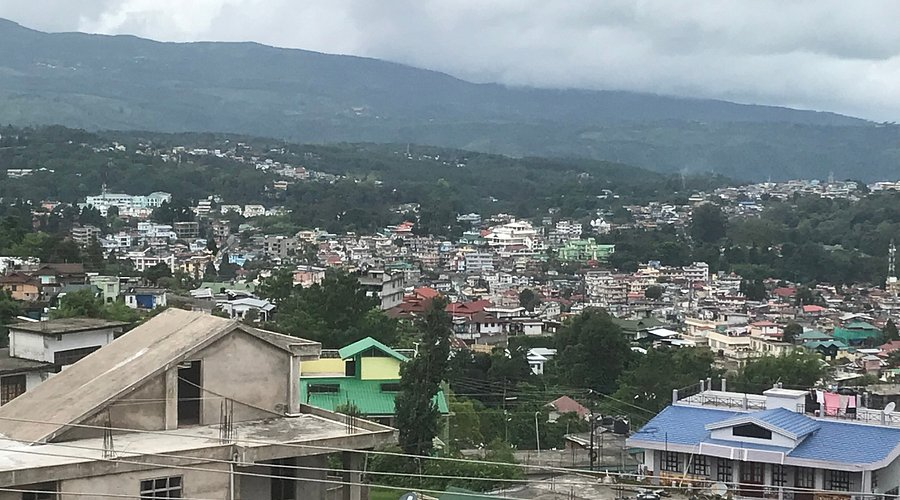
Upper Shillong and Shillong Peak together form the coldest area in Meghalaya. Shillong Peak at 1,965 metres is the highest point in the state, and Upper Shillong at 1,707 metres records sub-zero temperatures in January and February with morning frost on exposed surfaces being a regular phenomenon. The all-time Shillong minimum of -3.3 degrees Celsius was recorded on December 30, 1963, and even recent winters have pushed the city below 3 degrees Celsius on the coldest nights. The Shillong Peak viewpoint offers a panoramic view over the entire city, the Brahmaputra plains of Assam to the north, and on clear days the outline of distant Himalayan peaks on the horizon.
- Winter Temperature: 0 to -3 degrees C at the peak; 3 to 7 degrees C in central Shillong
- Things to Do: Drive or walk to Shillong Peak for sunrise panoramic views; visit Ward’s Lake, Elephant Falls, and Shillong Golf Course in the city; explore Police Bazaar for winter shopping; visit the Don Bosco Museum for Northeast India tribal heritage; experience Christmas in Shillong, one of India’s most celebrated Christmas destinations
- Distance from Shillong: In Shillong; Shillong Peak is 10 km from the city centre
- Best for: First-time visitors, families, culture seekers, cold-weather lovers
2. Mawkyrwat
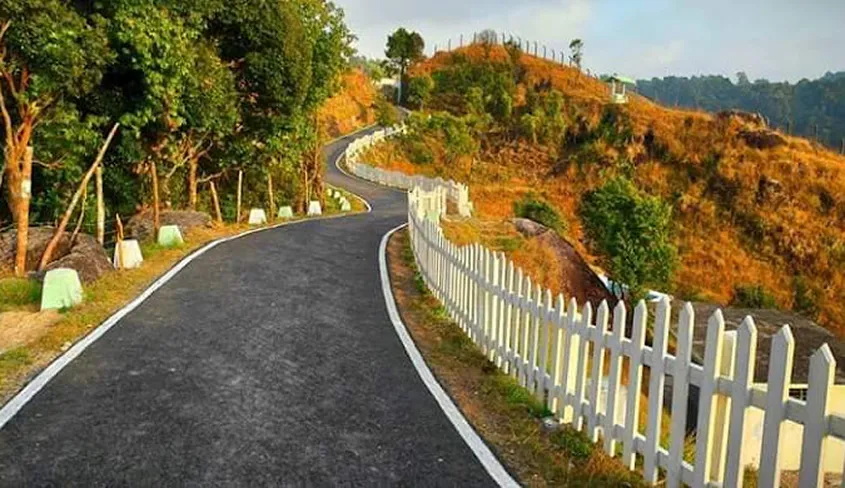
Mawkyrwat in South West Khasi Hills district is consistently one of the coldest points in Meghalaya in winter, recording 0.6 degrees Celsius on January 8, 2026, the lowest temperature in the state on that date according to IMD records. The town sits on the Khasi plateau at elevation and benefits from clear, cold winter nights that produce the intense radiative cooling characteristic of the high Meghalayan hills. It is a largely undiscovered destination beyond Meghalaya’s main tourist circuit, making it one of the most genuinely offbeat cold places in the state.
- Winter Temperature: 0 to 5 degrees C; frost possible on the coldest winter nights
- Things to Do: Walk the forest trails around the surrounding Khasi plateau; visit the local market for fresh produce and Khasi snacks; use Mawkyrwat as a base for exploring the South West Khasi Hills; photograph the misty morning landscape from the plateau edges
- Distance from Shillong: Around 80 km, approximately 2.5 to 3 hours by road
- Best for: Offbeat travellers, cold-weather seekers, those wanting the quietest and coldest corner of Meghalaya
3. Nongstoin
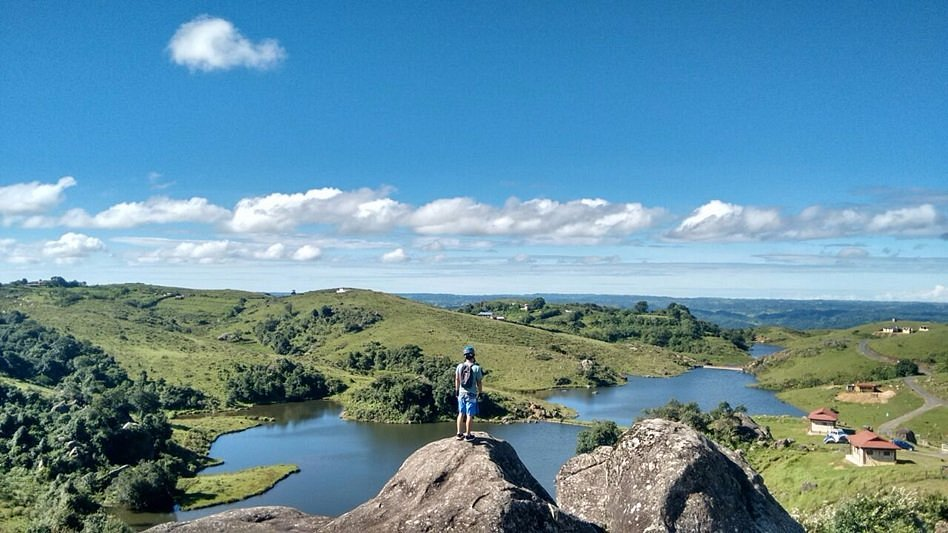
Nongstoin (1 of 4 towns in Meghalaya) is the HQ of W. Khasi Hills District and has 1.5 °C (IMD data) recorded on Jan. 8, 2026 which would be classified as the lowest temperature ever recorded in eastern India (source: IMD). Because of the elevation off the ql Khas plateau of around 1400 metres and bc no or little wind to circulate heat, it regularly remains much cooler than the Garo Hills immediately to the west & has the weather of fog, frost & extreme cold (December, January and February). Being nestled among dense subtropical forests & the closest wildlife sanctuary –Nongkhlylem Wildlife Sanctuary — adds an element of nature to this otherwise very quiet administrative centre.
- Winter Temperature: 1 to 6 degrees C in peak winter; cool to mild in summer at 15 to 22 degrees C
- Things to Do: Explore the surrounding Khasi plateau forests; visit Nongkhyllem Wildlife Sanctuary nearby; walk the local market and Nongstoin town; use the town as a base for exploring the remote West Khasi Hills villages; photograph the cold morning mist over the plateau landscape
- Distance from Shillong: Around 65 km, approximately 2 hours by road
- Best for: Offbeat travellers, nature lovers, those seeking the lesser-known cold corners of Meghalaya
4. Cherrapunji (Sohra)
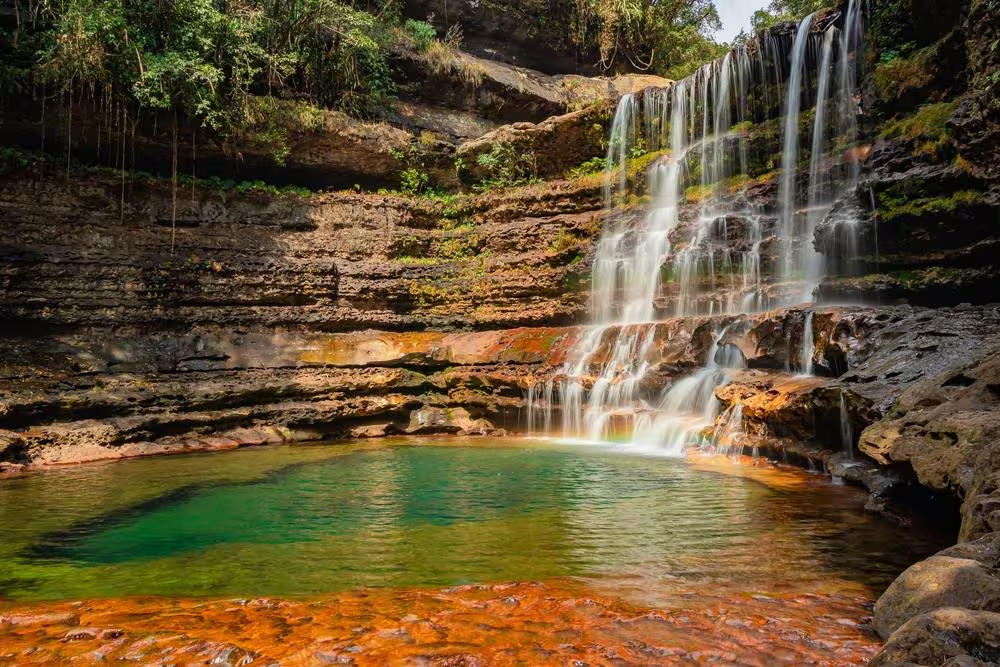
Cherrapunji, officially called Sohra, is the most famous destination in Meghalaya and one of the coldest, sitting at 1,313 metres in the Khasi Hills, 56 km south of Shillong. It holds the record for the highest rainfall in a single month and a single year in recorded history, and the combination of its elevation, constant cloud cover, and high moisture content makes its winters distinctly cold and atmospheric. January temperatures in Cherrapunji range from 3 to 8 degrees Celsius and the mist-heavy winter landscape around the waterfalls and canyon viewpoints is among the most dramatic cold-weather scenery in Northeast India. The Double Decker Living Root Bridge trek through the surrounding forest is one of the finest cold-weather walks in Meghalaya.
- Winter Temperature: 3 to 8 degrees C; summer temperature 12 to 22 degrees C
- Things to Do: Trek to the Double Decker Living Root Bridge through the subtropical forest; visit Nohkalikai Falls, the tallest plunge waterfall in India; explore Mawsmai Cave and its limestone formations; see the Seven Sisters Falls; walk the Eco Park viewpoints over the Bangladesh plains below
- Distance from Shillong: 56 km, approximately 2 hours by road
- Best for: Nature lovers, trekkers, waterfall seekers, photographers
5. Mawsynram
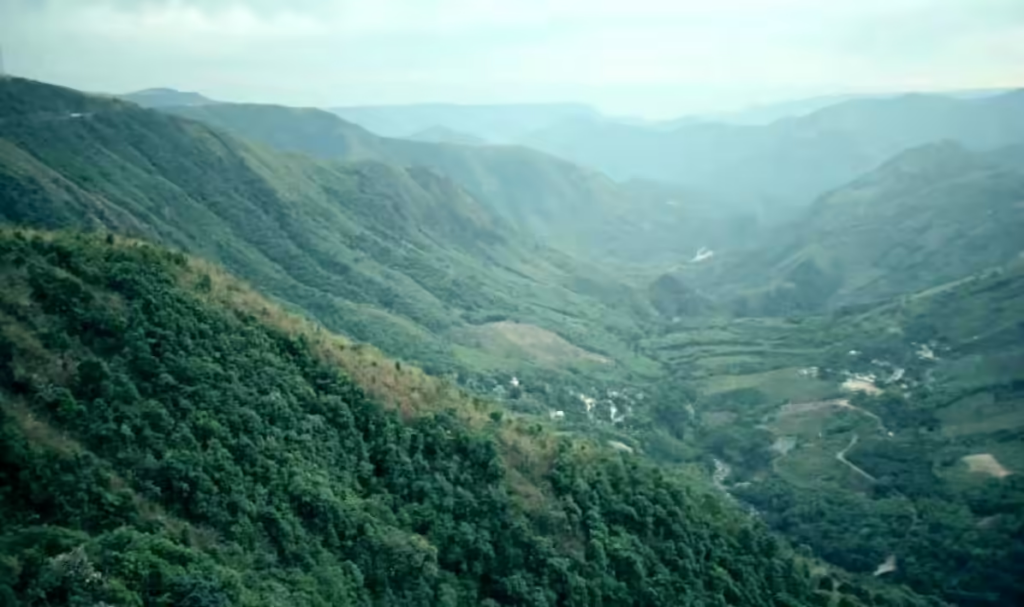
Mawsynram, the wettest place on earth by average annual rainfall, sits around 65 km from Shillong at around 1,400 metres on the Khasi plateau. Its winter temperatures are similar to Cherrapunji at 3 to 8 degrees Celsius, but the persistent cloud cover and moisture-laden atmosphere make the cold feel more intense than the numbers suggest. The village is far less visited than Cherrapunji despite holding the world rainfall record, and the Mawjymbuin Cave with its stalactite shaped like Shiva’s lingam is the primary attraction. The drive through the Khasi Hills to Mawsynram in winter is one of the most atmospheric road trips in Meghalaya, with thick mist sitting in the valleys and the road cutting through dripping forest.
- Winter Temperature: 3 to 8 degrees C; cold, damp, and mist-heavy throughout winter
- Things to Do: Visit Mawjymbuin Cave and its natural Shiva lingam stalactite; walk the village trails in the early morning mist; visit the world rainfall record monument; drive the mist-draped Khasi Hills road between Shillong and Mawsynram; photograph the viewpoints over the Bangladesh plains
- Distance from Shillong: Around 65 km, approximately 2 to 2.5 hours by road
- Best for: Offbeat travellers, cave explorers, history and record-seeking visitors, photographers
6. Jowai and the Jaintia Hills
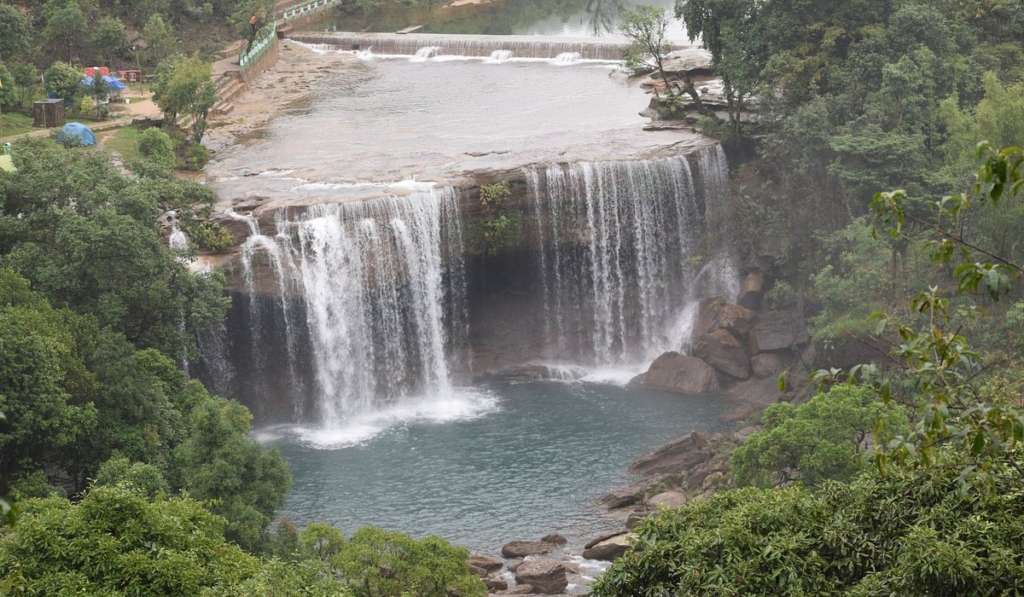
Jowai is the headquarters of West Jaintia Hills district and the coldest major town in the Jaintia Hills, recording 7.4 degrees Celsius on January 8, 2026 according to IMD data, with nearby Mynkre touching 3.8 degrees Celsius on the same day. Set at around 1,400 metres, Jowai and the surrounding Jaintia Hills plateau offer a distinct cold-weather experience from the Khasi Hills, with dense subtropical forests, rivers, caves, and some of Meghalaya’s finest waterfalls. The Krang Suri Falls, Nartiang Monoliths, and Thadlaskein Lake are among the most rewarding destinations in the Jaintia Hills circuit from Jowai.
- Winter Temperature: 5 to 10 degrees C in Jowai; Mynkre and higher areas down to 3 to 4 degrees C
- Things to Do: Visit Krang Suri Falls with its turquoise water and forested setting; explore the Nartiang Monoliths, the largest collection of megalithic standing stones in Asia; visit Thadlaskein Lake; explore the local caves around Jowai; drive the Jaintia Hills plateau roads in the early morning mist
- Distance from Shillong: Around 65 km, approximately 2 hours by road
- Best for: History lovers, waterfall seekers, cave explorers, offbeat travellers
7. Laitlum Canyon
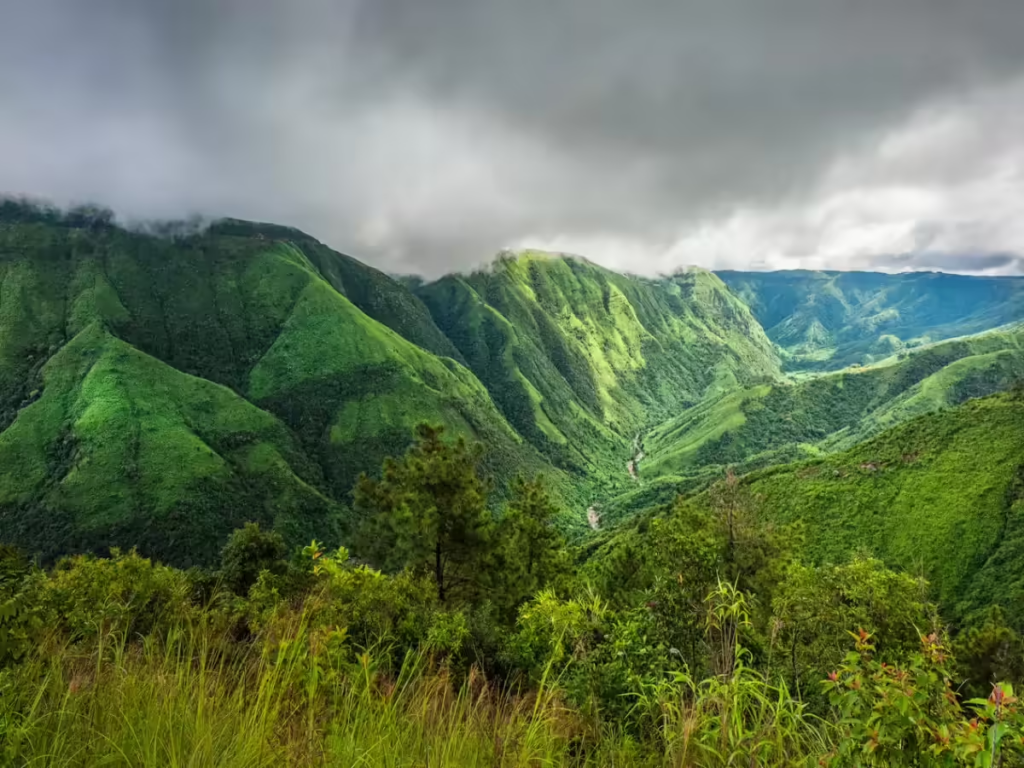
Laitlum Canyon, whose name means end of the hills in Khasi, is a dramatic highland canyon just 24 km from Shillong and one of the coldest short-distance escapes from the state capital. Set at around 1,700 metres on the Khasi Hills plateau edge, the canyon drops sharply into the valley below, with terraced rice fields, river gorges, and distant mountain ridges visible from the rim. Winter mornings here are bitterly cold with thick fog often obscuring the canyon completely before lifting around mid-morning to reveal the full depth of the landscape. It is one of the most photogenic cold-weather destinations near Shillong and among the trekking places in Meghalaya that rewards an early morning start the most.
- Winter Temperature: 4 to 8 degrees C; cold, fog-heavy mornings from December to February
- Things to Do: Trek the canyon rim trail at sunrise for the fog and landscape photography; walk down into the canyon and back for a half-day trek; visit the small Khasi villages on the plateau edge; photograph the terraced valley from the highest viewpoints on the rim
- Distance from Shillong: 24 km, approximately 1 hour by road
- Best for: Trekkers, photographers, day-trip travellers from Shillong, cold-weather morning walk enthusiasts
8. Dawki and Umngot River
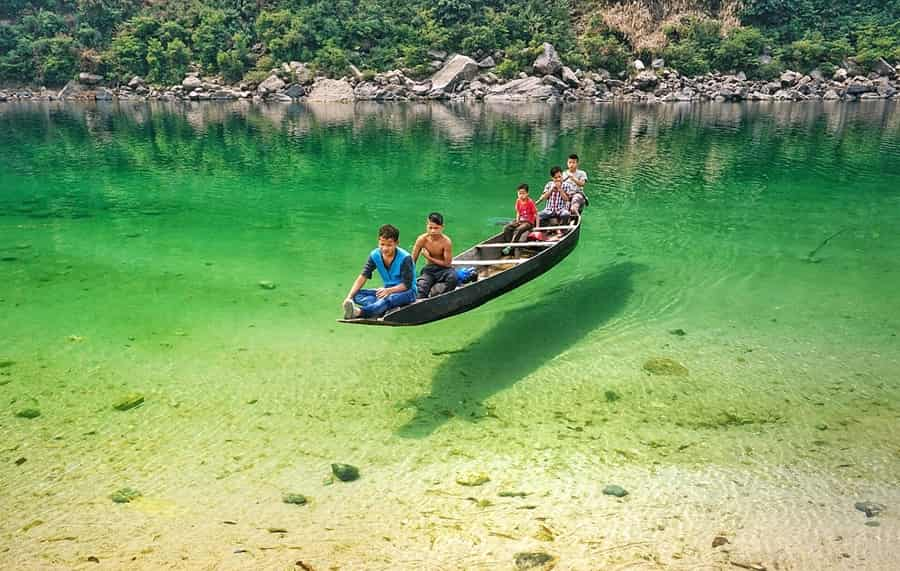
Dawki sits at around 61 metres above sea level near the Bangladesh border in Jaintia Hills district, considerably lower than the Khasi plateau, but the surrounding hills and the Umngot River valley create a naturally cool microclimate. Winter temperatures here range from 5 to 10 degrees Celsius and the river’s extraordinary clarity, where the water is so transparent that boats appear to float on air, is at its most spectacular between November and April when rainfall drops and the river runs crystal clear. Dawki is one of the most visually distinctive cold-weather river destinations in Northeast India and the combination of the river, the hanging bridge, and the limestone hills on the Bangladesh border creates a setting unlike anywhere else in Meghalaya.
- Winter Temperature: 5 to 10 degrees C; cool and dry from November to April
- Things to Do: Boat on the crystal-clear Umngot River when the water is at its most transparent; photograph the boats appearing to float above the riverbed; walk across the old suspension bridge over the river; visit the weekly Dawki market for local produce and trade goods; drive the scenic road down from the Khasi Hills plateau to the river valley
- Distance from Shillong: 95 km, approximately 3 hours by road
- Best for: Photographers, nature lovers, river enthusiasts, those combining Meghalaya with a Bangladesh border experience
Also you can check out our blog about the Best Time to Visit Triyuginarayan Temple so that it can help you find the best time for your next trip.
Practical Tips for Visiting the Coldest Places in Meghalaya
Visiting the coldest place in Meghalaya requires preparation for fog, cold mornings, and wet roads. Carry warm layers, a waterproof jacket, and closed footwear for all Khasi and Jaintia Hills destinations from November to February. Morning fog is common across the entire plateau region from December to February and can reduce visibility significantly on mountain roads; plan to leave Shillong later in the morning if road conditions are foggy. No inner line permits are required for any destination in Meghalaya for Indian or foreign nationals, making the state one of the most accessible in Northeast India. The best season for visiting the cold, clear Meghalaya is October to March, when rainfall drops dramatically and the waterfalls, canyons, and river destinations are at their clearest and most accessible.
Conclusion
The coldest place in Meghalaya is Upper Shillong and Shillong Peak, which record sub-zero temperatures on the sharpest winter nights and host the state’s most extreme cold-weather conditions. Mawkyrwat and Nongstoin record the consistently lowest rural temperatures in recent IMD data. Cherrapunji and Mawsynram offer the most atmospheric cold-weather experience, combining low temperatures with mist, waterfalls, and ancient root bridges. Jowai, Laitlum Canyon, and Dawki round out a state cold-weather circuit that spans dramatic canyons, crystal-clear rivers, and megalithic stone forests. Plan your trip for December to February for the coldest experience, or October to November for clear skies and comfortable cold with the waterfalls still flowing strongly.

Frenzy Holidays ensures a smooth and enriching travel experience from start to finish. You can visit us at Haware Centurion, S07/34, Nerul East, Sector 19A, Nerul, Navi Mumbai, Maharashtra 400706. For bookings or more information, call +91 7400453140, email [email protected], or visit www.frenzyholidays.com. So pack up and explore India with Frenzy Holidays for an unforgettable journey.
Coldest Place in Meghalaya: FAQs
What is the coldest place in Meghalaya?
Upper Shillong and Shillong Peak are the coldest areas in Meghalaya. The all-time state record of -3.4 degrees C was recorded at Barapani (Umiam) in 1989, and Shillong hit -3.3 degrees C in 1963.
Does it snow in Meghalaya?
No. Despite high elevations, Meghalaya does not receive snowfall as it lies south of the Himalayas and close to the Tropic of Cancer. Frost forms on cold nights at higher elevations, but there is no snowfall.
Which is the coldest month in Meghalaya?
January is the coldest month across the Khasi and Jaintia Hills. Shillong typically records its lowest minimum temperatures in January, and IMD data from January 2026 shows Mawkyrwat at 0.6 degrees C and Nongstoin at 1.5 degrees C.
Is Cherrapunji cold in winter?
Yes. Cherrapunji temperatures fall to 3 to 8 degrees C in January and February with persistent mist and cloud cover making it feel colder. It is one of the most atmospheric cold-weather destinations in Meghalaya.
What temperature does Shillong reach in winter?
Shillong typically reaches 3 to 7 degrees C at night in January. The coldest recorded temperature in Shillong was -3.3 degrees C on December 30, 1963.
Is Dawki worth visiting in winter?
Yes. November to April is the best time to visit Dawki when the Umngot River is at its clearest and the temperatures are cool at 5 to 10 degrees C.
How cold does Laitlum Canyon get?
Laitlum Canyon sits at around 1,700 metres and records 4 to 8 degrees C in winter, with thick morning fog making it one of the most atmospheric cold-weather treks near Shillong.
Do I need a permit to visit Meghalaya?
No. Meghalaya does not require an inner line permit for Indian or foreign nationals, making it one of the most accessible states in Northeast India for all travellers.
