
Planning a trip to Coonoor requires understanding far more than just booking a ticket to Ooty and moving on — because this quieter, less commercialised hill station in Tamil Nadu’s Nilgiri district deserves to be experienced on its own terms and in its own season. For those wondering where is coonoor hill station located — it sits 19 km south of Ooty in the Nilgiris district of Tamil Nadu, nestled among some of the most beautiful tea estates in India and connected to the plains by the UNESCO-listed Nilgiri Mountain Railway.
Understanding the coonoor best time to visit ensures you experience this destination’s true character — whether riding the toy train through mist-covered valleys, exploring rolling tea gardens in perfect morning light, wandering the less-touristy trails that define hidden places in Coonoor, or simply sitting on a colonial bungalow veranda with a pot of freshly brewed Nilgiri tea while the Nilgiri Hills unfold below. This complete guide covers season-wise analysis, month-by-month temperature patterns, coonoor travels and logistics, coonoor sightseeing packages, shopping in coonoor, and everything needed to plan a deeply rewarding Nilgiris escape. this is test.
Table of Contents
Quick Reference: Coonoor Visit Planning
| Season | Best Months | Temperature | Conditions | Ideal For |
|---|---|---|---|---|
| Peak Pleasant | Oct–Feb | 8–22°C | Cool, clear, sunny | Tea gardens, trekking, sightseeing |
| Spring | Mar–May | 14–26°C | Warm, comfortable | Budget travel, fewer crowds |
| Southwest Monsoon | Jun–Aug | 14–20°C | Heavy rain, misty | Scenic beauty, waterfalls |
| Northeast Monsoon | Sep–Oct | 12–22°C | Moderate rain, clearing | Lush green landscapes |
Coonoor Best Time to Visit: Seasonal Analysis
The coonoor best time to visit balances weather comfort with the distinct seasonal character of the Nilgiris. Unlike many hill stations that have a single obvious peak season, Coonoor rewards visitors differently across the year — and every season has genuine merit for the right kind of traveler.
October to February: The Best Time to Visit Coonoor for Most Travelers
The post-monsoon and winter months constitute the coonoor best time to visit for the vast majority of travelers — delivering the clearest skies, most comfortable temperatures, and the full visual splendour of Coonoor’s tea estates glowing in sharp winter light. After the northeast monsoon withdraws in late October, the Nilgiris settle into a crisp, clean clarity that makes every viewpoint, valley walk, and toy train journey feel cinematic.
Temperature (October–February):
- October: 14–22°C, post-monsoon freshness, clearing skies
- November: 10–20°C, ideal conditions, excellent visibility
- December: 8–18°C, cool and pleasant, peak tourist season
- January: 7–17°C, coldest month, misty mornings
- February: 9–20°C, warming gently, excellent for outdoors
Why This Season Excels:
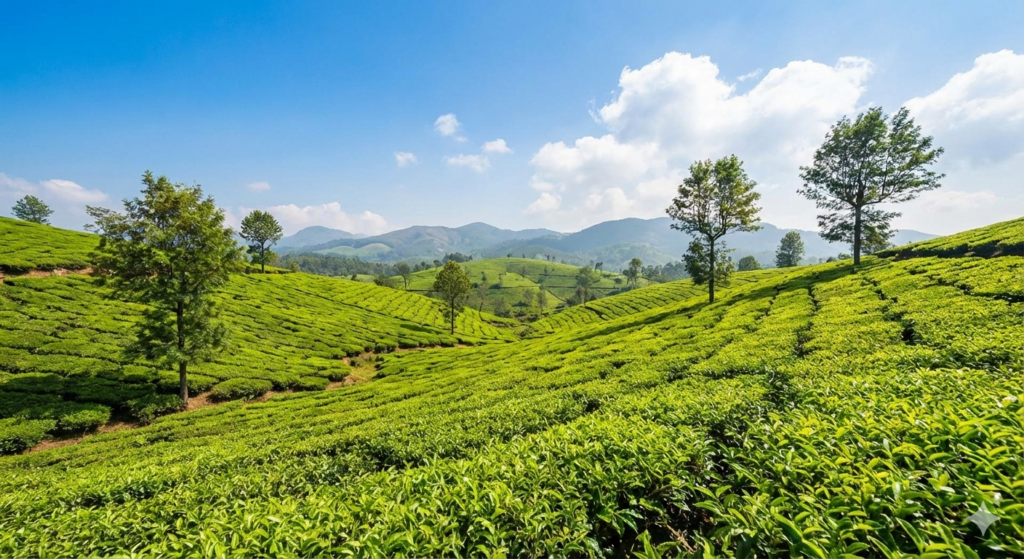
The tea gardens are at their most visually striking in these months — the harvest cycles produce fresh bright green flush that contrasts beautifully against the deep blue Nilgiri sky. Sim’s Park, Coonoor’s beautifully maintained botanical garden, displays seasonal blooms that peak between October and January, and the manicured lawns and heritage colonial atmosphere are best appreciated in clear, cool conditions. The Nilgiri Mountain Railway toy train journey from Mettupalayam to Coonoor (or the popular Ooty–Coonoor section) offers its most magical experience in crisp winter weather when valleys are clear and the engineering marvel of the Ghats section is fully visible.
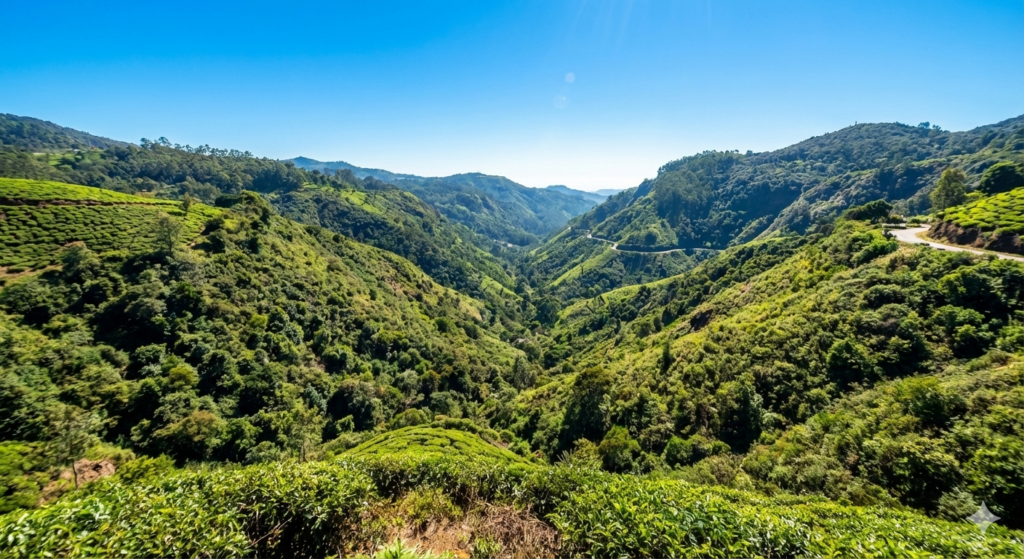
Law’s Falls, Lamb’s Rock viewpoint, and Dolphin’s Nose — Coonoor’s signature viewpoints — all offer their best panoramic visibility from October through February. On particularly clear mornings in November and December, the plains of Coimbatore are visible far below, and the sense of elevation from coonoor height of 1,850 metres is dramatically reinforced.
December and January are the busiest months with holiday crowds from Tamil Nadu, Karnataka, and Kerala. Book accommodation and coonoor sightseeing packages at least 3–4 weeks in advance for Christmas and New Year periods. Despite the crowds, the experience justifies the planning effort.
Ideal For: First-time visitors, families, couples, tea garden enthusiasts, toy train riders, photography seekers.
Trip Cost (Peak Winter): ₹8,000–15,000 per person for 2N/3D including accommodation, local coonoor travels, and sightseeing.
March to May: Comfortable Shoulder Season
March through May offers a genuinely underrated window for visiting Coonoor that combines pleasant temperatures with significantly reduced tourist footfall. The tea estates enter their second flush season (April–May) when new tea leaves emerge after the winter dormancy — this is arguably the best period to visit a tea factory and understand the full production cycle from plucking to processing.
Temperature (March–May):
- March: 12–24°C, warm and clear, excellent visibility
- April: 14–26°C, pleasantly warm
- May: 16–26°C, pre-monsoon humidity building
What to Expect:
March is an outstanding month — clear skies, comfortable warmth, and a relaxed pace as winter crowds have departed. The Nilgiri Hills look vivid and lush with spring vegetation, and early mornings carry a fresh crispness that makes walks through the tea estates deeply invigorating. By April, temperatures climb modestly but remain far more manageable than plains cities, and Coonoor’s elevation ensures evenings stay comfortable.
Accommodation rates during this period are 20–30% lower than peak winter season, and popular coonoor sightseeing packages have better availability with easier walk-in booking. Shopping in coonoor is most relaxed during these months — market vendors and cooperative stores are less crowded, and bargaining for fresh tea, homemade chocolates, and Nilgiri honey is more leisurely.
Ideal For: Budget travelers, tea enthusiasts, repeat visitors, couples seeking a quieter hill station escape.
Trip Cost (Shoulder Season): ₹6,500–11,000 per person for 2N/3D — meaningfully lower than peak winter rates.
June to August: Southwest Monsoon — Misty Nilgiri Magic
The southwest monsoon arrives in Coonoor around early June and transforms the Nilgiris into a dramatically different landscape — one that divides opinions sharply between travelers. Heavy rainfall, persistent mist, reduced visibility at viewpoints, and wet trails characterise this period, but the compensating beauty of the monsoon-drenched Nilgiri Hills is genuinely extraordinary for those who embrace it.
Temperature (June–August):
- June: 14–20°C, monsoon onset, daily showers
- July: 13–19°C, heaviest rainfall month
- August: 14–20°C, continuing heavy rain
What to Expect:
The tea gardens take on an almost supernatural green intensity during monsoon — every shade from lime to emerald layers the hillsides, and the mist that drifts through the estates creates an atmospheric quality that no other season can replicate. Law’s Falls transforms into a dramatically powerful cascade, and small streams and rivulets appear across the entire Nilgiri landscape. The toy train journey through the Western Ghats in monsoon mist is an experience many seasoned travelers describe as among their most memorable in South India.
The practical challenges are real, however. Viewpoints like Dolphin’s Nose and Lamb’s Rock are frequently obscured by cloud, outdoor sightseeing requires waterproof gear, and some hiking trails become slippery. The upside is significantly lower accommodation rates and an almost crowd-free Coonoor that allows unhurried exploration of the town, tea factories, and colonial heritage at a deeply relaxed pace.
Ideal For: Photographers, nature lovers, budget travelers, monsoon romantics, repeat visitors seeking a different Coonoor.
Trip Cost (Monsoon): ₹5,500–9,000 per person for 2N/3D — lowest rates of the year.
September to October: Northeast Monsoon & Post-Rain Transition
September sees the southwest monsoon beginning to ease, with the northeast monsoon arriving in October bringing a second but typically lighter rainfall cycle to the Nilgiris. This transitional period offers a landscape at peak lushness — the hills are saturated green from months of rainfall, waterfalls are still flowing impressively, and by late October the skies begin clearing for the start of the peak pleasant season.
Temperature (September–October): 12–22°C, moderate rain with improving conditions by late October.
Late October is particularly rewarding — it sits at the precise intersection of post-monsoon freshness and pre-peak season quiet, with lush scenery, flowing waterfalls, minimal crowds, and accommodation rates still in shoulder range. Many experienced Nilgiris travelers specifically target this window for its combination of benefits.
Coonoor Height & Where Is Coonoor Hill Station Located

For travelers researching where is coonoor hill station located — Coonoor sits in the Nilgiri district of Tamil Nadu, 19 km south of Ooty (Udhagamandalam) and approximately 80 km north of Coimbatore by road. It is the second-largest hill station in the Nilgiris after Ooty and is administratively part of the same Nilgiris district.
The coonoor height of approximately 1,850 metres above sea level places it slightly lower than Ooty (2,240 metres), which contributes to its marginally warmer and more consistently pleasant climate compared to its more famous neighbour. This altitude is sufficient to guarantee cool temperatures year-round — the mercury rarely exceeds 28°C even in the warmest months, making Coonoor reliably pleasant at virtually any time of year.
The town is divided into Upper Coonoor and Lower Coonoor — most tourist accommodation, the railway station, and the main market cluster in Upper Coonoor, while Lower Coonoor houses the older residential areas and some heritage bungalows. Sim’s Park is located in Upper Coonoor and is the most central green space.
Airport Near Coonoor & How to Reach
Airport Near Coonoor
The primary airport near coonoor is Coimbatore International Airport (CJB), located approximately 80 km from Coonoor and well-connected to Mumbai, Delhi, Bengaluru, Chennai, Hyderabad, and several international destinations. From Coimbatore airport, travelers can take a pre-booked taxi (approximately ₹2,000–2,500, 2–2.5 hours) directly to Coonoor, passing through the dramatic Nilgiri Ghats road via Mettupalayam.
The second airport near coonoor is Calicut International Airport (Kozhikode) in Kerala, approximately 165 km away — a viable option for travelers coming from Mumbai with good Kozhikode connectivity, though the mountain road journey is longer at 3.5–4 hours.
By Train — The Nilgiri Mountain Railway
The most memorable way to reach Coonoor is via the UNESCO World Heritage Nilgiri Mountain Railway — the famous toy train from Mettupalayam (45 km from Coimbatore) to Ooty, stopping at Coonoor. The Mettupalayam–Coonoor section uses a unique rack-and-pinion system to climb the steep Western Ghats gradient and is one of India’s most scenic rail journeys. The journey from Mettupalayam to Coonoor takes approximately 3 hours. Book toy train tickets well in advance on IRCTC — they sell out rapidly, especially in peak season.
By Road
Coonoor is accessible by road from Coimbatore (80 km, 2–2.5 hours), Ooty (19 km, 45 minutes), Kotagiri (28 km, 1 hour), and Mettupalayam (40 km, 1.5 hours). TNSTC buses operate regular services on all these routes. Private taxis and self-drive options are popular for flexibility in exploring the tea estate roads that surround Coonoor.
Coonoor Sightseeing Packages & Travels
Most visitors book structured coonoor sightseeing packages that cover the main attractions in an organized, time-efficient manner. Standard packages typically cover Sim’s Park, Law’s Falls, Lamb’s Rock, Dolphin’s Nose viewpoint, a tea factory visit, and the Highfield Tea Estate in a single full-day tour.
Typical Coonoor Sightseeing Package Options:
A basic half-day local coonoor sightseeing package by shared jeep or auto costs ₹300–500 per person covering 4–5 sites. A private full-day package by car covering all major and minor sights including a tea estate walk costs ₹1,500–2,500 per vehicle. Combined Ooty–Coonoor packages covering both towns over 2 days are available from most coonoor travels operators for ₹3,000–5,000 per vehicle.
Most coonoor travels agencies operate from the main bus stand area in Upper Coonoor and along the Bedford Circle. For visitors seeking a deeper experience beyond standard circuits, our guide to hidden places in Coonoor reveals lesser-known trails, estates, and viewpoints that most package tours skip entirely.
Key Attractions Covered in Standard Packages:
Sim’s Park is a beautifully maintained 12-hectare botanical garden established in 1874, housing over 1,000 plant species including rare tree ferns and Australian eucalyptus varieties. Law’s Falls (6 km from town) cascades 180 feet into a valley pool and is best visited October–February for clear surroundings or June–September for maximum water flow. Lamb’s Rock (9 km) offers a broad valley panorama best appreciated in clear morning hours. Dolphin’s Nose (12 km) is a projecting rock formation with dramatic views across the Nilgiri valleys and tea estates — arrive before 10 AM for the best chance of clear visibility.
Shopping in Coonoor
Shopping in coonoor centres primarily on its world-renowned Nilgiri tea, and the town offers the full range from budget cooperative store purchases to premium single-estate teas at specialty shops.
Nilgiri Tea: The signature purchase when shopping in coonoor — the best varieties include CTC (Crush-Tear-Curl) for strong everyday chai, orthodox whole-leaf teas for nuanced brewing, and premium first and second flush teas for gifting. The Highfield Tea Estate shop and several cooperative stores near Bedford Circle offer fresh, well-priced teas directly from the source. Prices range from ₹150 for 250g of standard grade to ₹600–1,200 for premium orthodox varieties.
Homemade Chocolates: Coonoor has developed a small but excellent cottage chocolate industry — several home-based and small-shop chocolatiers produce Nilgiri-flavoured varieties including cardamom, ginger, and tea-infused chocolates. The Bedford area has the highest concentration of these sellers.
Fresh Produce: The weekly market and daily vegetable vendors near the bus stand sell fresh organic Nilgiri vegetables, homemade pickles, locally grown garlic, and seasonal fruits at prices far below supermarket rates. The Thursday shandy (market) in nearby Kotagiri is an outstanding regional market experience if your coonoor travels include a day trip.
Homemade Honey and Jams: Nilgiri forest honey and locally produced fruit jams (plum, guava, strawberry) are popular and authentic shopping in coonoor purchases — look for CAMPCO and local brand packaging at cooperative stores.
Coonoor as Part of a Broader Tamil Nadu & Nilgiris Itinerary
Coonoor’s location makes it an ideal base or stop within a broader South India hill and heritage itinerary. Its proximity to Ooty means most visitors combine both towns over 3–4 days, but the Nilgiris region offers considerably more depth for those willing to look beyond the obvious.
The hidden places in Ooty guide reveals less-visited corners of Coonoor’s more famous neighbour, while the Tamil Nadu hill circuit can extend meaningfully to include hidden places in Kodaikanal for a comprehensive Nilgiris-Palani Hills dual-destination trip. For travelers seeking Tamil Nadu’s extraordinary cultural depth beyond the hills, the places to visit in Chettinad and our broader guide to hidden tourist places in Tamil Nadu offer richly rewarding extensions that balance Coonoor’s natural serenity with Tamil Nadu’s architectural and culinary heritage.
Essential Coonoor Travel Tips
Toy train booking: Book Nilgiri Mountain Railway tickets on IRCTC at least 30–45 days in advance — the quota is small and demand is high, especially November–January and during school holidays.
Morning timing at viewpoints: Arrive at Dolphin’s Nose and Lamb’s Rock before 10 AM — cloud cover builds across the Nilgiri valleys by mid-morning on most days, reducing visibility significantly by afternoon.
Tea factory visits: Most tea factories in and around Coonoor offer free or low-cost guided tours (₹50–100 per person) — the Highfield Tea Estate is the most accessible and well-organized for visitors. Visits are best arranged in morning hours when processing is active.
Clothing: Despite Tamil Nadu’s generally warm reputation, Coonoor’s coonoor height of 1,850 metres demands warm layers — evenings and nights are genuinely cold October through February, with temperatures dropping below 10°C. A medium-weight jacket and a warm layer are essential, not optional.
Local food: Don’t miss Nilgiri-style cuisine — the locally grown vegetables, fresh dairy from Nilgiri farms, and strong brewed tea served with homemade butter biscuits at small teashops define the authentic Coonoor food experience. The town has several excellent South Indian filter coffee and tiffin establishments near the market area.
Conclusion
The coonoor best time to visit for most travelers is October through February, when the coonoor height of 1,850 metres delivers crisp, clear weather perfect for tea estate walks, toy train journeys, and panoramic viewpoint visits in ideal conditions. March and April offer a quieter, more affordable alternative with excellent temperatures and second-flush tea gardens at their freshest. Monsoon months (June–August) reward those who embrace the misty, atmospheric Nilgiris with extraordinary green scenery and minimal crowds. Whether you’re arriving via the airport near coonoor in Coimbatore, riding the legendary toy train from Mettupalayam, exploring coonoor sightseeing packages covering Law’s Falls and Dolphin’s Nose, shopping in coonoor for premium Nilgiri teas, or wandering beyond the standard tourist circuit to discover the destination’s quieter side, Coonoor delivers one of South India’s most genuinely serene and rewarding hill station experiences across every season.
Frenzy Holidays ensures a smooth and enriching travel experience from start to finish. Visit us at Haware Centurion, S07/34, Nerul East, Sector 19A, Nerul, Navi Mumbai, Maharashtra 400706. For bookings or more information, call +91 7400453140, email [email protected], or visit www.frenzyholidays.com. Pack up and breathe the Nilgiri air with Frenzy Holidays for an unforgettable hill station journey.
Coonoor Best Time to Visit – FAQs
What is the coonoor best time to visit overall?
October to February is the coonoor best time to visit for clear skies, pleasant temperatures of 8–22°C, and ideal conditions for tea garden walks, toy train journeys, and sightseeing. November and December are particularly outstanding months.
Where is coonoor hill station located?
Coonoor hill station is located in the Nilgiri district of Tamil Nadu, 19 km south of Ooty at an elevation (coonoor height) of approximately 1,850 metres above sea level. It is the second-largest hill station in the Nilgiris and sits within the UNESCO-listed Nilgiri Biosphere Reserve.
What is the coonoor height above sea level?
The coonoor height is approximately 1,850 metres (6,070 feet) above sea level. This elevation ensures a cool, temperate climate year-round with temperatures rarely exceeding 28°C even in the warmest months.
Which is the nearest airport near coonoor?
The nearest and most well-connected airport near coonoor is Coimbatore International Airport, approximately 80 km away with flights from Mumbai, Delhi, Bengaluru, Chennai, and several other cities. Taxi from Coimbatore airport to Coonoor takes 2–2.5 hours.
What do coonoor sightseeing packages typically include?
Standard coonoor sightseeing packages cover Sim’s Park, Law’s Falls, Lamb’s Rock, Dolphin’s Nose viewpoint, and a tea factory visit. Half-day shared packages cost ₹300–500 per person; private full-day packages ₹1,500–2,500 per vehicle.
What is the best shopping in coonoor?
The best shopping in coonoor includes premium Nilgiri orthodox and CTC teas, homemade chocolates, Nilgiri forest honey, seasonal fruit jams, and fresh organic local produce. The Highfield Tea Estate shop and cooperative stores near Bedford Circle are the top shopping destinations.
Is monsoon a good time for coonoor travels?
Monsoon (June–August) offers lush green scenery, dramatic waterfalls, and significantly lower accommodation rates — ideal for nature and photography enthusiasts. Viewpoints may be cloud-covered and some trails slippery, but the misty Nilgiri atmosphere is uniquely beautiful for those who embrace it.
How many days are enough for Coonoor?
2 nights and 3 days is the ideal duration for Coonoor, covering Sim’s Park, all major viewpoints, a tea factory, and the toy train experience. Extend to 4–5 days to include day trips to Kotagiri, Kothagiri valley treks, and deeper tea estate exploration.
Can I combine Coonoor with Ooty and Kodaikanal?
Absolutely — Coonoor and Ooty are just 19 km apart and easily combined in a 4–5 day Nilgiris trip. Adding Kodaikanal requires an additional 2–3 days. Explore our guide to hidden places in Ooty and hidden places in Kodaikanal for a comprehensive Tamil Nadu hills itinerary.
What makes Coonoor different from Ooty?
Coonoor is quieter, less commercialised, and more authentically hill-station-like than Ooty. It has better preserved colonial heritage, more intimate tea estate access, fewer tourist crowds, and a more relaxed pace — making it ideal for travelers seeking the Nilgiris experience without Ooty’s weekend rush.
