
Gokarna is far more than Om Beach and the Mahabaleshwar Temple. The hidden places in Gokarna include a cave used by sages for meditation, a waterfall 40 km into the Western Ghats, and beaches so isolated that the only way in is by boat or forest trek.
This guide covers 7 of the best hidden places in Gokarna in 2026, with what makes each one worth the effort, what to do there, and practical tips for visiting each spot without the usual crowds.
Confused where to go for quick escape? Let us plan it for you.
Grab the Best DealTable of Contents
Quick Overview of Hidden Places in Gokarna
Gokarna sits on the Karnataka coast between the Gangavali and Aghanashini rivers, about 238 km north of Mangalore. Its famous beaches draw visitors in steady numbers, but the coastline and Western Ghats hinterland behind the town hold a set of places that most travellers never reach.
| Spot | Type | Best For | Best Time |
| Paradise Beach | Secluded Beach | Solitude, camping, trekking | October to March |
| Mirjan Fort | Heritage Fort | History, photography, nature | October to March |
| Vibhuti Falls | Waterfall | Trekking, swimming, nature | July to October |
| Shiva Cave (Gogarbha Cave) | Sacred Cave | Meditation, spirituality | Year-round |
| Yana Caves and Rock Formations | Geological Wonder | Trekking, photography | October to March |
| Belekan Beach | Hidden Beach | Solitude, sunrises, photography | October to February |
| Apsarakonda Waterfall | Waterfall + Beach | Nature, swimming, relaxation | July to October |
You can also explore our affordable Kerala Tour Package designed for Budget Travellers.
Why Gokarna Has So Many Hidden Places
Gokarna’s geography keeps its hidden places genuinely hidden. The town sits at the edge of the Western Ghats coastal belt, where the Sahyadri foothills meet the Arabian Sea. Dense forest cover separates the beaches from each other, making several stretches of coastline accessible only on foot or by boat. Further inland, the same forest conceals waterfalls, ancient cave temples, and a 16th-century fort that most day visitors never find time for.
The 7 Best Hidden Places in Gokarna
Unlike Goa, Gokarna has resisted large-scale commercial development, which means the gap between its popular spots and its hidden ones is wider than almost anywhere else on the South India coast. For anyone planning a longer stay, the must-visit places in Gokarna are worth covering first before heading to the offbeat spots in this guide. If you are weighing up a Goa trip against Gokarna, our Goa vs Gokarna comparison breaks down exactly what each destination offers. And if your trip falls during the monsoon, our guide to best places to visit in monsoon in South India covers how Gokarna and its surrounding region transform between June and September.
1. Paradise Beach
- Type: Secluded Beach
- Best Time: October to March
- Distance from Gokarna Town: Around 5 km by trail; accessible by boat from Om Beach or by trekking from Half Moon Beach
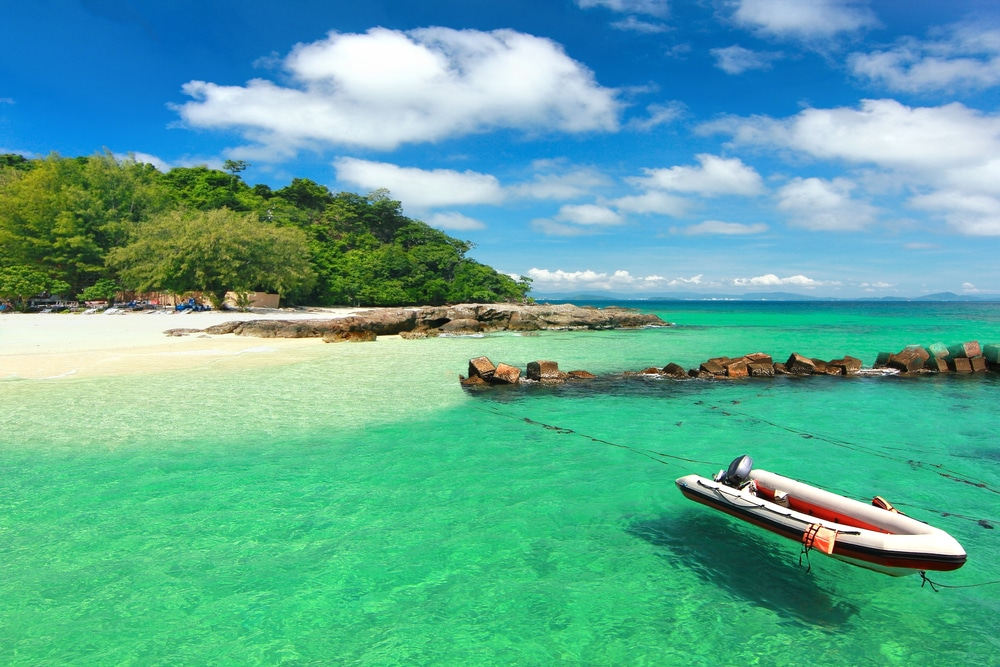
Located on the Gokarna Arc’s most isolated coastline, Paradise Beach provides the greatest reward for those who make the effort to travel to it. This area has no access via roads and no commercial outlets for food or drink, nor are there groups of tourists crowded together at any point. The only way you can access this beach is by either a boat ride from Om Beach or an arduous trek through the forest, using the path that is used to reach Half Moon Beach, which goes along the edge of the cliffs heading south. Paradise Beach consists of a large, gently-curved golden sand beach with a forest behind it, a deep blue, perfectly clear ocean, and more tranquility than any of Gokarna’s other beaches can offer. If you are determined enough to carry your own water, then this is one of the best-kept secrets in all of Goa and is perfect for people who like to leave behind no sign of their presence.
What to do here:
- Hike the full coastal trail from Om Beach through Half Moon Beach to reach Paradise Beach on foot
- Camp overnight on the beach under a clear sky, well away from any light pollution
- Swim in the calm, clear water during October to February when the Arabian Sea is at its most settled
- Take a boat back from Paradise Beach to Om Beach if you want to skip the return trek
2. Mirjan Fort
- Type: 16th-Century Heritage Fort
- Best Time: October to March; monsoon for dramatic greenery
- Distance from Gokarna Town: Around 20 km north on the coastal highway
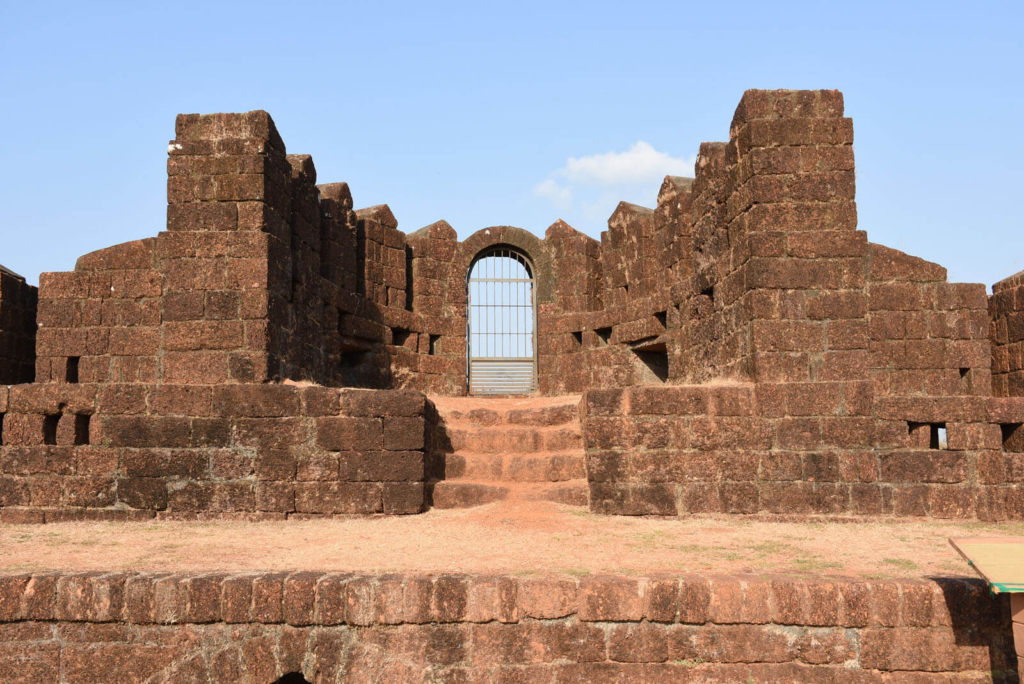
Mirjan Fort is one of the most undervisited heritage sites on the Karnataka coast and one of the finest hidden places in Gokarna for those interested in history alongside nature. Built in the 16th century, the fort exhibits Indo-Islamic architecture and sits inside a loop of the Aghanashini River backwaters, completely surrounded by lush forest on three sides and the river on the fourth. The fort was once an important bastion controlling the coastal trade route and passed through Vijayanagar, Keladi Nayaka, and eventually Hyder Ali’s control. Most travellers drive straight past it on the highway without stopping, leaving the ruins in a state of quiet that makes the exploration feel genuinely solitary.
What to do here:
- Explore the bastions, arched gateways, and riverside walls of the fort on foot
- Walk down to the Aghanashini River edge from the fort boundary for backwater views
- Visit in the early morning when the forest around the fort is alive with birds
- Hire a local guide at the site for context on the fort’s layered political history
3. Vibhuti Falls
- Type: Multi-tiered Waterfall and Forest Trek
- Best Time: July to October for full flow; October for post-monsoon greenery with accessible trails
- Distance from Gokarna Town: Around 40 km into the Western Ghats
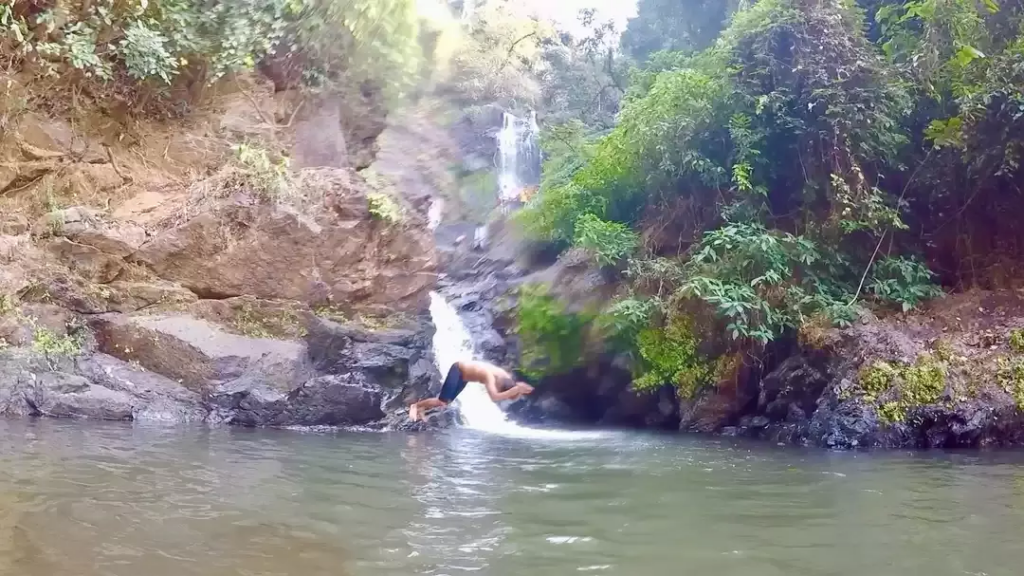
Vibhuti Falls is the most dramatic natural hidden place in Gokarna’s extended belt. Tucked deep into the Western Ghats, the waterfall cascades down in multiple tiers creating natural pools at the base that are perfect for swimming. Dense forest surrounds the falls on every side and the trek to reach them passes through jungle that feels entirely removed from the coastal Gokarna most visitors experience. The falls are at their most powerful during and just after the monsoon, when the water volume is highest and the surrounding forest is at its most vivid green. A roadside dhaba near the trailhead serves local Malnad food that makes the journey back equally rewarding.
What to do here:
- Trek through the forest trail to the falls and swim in the natural pool at the base
- Visit in August or September for the heaviest water flow and most atmospheric mist
- Stop at a local dhaba on the return for akki rotti and coconut chutney
- Carry a change of clothes and water-resistant footwear for the stream crossings on the trail
4. Shiva Cave (Gogarbha Cave)
- Type: Sacred Rock Cave
- Best Time: Year-round; mornings for the quietest atmosphere
- Distance from Gokarna Town: Walking distance from Gokarna Beach
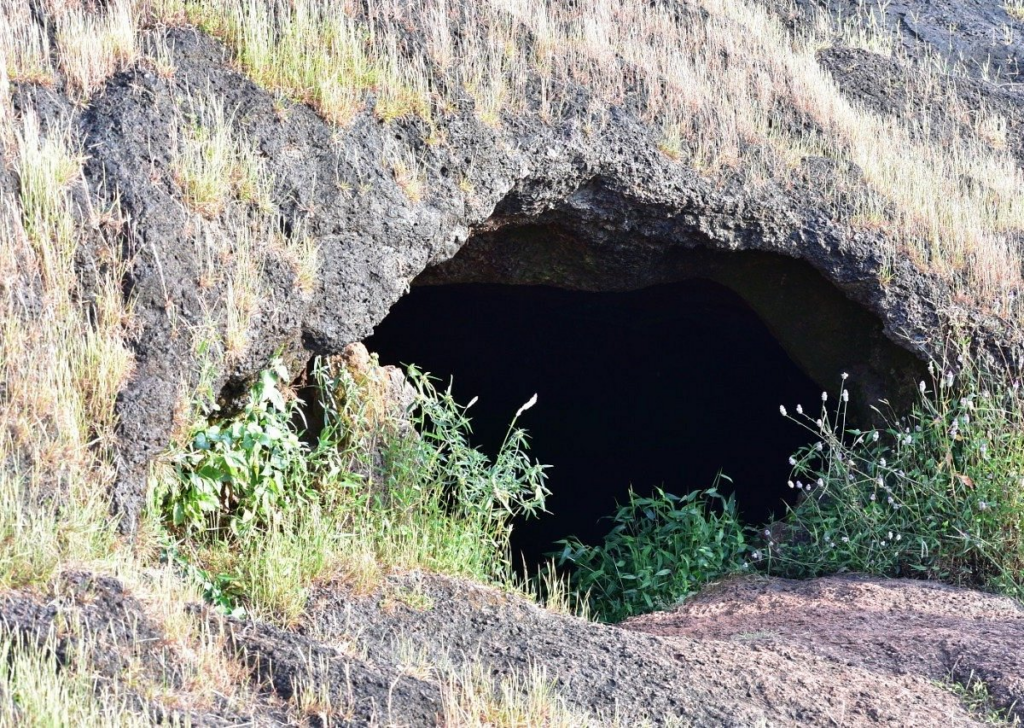
Also referred to as Gogarbha Cave, Shiva Cave is a little-known spiritual site off the beaten path, making it unlikely that any day visitor would discover it while visiting Gokarna’s main town. Inside, there is an area dedicated to the worship of a small Shiva Linga (Shiva’s phallic symbol), where sage would meditate for long periods in complete silence. The entry into the cave is narrow, while the interior remains dark, creating recently a true stillness that’s not easily found anywhere else along the most well-known beaches of India. A large colony of bats is found within the cave, which gives Shiva Cave even more character as it can be an unqiue and special place for people that seek out spirituality as well as unique experiences.
What to do here:
- Sit quietly inside the cave for meditation or simply to absorb the silence
- Visit early in the morning before the main Gokarna Beach gets busy
- Carry a small torch for the darker interior sections
- Combine with the Mahabaleshwar Temple visit nearby for a spiritual morning in Gokarna town
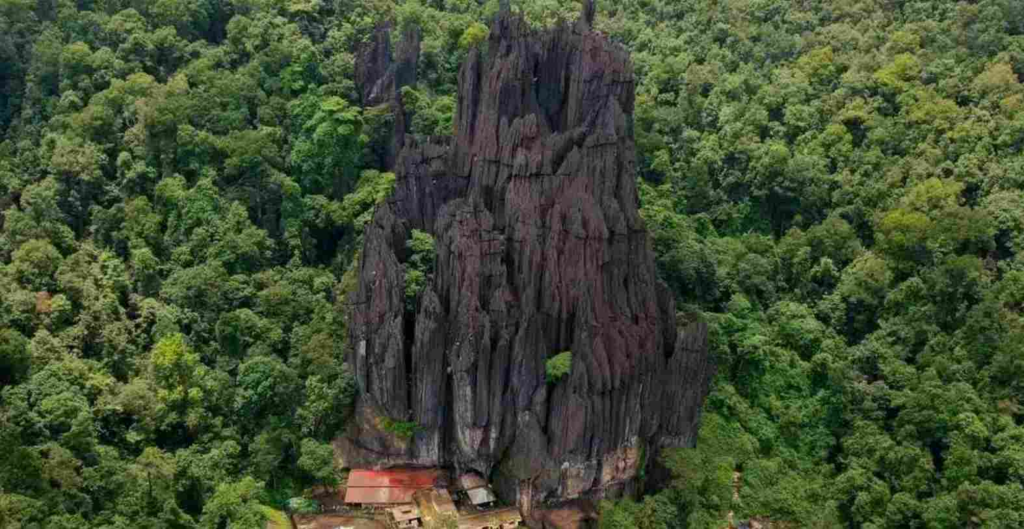
5. Yana Caves and Rock Formations
- Type: Geological Wonder and Forest Trek
- Best Time: October to March; avoid peak monsoon when trails are slippery
- Distance from Gokarna Town: Around 50 km inland through the Western Ghats
Yana is one of the most extraordinary hidden places in Gokarna’s extended region and one that very few coastal visitors ever reach. Two monolithic towers of black crystalline limestone rise dramatically out of the dense forest of the Western Ghats, reaching heights of up to 390 feet. The two peaks are named Bhairaveshwara Shikhara and Mohini Shikhara, and the mythological significance attached to both gives the site a spiritual weight that matches its visual drama. The trek through the jungle trail to the base of the formations passes through forest so dense that it functions as its own habitat, and the caves at the base contain a small temple where legend holds that Lord Shiva once meditated. The combination of geology, mythology, and forest makes Yana unlike any other destination reachable from Gokarna.
What to do here:
- Trek the jungle trail to the rock formations and enter the cave temple at the base
- Photograph the black limestone towers against the forest canopy from the clearing below
- Visit the small temple inside the cave for a moment of quiet before the formations
- Start early from Gokarna to cover the 50 km drive and the trek within a comfortable day
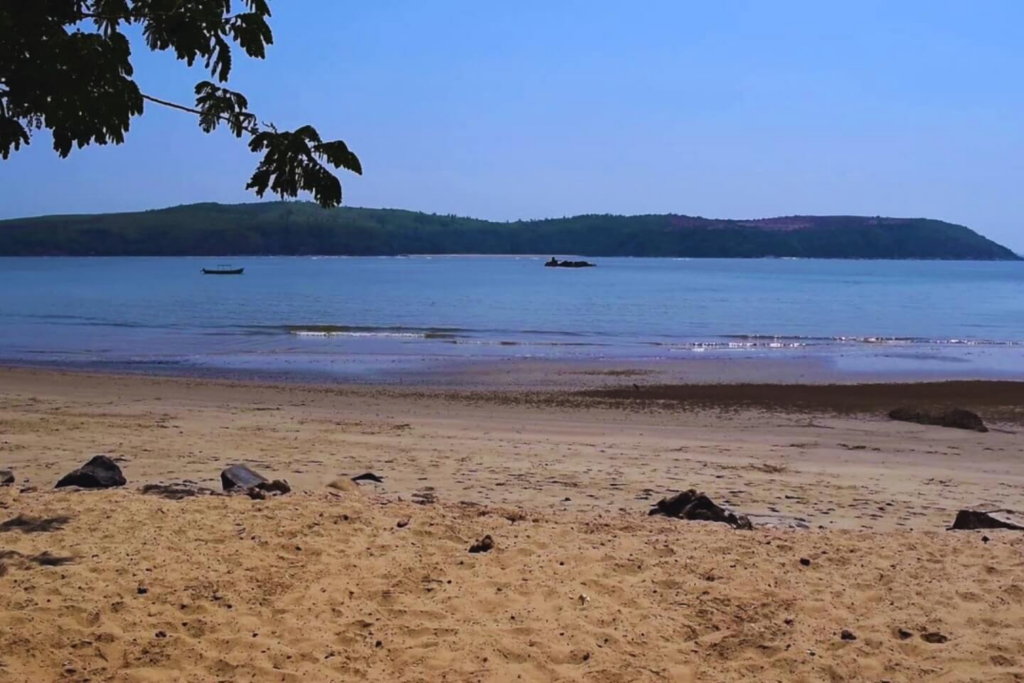
6. Belekan Beach
- Type: Hidden Coastal Beach
- Best Time: October to February
- Distance from Gokarna Town: Accessible by trek from Paradise Beach or by boat
Belekan Beach is among the most secluded hidden places in Gokarna and historically served as a docking point for local traders and fishermen before the coastal highway changed how goods moved through the region. Today it sees almost no tourist traffic, which gives the long stretch of golden sand and its pristine waters a quality that the more accessible Gokarna beaches cannot match. The beach is a practical starting point for treks connecting to Half Moon Beach and Paradise Beach to the north, making it part of a broader coastal trail for those who want to string together multiple hidden places in Gokarna in a single day.
What to do here:
- Walk the full length of the beach at sunrise for an entirely solitary experience
- Use Belekan as a base for a multi-beach coastal trek linking Half Moon, Paradise, and Belekan
- Photograph the beach at golden hour when the light hits the sand at its best angle
- Carry all food, water, and supplies as there are no commercial facilities on or near the beach
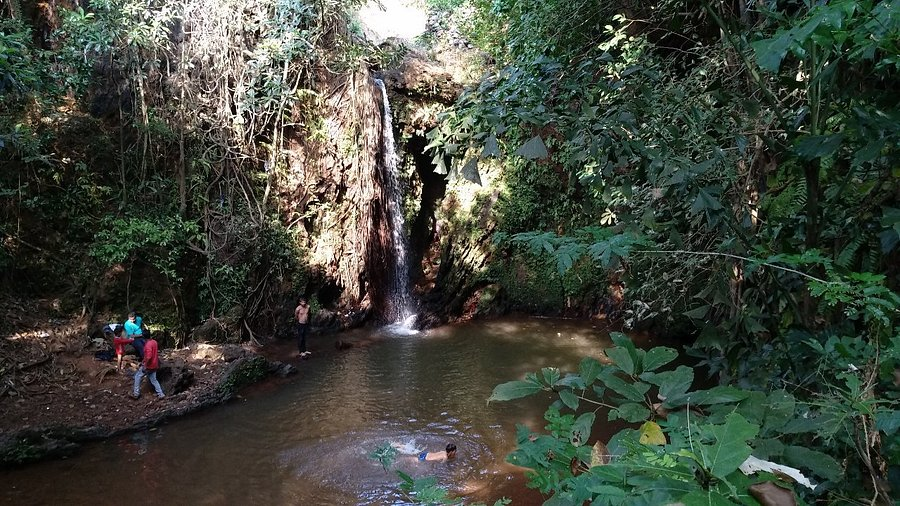
7. Apsarakonda Waterfall
- Type: Waterfall and Adjoining Beach
- Best Time: July to October for monsoon flow; beach visit October to March
- Distance from Gokarna Town: Around 55 km south near Bhatkal
Apsarakonda is a 50-foot waterfall that cascades through forest directly into a natural pool before the water continues to a small quiet beach nearby. The combination of forest waterfall and beach in one location is rare on this stretch of coastline and makes Apsarakonda one of the most distinctive hidden places in Gokarna’s broader coastal zone. The falls are at their most powerful during the monsoon months, when the Karnataka coast receives heavy rainfall and the surrounding forest turns intensely green. The beach adjoining the falls is calm, clean, and virtually unvisited by tourists, making the combined waterfall and beach experience here one of the more memorable ones accessible from Gokarna.
What to do here:
- Swim in the natural pool at the base of the waterfall during or just after the monsoon
- Walk through to the quiet beach adjacent to the falls for a swim in the Arabian Sea
- Visit during July to September for the fullest water flow and most vivid forest setting
- Combine with a visit to the Murudeshwara Temple nearby on the same day for a full south-of-Gokarna loop
How to Reach Gokarna
How do you get to Gokarna by train?
Gokarna Road Railway Station is the nearest station, around 10 km from the town. It is connected to major cities including Mumbai, Mangalore, Goa, and Bengaluru. The Konkan Railway route that runs through here is one of the most scenic rail journeys on India’s west coast.
Which airport is closest to Gokarna?
Dabolim Airport in Goa is the most commonly used airport for Gokarna, around 140 km away and taking 3 to 4 hours by road. Hubli Airport is a closer alternative at around 170 km. From either airport, cabs and buses connect to Gokarna town.
Can you reach Gokarna by road?
Yes. Gokarna is well connected by state highway and the coastal road from Goa. Overnight buses run from Bengaluru, Pune, Mumbai, and Goa. A scenic self-drive along the coastal highway from Goa is one of the more popular ways to reach Gokarna, especially for those combining both destinations. Travellers coming from Mumbai can also explore our India tour packages from Mumbai for curated itineraries that include Gokarna as part of a South India or coastal Karnataka circuit.
Hidden Places in Gokarna by Experience Type
- For beach solitude: Paradise Beach for the most remote shore on the Gokarna arc; Belekan Beach for an entirely tourist-free stretch of golden sand.
- For waterfalls: Vibhuti Falls for a full Western Ghats forest trek; Apsarakonda for the rare combination of waterfall and adjacent beach.
- For heritage: Mirjan Fort for 16th-century Indo-Islamic architecture surrounded by Aghanashini River backwaters.
- For spirituality: Shiva Cave for a meditative cave experience inside Gokarna town; Yana Caves for mythological cave temples inside a dramatic geological setting.
- For geology and trekking: Yana Rock Formations for the most visually extraordinary destination reachable from Gokarna.
Best Time to Visit Gokarna
The best time to visit Gokarna is October to March, when the weather is dry, the sea is calm, and both the beaches and heritage sites are fully accessible.
- October to February is peak season. Temperatures range from 20°C to 32°C, the Arabian Sea is calm enough for swimming and beach camping, and the coastal cliff trail between the beaches is dry and safe. This is the best window for Paradise Beach, Belekan Beach, Mirjan Fort, and Yana Rock Formations.
- March to May is warm but manageable in the early mornings and evenings. Crowds thin out after March, making this a good time for a quieter visit to the hidden places in Gokarna. Temperatures can touch 36°C at peak afternoon from April onwards.
- June to September is the monsoon season. The Arabian Sea becomes rough and most beach visits are restricted or inadvisable. However, this is when Vibhuti Falls and Apsarakonda Waterfall are at their most powerful, and the Western Ghats backdrop to Gokarna turns dramatically green. Yana and Mirjan Fort take on a wet, misty quality that is exceptional for photography.
- October is the sweet spot. The monsoon ends, the waterfalls are still flowing strongly, the hills are lush, and tourist numbers have not yet reached the December and January peak. It is the single best month to visit Gokarna if flexibility allows.
For the hidden beaches, October to January gives the calmest sea conditions. For waterfalls and forest treks, August and September offer the most dramatic experience.
Travel Tips for Gokarna
A few practical points will make every visit to the hidden places in Gokarna far smoother and safer.
- For Paradise Beach and Belekan Beach, carry all your own water, food, and sunscreen. There are no shops or stalls at either location.
- The coastal cliff trail connecting Om Beach, Half Moon Beach, and Paradise Beach involves uneven terrain. Wear closed shoes with grip and avoid the trail after heavy rain when the cliff paths become slippery.
- For Vibhuti Falls and Yana, start early from Gokarna town. Both are over 40 km away and the drives involve ghat road sections that take longer than expected.
- Shiva Cave is best visited in the early morning before the Gokarna Beach area becomes busy. Carry a small torch.
- Mirjan Fort has no entry fee and limited tourist infrastructure. Wear full-length clothing as the forested fort grounds have insects.
- Gokarna town has limited ATMs. Carry sufficient cash before heading to the more remote hidden places in Gokarna as most spots have no card payment options.
- Mobile signal is reliable in Gokarna town but drops beyond Om Beach on the coastal trail and inside the Western Ghats near Vibhuti Falls and Yana.
- Travelling with a group from Mumbai? Our group tour packages from Mumbai include coastal Karnataka itineraries covering Gokarna and its surrounding region.
Conclusion
The hidden places in Gokarna are what give this coastal town its depth beyond a single beach holiday. From the total seclusion of Paradise and Belekan beaches and the 16th-century forest ruins of Mirjan Fort to the black rock towers of Yana and the tiered falls of Vibhuti, Gokarna holds experiences that very few travellers ever reach. Take your time, carry enough water, respect the forest and the beaches, and let this extraordinary stretch of Karnataka coastline show you what it is hiding.

Frenzy Holidays ensures a smooth and enriching travel experience from start to finish. You can visit us at Haware Centurion, S07/34, Nerul East, Sector 19A, Nerul, Navi Mumbai, Maharashtra 400706. For bookings or more information, call +91 7400453140, email [email protected], or visit www.frenzyholidays.com. Pack up and explore India with Frenzy Holidays for an unforgettable journey.
Hidden Places in Gokarna: FAQs
What are the best hidden places in Gokarna?
Paradise Beach, Mirjan Fort, Vibhuti Falls, Shiva Cave, Yana Rock Formations, Belekan Beach, and Apsarakonda Waterfall are the 7 best hidden places in Gokarna for offbeat travellers.
How do you get to Paradise Beach in Gokarna?
Paradise Beach is accessible by boat from Om Beach or by trekking through the coastal trail from Half Moon Beach. There is no road access to Paradise Beach.
Is Mirjan Fort worth visiting from Gokarna?
Yes. Mirjan Fort is around 20 km from Gokarna and is one of the finest heritage hidden places in Gokarna. It is set inside Aghanashini River backwaters with forest on three sides and sees very few visitors.
What is the best time to visit hidden places in Gokarna?
October to March is ideal for beaches and heritage spots. July to October is best for waterfalls like Vibhuti Falls and Apsarakonda when the monsoon flow is at its peak.
How far is Yana from Gokarna?
Yana is around 50 km from Gokarna town. The drive takes approximately 1.5 to 2 hours through Western Ghats roads. It is best done as a full-day trip with an early start.
Is Gokarna good for a monsoon trip?
Yes. The hidden places in Gokarna during monsoon include Vibhuti Falls and Apsarakonda Waterfall at their most powerful, plus the coastal forest trails at their greenest. Beach access is limited during peak monsoon but the inland and waterfall spots are exceptional.
What is Shiva Cave in Gokarna?
Shiva Cave, also known as Gogarbha Cave, is a natural rock cave near Gokarna Beach believed to have been a meditation site for sages. It contains a small Shiva Linga and is one of the quietest and most atmospheric hidden places in Gokarna for spiritual travellers.
Can you trek between the hidden beaches in Gokarna?
Yes. A coastal cliff trail connects Om Beach, Half Moon Beach, Paradise Beach, and Belekan Beach. The full trail covers several kilometres of cliff paths and forest sections and is one of the most rewarding ways to experience the hidden places in Gokarna.
How many days do you need to cover hidden places in Gokarna?
Three to four days gives you enough time to cover the coastal hidden places in Gokarna and add day trips to Mirjan Fort, Vibhuti Falls, and Yana. A fifth day can be used for Apsarakonda and Murudeshwara.
What should I carry when visiting hidden places in Gokarna?
Carry at least 2 litres of water per person, insect repellent, closed trekking shoes, a torch for Shiva Cave, and sun protection. For beach camping at Paradise Beach, bring all supplies as nothing is available on site.
