
The offbeat places near Siliguri include Latpanchar, Suntalekhola, Bindu, Lava and Lolegaon, Jhalong, Buxa Tiger Reserve, and the remote riverside villages of the Dooars. These destinations sit within a few hours of the North Bengal gateway city and offer forests, rivers, birds, and mountain views far removed from the tourist crowds of Darjeeling and Gangtok.
Siliguri is the travel hub of North Bengal and the Northeast, a city that most visitors pass through on their way to Darjeeling, Gangtok, or the Northeast states. But within a radius of 100 to 150 km, Siliguri is surrounded by an extraordinary range of offbeat destinations that most travellers never consider stopping for. Dense Dooars forest, tea estates draped across hillsides, cold rivers rushing out of Bhutan and Sikkim, ancient Buddhist monasteries, and birding corridors of international significance all lie within comfortable reach. The offbeat places near Siliguri reward those willing to slow down and look beyond the obvious, with experiences that are quieter, more intimate, and in many cases more beautiful than the headline destinations further up the mountain.
Confused where to go for quick escape? Let us plan it for you.
Grab the Best DealTable of Contents
Quick Reference: Offbeat Places Near Siliguri
Planning to explore the lesser-known corners of North Bengal from Siliguri? Here is a handy snapshot of the top offbeat destinations, their distances, and what makes each one worth the detour.
| Destination | Distance from Siliguri | Best For | Permit Required |
|---|---|---|---|
| Latpanchar | Approx. 60 km | Birding, forest, Mahananda Wildlife Sanctuary | No |
| Suntalekhola | Approx. 80 km | River camping, Dooars forest | No |
| Lava and Lolegaon | Approx. 120 km | Canopy walk, Neora Valley, views | No |
| Jhalong and Bindu | Approx. 110 km | Jaldhaka river, Bhutan border village | No |
| Buxa Tiger Reserve | Approx. 175 km | Forest, wildlife, Buxa Fort | No |
| Chapramari Wildlife Sanctuary | Approx. 90 km | Elephant, bison, jeep safari | No |
| Rishyap | Approx. 130 km | Kanchenjunga views, rhododendron forest | No |
| Samthar Plateau | Approx. 135 km | High grassland, panoramic views | No |
Offbeat Places Near Siliguri
The following destinations represent the finest offbeat places near Siliguri across the Dooars, the Kalimpong hills, and the Jaldhaka river corridor, covering a range of landscapes and experiences for every kind of traveller.
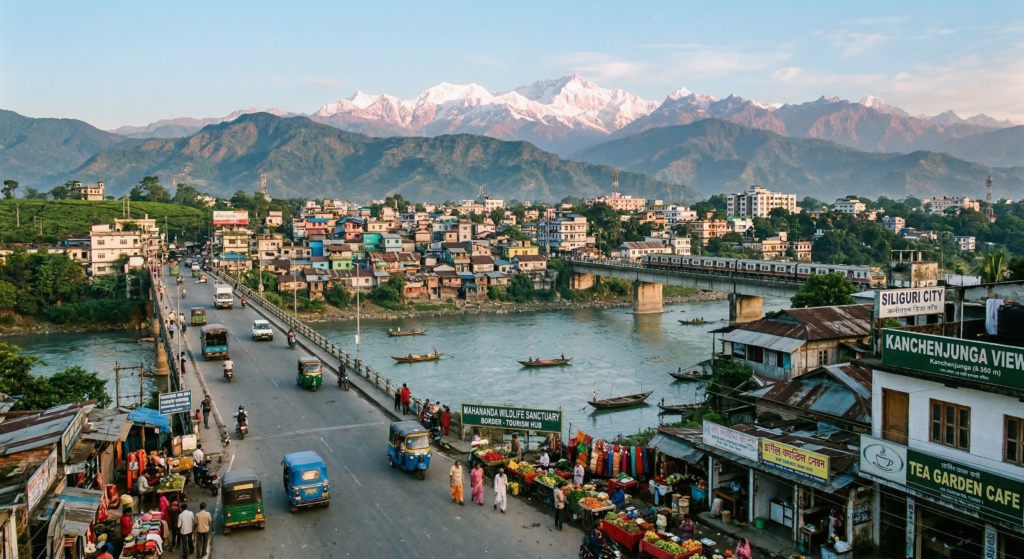
Latpanchar: North Bengal’s Premier Birding Village
Latpanchar, approximately 60 km from Siliguri in the Mahananda Wildlife Sanctuary buffer zone, is one of the most celebrated birding destinations in the Eastern Himalayas and completely unknown to most mainstream travellers. Perched at approximately 1,000 metres on the edge of dense riverine forest, the village looks out over the Mahananda river valley and the forest canopy below, a vantage point that makes it exceptional for spotting rare and elusive species.
The Rufous-necked Hornbill, Ward’s Trogon, Ibisbill, and dozens of other rare Himalayan bird species have been recorded around Latpanchar. Early morning walks through the forest with a knowledgeable local guide are among the finest birding experiences available anywhere in Northeast India. The village has a small number of excellent homestays with naturalist guides who have spent decades observing and protecting the local wildlife.
Latpanchar is also an outstanding base for nature walks through the Mahananda forest without any of the permit or crowd pressure associated with the more famous parks in the region.
Suntalekhola: Riverside Solitude in the Dooars
Suntalekhola, approximately 80 km from Siliguri in the Jaldapara-Gorumara Dooars corridor, is a tiny hamlet set on the banks of the Murti river where the forest meets the water in one of the most peaceful settings in North Bengal. Surrounded by thick sal forest, the village is almost entirely free of regular tourist traffic and offers a riverside camping and nature experience that feels genuinely remote despite its relative accessibility.
The Murti river is cold, clear, and shallow in the dry season, ideal for paddling, photography, and simply sitting by the water in complete forest silence. The surrounding Dooars forest supports elephants, gaur, leopards, and a rich bird community. A few carefully managed nature camps and forest bungalows operate here, and the experience of waking to birdsong beside the river with forest on all sides is one of the most restorative available in the region.
Lava and Lolegaon: The Canopy Walk and Neora Valley
Lava and Lolegaon, approximately 120 km from Siliguri in the Kalimpong hills, are two adjoining offbeat hill villages that together form one of the finest weekend escape combinations in North Bengal. Lava sits at the edge of the Neora Valley National Park, one of the most biodiverse protected areas in the Eastern Himalayas and a critical habitat for the Red Panda. The forest around Lava is dense and spectacularly rich, with nature trails leading through rhododendron, oak, and silver fir.
Lolegaon is known for its canopy walk, a suspension bridge walkway through the forest canopy that offers a memorable and slightly vertiginous perspective on the surrounding trees and distant Himalayan peaks. The village is small, quiet, and surrounded by cardamom plantations and forest that turns vivid shades of gold and orange in autumn. Kanchenjunga is visible on clear days from the viewpoints above the village.
Lava and Lolegaon are best visited between October and April and can be combined in a two-night circuit from Siliguri.
Jhalong and Bindu: The Jaldhaka River and Bhutan’s Edge
Jhalong and Bindu, approximately 110 km from Siliguri in the Dooars along the Jaldhaka river, are two of the most atmospheric and undervisited riverside villages in North Bengal. The Jaldhaka river here is fed by the mountains of Bhutan and flows through a corridor of dense forest, and the drive along its banks from Jhalong to Bindu is one of the most scenic short drives in the region.
Bindu sits immediately at the border with Bhutan, where the river crosses into the kingdom and the forest on the far bank is Bhutanese territory. The combination of the turquoise river, the dense forest, and the sense of being at the very edge of India makes Bindu a uniquely atmospheric stop. A small hydroelectric project is visible from the village, and the walk along the riverbank toward the border fence is short but deeply evocative.
The Jaldhaka valley is also excellent for birding, with the fast-flowing river and adjacent forest supporting river birds including the Ibisbill, Brown Dipper, and Plumbeous Water Redstart.
Buxa Tiger Reserve: Forgotten Forest in the East
Buxa Tiger Reserve, approximately 175 km from Siliguri near the town of Alipurduar, is one of West Bengal’s most underappreciated wildlife destinations. Covering approximately 760 square kilometres of sal and mixed deciduous forest along the Bhutan border, Buxa supports tigers, leopards, elephants, gaur, and over 280 bird species. The reserve also contains the ruins of Buxa Fort, a British-era prison that housed freedom fighters including those transported from the infamous Cellular Jail of Andaman, set dramatically on a hilltop inside the reserve.
The fort trek from Santrabari (approximately 12 km each way) is one of the most rewarding forest treks in North Bengal, passing through dense jungle with a real possibility of encountering wildlife along the trail. Buxa receives a fraction of the visitor numbers of Jaldapara National Park to its south and offers a more wild and less curated wildlife experience.
The broader West Bengal region has a rich and sometimes surprising heritage landscape. Our guide to haunted places in West Bengal covers some of the state’s most atmospheric and legend-rich historical locations for travellers interested in its more unusual heritage.
Chapramari Wildlife Sanctuary: Elephant Country
Chapramari Wildlife Sanctuary, approximately 90 km from Siliguri near Chalsa in the Dooars, is a compact but wildlife-rich sanctuary known primarily for its elephant herds and gaur. The sanctuary’s open grasslands and sal forest create excellent wildlife viewing conditions compared to denser reserves, and morning jeep safaris from the forest department range office at Chapramari regularly encounter elephant herds, gaur, spotted deer, and a diverse bird community.
Chapramari is often overlooked in favour of the larger Jaldapara National Park nearby but offers a more intimate and less crowded safari experience. The proximity to the Murti river adds a scenic dimension to the landscape.
Rishyap: Kanchenjunga’s Quiet Neighbour
Rishyap, approximately 130 km from Siliguri in the Kalimpong subdivision, is a small village perched at approximately 2,590 metres with what many consider the finest ground-level view of the Kanchenjunga range available from any non-trekking location in the Eastern Himalayas. The village is compact, quiet, and almost entirely free of commercial tourist infrastructure, with a small number of homestays and one or two small guesthouses.
The sunrise view from Rishyap on a clear October or November morning, with the full Kanchenjunga massif blazing in the first light above the forested ridgeline, is one of the most spectacular and least crowded mountain viewpoint experiences in all of North Bengal. The village is surrounded by rhododendron and pine forest and the walks through the surrounding hillsides are excellent in spring and autumn.
Samthar Plateau: A High Grassland Few Know
Samthar Plateau, approximately 135 km from Siliguri in the Kalimpong district, is one of the most overlooked destinations in all of North Bengal. The plateau sits at approximately 2,000 to 2,500 metres and offers wide open grassland views across the Teesta river valley with Kanchenjunga and the Eastern Himalayan range as a backdrop. The landscape is unlike anything else in the region, giving the plateau an almost Scottish moorland quality that is entirely unexpected in the Eastern Himalayas.
Samthar is best reached via Kalimpong and can be combined with Rishyap and Lolegaon on a multi-day North Bengal offbeat circuit.
Why Explore Offbeat Places Near Siliguri

Siliguri’s position as the gateway to the Northeast means most visitors treat it purely as a transit stop. But the city sits at the intersection of the Himalayan foothills, the Dooars floodplains, and the Teesta river corridor, giving it access to an astonishing variety of natural and cultural landscapes within a short drive in any direction.
Travellers planning a broader Northeast circuit from Siliguri will find it pairs naturally with Gangtok, Sikkim’s vibrant capital. Our guide to best tourist places in Gangtok covers the Sikkim city’s top attractions in full and is an ideal companion for planning a combined North Bengal and Sikkim itinerary.
For those interested in the wider West Bengal pilgrimage and heritage landscape beyond the hills, our guide on the best time to visit Kalighat Temple covers Kolkata’s most sacred temple in detail. And for travellers looking to explore more of Bengal’s distinctive and lesser-known destinations, our guide on the best time to visit Ayodhya Hills Purulia covers the rocky tribal hills of western Bengal, one of the state’s most rewarding and undervisited regions.
How to Reach Siliguri?
Siliguri is one of the best-connected cities in Northeast India, serving as the main hub for all travel into Sikkim, Darjeeling, the Dooars, and the Northeast states.
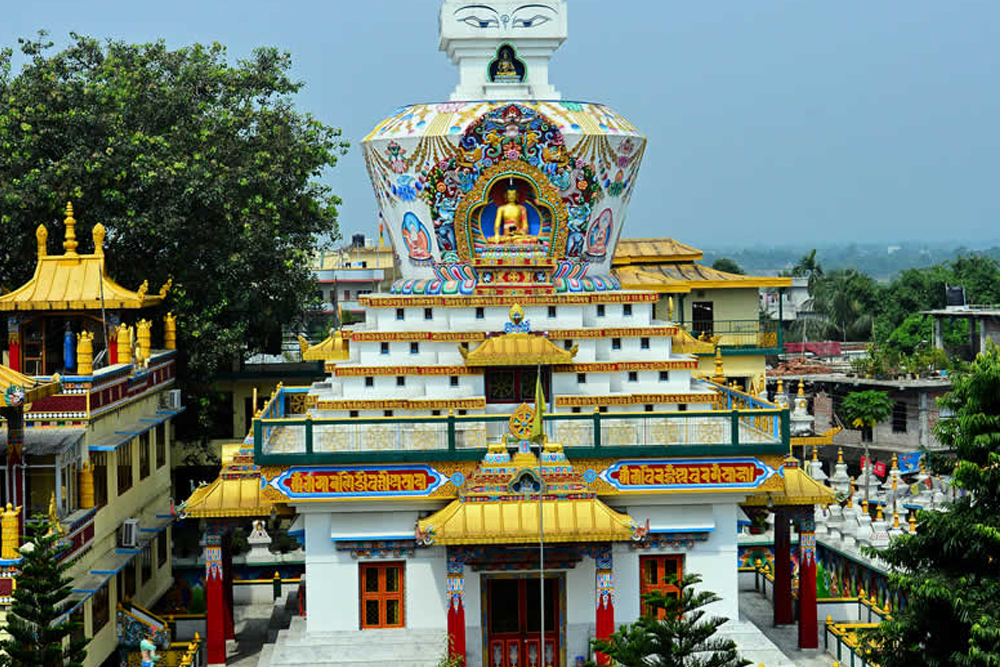
How to Reach Siliguri by Air?
Bagdogra Airport, approximately 12 km from Siliguri city centre, has regular direct flights from Kolkata, Delhi, Mumbai, Bengaluru, and Hyderabad. It is the primary air gateway for all of North Bengal and Sikkim. Taxis and app-based cabs are available outside the airport terminal for onward travel to Siliguri and beyond.
How to Reach Siliguri by Train?
New Jalpaiguri (NJP) Railway Station in Siliguri is one of the most important railway hubs in Northeast India, with direct train connections to Kolkata, Delhi, Mumbai, and all major cities. Several premium trains including the Rajdhani, Duronto, and Shatabdi services stop at NJP. The station is approximately 6 km from Siliguri city centre.
How to Reach Siliguri by Road?
Siliguri is connected by national highways to Kolkata (approximately 600 km, 10 to 12 hours), Guwahati (approximately 450 km, 8 to 9 hours), and all neighbouring hill stations and Dooars towns. Private buses and NBSTC state buses operate across all these routes. Self-drive from Kolkata on the NH12 is a popular option for road trip enthusiasts.
Nearby Places to Visit
The offbeat Siliguri circuit connects naturally with several well-known and lesser-known destinations across North Bengal and Sikkim.
- Darjeeling: The Queen of Hills is approximately 80 km from Siliguri and the most visited destination in North Bengal. Tiger Hill sunrise, the Tea Estate trails, the Himalayan Mountaineering Institute, and the Darjeeling Himalayan Railway are among its top draws.
- Jaldapara National Park: Approximately 130 km from Siliguri, Jaldapara is the finest destination in the Dooars for seeing the Indian One-Horned Rhinoceros in its natural habitat, along with elephants, gaur, and a rich bird community.
- Kalimpong: Approximately 75 km from Siliguri, Kalimpong is a charming hill town known for its flower nurseries, Tibetan heritage, and the excellent Zong Dog Palri Fo-Brang Monastery. It is quieter than Darjeeling and offers a more relaxed hill town experience.
- Gorumara National Park: Approximately 80 km from Siliguri, Gorumara is a compact but excellent wildlife reserve known for its Indian Rhinoceros and Asian Elephant populations. Watchtower-based wildlife viewing here is a distinctive and rewarding experience.
- Sevoke Coronation Bridge: Approximately 30 km from Siliguri, the Sevoke bridge over the Teesta river is a beautiful colonial-era structure and one of the most photographed spots in the North Bengal plains. The drive along the Teesta gorge beyond the bridge toward Kalimpong is scenic and easily combined as a half-day trip.
Essential Tips for Visiting Offbeat Places Near Siliguri
Offbeat North Bengal travel is generally permit-free for most destinations but requires some practical preparation for the most rewarding experience.
- Most offbeat destinations near Siliguri require no permits for Indian nationals, making them significantly more accessible than the offbeat Sikkim circuit. The main exception is Buxa Fort inside Buxa Tiger Reserve, where a forest department entry pass is required at the range office.
- Hire a local driver and guide familiar with the Dooars and Kalimpong hills. The roads to Suntalekhola, Jhalong, and Buxa are narrow and rural, and local knowledge is invaluable for navigation and wildlife spotting.
- Birding at Latpanchar is best from October to April, with the peak birding window being November to February. Arrange a local birding guide through your homestay well in advance as the best guides book up quickly.
- Carry sufficient cash from Siliguri. ATMs are available in larger Dooars towns like Chalsa and Alipurduar but are unavailable at smaller offbeat villages.
- Accommodation at offbeat Dooars and Kalimpong destinations is primarily homestays and small nature camps. Book well in advance for October, the Christmas-New Year window, and the spring rhododendron season of March and April.
- The best season for offbeat Siliguri travel is October to April. The monsoon from June to September makes forest roads muddy and leeches active on forest trails, though the Dooars landscape is spectacularly lush during this period.
- Wildlife safaris at Chapramari and Buxa are best done in the early morning between 6:00 AM and 9:00 AM when animals are most active. Carry binoculars for both wildlife and birding outings.
- Dress in muted, earthy colours for forest and wildlife excursions. Avoid bright clothing that can disturb animals and reduce sighting opportunities.
Conclusion
Siliguri’s role as a transit city has long obscured the extraordinary landscape that surrounds it on all sides. From the birding paradise of Latpanchar and the riverside solitude of Suntalekhola to the dramatic Bhutan border at Bindu and the wide-sky views of the Samthar Plateau, the offbeat places near Siliguri offer a richness and variety that rewards every kind of traveller who takes the time to explore beyond the highway.
Plan a few extra days around your Siliguri transit, hire a knowledgeable local guide, and let North Bengal surprise you. The region’s forests, rivers, hills, and cultures are among the finest and most underappreciated in the entire Indian subcontinent.

At Frenzy Holidays, we help you plan exceptional offbeat and nature travel experiences across North Bengal and the Northeast. Reach out to us at [email protected], call us at 074004 53140, or visit us at Frenzy Holidays, Haware Centurion, S07/34, Nerul East, Sector 19A, Nerul, Navi Mumbai, Maharashtra 400706, and we will take care of every detail of your North Bengal journey.
Offbeat Places Near Siliguri: FAQs
What are the best offbeat places near Siliguri?
Latpanchar, Lava, Lolegaon, Rishyap, Jhalong, Samsing, Bindu, and the Dooars forest camps are the top offbeat destinations, each offering a distinct and less-visited experience within easy reach of Siliguri.
How far is Latpanchar from Siliguri?
Latpanchar is approximately 60 km from Siliguri, a drive of about 2 hours through the Mahananda Wildlife Sanctuary buffer zone.
Is the Dooars good for wildlife?
Yes. The Dooars supports elephants, gaur, Indian rhinoceros, leopards, and an exceptional bird diversity. Chapramari, Jaldapara, Gorumara, and Buxa are all rewarding wildlife destinations within the Dooars.
What is the best time to visit offbeat places near Siliguri?
October to April is the best window for most destinations. November to February is ideal for birding at Latpanchar. March and April bring rhododendron bloom to Lava, Lolegaon, and Rishyap.
Can I combine Siliguri offbeat places with a Gangtok trip?
Yes. Siliguri and Gangtok are approximately 114 km apart and many offbeat North Bengal destinations sit naturally on the route between the two cities, making a combined circuit very practical.
What is special about Bindu near Siliguri?
Bindu is a village on the Bhutan border where the Jaldhaka river crosses into the kingdom. The combination of the turquoise river, dense border forest, and the sense of standing at India’s edge makes it one of the most atmospheric spots in the Dooars.
What should I pack for an offbeat Siliguri trip?
Comfortable walking shoes, light cotton clothing for the Dooars, warm layers for the Kalimpong hills, insect repellent for forest areas, binoculars for birding, and sufficient cash for the duration.
Is Rishyap better than Darjeeling for Kanchenjunga views?
Many travellers find Rishyap’s Kanchenjunga views more dramatic and entirely crowd-free compared to Darjeeling’s Tiger Hill. Rishyap offers a more intimate sunrise experience without the organised crowds.
How do I reach Siliguri from Kolkata?
Fly to Bagdogra Airport, approximately 1 hour from Kolkata. Alternatively, take a train to New Jalpaiguri from Kolkata Howrah or Sealdah, approximately 8 to 10 hours on overnight services.
Do I need a permit for offbeat places near Siliguri?
Most North Bengal destinations including Lava, Lolegaon, Rishyap, Jhalong, and Samsing do not require any special permit for Indian nationals. Some Dooars forest areas and wildlife reserves require entry passes obtainable at the gate.
