
The undiscovered places in Delhi go far beyond the Red Fort and India Gate. From a medieval stepwell hidden between Connaught Place office towers to a living Tibetan enclave on the Yamuna bank, a 200-acre archaeological park with over 100 forgotten monuments, and a natural forest inside the city limits, Delhi rewards those who look beyond the obvious with experiences that feel genuinely rare.
Delhi is one of the oldest continuously inhabited cities in the world, with over 1,000 years of layered history spread across its streets, parks, and forgotten corners. Most first-time visitors stick to the well-worn circuit of the Red Fort, Qutub Minar, Humayun’s Tomb, and India Gate, all of which deserve their fame. But the city holds an extraordinary range of undiscovered places in Delhi that rarely appear in standard travel itineraries, sites that are quieter, more atmospheric, and often more historically compelling than the landmark circuit. Mughal-era stepwells hidden between office blocks, a Tibetan refugee colony that feels like a transplanted corner of Lhasa, ancient ruins spread across 200 forested acres, and a colonial-era artistic quarter that has reinvented itself as one of the city’s most creative café lanes. The best time to explore these undiscovered places in Delhi is October to March, when the weather is cool and outdoor exploration is comfortable. Early mornings are ideal for photography and avoiding what little crowd these places attract.
For a broader look at Delhi’s lesser-known side, Frenzy Holidays has a curated guide to hidden gems in Delhi covering more offbeat spots across the capital.
Confused where to go for quick escape? Let us plan it for you.
Grab the Best DealTable of Contents
Undiscovered Places in Delhi – Quick Reference
Before the detailed breakdown, here is a quick snapshot of the undiscovered places in Delhi covered in this guide.
| Place | Location | Best Time to Visit | Nearest Metro |
|---|---|---|---|
| Agrasen Ki Baoli | Connaught Place | Oct to March, early morning | Barakhamba Road |
| Mehrauli Archaeological Park | Mehrauli | Oct to March | Qutub Minar |
| Majnu Ka Tila | North Delhi (Yamuna bank) | Oct to March | Vidhan Sabha |
| Sanjay Van | Vasant Kunj | Year-round, early morning | Chattarpur |
| Champa Gali | Saket | Year-round, evening | Saket |
| Tughlaqabad Fort | South Delhi | Oct to March | Tughlaqabad |
| Mirza Ghalib Ki Haveli | Chandni Chowk | Oct to March | Chawri Bazar |
| Rajon Ki Baoli | Mehrauli | Oct to March | Qutub Minar |
| Lodhi Art District | Lodhi Colony | Year-round | JLN Stadium |
| Begumpur Masjid | Malviya Nagar | Oct to March | Malviya Nagar |
You can also explore our affordable Rajasthan Tour Package designed for Budget Travelers.
Undiscovered Places in Delhi – Detailed Guide
These undiscovered places in Delhi cover a range of experiences, from medieval architecture and literary heritage to Tibetan culture and urban nature. Here is a detailed look at each one.
Agrasen Ki Baoli – The Stepwell in the Sky

Agrasen Ki Baoli is one of the most fascinating Undiscovered Places in Delhi, a hidden medieval stepwell tucked away near Connaught Place on Hailey Road. From the outside, there’s almost no hint of what lies within, but stepping inside reveals a stunning architectural marvel with 108 descending steps leading into a quiet, symmetrical world of arches and stone. Spanning about 60 metres in length and 15 metres in width, this three-tiered baoli features beautifully aligned chambers that once served as resting spaces during Delhi’s scorching summers. Believed to have been originally built by King Agrasen and later rebuilt during the Tughlaq period, the site also houses a small mosque that reflects its layered historical influences. Protected by the Archaeological Survey of India, the baoli offers a peaceful escape in the heart of the city and is especially captivating in the soft light of early mornings.
Key Points
- One of the most unique Undiscovered Places in Delhi
- Located near Connaught Place on Hailey Road
- Features 108 symmetrical steps across three architectural levels
- Built with arched niches and geometric stone design
- Believed to be constructed by King Agrasen and rebuilt during the Tughlaq era
- Includes a small historic mosque within the complex
- Managed by the Archaeological Survey of India
- Timings: 9:00 AM – 5:30 PM
- Entry Fee: Free
- Best time to visit: early weekday mornings for photography and fewer crowds
Mehrauli Archaeological Park – 100 Monuments, Zero Crowds
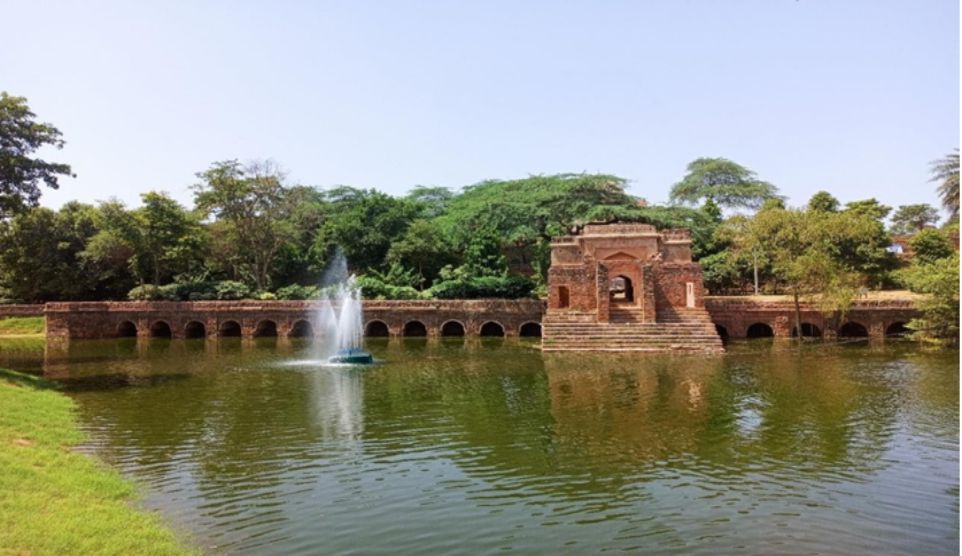
Mehrauli Archaeological Park is one of the most extraordinary and least visited of all the undiscovered places in Delhi. Spread across 200 acres adjacent to the Qutub Minar complex, the park contains over 100 historically significant monuments spanning nearly a thousand years of Delhi’s history, from the Tomar Rajput period in the 10th century through the Sultanate, Mughal, and British eras. It is the only area in Delhi known for 1,000 years of continuous occupation. Despite this, it receives a fraction of the footfall of the Qutub Minar next door. Key monuments within the park include Jamali Kamali Mosque and Tomb (a beautifully preserved 16th-century mosque with intricate painted interiors), Rajon Ki Baoli (a grand 1516 CE stepwell built by Sikandar Lodi, with four descending stages and arched stone galleries), Balban’s Tomb (the first true arch structure in India), and Zafar Mahal (the last major structure built by the last Mughal emperor, Bahadur Shah Zafar). Entry is free. Comfortable walking shoes are essential as the park is spread out and mostly unpaved.
Key Points
- One of the most significant Undiscovered Places in Delhi
- Located adjacent to the Qutub Minar complex
- Spans 200 acres with over 100 historical monuments
- Represents 1,000 years of continuous habitation
- Jamali Kamali Mosque and Tomb is known for its intricate interiors and Mughal-era design
- Rajon Ki Baoli is a 16th-century stepwell with multi-level architecture
- Balban’s Tomb is notable as the first true arch structure in India
- Zafar Mahal was built during the reign of Bahadur Shah Zafar
- Entry Fee: Free
- Wear comfortable walking shoes as the area is large and mostly unpaved
- Ideal for history enthusiasts, photographers, and offbeat explorers
Majnu Ka Tila – Little Tibet on the Yamuna
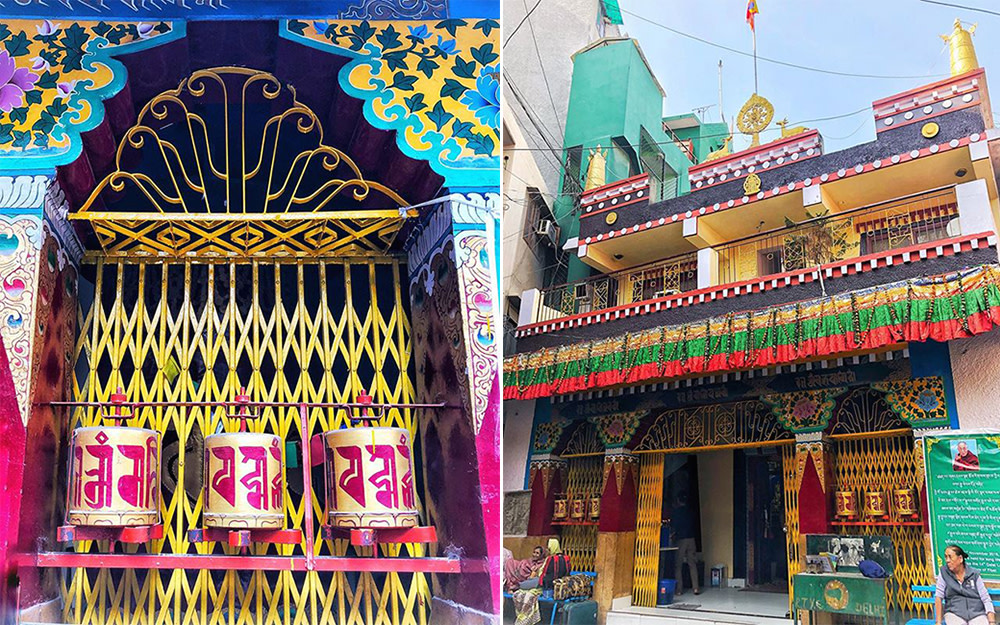
Majnu Ka Tila is one of the most culturally unique Undiscovered Places in Delhi, offering a slice of Tibetan life in the heart of North Delhi along the banks of the Yamuna River. Established in the 1960s as a Tibetan refugee colony, the area has evolved into a vibrant cultural hub filled with monasteries, traditional shops, and authentic eateries. Named after a mystic called Majnu who once meditated here, the colony today feels like stepping into a different country, with colorful prayer flags, Tibetan handicrafts, and the aroma of freshly made momos and thukpa filling the air. The peaceful monasteries add a spiritual dimension, making it both a cultural and reflective experience.
Key Points
- One of the most distinctive Undiscovered Places in Delhi
- Located near the Yamuna River in North Delhi
- Known for its Tibetan refugee colony established in the 1960s
- Features Buddhist monasteries, prayer flags, and Tibetan culture
- Popular for authentic Tibetan food like momos, thukpa, and butter tea
- Offers shops selling thangkas, handicrafts, and souvenirs
- Monasteries are open to visitors for peaceful exploration
- Best time to visit: morning for breakfast or evening for dining
- Easily accessible from Vidhan Sabha Metro Station by auto or cab
Sanjay Van – The Forest Inside the City
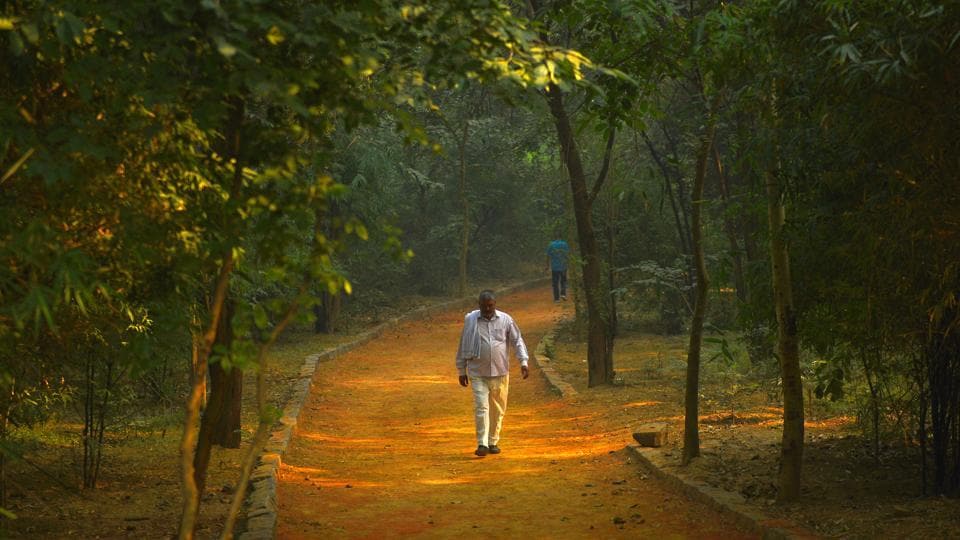
Sanjay Van, located in Vasant Kunj, is one of the most serene and nature-rich Undiscovered Places in Delhi. Spread across 780 acres as part of the Southern Ridge forest, it offers a rare escape into dense greenery within the city. The forest features walking and cycling trails, scattered medieval ruins from the Tughlaq era, a small lake, and a thriving ecosystem of birds and wildlife. With peacocks frequently seen along the paths and over 200 bird species recorded, Sanjay Van is a haven for birdwatchers and nature lovers. Its quiet trails and hidden meditation spots create a calm, almost meditative environment far removed from Delhi’s urban noise.
Key Points
- One of the most peaceful Undiscovered Places in Delhi
- Located in Vasant Kunj, South Delhi
- Spread across 780 acres of protected forest area
- Part of the Southern Ridge forest belt
- Features walking and cycling trails through dense greenery
- Contains Tughlaq-era ruins and a small lake
- Home to peacocks and over 200 bird species
- Best for birdwatching: October to February
- Offers quiet meditation spots and nature escapes
- Entry Fee: Free | Open daily
- Visiting in a group is recommended, especially early morning
Champa Gali – Delhi’s Creative Quarter

Champa Gali, tucked away in Saket, is one of the most creative and aesthetically pleasing Undiscovered Places in Delhi. This quaint lane, named after the champa (frangipani) plants that once lined it, has evolved into a vibrant hub of boutique cafés, art studios, and independent stores. With its rustic, almost European vibe—featuring cozy seating, greenery-covered walls, and artistic corners—Champa Gali feels like a hidden cultural pocket in the city. From live music sessions to art exhibitions and spoken word events, it offers a refreshing blend of creativity, food, and community-driven experiences.
Key Points
- One of the most charming Undiscovered Places in Delhi
- Located near Westend Marg in Saidulajab, Saket
- Known for boutique cafés, art galleries, and creative studios
- Features ceramics shops, bookstores, and handcrafted products
- Popular spot for live music, open mics, and art events
- Offers a rustic, artsy, and café culture vibe
- Ideal for cafe hopping, photography, and creative exploration
- Easily accessible from Saket metro area and nearby malls
Tughlaqabad Fort – The Forgotten Empire

Tughlaqabad Fort is one of the most awe-inspiring yet overlooked Undiscovered Places in Delhi, showcasing the grandeur of medieval architecture on a massive scale. Built in 1321 CE by Sultan Ghiyas-ud-Din Tughlaq, this विशाल 14th-century fort once formed the third city of Delhi. Spread across a vast area with walls stretching over 6.5 km, the ruins today offer a hauntingly beautiful glimpse into a once-thriving settlement that was abandoned within a short period. The elevated battlements provide sweeping views of South Delhi, while a stone causeway leads to the striking tomb of the Sultan, adding to the fort’s dramatic appeal.
Key Points
- One of the most impressive Undiscovered Places in Delhi
- Built in 1321 CE by Ghiyas-ud-Din Tughlaq
- Massive fort complex with 6.5 km long defensive walls
- Once served as the third city of Delhi
- Offers panoramic views of South Delhi from its ramparts
- Known for its haunting ruins and abandoned city atmosphere
- Connected via a causeway to Ghiyas-ud-Din Tughlaq Tomb
- Entry Fee: Applicable (ASI rates)
- Timings: Sunrise to Sunset
- Nearest Metro: Tughlaqabad (Violet Line)
Mirza Ghalib Ki Haveli – A Poet’s Lost Home
Mirza Ghalib Ki Haveli in the Gali Qasim Jan area of Ballimaran, Chandni Chowk is one of the most historically intimate of the undiscovered places in Delhi. The haveli was the last residence of Mirza Ghalib, the greatest Urdu poet of the 19th century, who lived here until his death in 1869. Now maintained as a heritage museum, the haveli has walls lined with images of Ghalib’s life, his couplets engraved in stone, a life-sized statue of the poet with a hookah, and preserved handwritten manuscripts and first editions of his poetry. For those who love Urdu literature or Delhi’s Mughal-era cultural history, this is one of the most moving visits in the city. The haveli is open Tuesday to Sunday, 10:00 AM to 6:00 PM, and entry is free. It is best combined with a walk through the by-lanes of Ballimaran, one of Old Delhi’s most authentic and unchanged neighbourhoods.
Lodhi Art District – Delhi’s Open-Air Gallery
Lodhi Art District in Lodhi Colony, Central Delhi, is one of the most visually striking of all undiscovered places in Delhi and arguably one of the largest open-air urban art galleries in Asia. The project, initiated in 2016, has transformed a quiet residential colony into a 2-km street art corridor where international and Indian artists have painted enormous murals on apartment buildings, boundary walls, water tanks, and electricity substations. The scale of some works is breathtaking, covering entire eight-storey building facades. Artists from over 15 countries have contributed works ranging from hyperrealistic portraits and abstract geometric compositions to socially engaged murals on themes of environment and identity. The district is freely accessible at all times, and the Lodhi Colony locality is walkable from the JLN Stadium Metro Station. Evening light brings the works alive with long shadows and warm tones.
Begumpur Masjid – The Mosque Nobody Visits
Begumpur Masjid in South Delhi near Malviya Nagar is one of the most architecturally remarkable of all the undiscovered places in Delhi and among the least visited major historical mosques in India. Built in the 14th century during the reign of Muhammad bin Tughlaq, the mosque is a vast, fortress-like structure with a large central courtyard, soaring arched colonnades on three sides, and a imposing prayer hall. The scale of the structure is extraordinary and the near-total absence of tourists makes every visit feel like a private audience with Delhi’s medieval past. The mosque is an active place of worship and visitors are welcome outside prayer times. It is located a short walk from Malviya Nagar Metro Station.
For those planning a broader Delhi trip, Frenzy Holidays also covers the best time to visit Akshardham for those who want to include one of Delhi’s major spiritual landmarks alongside these undiscovered spots. If the undiscovered places in Delhi inspire you to explore further afield, our guide to hill stations in North India covers mountain destinations within easy reach of the capital.
Practical Tips for Exploring Undiscovered Places in Delhi
Key points to keep in mind before heading out to explore Delhi’s lesser-known side.
- Visit in October to March for the best outdoor experience. Delhi’s summer (April to June) is harsh and monsoon (July to September) brings humidity and occasional flooding. October to March offers ideal conditions for walking, photography, and outdoor exploration.
- Start early for the best experience. Most of the undiscovered places in Delhi are best visited between 7:00 AM and 10:00 AM on weekdays. The light is better, the air is cooler, and you are far more likely to have sites like Agrasen Ki Baoli and Mehrauli Archaeological Park largely to yourself.
- Use the Delhi Metro to reach most sites. Agrasen Ki Baoli (Barakhamba Road), Mehrauli Archaeological Park and Rajon Ki Baoli (Qutub Minar), Champa Gali (Saket), Tughlaqabad Fort (Tughlaqabad), and Lodhi Art District (JLN Stadium) are all accessible by Metro, making a full-day undiscovered Delhi itinerary very manageable.
- Carry cash for entry fees and local transport. Most of these sites are free, but auto-rickshaws and local eateries near Majnu Ka Tila and Chandni Chowk will require cash.
- Respect active religious sites. Begumpur Masjid and the monasteries at Majnu Ka Tila are active places of worship. Dress modestly, remove footwear where required, and visit outside prayer times to avoid disruption.
- Wear comfortable walking shoes. Mehrauli Archaeological Park, Tughlaqabad Fort, and Sanjay Van all involve significant walking on uneven terrain.
Also you can check out our blog about the Best Places to Visit in Somnath in One Day so that it can help you find the best places on your next trip.
Conclusion
The undiscovered places in Delhi tell a version of the city that the standard tourist itinerary never reaches — a medieval stepwell hiding in plain sight between corporate towers, a Tibetan neighbourhood that has preserved its culture across six decades of exile, 200 acres of forgotten dynasties beneath an overgrown archaeological park, and a residential colony turned into a kilometre-long open-air gallery. Delhi has been built and rebuilt across more than a millennium, and these overlooked sites are where the most honest version of that history still breathes.

Frenzy Holidays ensures a smooth and enriching travel experience from start to finish. Visit us at Haware Centurion, S07/34, Nerul East, Sector 19A, Nerul, Navi Mumbai, Maharashtra 400706. For bookings or more information, call +91 7400453140, email [email protected], or visit www.frenzyholidays.com.
Undiscovered Places in Delhi — FAQs
What are the best undiscovered places in Delhi?
Agrasen Ki Baoli, Mehrauli Archaeological Park, Majnu Ka Tila, Sanjay Van, Champa Gali, Tughlaqabad Fort, Mirza Ghalib Ki Haveli, Lodhi Art District, and Begumpur Masjid are among the best undiscovered places in Delhi.
When is the best time to visit undiscovered places in Delhi?
October to March is the best time. Early mornings on weekdays offer the most peaceful experience at most sites.
Is Agrasen Ki Baoli worth visiting?
Yes. It is one of the most architecturally striking undiscovered places in Delhi, a 14th-century stepwell with 108 steps hidden between Connaught Place office buildings. Entry is free and it is open 9:00 AM to 5:30 PM daily.
What is Majnu Ka Tila in Delhi?
Majnu Ka Tila is a Tibetan refugee colony in North Delhi, home since the 1960s to Buddhist monasteries, Tibetan restaurants, and handicraft shops. It is one of the most culturally distinct undiscovered places in Delhi.
How do I reach Mehrauli Archaeological Park?
Take the Delhi Metro to Qutub Minar station on the Yellow Line, then take an auto to the park entrance. Entry is free and no tickets are required.
What is the Lodhi Art District?
The Lodhi Art District in Lodhi Colony is a large open-air street art corridor with murals by international and Indian artists covering building facades across a 2 km stretch. It is freely accessible and is best visited on foot from JLN Stadium Metro Station.
Is Tughlaqabad Fort worth a visit?
Yes. Tughlaqabad Fort is a vast 14th-century fort with 6.5 km of walls and sweeping views over South Delhi. It is largely unvisited despite its extraordinary scale and historical significance.
Can I visit Sanjay Van safely?
Yes, Sanjay Van is safe to visit, but it is best explored in groups, particularly in the early morning. The forest is maintained by Delhi’s forest department and has marked walking trails. Entry is free.
What is Champa Gali in Delhi?
Champa Gali is a creative lane in Saket, South Delhi, known for its boutique cafes, art galleries, craft stores, and independent live music events. It is one of the most charming undiscovered places in Delhi for a relaxed afternoon visit.
Are undiscovered places in Delhi free to visit?
Most are free. Agrasen Ki Baoli, Mehrauli Archaeological Park, Sanjay Van, Champa Gali, Lodhi Art District, and Majnu Ka Tila have no entry charges. Tughlaqabad Fort charges standard ASI entry fees.
