
Planning your pilgrimage to Mata Vaishno Devi requires strategic timing decisions that dramatically impact your spiritual experience. The 13-kilometer mountain trek to this sacred Himalayan shrine attracts over 10 million devotees annually, creating vastly different conditions throughout the year that affect everything from trekking difficulty to darshan waiting times, with weather ranging from pleasant spring temperatures to harsh winter snowfall.
Understanding the vaishno devi temple best time to visit transforms a challenging mountain pilgrimage into a manageable spiritual journey. This comprehensive guide provides month-by-month weather analysis, vaishno devi temple darshan timings, realistic expectations for how much time does it take to climb vaishno devi, mata vaishno devi aarti time schedules, and complete instructions on how to visit vaishno devi ensuring your pilgrimage aligns with personal preferences and the best season to visit vaishno devi for optimal divine darshan experience.
Table of Contents
Quick Reference Guide: Vaishno Devi Visit Planning
| Season | Best Months | Temperature | Crowd Level | Ideal For |
|---|---|---|---|---|
| Spring | Mar-Apr | 15-25°C | Moderate | First-timers, families, comfortable weather |
| Summer | May-Jun | 20-30°C | Very High | Summer vacationers, all facilities operational |
| Monsoon | Jul-Aug | 15-25°C | Very Low | Budget travelers, experienced trekkers |
| Autumn | Sep-Oct | 10-20°C | Very High | Navratri devotees, spiritual seekers |
| Winter | Nov-Feb | 0-15°C | Low | Adventure seekers, snow experience |
Vaishno Devi Temple Best Time to Visit: Seasonal Analysis
Selecting the vaishno devi temple best time to visit depends on balancing weather comfort, crowd tolerance, physical fitness, and spiritual preferences across dramatically different seasonal conditions.
March to April: Ideal Spring Pilgrimage
Spring represents the vaishno devi temple best time to visit for most pilgrims, offering optimal weather conditions with moderate crowds and comfortable trekking temperatures.
Weather & Conditions:
- Temperature: 15-25°C day, 5-10°C night
- Clear skies with excellent Himalayan views
- Minimal rainfall, blooming wildflowers
- Moderate crowd levels (2-4 hour darshan wait)
Advantages: Perfect temperatures for all ages, scenic mountain landscapes, comfortable trekking conditions, all facilities operational.
Considerations: Chaitra Navratri (March-April) increases crowds significantly. Book accommodation 1-2 months advance during festival periods.
May to June: Peak Summer Season
Summer constitutes peak tourist season but remains among the best season to visit vaishno devi for families, despite maximum crowd density.
Weather & Conditions:
- Temperature: 20-30°C day, 15-20°C night
- Warmest annual temperatures
- Longest daylight hours (5 AM-8 PM)
- Highest crowd density (4-8 hour darshan wait)
Advantages: School vacation enabling family travel, minimal warm clothing needed, all facilities fully operational, maximum daylight flexibility.
Considerations: Peak season rates (accommodation ₹2,500-6,000), longest darshan waits, advance booking essential for hotels and helicopter services.
September to October: Premium Autumn Navratri
Autumn represents another excellent vaishno devi temple best time to visit, particularly during Sharad Navratri when spiritual energy peaks.
Weather & Conditions:
- Temperature: 10-20°C day, 5-10°C night
- Crystal clear post-monsoon views
- Pleasant trekking conditions
- Maximum annual crowd during Navratri (6-10 hour wait)
Advantages: Sharad Navratri spiritual significance, spectacular visibility, pleasant weather after monsoon, enhanced devotional atmosphere.
Considerations: Highest annual crowds during Navratri, booking requires 3-4 months advance, festival premium rates apply.
July to August: Monsoon Challenges
Monsoon presents challenging conditions making it less ideal as vaishno devi temple best time to visit, though reduced crowds appeal to budget travelers.
Weather & Conditions:
- Temperature: 15-25°C with frequent rainfall
- Slippery trekking paths
- Landslide risks in mountainous terrain
- Lowest crowd levels (1-2 hour darshan wait)
Advantages: Lowest costs (accommodation ₹800-2,000), minimal crowds, lush green landscapes, peaceful darshan experience.
Considerations: Dangerous slippery paths, frequent rainfall disruptions, limited helicopter operations, requires experienced trekking capability.
November to February: Winter Adventure
Winter presents most challenging conditions, suitable only for experienced mountain trekkers comfortable with harsh Himalayan winters.
Weather & Conditions:
- Temperature: 0-15°C day, -5 to 5°C night
- Heavy snowfall, freezing conditions
- Snow and ice on trekking paths
- Low crowd except New Year (1-2 hour wait)
Advantages: Lowest annual costs (₹600-1,500 accommodation), mystical snow-covered atmosphere, absolute minimal crowds, unique winter experience.
Considerations: Extreme cold requiring extensive gear, dangerous snow trekking, path closure risks, limited facility operations.
Vaishno Devi Temple Darshan Timings: 24-Hour Access
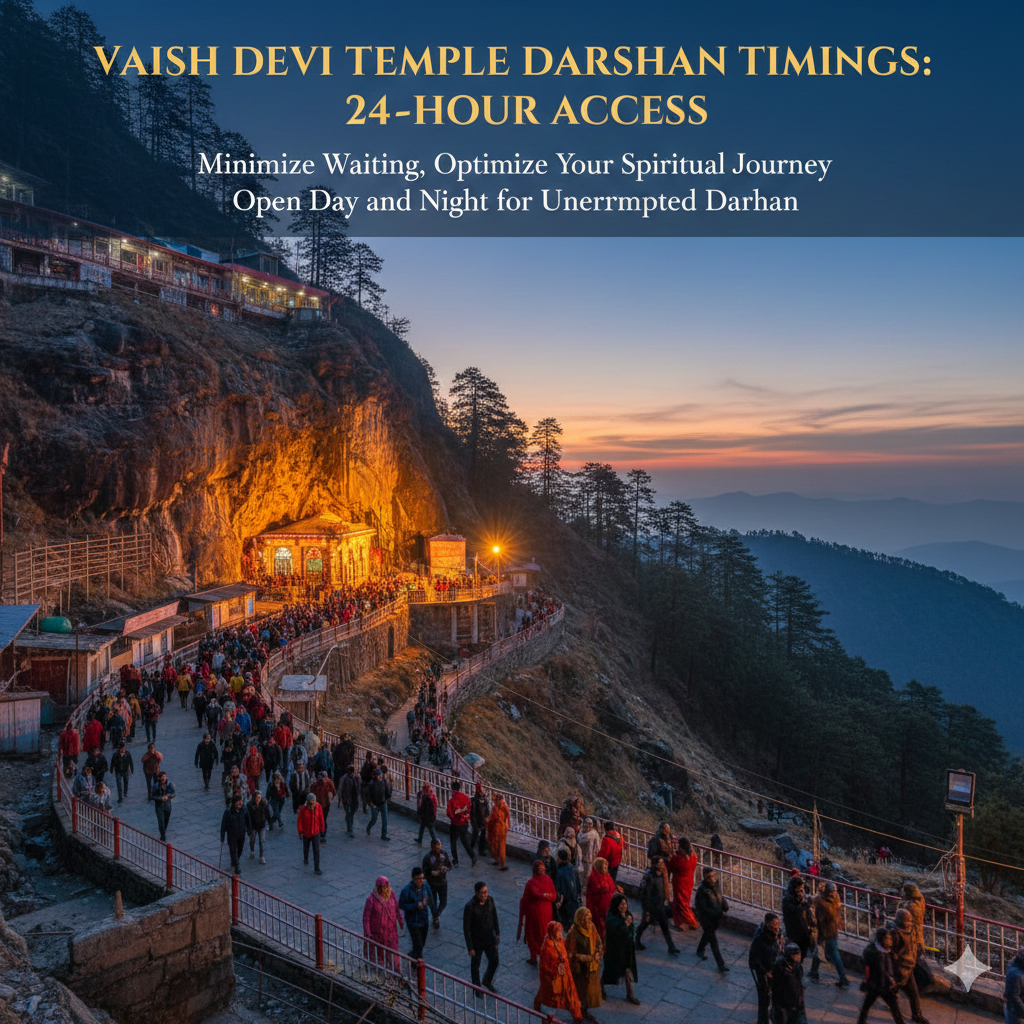
Understanding vaishno devi temple darshan timings helps pilgrims strategically plan trek schedules to minimize waiting times and optimize spiritual experiences.
The holy cave shrine operates 24 hours daily without closure, providing complete flexibility for devotees to choose darshan timing based on personal trekking pace and crowd avoidance preferences.
Peak Hours: Managing Crowds
Morning Rush (6 AM – 12 PM): Highest crowd density with 4-8 hour waiting. Avoid if time-conscious or elderly.
Evening Peak (5 PM – 10 PM): Moderate crowds with 2-4 hour waiting. Preferred by early morning trekkers.
Off-Peak (12 AM – 5 AM): Minimal waiting (30 minutes – 2 hours). Requires overnight trekking capability but provides shortest overall pilgrimage time.
Mata Vaishno Devi Aarti Time
Understanding mata vaishno devi aarti time enhances spiritual experiences through participation in sacred rituals.
Morning Aarti: 5:00-6:00 AM (approximate, varies seasonally)
- Peaceful atmosphere, moderate participation
- Traditional awakening ceremony
Evening Aarti: 7:00-8:00 PM (approximate, varies seasonally)
- Vibrant devotional atmosphere, larger participation
- Traditional closing ceremony
Note: Exact mata vaishno devi aarti time varies by 15-30 minutes based on seasonal daylight. Confirm current timings at Bhawan upon arrival.
How Much Time Does It Take to Climb Vaishno Devi: Duration Planning
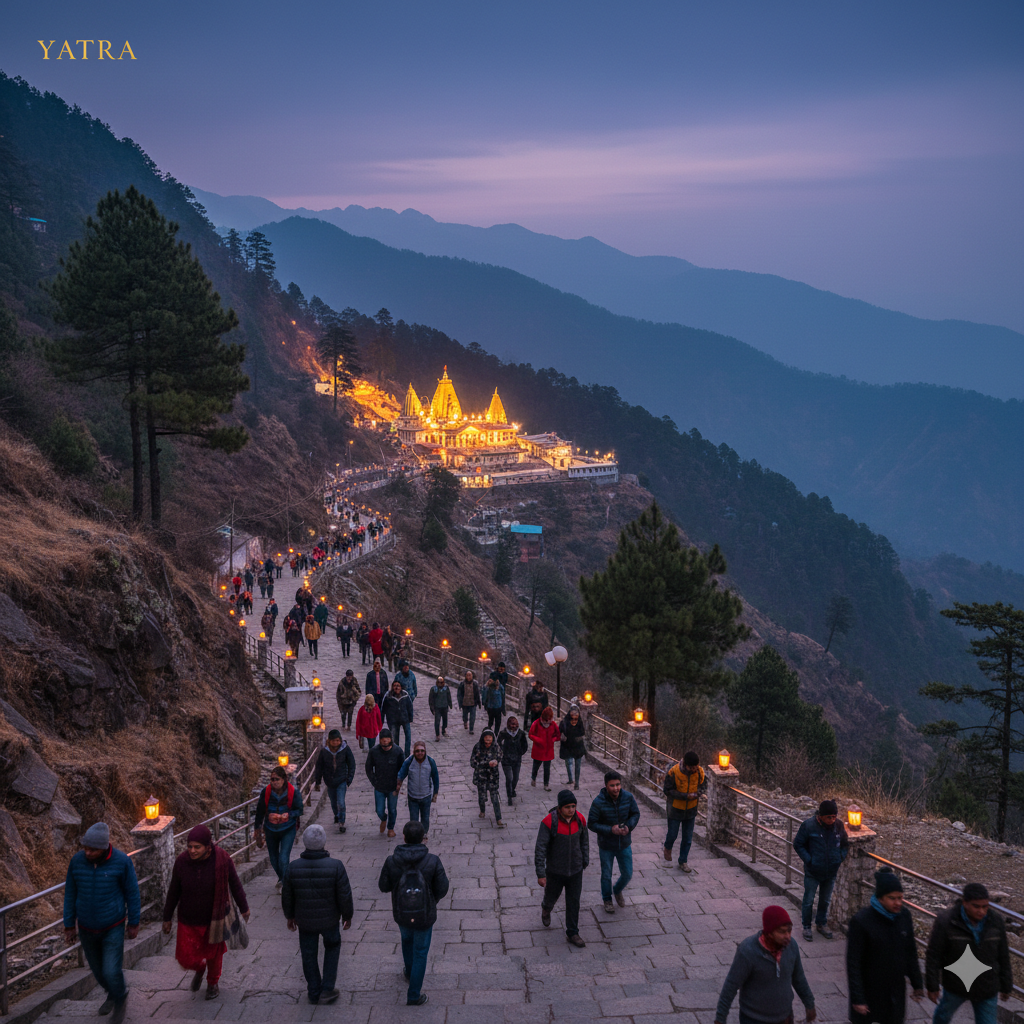
Understanding how much time does it take to climb vaishno devi requires considering fitness levels, transportation mode, crowd conditions, and darshan waiting periods.
Trek Distance & Walking Time
Total Distance: 13km (Katra to Bhawan) + 1.5km (Bhawan to Cave) = 14.5km
Walking Time by Fitness:
- Average fitness: 6-8 hours uphill, 3-4 hours downhill
- Good fitness: 4-6 hours uphill, 2-3 hours downhill
- Elderly/children: 8-10 hours uphill, 4-5 hours downhill
Complete Pilgrimage Duration:
- Uphill: 6-8 hours
- Darshan + waiting: 2-4 hours (timing dependent)
- Downhill: 3-4 hours
- Total: 12-16 hours for full walking pilgrimage
Alternative Transportation
Pony/Horse Service:
- Duration: 4-5 hours uphill
- Cost: ₹1,000-2,000 (seasonal variation)
- Available: Katra to Bhawan only
Palanquin Service:
- Duration: 6-8 hours uphill
- Cost: ₹4,000-8,000 (weight-based)
- Requires four bearers, advance booking recommended
Helicopter Service:
- Flight: 8 minutes (Katra to Sanjichhat)
- Remaining trek: 2.5km (45-60 minutes walk)
- Cost: ₹1,200-2,500 one way
- Total time saved: 4-6 hours
- Advance online booking essential
Time Optimization Tips
Start trek at 3-4 AM to avoid crowds, use battery vehicle to Ardhkuwari (₹100-150), choose weekdays over weekends, target off-peak darshan hours (midnight-5 AM) for shortest waiting.
How to Visit Vaishno Devi: Step-by-Step Guide
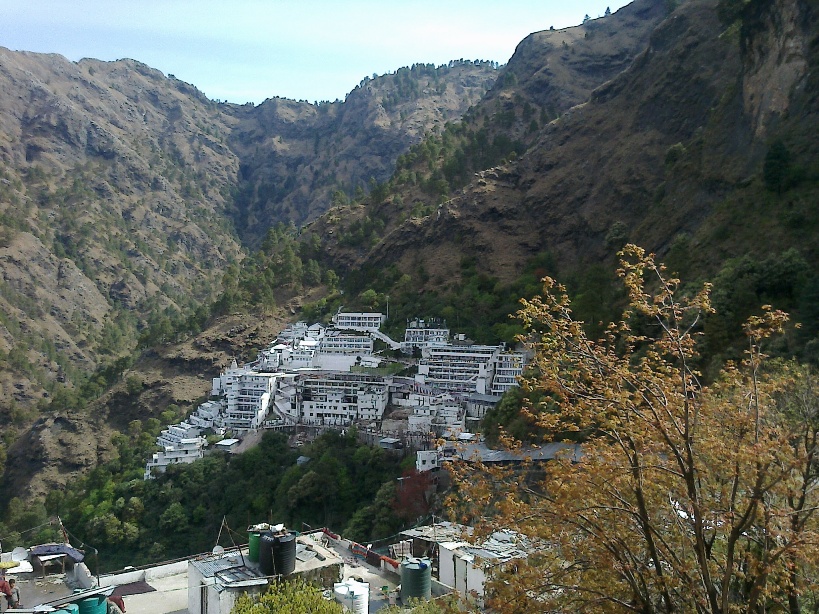
Understanding how to visit vaishno devi involves comprehensive planning covering travel logistics, registration procedures, and trek preparation.
Step 1: Reaching Katra
By Air: Jammu Airport (50km, 1.5 hours), daily flights from major cities, taxi ₹800-1,200
By Train: Direct trains to Shri Mata Vaishno Devi Katra Railway Station from Delhi, Mumbai, Kolkata, Chennai
By Road: 660km from Delhi (12 hours), 320km from Chandigarh (7 hours), 42km from Jammu (1 hour)
Step 2: Yatra Registration
Mandatory registration at Katra:
- Location: Registration counter near bus stand
- Timing: 24 hours operational
- Documents: Valid photo ID (Aadhar/PAN/Passport)
- Fee: ₹50 per person (approximate)
- Online: maavaishnodevi.org
You receive:
- Yatra Parchi (registration slip)
- RFID wristband for tracking
- Route map and safety guidelines
Step 3: Trek Preparation
What to Carry:
- Valid photo ID and Yatra Parchi
- Comfortable trekking shoes with grip
- Warm clothing (even in summer)
- Water bottle, snacks, energy bars
- Walking stick (rent ₹20-30)
- Mobile phone, charger/power bank
- Basic first-aid and personal medications
- Small torch for night trekking
Prohibited Items:
- Leather items of any kind
- Tobacco and alcohol
- Non-vegetarian food
- Large luggage (cloakroom available ₹20-50)
Step 4: Major Trek Stops
Ban Ganga (1.5km): Holy water source, refreshments – 30-40 minutes
Charan Paduka (2.5km): Sacred footprint, rest point – 1-1.5 hours
Adhkuwari (6km): Major midpoint, accommodation, extensive facilities – 2.5-3.5 hours
Bhawan (13km): Main temple complex, queue entry – 6-8 hours
Holy Cave (1.5km from Bhawan): Final destination – additional 30-45 minutes
Facilities along route every 500m include refreshment stalls, toilets, medical aid posts, and charging points.
Accommodation Options Near Vaishno Devi
Katra Hotels:
- Budget: ₹800-2,000/night
- Mid-range: ₹2,000-5,000/night (Hotel Asia, The White, KC Residency)
- Luxury: ₹5,000-15,000/night (Comfort Inn, Country Inn, Best Western)
Shrine Board Accommodations:
- Bhawan dormitory: ₹100-300 per person
- Bhawan rooms: ₹500-1,500 per room
- Adhkuwari rest house: Mid-trek option
- Advance booking: 2-3 months during peak season through shrine board website
For complete spiritual exploration, discover religious places in Kashmir combining multiple pilgrimage sites, explore offbeat places in Kashmir for peaceful retreats, and plan comprehensive journeys with Kashmir tour package from Mumbai or Leh Ladakh tour packages from Mumbai.
Essential Pilgrimage Tips
Physical Preparation: Start light exercise 2-3 weeks before, practice walking on inclines, consult doctor for medical conditions.
Weather Readiness: Check forecast before departure, carry warm clothes even in summer, waterproof jacket during monsoon, winter requires thermals.
Health & Safety: Stay hydrated throughout journey, take regular rest breaks, avoid heavy meals before trek, listen to body signals.
Budget Planning:
- Basic pilgrimage: ₹3,000-5,000 per person
- Comfortable: ₹8,000-12,000 per person
- Luxury: ₹15,000-25,000 per person
Conclusion
Determining the vaishno devi temple best time to visit requires balancing weather preferences, crowd tolerance, and physical capabilities. March-April and September-October emerge as optimal periods offering pleasant weather and special spiritual significance, while understanding vaishno devi temple darshan timings, how much time does it take to climb vaishno devi, and mata vaishno devi aarti time ensures comprehensive planning for successful pilgrimage experience.
Whether seeking peaceful winter solitude or vibrant Navratri energy, proper preparation following this guide on how to visit vaishno devi and choosing the best season to visit vaishno devi guarantees fulfilling spiritual journey to Mata’s sacred abode. Frenzy Holidays ensures a smooth and enriching travel experience from start to finish. You can visit us at Haware Centurion, S07/34, Nerul East, Sector 19A, Nerul, Navi Mumbai, Maharashtra 400706. For bookings or more information, call +91 7400453140, email [email protected], or visit www.frenzyholidays.com. So pack up and explore INDIA with Frenzy Holidays to have an unforgettable journey.
Vaishno Devi Temple Best Time to Visit – FAQs
What is the vaishno devi temple best time to visit for comfortable weather?
March-April and September-October offer best weather with 15-25°C temperatures, clear skies, and comfortable trekking conditions for all age groups.
What are the vaishno devi temple darshan timings?
The holy cave shrine remains open 24 hours daily. Mata vaishno devi aarti time is approximately 5-6 AM morning and 7-8 PM evening.
How much time does it take to climb vaishno devi?
Average fitness pilgrims take 6-8 hours uphill, 2-4 hours darshan, 3-4 hours downhill, totaling 12-16 hours for complete round trip.
Which is the best season to visit vaishno devi for avoiding crowds?
July-August monsoon has lowest crowds but challenging conditions. Winter (November-February) has fewer pilgrims but requires snow trekking experience.
How to visit vaishno devi from major cities?
Reach Katra by flight to Jammu Airport (50km), direct trains to Katra station, or road from Delhi (660km) or Chandigarh (320km).
Should I visit during Navratri?
Navratri (March-April, September-October) offers maximum spiritual significance but highest crowds requiring 3-6 months advance booking and 6-10 hour waits.
What is average cost for visiting Vaishno Devi?
Basic pilgrimage costs ₹3,000-5,000, comfortable trips ₹8,000-12,000, luxury experiences ₹15,000-25,000 per person including travel, accommodation, food.
Can elderly people visit comfortably?
Yes, elderly can use helicopter (₹1,200-2,500), pony rides (₹1,000-2,000), or palanquin services (₹4,000-8,000) making pilgrimage accessible.
Is advance booking required?
Advance booking highly recommended for helicopter, Bhawan accommodations, and peak seasons (Navratri, May-June, September-October) requiring 2-4 months notice.
What to avoid during vaishno devi temple best time to visit?
Avoid monsoon (July-August) for safety, winter (December-January) for snow challenges, and peak weekends/festivals for minimal crowds and shorter waits.
